

UK Supplier Netherlands Shipping & EU Intra-Community Supply Process
How Continox supplies bespoke staircases to Dutch projects from our EN 1090-1 EXC2 facility near Kraków — intra-EU acquisition (no customs, no tariffs), BTW reverse-charge under article 12.3 Wet OB, 2–3 day road transit, plus the Brexit clarification that addresses the most common Dutch architect concern about a "UK supplier" and a comparison against Dutch-domestic suppliers.
Continox is a UK-branded company with EU manufacturing — our EN 1090-1 EXC2 production facility is near Kraków, Poland. All supply to the Netherlands is therefore intra-Community acquisition (intracommunautaire verwerving) under EU VAT rules: no customs at the border, no T1 transit document, no import duty, no UKCA marking, no Brexit complication. BTW is handled by reverse-charge under article 12.3 Wet OB — Continox invoices at 0% BTW; the Dutch B2B buyer self-accounts BTW on the VAT return at 21% and simultaneously claims the same amount as input VAT, net administrative effect zero. Transit from Kraków to anywhere in the Netherlands: 2–3 working days by dedicated road freight via Germany–Venlo or Germany–Oldenzaal corridors. Full programme order to delivery: 5–8 weeks (1 week 3D sign-off, 4–6 weeks fabrication, 2–3 days transit).
Logistics & Customs Reality
The Continox Supply Route — Kraków to Randstad in 2–3 Days
Continox manufactures bespoke staircases at our certified facility near Kraków, southern Poland — an EN 1090-1 EXC2 plant set up specifically to serve the European architectural-staircase market. The route from manufacture to Dutch project site runs via two principal road-freight corridors:
- Germany–Venlo corridor (southern entry) — preferred routing for Brabant, Limburg, Gelderland, eastern Utrecht and Amsterdam-via-A2. Transit Kraków → Wrocław → Görlitz → Dresden → Köln → Venlo → Eindhoven, 1,150–1,250 km, 16–20 driving hours plus rest periods, total 2–3 working days door-to-door.
- Germany–Oldenzaal corridor (northern entry) — preferred routing for Overijssel, Drenthe, Groningen, Friesland, Noord-Holland north and Flevoland. Transit Kraków → Wrocław → Berlin → Hannover → Osnabrück → Oldenzaal → Zwolle, 1,200–1,300 km, similar transit duration.
The full programme from order placement to installed staircase runs 5–8 weeks in standard cases:
Week 1: 3D visualisation released, two revision rounds standard
Weeks 2–6: Fabrication at EN 1090-1 EXC2 facility (timber, steel, glass, finishes)
Week 6 (end): Pre-shipment QC + photographic record + dispatch
Weeks 6–7: Road transit Kraków → Netherlands (2–3 working days)
Weeks 7–8: Local installer mobilises, installation 3–5 working days on site
For grachtenpand and Amsterdam canal-ring projects we coordinate the final-mile logistics with the local installer to handle canal-side parking constraints — most canal addresses do not allow truck parking and require a smaller offload vehicle within the venster (truck-permit window). Components are designed and crated to fit through standard Amsterdam canal-house front doors (typically 80–90 cm clear) and to be carried up tight stairwells to the relevant floor.

Intra-EU Acquisition: No Customs, No Tariffs, No T1 Document
The single most important fact about Continox supply to the Netherlands is that it sits inside the EU customs union throughout. The goods originate at our manufacturing facility in Poland (EU member state), travel by road through Germany (EU member state) to the Netherlands (EU member state) — there is no customs frontier crossed, no T1 transit document required, no import duty applicable, no border clearance delay.
This stands in contrast to supply from the UK post-Brexit, which requires T1 transit documents, border customs clearance at either Dover/Calais–Rotterdam route or via the Channel Tunnel + ferry, plus potential import VAT and tariff implications depending on the specific HS-code classification of the goods. None of this applies to Continox supply because the legal origin of the goods is Poland, not the UK.
| Logistics parameter | Continox (EU-manufactured) | UK-manufactured supplier (post-Brexit) |
|---|---|---|
| Customs frontier crossed | None — intra-EU throughout | UK → EU border (Dover/Calais or Channel Tunnel) |
| T1 transit document required | No | Yes — for goods in transit through EU |
| Import duty (tariff) | Zero — goods originate in EU | Possible — depends on TCA + HS classification |
| Border clearance time | Zero — direct road freight | 4–24 hours typical |
| BTW (Dutch VAT) at border | None — reverse-charge on VAT return | Possible — paid at border or deferred |
| UKCA / CE marking question | CE marked — manufactured in EU | UKCA in UK, CE for EU export |
| Transit time (Netherlands) | 2–3 working days | 4–7 working days typical |
| Documentation burden on buyer | None — handled by supplier | Customs paperwork, duty declarations |
Table 1 · Intra-EU acquisition (Continox EU-manufactured) versus UK-export supply (post-Brexit). The legal manufacturing origin determines the customs treatment.
For the Dutch B2B buyer the practical consequence is administrative simplicity. The Continox commercial invoice arrives with EU intra-Community supply marked, BTW shown as reverse-charge under article 12.3 Wet OB (next section). No customs declarations to file, no T1 transit reference to track, no border clearance to wait for. The same procedural treatment that applies to a buyer purchasing steel from a Belgian fabricator or glass from a German supplier.
BTW Reverse-Charge Mechanics & Worked Example
BTW (Belasting Toegevoegde Waarde — Dutch VAT, currently 21% standard rate) on intra-Community supply is handled by the reverse-charge mechanism under article 12.3 of the Wet op de omzetbelasting (Wet OB). The mechanic is straightforward but worth setting out in detail because Dutch architects and project managers commissioning their first cross-border bespoke supply often ask the same question: who pays the BTW, when, and to whom?
The answer: nobody pays BTW at the point of cross-border transfer. The Dutch B2B buyer self-accounts BTW on the next quarterly VAT return (the verschuldigde-belasting line) at the standard 21% rate, and simultaneously claims the same amount as input VAT (the voorbelasting line). The two entries cancel — net cash impact zero, net administrative effect a single line entry in the VAT return.
BTW Reverse-Charge in Practice
Self-accounted BTW at 21% on intra-Community acquisition +€2,099.79
Same amount claimed as input VAT −€2,099.79
Net administrative effect: one ICP-listing (Intracommunautaire Prestaties) plus the two equal-and-opposite lines on the VAT return. Buyer's BTW number is captured at quotation stage and used on the Continox invoice as proof of B2B status. If the buyer's BTW number is not yet active or the buyer is not BTW-registered, supply terms are discussed at quotation stage.
Three practical points. First, the BTW number requirement: the buyer must have a valid Dutch BTW-identificatienummer (in the format NL[9 digits]B[2 digits]) for the reverse-charge mechanism to apply. Continox validates the BTW number via the EU's VIES system at quotation stage; an invalid or inactive number means the reverse-charge cannot be used and we discuss alternative supply terms at that point. Second, the ICP-opgave obligation: the buyer files an ICP-listing alongside the standard quarterly VAT return reporting the value of intra-Community acquisitions; this is a routine entry for any Dutch business that purchases from EU suppliers. Third, the Continox VAT-listing obligation on our side: Continox files a corresponding ICP-opgave in Poland reporting the dispatch to the Dutch BTW number, mirroring the buyer's filing — this is what closes the EU's intra-Community supply control loop.
Final-Mile Delivery: Amsterdam Canal Ring to Maastricht
Once the freight crosses into the Netherlands at Venlo or Oldenzaal, the final-mile logistics depend significantly on project location. The Continox protocol covers four typical scenarios:
- Randstad new-build (Zuidas, Kop van Zuid, Leidsche Rijn) — direct delivery to the project site by the same road freight that crossed the border. Loading bay or driveway access typical; offload by tail-lift at site, components moved by site contractor's lifting equipment to the installation floor.
- Amsterdam canal ring (grachtenpand) — final-mile transfer to a smaller delivery vehicle that fits the canal-side venster permit. Components designed to fit through 80–90 cm front doors and tight stairwells. Coordination with local installer mandatory; we typically schedule delivery for the morning of the venster window.
- Coastal villa belt (Bloemendaal, Aerdenhout, Wassenaar) — direct delivery to villa-belt addresses. Substantial driveway access typical for these properties; standard road freight handles the offload. Coastal-corrosion-specified components ship in additional protective packaging to prevent salt-aerosol exposure during the final 24-hour delivery window.
- Provincial cluster (Brabant, Limburg, Gelderland) — direct delivery to project site, frequently arriving via the Venlo southern corridor. Brainport projects (Eindhoven Strijp-S, ASML-belt) typically have generous loading-bay access; rural villa projects in Brabant and Limburg have driveway delivery.
The local installer relationship matters more than the delivery itself. Continox supplies pre-engineered components plus the installation method statement, but installation work is performed by the project's appointed Dutch metalwork contractor (staalconstructeur) or general contractor's installation team under DNR 2011 contract framework and the contractor's own insurance. For specific Randstad projects we have working relationships with recommended installers — referrals available on request at quotation stage.
Brexit Clarification & Supplier Comparison
The Brexit Clarification: UK Brand, EU Manufacturing
The single most-asked question Continox receives from Dutch architects and project managers is some version of: "You're a UK supplier — what about Brexit?". The answer is worth setting out clearly because the misunderstanding persists. Continox is a UK-branded company with EU manufacturing. The brand, headquarters, sales operations and customer-facing administration sit in the United Kingdom; the actual production facility — the EN 1090-1 EXC2 plant where steel is welded, oak is engineered, glass is laminated and assemblies are fabricated — sits near Kraków, Poland.
Should I Use Continox or a Dutch-Domestic Supplier? — 4-Question Decision Tree
The decision between Continox supply and a Dutch-domestic supplier is genuinely a project-by-project question. Below is the decision tree we walk through with Dutch architects at the early specification stage. There is no single right answer — the tree helps clarify which scenario the specific project sits in.
Which Supply Route Suits Your Project?
Continox vs Dutch-Domestic Suppliers — Side-by-Side Comparison
The matrix below summarises the structural differences between Continox supply and the typical Dutch-domestic premium-segment supplier. Note that the Dutch-domestic market is heterogeneous — there are excellent specialists at all price points — so the column should be read as a typical-mid-premium-Dutch-supplier composite rather than a literal description of any specific company.
| Parameter | Continox (NL supply) | Dutch-domestic premium supplier |
|---|---|---|
| Manufacturing location | Kraków, Poland (EN 1090-1 EXC2) | Netherlands (typically EN 1090-1 EXC2) |
| Customs treatment | Intra-EU acquisition, no customs | Domestic supply, no customs |
| BTW invoicing | 0% reverse-charge under article 12.3 Wet OB | 21% standard BTW invoiced |
| Net BTW cash effect for B2B buyer | Zero (cancels on VAT return) | Zero (input VAT recovery) |
| Transit time | 2–3 working days road freight | 1–3 working days domestic transport |
| Programme order to delivery | 5–8 weeks total | 6–10 weeks typical bespoke |
| Pricing tier baseline | From €8,999 supply, design & delivery | From €12,000–€18,000+ comparable bespoke |
| Documentation pack | Bbl + NEN 2608 + 6707 + 3509 + EN 1090 cross-referenced | Variable — often basic, separate engineering required |
| Coastal-corrosion specification | Included automatically < 10 km coast | Often premium upcharge |
| Installation | Local appointed contractor (DNR 2011) | Often supplier's own installation team |
| Warranty | 5 years against manufacturing defect | 2–5 years typical |
| Communication language | English (Polish at fabrication-floor level) | Dutch primary |
Table 2 · Continox supply vs Dutch-domestic premium supplier composite. Final assessment depends on specific project requirements, budget tier and supplier identity within the Dutch-domestic segment.
Three patterns emerge from the comparison. First, on price, Continox typically positions 20–30% below comparable Dutch-domestic premium suppliers at equivalent specification — a structural advantage driven by the EU manufacturing cost base in southern Poland versus the Dutch-domestic labour and overhead structure. Second, on documentation, Continox's standard documentation pack (Bbl + NEN cross-referenced + Eurocode structural calculations + EN 1090 DoP) compares favourably with most Dutch-domestic mid-market suppliers, who often package documentation separately or rely on the project's appointed constructeur to produce it. Third, on installation, Continox's supply-only model with local-appointed installer suits B2B project workflows where the architect-developer-contractor structure is already established; Dutch-domestic suppliers with own-team installation suit residential clients without their own contractor relationships.
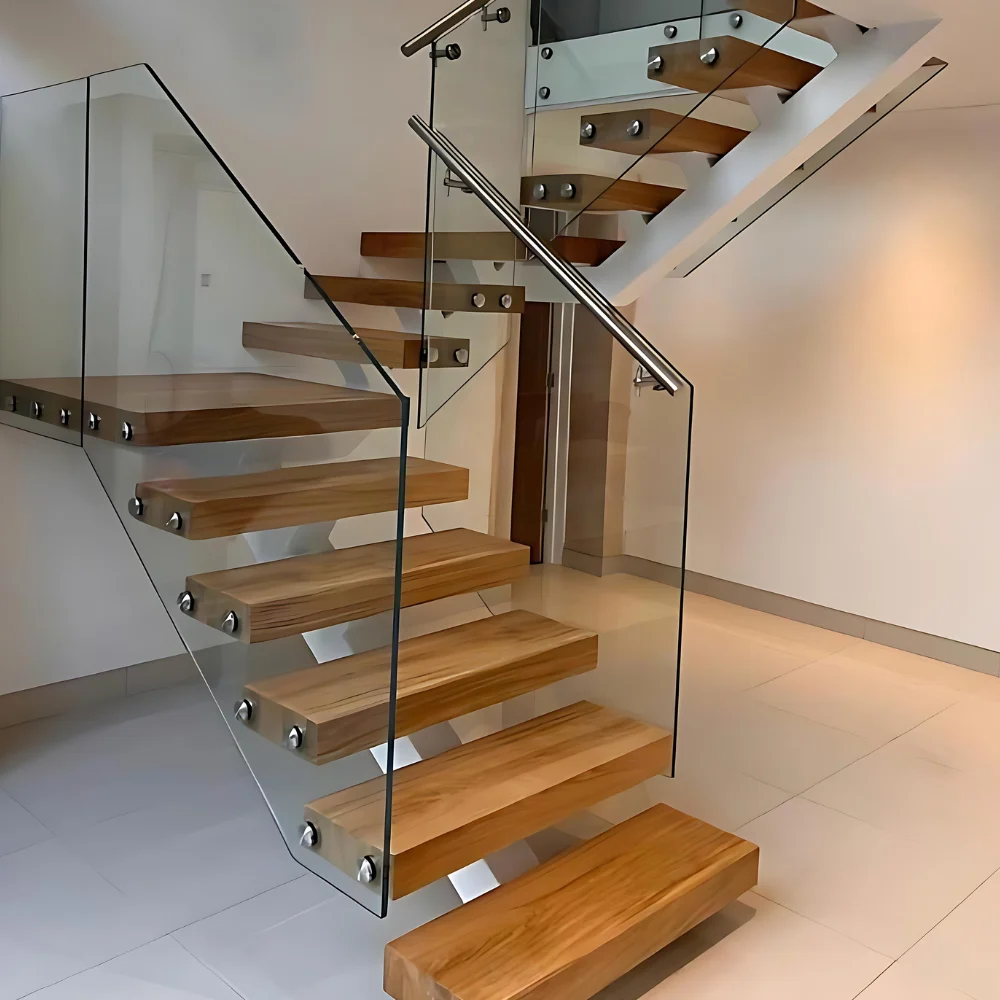
For project archetypes (grachtenpand, Randstad new-build, coastal villa, Brabant farmhouse) and the Continox configuration mapping by archetype, see Modern Staircase Amsterdam Grachtenpand & Randstad (NL03).
Frequently Asked Questions
Is Continox subject to Brexit customs procedures when shipping to the Netherlands?
No. Continox is a UK-branded company with EU manufacturing — our EN 1090-1 EXC2 production facility is near Kraków, Poland. The legal supply origin for Dutch projects is Poland, not the UK. Goods are manufactured in Poland, dispatched on a Polish commercial invoice and travel by road through Germany to the Netherlands without crossing any customs frontier.
Brexit customs procedures (T1 transit, UK CHIEF declaration, Dover/Calais clearance), UKCA marking and post-Brexit import duty therefore do not apply. Goods are CE-marked under the EU Construction Products Regulation 305/2011, with EN 1090-1 EXC2 Declaration of Performance attached to every shipment.
How does BTW work for Continox supply to a Dutch B2B buyer?
Continox supply to the Netherlands is intra-Community acquisition under EU VAT rules. The Continox invoice is issued at 0% BTW with a reference to the reverse-charge mechanism under article 12.3 Wet OB. The Dutch B2B buyer self-accounts BTW on the next quarterly VAT return at the standard 21% rate, and simultaneously claims the same amount as input VAT — net cash effect zero, net administrative effect a single matched-pair entry on the VAT return plus one ICP-opgave filing.
The buyer must have a valid Dutch BTW-identificatienummer for the reverse-charge mechanism to apply. Continox validates the BTW number via the EU's VIES system at quotation stage. If the buyer is not BTW-registered, alternative supply terms are discussed at that point.
How long does delivery from Kraków to the Netherlands take?
2–3 working days by dedicated road freight from our EN 1090-1 EXC2 facility near Kraków. Routing via Germany–Venlo corridor for Brabant, Limburg, Gelderland and Amsterdam-via-A2; Germany–Oldenzaal corridor for Overijssel, Drenthe, Groningen, Friesland and Noord-Holland north. Distance 1,150–1,300 km depending on destination.
The full programme order to installed staircase runs 5–8 weeks: 1 week for 3D sign-off and revisions, 4–6 weeks fabrication at our facility, 2–3 working days transit. Local installer mobilises during the transit period; on-site installation typically completes in 3–5 working days.
Why does Continox manufacture in Poland rather than the UK?
The EN 1090-1 EXC2 production specialism, skilled labour pool and competitive cost base for premium architectural steelwork concentrate in southern Poland. The facility near Kraków was set up specifically to serve the European architectural-staircase market, with the technical specialism (steel welding to EXC2, oak engineering, glass lamination, finishes coordination) and the cost structure to deliver bespoke supply at a price point below comparable Western European production.
The brand and customer-facing operations sit in the UK because that is where the design heritage, project-management approach and customer-service culture reflect Continox's positioning. The two facts — UK brand, EU manufacturing — are independent. For Dutch projects, what matters is the legal manufacturing origin, which is Poland (intra-EU).
Who is responsible for installation in the Netherlands?
Installation is performed by the project's appointed Dutch metalwork contractor (staalconstructeur) or general contractor's installation team under DNR 2011 contract framework and the contractor's own insurance. Continox supplies pre-engineered components designed for on-site assembly, plus a detailed installation method statement, English-language assembly drawings and remote technical support during installation (video calls, CAD clarifications).
For specific Randstad projects we have working relationships with recommended installers — referrals available on request at quotation stage. For grachtenpand and Amsterdam canal-ring projects we coordinate the final-mile logistics with the local installer to handle canal-side parking constraints (venster permit window) and tight stairwell access.
How does Continox pricing compare with Dutch-domestic premium suppliers?
At equivalent specification, Continox typically positions 20–30% below comparable Dutch-domestic premium suppliers. This is a structural advantage driven by the EU manufacturing cost base in southern Poland versus the Dutch-domestic labour and overhead structure — not a lower-quality positioning.
Examples: A Continox Floating Staircase from €10,999 supply, design & delivery typically compares with €15,000–€20,000 from a Dutch-domestic premium supplier at equivalent finish. A Continox Premium Central Spine from €12,999 compares with €18,000–€25,000 domestic. Fully bespoke configurations from €14,500+ compare with €20,000–€35,000+ domestic top-tier. The differential narrows as project specification approaches ultra-luxury — at €30,000+ the differential is typically 10–15% rather than 20–30%.