

How to Choose a UK Bespoke Staircase Manufacturer in 2026
Choosing a UK bespoke staircase manufacturer is a £10,000-£30,000 decision most homeowners make once. This complete 2026 guide gives you the 12 questions to ask, the 8 red flags that should disqualify a supplier, and the certification standards every manufacturer must meet to deliver a UK Building Regulations-compliant staircase.
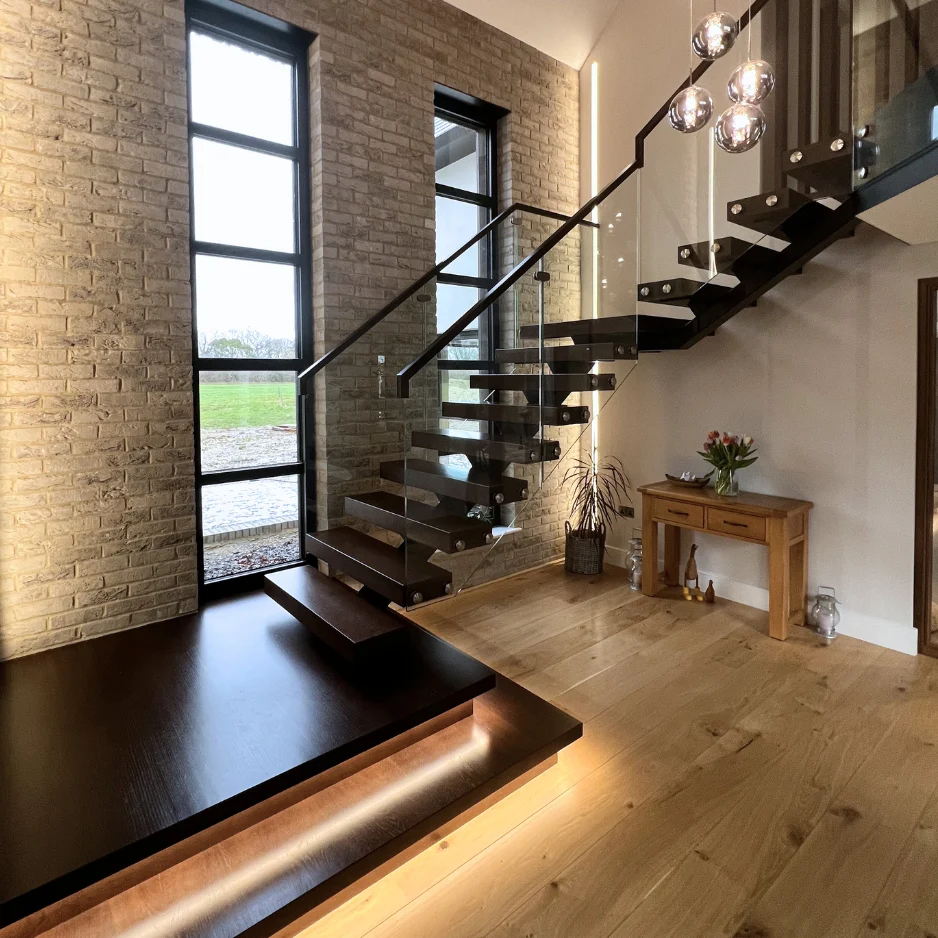
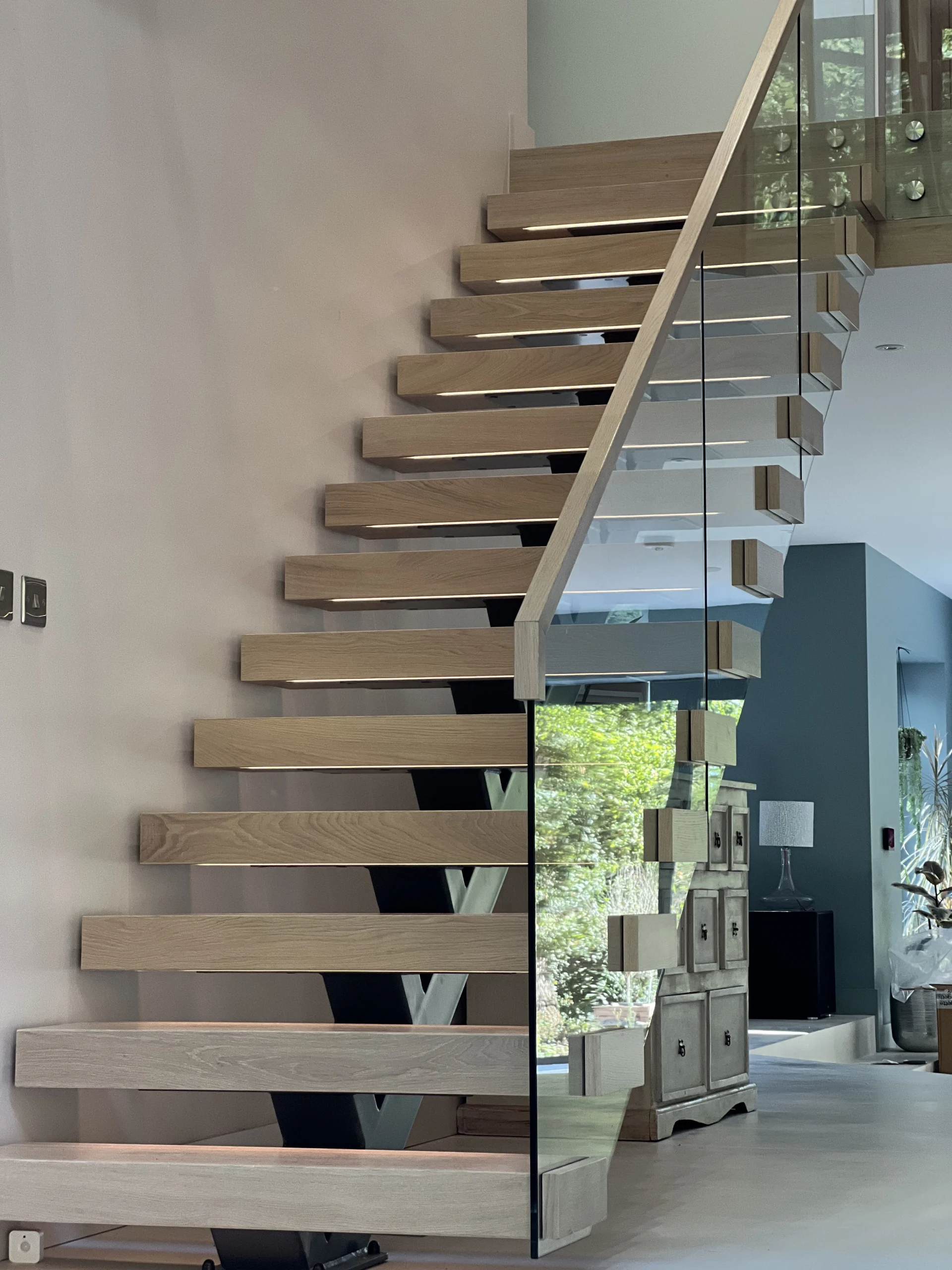
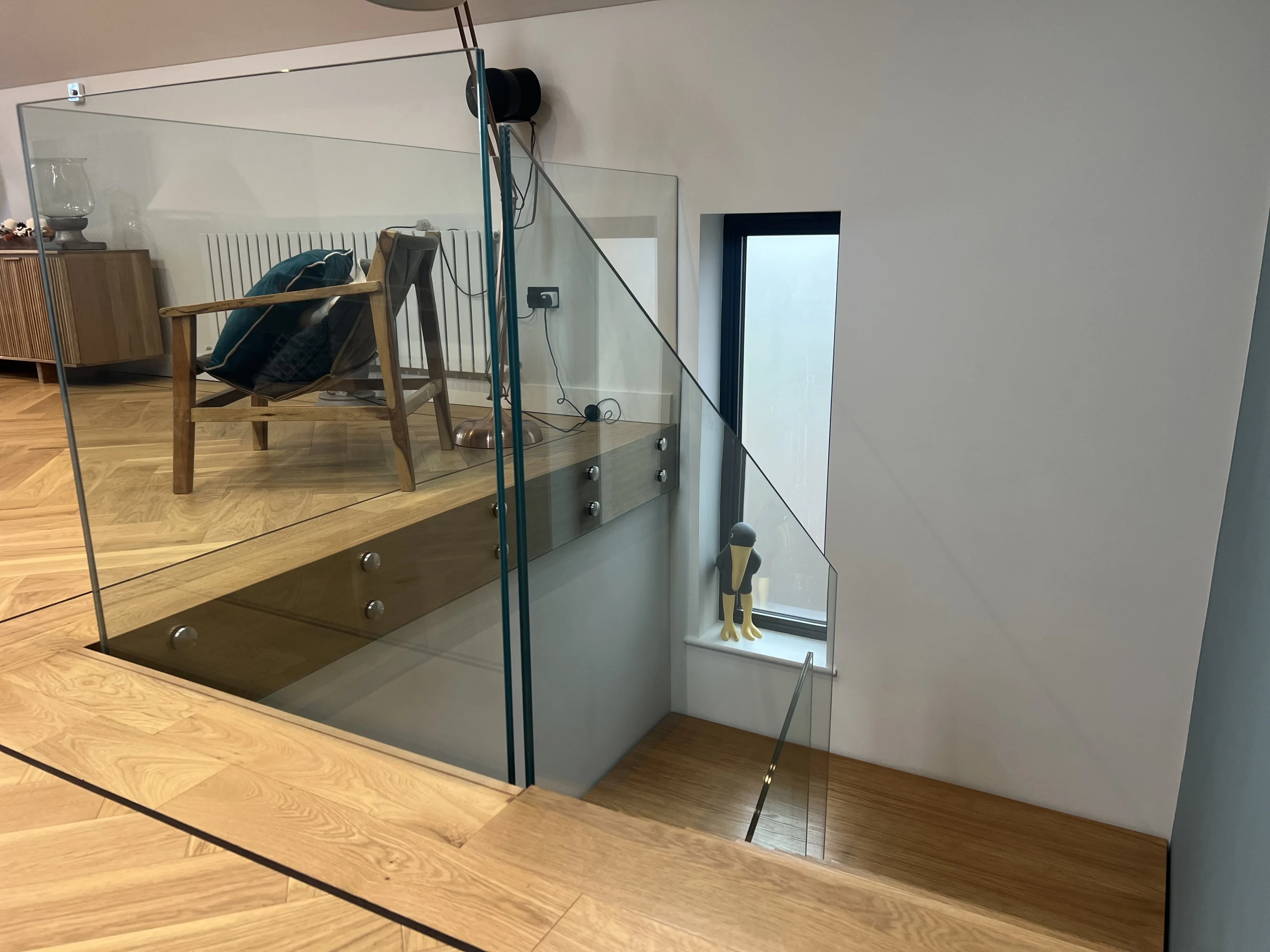

How do you choose a UK bespoke staircase manufacturer in 2026? Verify four mandatory criteria: (1) BS EN 1090-1 EXC2 certified steel manufacturing, (2) UKCA Declaration of Performance issued for every project, (3) in-house structural engineer who signs all calculations, (4) 5-year warranty across the assembly. Then ask the 12 questions in the interactive checklist below. Avoid suppliers with any of the 8 red flags — vague pricing, no certification, subcontracted installation without accountability, warranty under 5 years.
Which manufacturer category fits most UK projects? Most UK homeowners commissioning a serious bespoke staircase land with Premium Bespoke Manufacturers (£10,999-£18,000) — a category that includes Continox and offers full single-supplier accountability with all four mandatory criteria included as standard.
What's the most common mistake? Choosing a manufacturer based on headline price alone without normalising for scope. A £4,500 quote often becomes a £10,000 finished project after adding installation, structural certification, Building Control documentation and warranty extensions. Compare quotes with all eight elements (see "Red Flag #2" below).
Buying a bespoke staircase in the UK is a strange shopping experience. It's a £10,000-£30,000 purchase, you'll do it once or twice in your lifetime, and the market is genuinely opaque — the same product description ("modern open-tread staircase, oak and glass") can mean four wildly different things at four wildly different price points, and there's no consumer authority publishing manufacturer ratings.
This guide gives you the framework professional architects and specifiers use to evaluate manufacturers — adapted into language any UK homeowner can apply. Twelve questions to ask, eight red flags to disqualify, four certification standards to verify, and a decision matrix to match your project to the right manufacturer category. By the end, you'll be able to read any UK staircase quote and immediately know whether it's competitive within its band — or competitive only because key elements are missing.
The 4 Manufacturer Categories — Understand the Market First
Before you can compare manufacturers, you need to understand that they aren't all selling the same thing. The UK staircase market splits into four distinct business models, each operating at a different price band, with different strengths, different limitations, and different appropriate use cases. Match your project to the right category before you start collecting quotes.
DIY Kit Suppliers
Online configurators and high-volume manufacturers shipping flat-pack kits to the homeowner or trade buyer. The price covers components only; everything else is the customer's responsibility.
- Standardised geometry only
- Online ordering, no site visit
- Pine, oak veneer or engineered timber
- Customer arranges installation separately
- Best for: trade buyers, simple straight stairs, DIY-comfortable
Local Joineries
Traditional UK joiners running small workshops within a 30-60 mile radius of the project. Made-to-measure closed-string staircases in pine, oak or hardwood — the dominant model for replacement in mid-market UK housing.
- Made-to-measure traditional construction
- Hand-finished newels and handrails
- Direct relationship with craftsman
- Installation typically included
- Best for: period properties, traditional aesthetic
Premium Bespoke Manufacturers
UK-branded manufacturers with in-house structural engineering, EN 1090 EXC2 certified workshops, and single-supplier accountability for the entire project — design, manufacture, install, certify. This is where Continox operates.
- Full bespoke design, any geometry
- EN 1090-1 EXC2 certified steel
- In-house structural engineer signs calcs
- Fixed price including installation
- 5-year warranty across assembly
- Best for: most UK homeowners doing serious renovation
Designer Studios
London-area or regional studios with named designers, physical showrooms and architect referral relationships. Specification often identical to Category 3; the £5,000-£10,000 premium pays for brand, showroom, designer name and longer lead times.
- Named designer-led service
- Physical showroom + samples
- Premium-tier portfolio
- 10-14 week lead times typical
- Best for: high-end London residential, hotel, retail, signature design
For most UK homeowners commissioning a serious bespoke staircase as part of a renovation or new build, Category 3 (Premium Bespoke Manufacturers) represents the value sweet spot — the band where every mandatory certification is included, where warranties run to 5 years across the whole assembly, and where pricing reflects the actual cost of fabrication, engineering and installation rather than brand premium. For a deeper market analysis with worked examples, see our complete UK Staircase Price Bands guide.
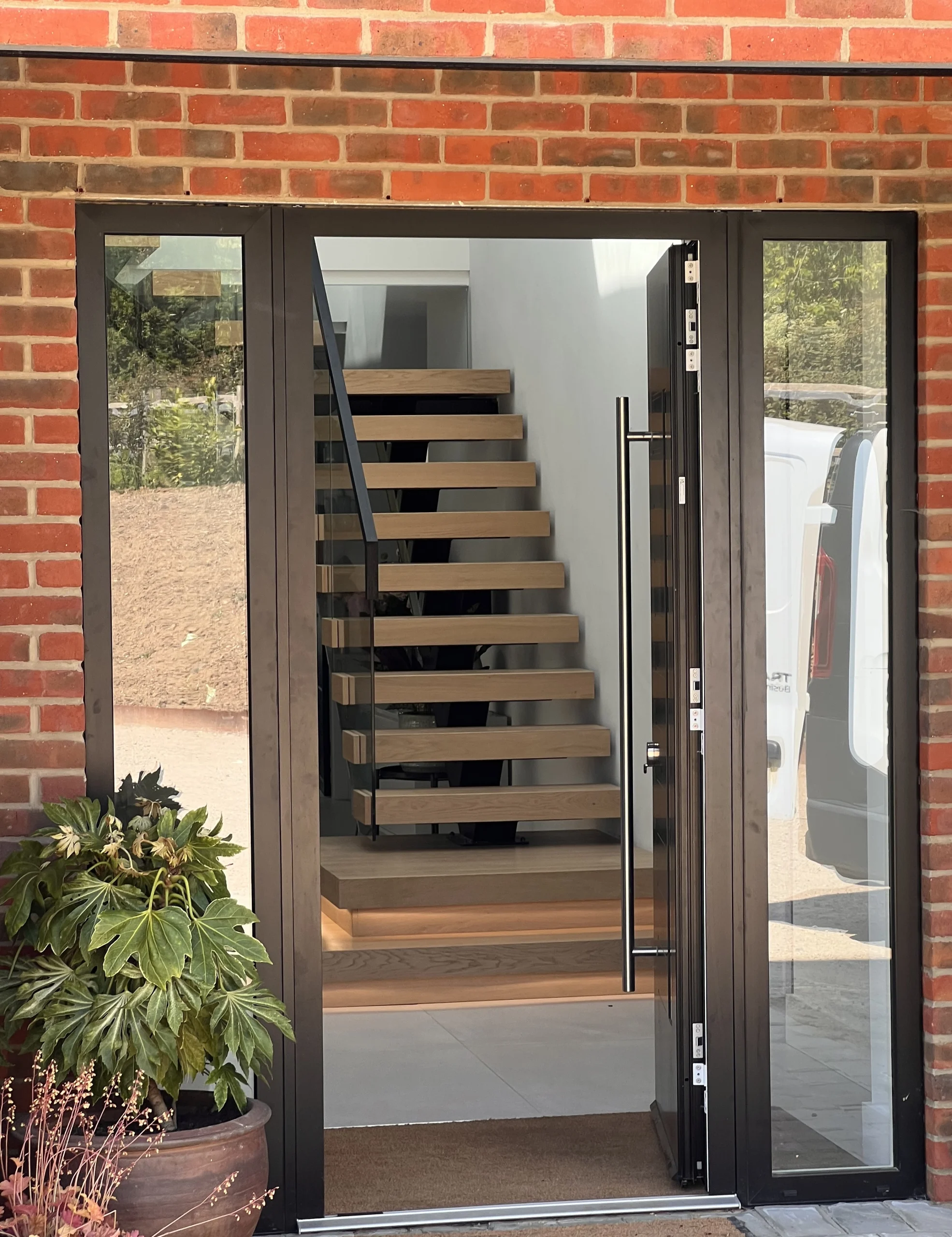
12 Questions to Ask Every Manufacturer
Tap each question to reveal what to expect, what a good answer looks like, and what should make you walk away. Print or screenshot before your supplier site survey — every question here protects you against the £20,000 mistake.
8 Red Flags That Should Disqualify a Manufacturer
No EN 1090-1 certification mentioned anywhere
BS EN 1090-1 is mandatory for structural steelwork sold in the UK. A manufacturer who can't produce certification numbers and Execution Class on request is operating outside the regulatory framework — your project may fail Building Control, your insurance may be voided, and the asset may be unsellable when you come to move home.
Vague pricing — won't issue a fixed quote
"Subject to site conditions" caveats, "to be confirmed" line items, or quotes that hedge with day-rate add-ons all signal a pricing model designed to extract additional money during fitting when you have no leverage. Any reputable manufacturer issues a fixed-price quote after free site survey.
No structural engineer in-house or contracted
Structural calculations are mandatory for Building Control sign-off on architectural staircases. A manufacturer without engineering capability either skips this step (non-compliance) or treats it as a £1,500-£3,500 add-on you'd pay to a separate engineer. Both are problems.
Subcontracts installation to "a fitter we found"
Manufacturing quality can be undone by poor installation. Manufacturers who hand you off to an unvetted local fitter remove themselves from the accountability chain — when the staircase squeaks or moves, manufacturer blames installer, installer blames manufacturer, you're the one chasing.
Warranty under 5 years or component-only
A bespoke staircase is a 25-30 year asset. Anything less than 5-year warranty across the whole assembly indicates the manufacturer doesn't expect their product to last that long, or doesn't want to commit. Component-only warranties (1 year glass, 2 years finish, 5 years steel) fragment your recourse when something fails at the boundary between components.
Won't provide written construction method
Particularly relevant for "cantilever" staircases, where the difference between true and faux cantilever determines wall requirements, cost and certification path. A manufacturer who refuses to specify construction method in writing is hiding something — see our Faux vs True Cantilever guide.
Pressure to commit before site survey
"Sign today and we'll hold this price" or "Deposit now to lock in your slot" before a site survey has happened are classic high-pressure sales techniques inappropriate for a £10,000+ purchase. Reputable manufacturers conduct free site survey, issue fixed quote, and give you reasonable time to decide. No exceptions.
No portfolio or verifiable references
Every legitimate UK staircase manufacturer maintains a portfolio of completed projects — on their website, on Houzz, on Trustpilot, or as case studies. A "manufacturer" who can show only stock photos, render-only examples, or "completed projects under NDA" without any verifiable proof is either too new to the market to trust or not actually delivering what they claim.
The disqualification ruleEven one red flag is enough to remove a manufacturer from your shortlist. These are not minor preferences — they are markers of regulatory non-compliance, operational immaturity, or customer-care models designed to maximise their margins at your expense. The UK staircase market has enough competent manufacturers operating without these problems that you should never compromise on any of the eight.
Certification Standards You Must Verify
Steel Manufacturing Certification
The European standard for execution of steel and aluminium structures. Architectural staircases require minimum Execution Class 2 (EXC2). The manufacturer's workshop must hold this certification — issued by an accredited Notified Body and verifiable on the certification body's public register. Continox holds EN 1090-1 EXC2 at our Krakow workshop.
UK Conformity Assessment + Declaration of Performance
UKCA marking replaced CE marking for most UK-market products from 2025. Architectural steelwork must carry UKCA marking accompanied by a Declaration of Performance (DoP) stating the product's performance against harmonised standards. Without both, the product cannot legally be sold for use in UK construction projects.
Glass Balustrade Code of Practice
The British Standard for protective barriers in and about buildings. Specifies loading requirements, glass type (toughened or laminated, depending on application), height (typically 900mm minimum, 1100mm in some applications), and post-failure behaviour. Continox standard glass spec is 17mm toughened laminated, comfortably exceeding BS 6180 requirements.
Eurocode 1 — Imposed Loadings
Specifies imposed loads for buildings, including stairs. Domestic stairs: 1.5 kN/m² uniformly distributed + 1.5 kN concentrated point load, with a 1.4 partial safety factor under serviceability limit state. Manufacturers must calculate to these values regardless of construction method (true cantilever, faux cantilever, central spine, conventional stringer).
For the full architect-level NBS-compatible specification clauses covering all four standards, see our Staircase Specification Guide for Architects — including downloadable spec text for Q40 (stairs) and P30 (balustrade) NBS sections.

The Decision Matrix — Match Your Project to Manufacturer Type
Define Project Complexity
Standard straight stair on identical wall thickness → Category 1-2. Bespoke geometry (Y, U, helical) → Category 3 minimum. Architect-led signature → Category 4. One-off sculptural → outside this guide entirely (luxury architectural).
Set Realistic Budget
Total project budget (not headline-only). UK staircase typically 0.5-2% of property value. £400k home → Category 2-3. £1.5M home → Category 3-4. £4M+ home → Category 4 or above. Match honestly.
Define Aesthetic
Traditional / period → Category 2. Modern open-tread → Category 3. Architect-led signature → Category 4. Specification quality matters more than name → stick with Category 3 even at higher project values.
Risk Tolerance
Comfortable handling installation + structural certification yourself → Category 1 saves money. Single-supplier accountability and single warranty preferred → Category 3-4 only.
The 70/20/10 Rule for UK Homeowners
Across UK residential staircase commissions in 2026, an approximate distribution emerges: 70% of homeowners end up matching to Category 3 (Premium Bespoke Manufacturers) when their project is honestly assessed against the four-step framework above. 20% are best served by Category 2 (Local Joineries) — typically period properties, traditional aesthetics, or simple replacement projects. 10% genuinely benefit from Category 4 (Designer Studios) — typically high-end London residential, hotel, or architect-led signature design where the brand premium is justified by the project context.
If your initial instinct is Category 4 but the project is a typical UK domestic renovation, work through the framework honestly — Category 3 may deliver identical specification at 30-50% lower cost. If your initial instinct is Category 1 and the project is bespoke geometry on a serious renovation, work through the hidden costs honestly — Category 3 may be cheaper finished than Category 1 + add-ons.
Pricing Reality Check — What Each Category Actually Costs
| Manufacturer Category | Headline Price | True Total Cost | Lead Time | Best For |
|---|---|---|---|---|
| 1. DIY Kit Suppliers | £3k-£6k | £7,500-£10,000 (after install + cert) | 2-4 weeks | Trade buyers, simple stairs |
| 2. Local Joineries | £4k-£8k | £5,000-£9,000 (typically inclusive) | 4-8 weeks | Period property, traditional |
| 3. Premium Bespoke (Continox) ★ | £10,999-£18,000 | £10,999-£18,000 (no surprises) | 6-8 weeks | Most UK homeowners (70%) |
| 4. Designer Studios | £18,000-£35,000+ | £18,000-£35,000+ | 10-14 weeks | High-end / signature design |
When £4,500 Becomes £10,000 (Hidden Cost Reality)
The most common UK staircase commissioning mistake: comparing a Category 1 headline price (£4,500 kit) to a Category 3 inclusive quote (£14,000 fully installed) and assuming the kit saves £9,500. After adding installation (£2,000-£4,000), structural certification (£1,500), Building Control fees (£400-£800), existing stair removal (£200-£600), and making-good (£300-£800), the kit project totals £8,000-£11,500 finished — closing most of the gap to the £14,000 bespoke. And you're left with a generic catalogue product when you could have had bespoke geometry, premium materials and 5-year warranty for the same money. See full breakdown in our Hidden Costs in UK Staircase Replacement guide.
When £25,000 Brand Premium Isn't Justified
The opposite mistake: paying Category 4 brand premium for Category 3 specification. A £25,000 designer studio project and a £14,000 Continox project may use identical S275 steel grade, identical 17mm laminated glass, identical Grade A oak, identical EN 1090-1 EXC2 certification, identical 5-year warranty. The £11,000 premium pays for the named designer, the showroom experience, the brand identity — not the physical product. For typical UK residential projects (semi-detached, terrace, modest detached), this premium often isn't justified. For £3M+ properties or architect-led signature commissions, it may be — but verify before you pay.
Lead Times in 2026 — What's Realistic
Realistic UK lead times in 2026 vary by category and reflect the actual manufacturing, engineering and installation work required. Suppliers quoting dramatically shorter or longer than these bands warrant questioning:
- 2-4 weeks (DIY kit suppliers) — components shipped from stock or built from standardised configuration. Realistic because no design or engineering time is required. Customer arranges installation separately, which often adds another 4-6 weeks of finding a fitter, getting structural calculations done if missing, and Building Control documentation.
- 4-8 weeks (local joineries) — small-batch hand-fabrication in a local workshop. Realistic and competitive timing for traditional staircase replacement. Quality varies; the very best local joiners can match Category 3 quality on traditional designs.
- 6-8 weeks (premium bespoke / Continox) — the sweet spot. Sufficient time for proper site survey, 3D design approval, structural engineering, EN 1090 EXC2 fabrication, delivery and professional installation. Continox standard 6-8 weeks from confirmed order to installed staircase, fixed at order stage.
- 10-14 weeks (designer studios) — extended timeline for showroom-based design service, multiple design iterations, longer manufacturing queues. Reasonable for complex projects but excessive for standard configurations at this band.
- 6-12 months (luxury architectural) — only relevant for signature one-off commissions in £3M+ properties. Outside the scope of typical homeowner decision-making.
Why Manufacturer Location Matters Less Than You Think
UK-Fabricated vs EU-Fabricated — The EN 1090 Reality
The European standard BS EN 1090-1 applies identically across all member and post-Brexit-aligned countries. A workshop in Yorkshire, Krakow, or Stuttgart certified to BS EN 1090-1 EXC2 produces structural steel to the same standard, with the same testing, the same documentation, and the same legal status in the UK construction market. The UK Building Control Body doesn't distinguish between origins of fabrication — it requires only the EN 1090 certification, the UKCA marking and the Declaration of Performance.
What does vary between workshops is cost base, not capability. UK-based workshops carry UK overheads (rent, wages, energy costs reflecting UK market). Continental workshops carry their respective national cost bases. For a single steel staircase, the cost difference can be £3,000-£8,000 — and this is the entire reason Category 3 (Premium Bespoke Manufacturers) and Category 4 (Designer Studios) can produce identical specification staircases at substantially different prices.
UK Brand + Continental Manufacturing = The Continox Model
Continox is UK-branded — UK design service, UK installation team, UK customer care, UK structural engineering, UK accountability. Manufacturing happens at our EN 1090-1 EXC2 certified workshop near Krakow, Poland — the same European standard required for any architectural steel staircase in the UK market, with the cost base advantage that allows us to deliver Category 3 specification at £10,999-£18,000 vs equivalent Category 4 pricing of £18,000-£35,000+.
This isn't a hidden detail — it's openly stated, it's the reason our pricing structure works, and it's compatible with every UK Building Regulations requirement. The certification, traceability, structural engineering and warranty are all UK-standard. The cost saving is real, the specification is uncompromised, and the visual outcome is identical to any UK-fabricated equivalent.
Continox at a Glance — Why Premium Bespoke at £10,999
Continox operates as a Category 3 Premium Bespoke Manufacturer with all four mandatory criteria included as standard: BS EN 1090-1 EXC2 certified manufacturing, UKCA Declaration of Performance issued for every project, in-house structural engineer signing all calculations, and 5-year warranty across the assembly. Pricing starts at £10,999 for central spine, £11,999 for floating, £12,500 for fully bespoke geometry — all turnkey, all installed across the UK, all with no hidden add-ons.
Our model: UK design and engineering, EN 1090-1 EXC2 certified manufacturing in Krakow, UK installation team. Result: Category 3 specification at pricing 30-50% below equivalent Category 4 designer studios. Same steel grade. Same glass spec. Same oak quality. Same warranty. Different overheads.
People Also Ask
The most common questions UK homeowners and architects ask when researching bespoke staircase manufacturers — direct answers below, with deeper detail in the FAQ section.
How do I find a reputable UK staircase manufacturer?
Start with the four mandatory criteria: BS EN 1090-1 EXC2 certification, UKCA Declaration of Performance, in-house structural engineer, 5-year minimum warranty. Any manufacturer missing one of these is not delivering current UK Building Regulations-compliant work.
What questions should I ask before signing a contract?
The 12 questions in this guide cover everything material: structural process, EN 1090 certification, warranty scope, UKCA/DoP, installation team, lead times, fixed pricing, inclusions, 3D visuals, fabrication location, snag process, and references.
How do I avoid hidden costs in a staircase quote?
Demand a fixed-price quote with all 8 elements specified as In or Out: site survey, 3D design, structural calcs, Building Control pack, installation, UKCA/DoP, warranty, VAT basis. Reputable Category 3 manufacturers include all of these.
Is a UK-fabricated staircase better than EU-fabricated?
Not inherently. BS EN 1090-1 EXC2 applies identically across European workshops. Quality depends on the certification, traceability and quality control system — not the postcode. Continental fabrication often delivers identical specification at lower cost.
What's the difference between a bespoke and off-the-shelf staircase?
Bespoke = made-to-measure for your specific dimensions, with custom geometry options (Y-shape, U-shape, helical), premium materials and full structural engineering. Off-the-shelf = catalogue product with fixed geometry, often supplied without structural calculations or installation. Different products entirely.
How long should a UK bespoke staircase last?
A properly engineered Category 3 or 4 staircase has a 25-30 year design life for the steel structure, oak treads typically refinished every 8-12 years, glass balustrade indefinite if not damaged. Continox 5-year warranty covers the first portion of this lifetime against manufacturing defect.
Manufacturer Choice FAQ
Detailed answers to the most common technical and commercial questions about choosing a UK bespoke staircase manufacturer in 2026.
Continox operates as a Category 3 Premium Bespoke Manufacturer with all four mandatory criteria included: BS EN 1090-1 EXC2 certified, UKCA Declaration of Performance, in-house structural engineering, 5-year warranty. Floating from £11,999, Central Spine from £10,999, fully bespoke from £12,500 — all turnkey, no hidden costs.