

Industrial Access Stairs UK: Steel Stairs for Platforms, Plant Rooms and Mezzanines
Bespoke steel access stairs for factories, warehouses, plant rooms, service platforms, maintenance areas and mezzanine floors. Built around practical use, site access, tread choice, guarding and the structure they need to connect to.
Industrial stairs are built around use
A stair for daily staff movement is not the same as a stair for occasional maintenance access, plant-room inspection or machinery access. The use should decide the layout and specification.
The connection detail matters
Industrial access stairs often connect to platforms, mezzanine frames, concrete slabs, steel supports or existing structures. The fixing strategy should be reviewed early.
Durability comes before decoration
Galvanised steel, mesh or grating treads, robust handrails and clear access geometry are usually more important than decorative finishes in industrial settings.
What are industrial access stairs?
Industrial access stairs are steel staircases used to reach working levels, mezzanines, plant rooms, roof equipment, maintenance platforms, production areas or storage levels. They are usually more functional than residential or feature staircases.
The right design starts with simple questions: who will use the stair, how often, what they need to carry, what structure it connects to, and whether the stair is internal, external or exposed to a harsh environment.
Steel access stairs for real industrial conditions

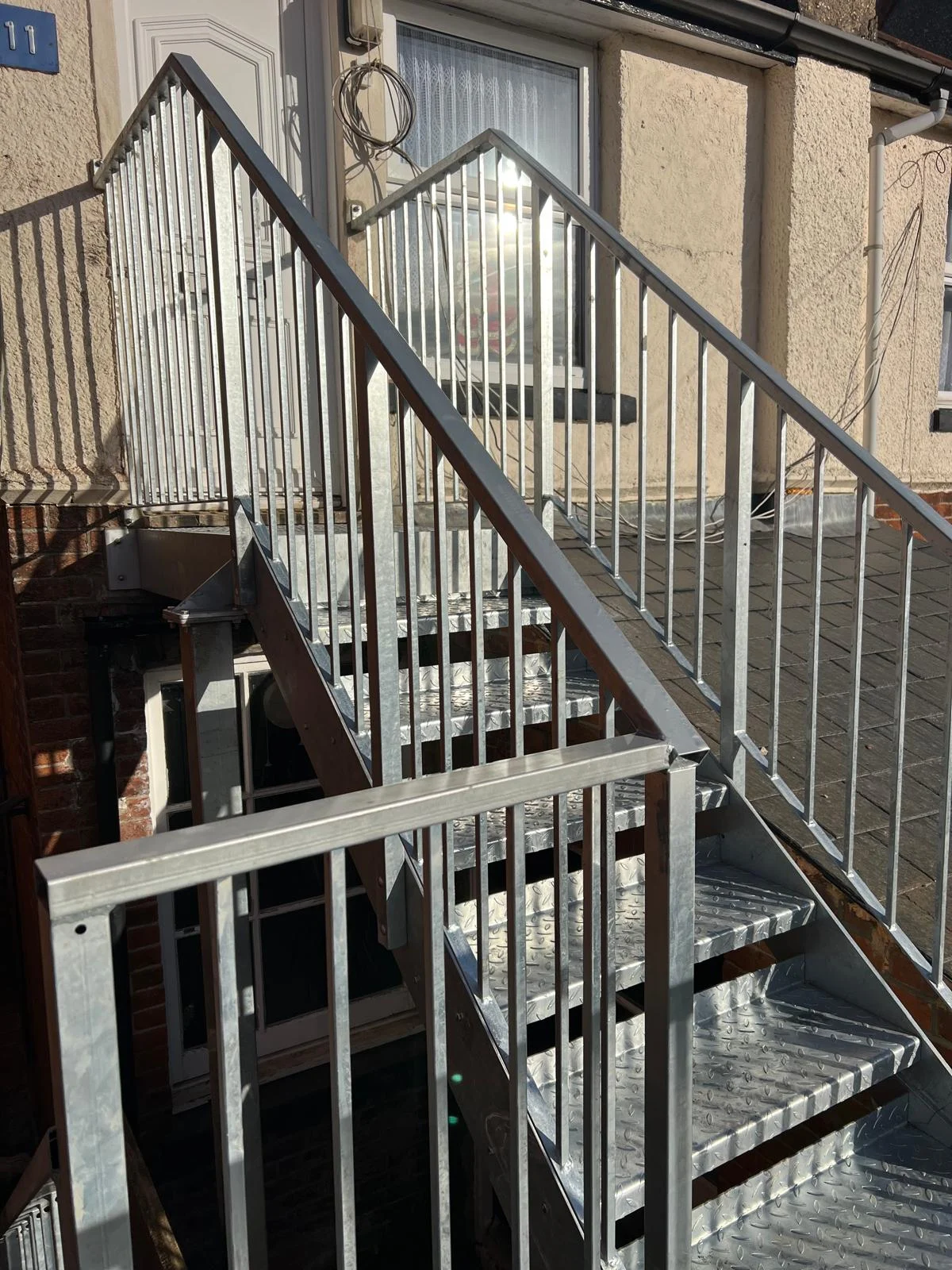


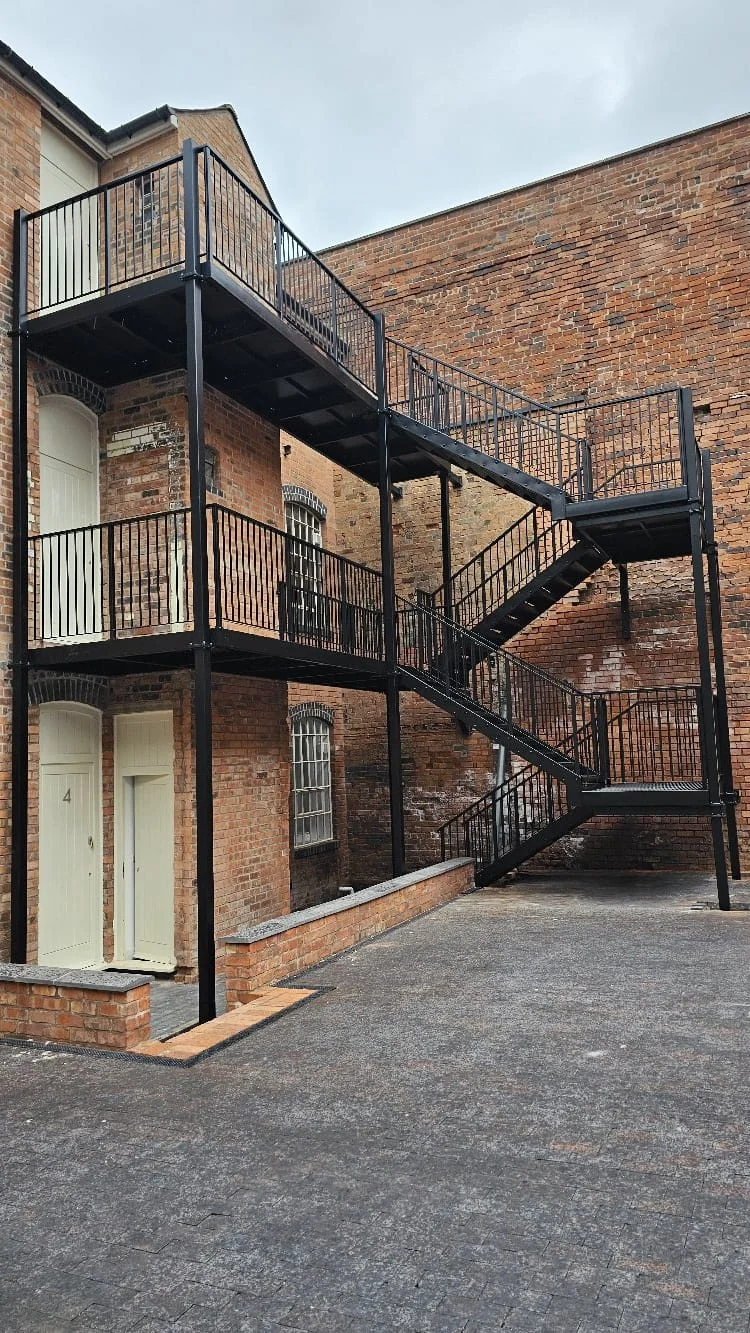
Where industrial access stairs are used
The same basic steel stair can serve very different industrial purposes. The important part is to match the stair to the task, not just to the available space.
Plant room access
Access to mechanical, electrical or service equipment often needs a compact but safe stair with practical handrails and enough room at the top for inspection or maintenance.
Maintenance platforms
Machinery, tanks, roof equipment and production lines may need permanent stairs so maintenance teams can reach equipment safely without relying on temporary ladders.
Factory access stairs
Factories often require steel stairs to reach production levels, raised floors, inspection walkways or equipment zones. Durability and clear access routes are usually the main priorities.
Mezzanine floor stairs
Many industrial stairs are linked to mezzanine floors used for storage, plant, offices or staff areas. The stair should coordinate with the mezzanine frame and guarding.
External service stairs
External stairs may be used for service access, rear access, plant access or building maintenance. These usually need galvanising and careful attention to drainage and exposure.
Warehouse and logistics units
Industrial access stairs in logistics spaces must avoid obstructing racking, loading routes and forklift movement while still providing a clear route to upper levels.
Specification choices that actually matter
Industrial stairs are usually judged by how well they work over time. These are the decisions that affect day-to-day use, maintenance and cost.
Stair width and pitch
The stair should suit the use. Occasional maintenance access may not need the same width as a regularly used staff route, but it still needs to be practical and safe.
- Staff use or maintenance use
- Available footprint
- Equipment carried by users
- Headroom and landing space
Tread type
Mesh, grating and chequer plate all behave differently. The right choice depends on dirt, moisture, drainage, cleaning, slip resistance and whether the stair is internal or external.
- Open mesh for drainage and grip
- Grating for heavy-duty industrial use
- Chequer plate for solid tread surface
- Anti-slip nosings where needed
Finish and protection
External and exposed stairs usually need hot-dip galvanising. Internal stairs may be galvanised, painted or powder coated depending on environment and appearance requirements.
- Hot-dip galvanised steel
- Painted steel for internal use
- Powder coating for visible areas
- Extra care for coastal or harsh sites
Different industrial stair types, different priorities
A stair to a plant platform does not need the same brief as a stair to a busy mezzanine office or a loading-area storage floor.
| Stair type | Main priority | Common specification | Typical information needed |
|---|---|---|---|
| Plant room stairs | Safe access for inspection and maintenance | Steel stair, handrails, compact layout, practical top landing | Equipment location, access frequency, floor levels, photos |
| Platform access stairs | Connection to a raised working level | Steel stringers, mesh or grating treads, guarded platform edge | Platform height, frame details, loading/use, fixing points |
| Factory access stairs | Durability and clear route through a working environment | Galvanised or painted steel, robust handrails, anti-slip details | Layout, production routes, obstructions, preferred stair position |
| Mezzanine access stairs | Staff or storage access to upper level | Straight or return flight, landing, handrails, mezzanine edge guarding | Mezzanine drawings, floor-to-floor height, width, intended use |
| External service stairs | Weather resistance and practical access | Hot-dip galvanised steel, open treads, external-grade fixings | Exposure, site access, building structure, drainage considerations |
Checks to make before manufacturing industrial stairs
Most problems with industrial stairs are caused by missing information at the start: unclear fixing points, unknown floor levels, poor access for installation or a layout that conflicts with equipment.
Check the structure it connects to
The stair needs a reliable fixing strategy at the bottom, top and any intermediate support points.
- Existing steel frame or new platform frame
- Concrete slab or foundation condition
- Wall, column or mezzanine edge connection
- Any movement, vibration or machinery nearby
Check the route around the stair
The staircase should not create a new obstruction or unsafe pinch point in a working industrial area.
- Forklift and pallet movement
- Doorways, shutters and escape routes
- Maintenance access around equipment
- Clear space at the bottom and top landings
Check the environment
Interna