

Glass Balustrade Winchester — Bespoke Heritage Work
Winchester is Hampshire's county town and one of England's most architecturally preserved historic cities. The entire central district is a Conservation Area, the Cathedral and surrounding streets hold Grade I and II* Listed Buildings, and the wider city extends into substantial Edwardian villas (St Cross, Hyde, Fulflood) and the South Downs National Park boundary villages. No marine exposure — pure inland premium heritage work. Bespoke specification, Conservation Officer documentation as standard. From £350/m framed, £450/m frameless — fully installed.

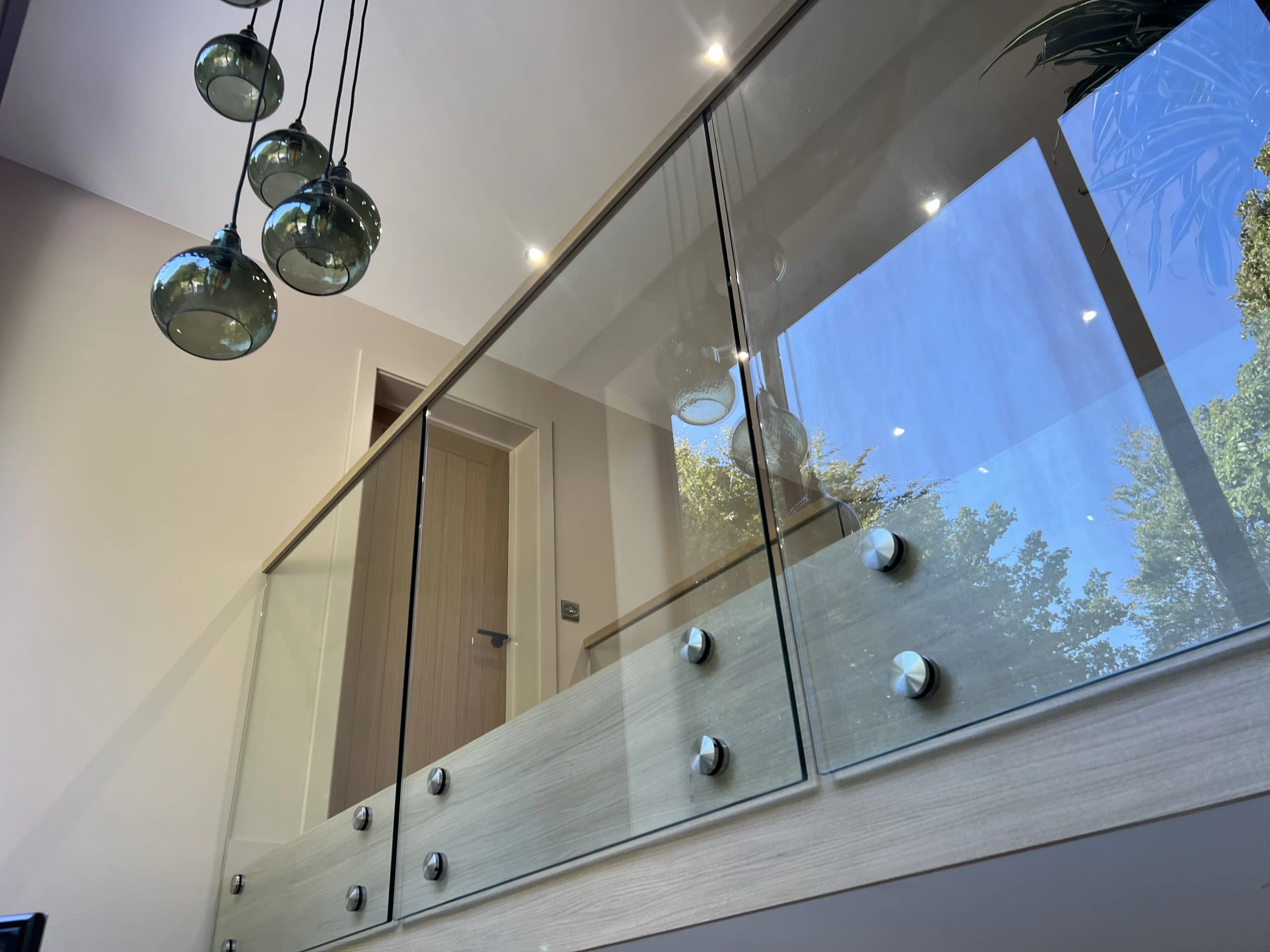
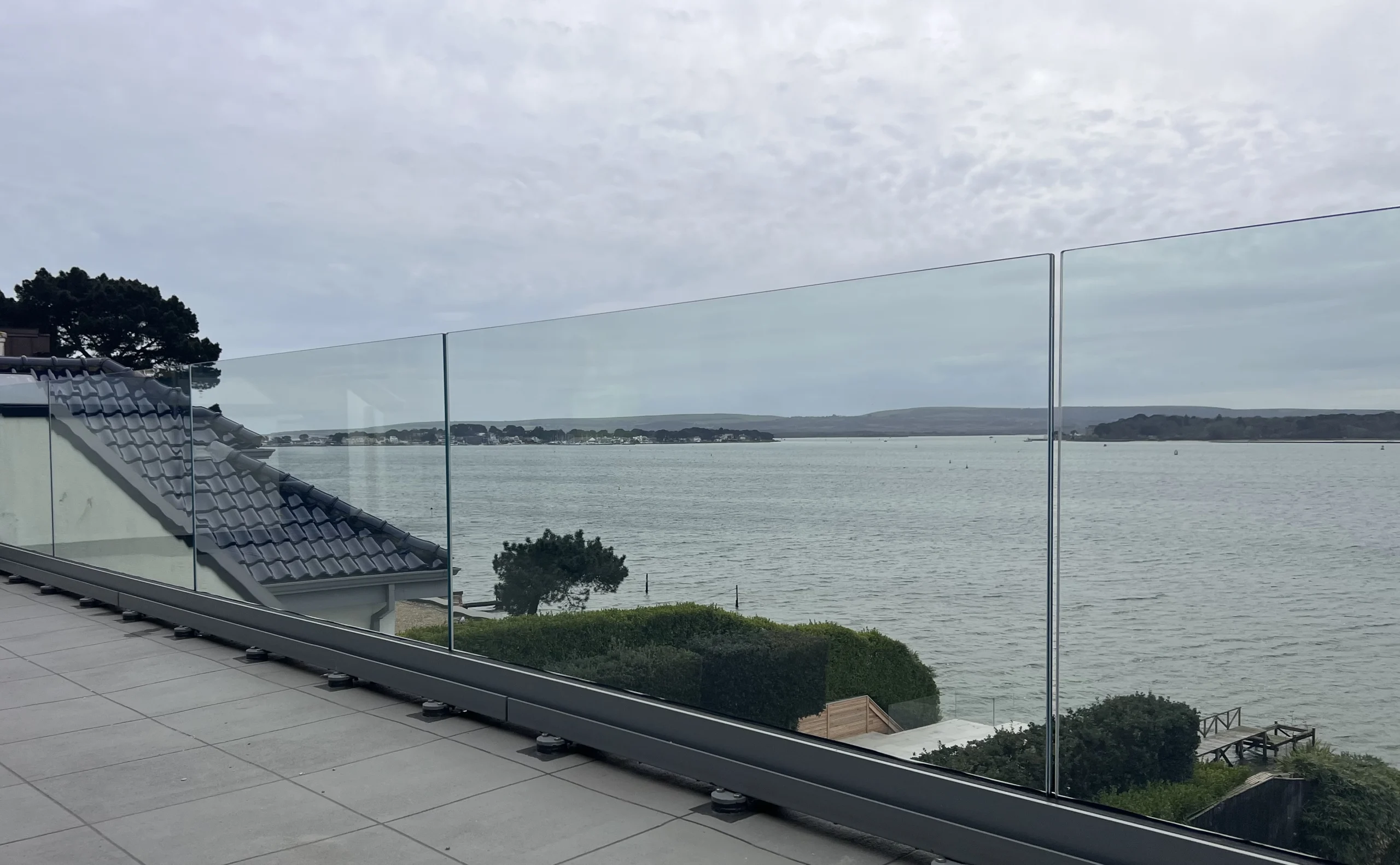

How much does glass balustrade cost in Winchester? A Continox glass balustrade in Winchester starts from £350/m framed or £450/m frameless, fully installed. Heritage-sympathetic specifications for Listed Buildings and Conservation Area properties from £475/m — typically internal staircase work in Pallant-style and Georgian townhouses. No marine premium — Winchester is fully inland, standard 304 stainless specification applies throughout.
Does Continox cover Winchester? Yes — Winchester is one of our closer service areas. We're based in Gosport, 45 minutes from Winchester via the M27 and M3. Coverage spans the cathedral city centre, the surrounding villa districts (St Cross, Hyde, Fulflood, Weeke, Olivers Battery), Twyford, Otterbourne, and the South Downs villages including Chilbolton and Sparsholt.
How long does installation take? 2–3 weeks lead time from order to install. Site time: typically 1–2 days. Add 6–10 weeks for Listed Building Consent where required for external work on Listed properties.
Winchester sits at a unique point in our service area. It is the most architecturally preserved historic city in Hampshire — the entire central district between the Cathedral, the Itchen and the High Street holds Listed Building density comparable to Bath or York. Around 250 Listed Buildings sit within the central Conservation Area, with the Cathedral itself Grade I Listed and the surrounding streets (The Square, The Close, Cathedral Close, Kingsgate Street, College Street) holding Grade II and II* properties in working residential and commercial use. Outside the historic core, the city extends through substantial late-Victorian and Edwardian villa districts (St Cross, Hyde, Fulflood, Highcliffe) and the wider South Downs National Park boundary villages.
Glass balustrade in Winchester is overwhelmingly heritage work. Marine exposure is irrelevant — Winchester sits 12 miles inland with no salt aerosol concern at all. What matters here is finish refinement, Conservation Officer relationship, Listed Building Consent supporting documentation, and specification that holds a respectful architectural dialogue with the period setting. Most Winchester projects we run are internal staircase work — replacing original spindle balustrades on the central staircase of a Georgian or Edwardian property with frameless glass paired with a hardwood handrail. The result is dramatic contemporary visual impact on an unmistakably period architectural foundation.
Glass Balustrade Cost Winchester
Pricing follows our standard per-linear-metre structure. Winchester pricing benefits from two factors: proximity (45 minutes via the M27/M3 is among the shortest in our service network) and no marine premium (Winchester is fully inland). A typical Winchester internal staircase glass balustrade installation of 4m in heritage frameless specification works out at 4m × £475/m = £1,900 fully installed including BS 6180 calculations, brushed stainless hardware, oak or walnut handrail and Conservation Officer supporting documentation if required. A Fulflood or Weeke family-home rear terrace of 6m in standard framed: 6m × £350/m = £2,100 fully installed.
For complete pricing across all glass balustrade specifications, see our glass balustrade page. For the full bespoke staircase context — particularly relevant to Winchester period property staircase upgrades — see our Bespoke Staircase Cost UK guide.
What's Included in the Winchester Price
- Free on-site survey across the Winchester area — cathedral city, St Cross, Hyde, Fulflood, Twyford, Otterbourne and the South Downs villages
- Property context assessment — Listed Building grade, Conservation Area designation, period-architectural setting
- Photorealistic 3D design visuals placed in your actual Winchester property — critical for period properties where finish selection matters significantly
- BS 6180:2011 structural calculations — residential 0.74 kN/m or commercial 1.5 kN/m
- Toughened glass — BS EN 12150 for framed infill; toughened laminated to BS EN 14449 for frameless
- Heritage-sympathetic specification — brushed not polished hardware, hardwood handrails, period-appropriate fixing methodology
- Conservation Officer supporting pack for cathedral city Conservation Area properties where applicable
- Listed Building Consent documentation pack for Grade II, Grade II* and Grade I Listed properties where applicable
- Professional installation by Continox's in-house Hampshire team — no Winchester subcontractors
- UKCA marking & Declaration of Performance handed over on completion
- 5-year warranty against manufacturing defect on all components and workmanship
Glass Balustrade Systems for Winchester Properties
Winchester's property mix divides cleanly into three contexts: cathedral city Conservation Area Listed properties (predominantly internal staircase work), substantial Edwardian and Victorian villa districts requiring contemporary internal updates, and family-home districts where standard specification is the right answer. Continox manufactures four distinct systems covering these contexts — we confirm the right approach at the on-site survey.
Heritage-Sympathetic Frameless
The specification for Listed Buildings and Conservation Area properties — predominantly Winchester cathedral city centre, the Close, The Square, Kingsgate Street, College Street, and the surrounding Conservation Area streets. The challenge is contemporary frameless glass that works against a period architectural setting without aesthetic disagreement. Achieved through brushed (not polished) stainless steel hardware, solid hardwood handrails (oak for Georgian contexts, walnut for late-Victorian and Edwardian), and concealed fixings that respect period stone, brick or render. Most common application: internal central staircase replacing original spindle balustrade.
- 17.5mm toughened laminated glass (BS EN 14449)
- Brushed stainless or bronze-finish hardware
- Oak or walnut solid hardwood handrail
- Concealed fixings respect period substrate
- Conservation Officer documentation included
- Listed Building Consent supporting pack if required
Frameless Standard Balustrade
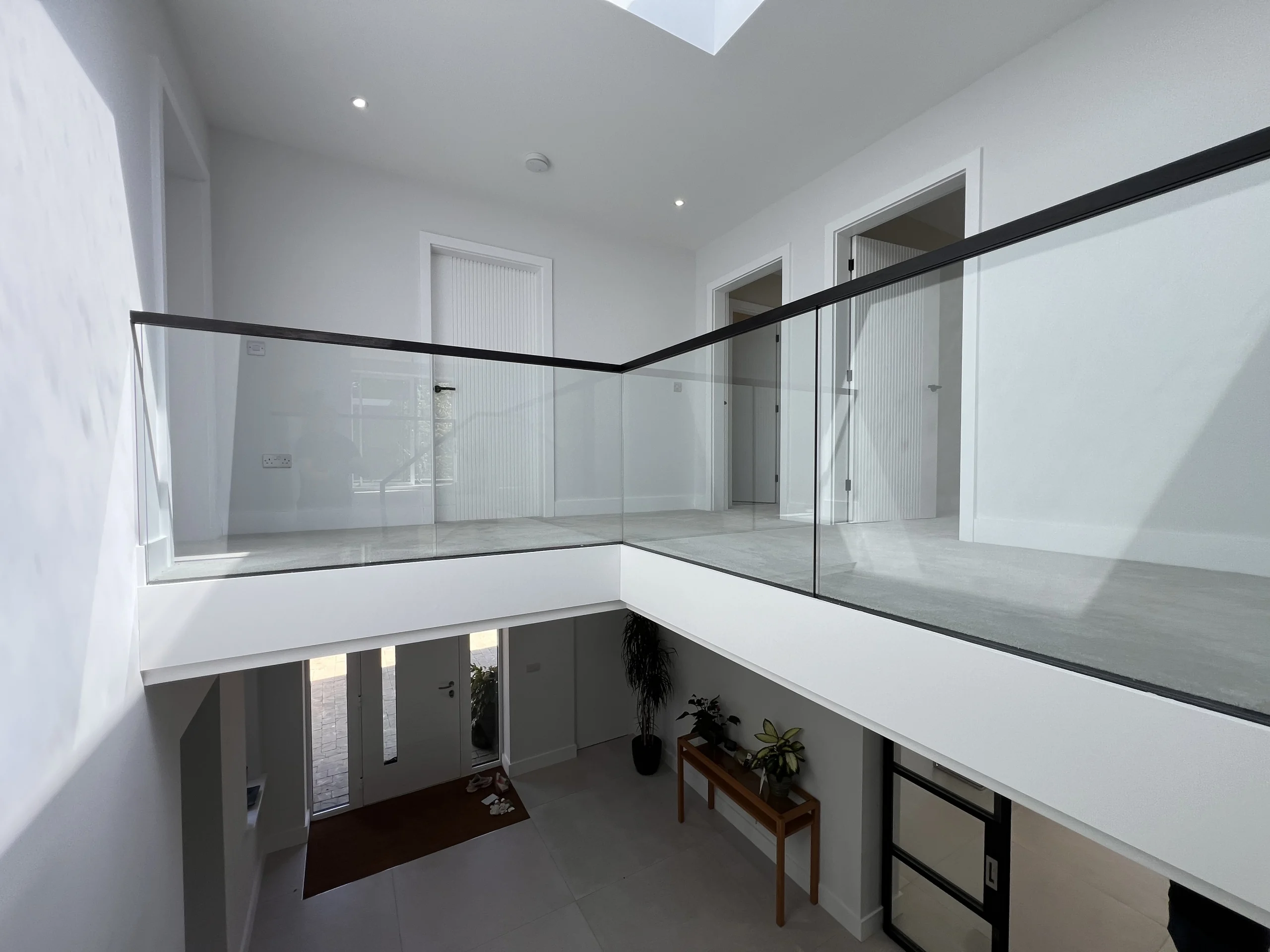
The premium contemporary specification for Winchester's substantial Edwardian and late-Victorian villa districts — St Cross, Hyde, Fulflood, Highcliffe, Stanmore, Olivers Battery. These districts hold large family homes typically undergoing comprehensive contemporary renovation, where frameless glass balustrade replaces original timber spindle work on internal central staircases, landings, and (less commonly) terraces. Standard 304 stainless hardware specification applies — no marine premium.
- 17.5mm toughened laminated glass (BS EN 14449)
- Patch fittings or base channel fixing
- No top rail option — pure frameless aesthetic
- Optional slimline stainless or oak handrail
- Standard 304 stainless hardware throughout
- BS 6180:2011 residential 0.74 kN/m
Framed Standard Balustrade
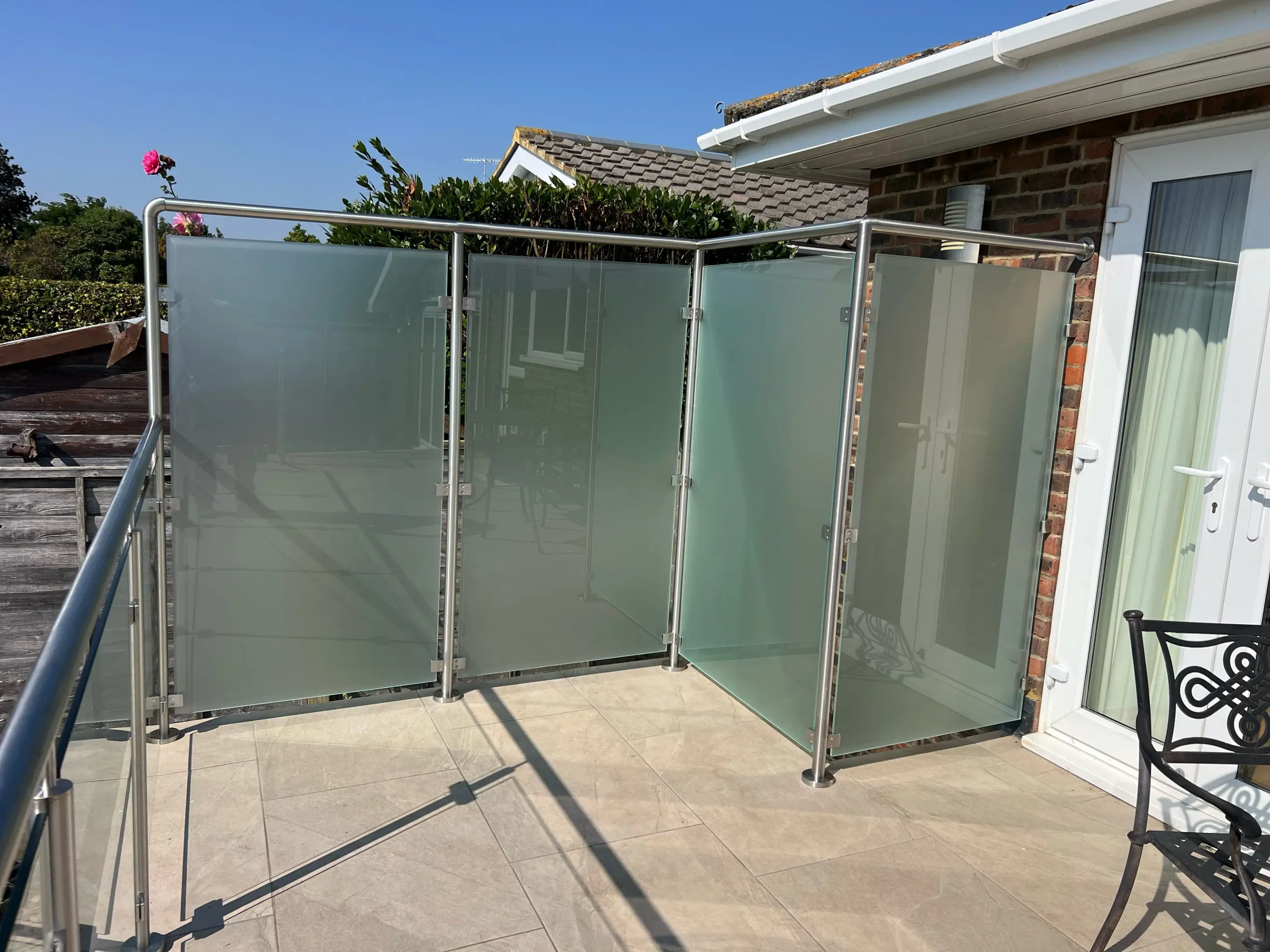
Steel post-and-rail framework holding toughened glass infill panels — the most economical option per linear metre and the system we install most frequently across the wider Winchester area: Fulflood, Weeke, Stanmore, Twyford, Otterbourne, the new-build estates north and east of the city, and the South Downs boundary villages. Particularly suited to rear terraces, decked gardens, family-home external steps, and any installation with longer linear footage where per-metre cost matters.
- 10mm or 12mm toughened glass (BS EN 12150)
- Steel posts at 1.2–1.5m centres
- Top handrail — stainless, painted or hardwood
- Standard 304 stainless or marine powder-coat steel
- Any RAL powder coat colour available
- Lower per-metre cost on longer runs
Country Framed Balustrade
For the substantial country properties in the South Downs National Park villages around Winchester — Sparsholt, Chilbolton, Crawley, Littleton, Headbourne Worthy, Easton, Itchen Abbas, and out to the wider Itchen Valley. Period country properties with substantial outdoor space (rear terraces, decked entertainment areas, balconies over substantial gardens) where standard 304 stainless framed specification works well. Concealed handrail-integrated lighting available where the country setting calls for it.
- 10mm or 12mm toughened glass (BS EN 12150)
- Steel posts at 1.2–1.5m centres
- Substantial hardwood handrail option
- Optional concealed handrail lighting
- Period-appropriate RAL colour matching
- South Downs National Park planning awareness
Winchester Heritage Work — Listed Buildings & Conservation Areas
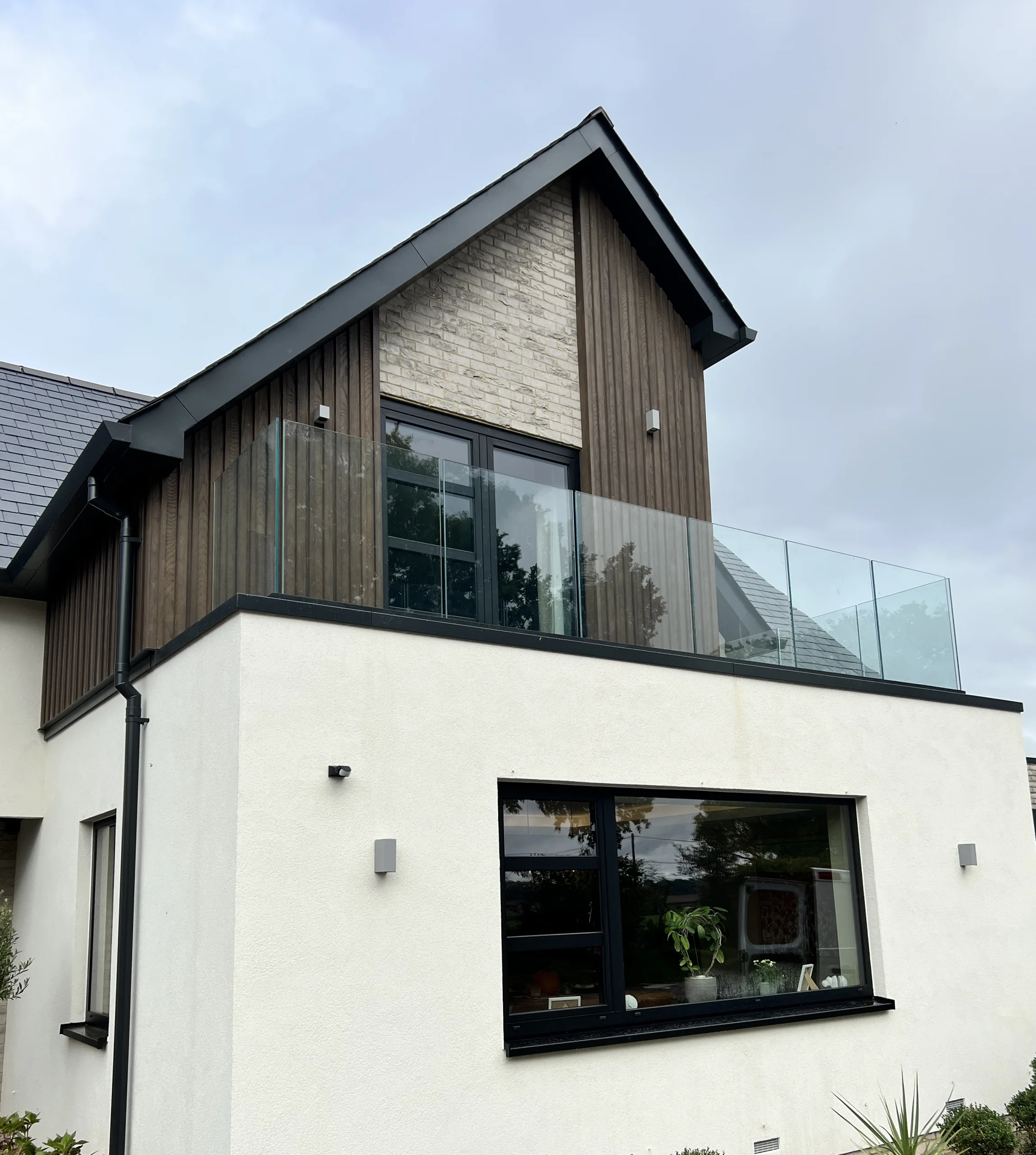
Glass balustrade work in Winchester is largely defined by the heritage and Conservation framework. The central Conservation Area encompasses the historic core from the Cathedral north to North Walls and south to the city wall remnants — an area of approximately 50 hectares containing the highest density of Listed Buildings in Hampshire outside Portsmouth's harbour fortifications. Within this area, virtually every glass balustrade project encounters one or more heritage considerations: Listed Building grade and consent requirements, Conservation Area Article 4 directions, sensitive setting next to other Listed Buildings, period staircase substrate that requires concealed fixing methodology, and finish selection that must hold against the period architectural context.
Listed Building Grades and Consent Requirements
For glass balustrade work, the relevant distinction is between internal and external alterations rather than Listed grade — though the grade affects how rigorously the Conservation Officer will scrutinise an application:
- Grade I Listed (Winchester Cathedral itself, a small number of other properties) — exceptional national interest; any alteration requires careful supporting documentation and significant Conservation Officer engagement
- Grade II* Listed (several hundred properties within Winchester, including College Street and parts of The Close) — particular importance; alterations require Listed Building Consent and supporting documentation
- Grade II Listed (the majority of Winchester central Listed Buildings) — national importance; alterations require Listed Building Consent
- Conservation Area only (not individually Listed) — most other central Winchester properties; external alterations may require Conservation Officer consideration; internal alterations typically don't require formal consent
Internal vs External Work — The Critical Distinction
Most Winchester glass balustrade projects are internal staircase work — and this matters significantly for the consent process. For Listed Buildings, internal alterations may still require Listed Building Consent depending on how the listing description treats the interior, but the threshold and scrutiny are typically lower than for external work. For non-Listed Conservation Area properties, internal staircase glass balustrade typically doesn't require formal consent at all, just standard Building Control.
External work is more complex. Any glass balustrade on a Listed Building external balcony, terrace or other external position requires Listed Building Consent. Continox provides full supporting documentation — drawings showing the design and detail, finish specifications, comparable installation references, written design justification explaining the architectural dialogue with the period setting. Where Conservation Officer approval is required for non-Listed Conservation Area properties, we provide similar documentation. The consent process typically takes 6–10 weeks and we run it in parallel with manufacture wherever possible.
Why Conservation Area specification matters even where consent isn't formally required. Many Winchester glass balustrade projects don't technically require Listed Building Consent or Conservation Officer approval — most internal staircase work, all work on non-Listed Conservation Area properties — but they still benefit from heritage-sympathetic specification. Polished mirror-finish stainless hardware against a Georgian or Edwardian staircase looks visually wrong; the contemporary finish disagrees with the period setting. Brushed stainless with a substantial solid hardwood handrail (oak for Georgian, walnut for late-Victorian/Edwardian) maintains the architectural dialogue. We use 3D photorealistic visuals to demonstrate the finish fit before any commitment, so the period-architectural integration is established and approved before manufacture begins.
What's Included in Every Winchester Project
Every Continox glass balustrade project in Winchester includes the full scope from first site visit to handover with full compliance documentation. The following is included as standard in every fixed-price quotation.
Free Winchester Survey
On-site visit anywhere across Winchester — cathedral city, St Cross, Hyde, Fulflood, Weeke, Twyford, Otterbourne, South Downs villages. Includes Listed Building grade check, Conservation Area assessment and heritage suitability review. No charge.
3D Photorealistic Visuals
Photorealistic renders of your glass balustrade in your actual Winchester property. Critical for heritage properties where finish selection (hardware, handrail timber) must work with the period architectural context. Produced before manufacture, at no charge.
Structural Calculations
BS 6180:2011 balustrade load calculations — residential 0.74 kN/m or commercial 1.5 kN/m as required. Signed by a qualified structural engineer. Required for Building Control submission.
Conservation Documentation
Where Listed Building Consent or Conservation Officer approval applies — full supporting documentation pack: drawings, finish specifications, comparable installation references, design justification statement. Included where required.
UKCA Marking & DoP
All structural steel components carry UKCA marking and a Declaration of Performance under UK Construction Products Regulations — required by Building Control and increasingly by Winchester property insurers.
Heritage-Experienced Team
Installed by Continox's in-house team — experienced with period staircase substrates, concealed fixing methodology that respects historic stone/brick/timber, and the practical realities of working in Listed Building interiors. No subcontractors.

Building Regulations: Heritage + Compliance Standards
Every Continox glass balustrade in Winchester is designed and installed to UK Building Regulations and the relevant British Standards, with the additional Conservation and Listed Building considerations that define so much Winchester work. For full regulatory detail see our Glass Balustrade Regulations guide.
| Requirement | Winchester Specification | Standard |
|---|---|---|
| Balustrade Height — Landing | 1100mm above ground floor | Approved Document K |
| Balustrade Height — Stair Flight | 900mm above pitch line | Approved Document K |
| Balustrade Height — Balcony | 1100mm minimum residential | Approved Document K |
| Horizontal Load — Residential | 0.74 kN/m horizontal | BS 6180:2011 |
| Glass — Frameless / No Top Rail | 17.5mm laminated minimum | BS EN 14449 |
| Glass — Framed Infill | 10mm or 12mm toughened | BS EN 12150 |
| Toughening Standard | Heat-soak tested | BS EN 12150 |
| Stainless Steel — Standard Inland | 304 stainless adequate | BS EN 10088-2 |
| Listed Building Consent | Required for designated properties | P&LBA 1990 |
| Conservation Area Designation | Officer approval may apply | P&LBA 1990 |
| Sphere Rule — No Openings | No 100mm sphere passage | Approved Document K |
| Structural Steel Manufacture | EXC2 minimum | BS EN 1090-1 |
| UKCA Marking | Declaration of Performance | UK CPR 2013 |

How It Works: From Winchester Survey to Install
Every Continox glass balustrade project in Winchester follows the same four-stage process — adapted at the survey for Listed Building grade, Conservation Area status, and period-architectural context. Total lead time from order to installation: typically 2–3 weeks for stock-spec systems on non-Listed properties, longer where Listed Building Consent is required.
Free Winchester Survey
Site visit within 5–7 working days — Winchester is 45 minutes from our Hampshire base via M27/M3. Measure precisely, assess substrate, check Listed Building grade and Conservation Area designation, confirm heritage specification approach. No charge, no surcharge.
Spec & Fixed Price
Photorealistic 3D renders showing finish selection against your actual period setting. Fixed-price quotation including Listed Building Consent or Conservation Officer documentation pack where applicable. Confirmed within 24 hours.
Manufacture & Consent
Glass cut and toughened. Hardware procured — brushed stainless for heritage, standard polished for contemporary. Listed Building Consent or Conservation Officer submission run in parallel with manufacture where required.
Installation & Sign-Off
Installed by our heritage-experienced in-house team — typically 1–2 days on site. Concealed fixing methodology respects period substrate. UKCA documentation and full compliance schedule handed over. 5-year warranty starts on handover.
Glass Balustrade Across Winchester
Continox installs glass balustrade systems across Winchester and the wider city area — from the cathedral city Conservation Area properties at The Close, Cathedral Close, Kingsgate Street, College Street, The Square, North Walls and the historic core, through the substantial Victorian and Edwardian villa districts at St Cross, Hyde, Fulflood, Weeke, Stanmore and Highcliffe, to the South Downs boundary villages at Twyford, Otterbourne, Sparsholt, Chilbolton, Crawley, Littleton and Easton.
Specification is matched to the property: heritage-sympathetic for Listed Buildings and Conservation Area properties, standard frameless or framed for the villa and family-home districts, country specification for the South Downs boundary villages. Every project is priced following a free on-site survey — never from drawings, never from generic catalogue assumptions.
For glass balustrade context across our full UK service area see our main glass balustrade page. For staircase balustrade including bespoke central staircase work — particularly relevant to Winchester period property renovation — see our modern staircase range.
Hampshire Manufacturer — Heritage Experience
Continox is a Hampshire-based bespoke manufacturer — 45 minutes from Winchester via the M27 and M3. We're equipped for heritage glass balustrade work as standard practice rather than as an occasional exception: our installation team is experienced with period staircase substrates and concealed fixing methodology, our manufacturing sources brushed (not polished) stainless hardware and hardwood handrail components from heritage-appropriate suppliers, and we maintain working relationships with Hampshire local authority Conservation Officers including Winchester City Council.
Beyond Winchester, we cover the wider Hampshire region as standard service: Eastleigh, Romsey, Petersfield, Alresford, Bishop's Waltham, and into the South Downs National Park, plus full coastal Hampshire coverage (Portsmouth, Southampton, Gosport, Fareham, Havant) and into Dorset for Bournemouth-Poole heritage country properties.
For external installations see our external staircase page. For balcony-specific solutions see our balcony railings range.
People Also Ask
The most common questions from Winchester homeowners researching glass balustrade — direct answers below, with deeper detail in the FAQ section.
How much is glass balustrade in Winchester per metre?
Glass balustrade in Winchester costs from £350/m framed, £450/m frameless, or £475/m heritage-sympathetic for Listed Buildings and Conservation Area properties. All prices include design, manufacture, BS 6180 calculations, Conservation documentation where needed, and professional installation.
Who installs glass balustrade in Winchester?
Continox is Hampshire-based, 45 minutes from Winchester via the M27 and M3. We specialise in heritage-sympathetic specification for Listed Buildings and Conservation Area properties, alongside standard contemporary specification for villa and family-home districts.
Can I install glass balustrade on a Winchester Listed Building?
Yes — Listed Building Consent is required for external alterations and may be required for internal alterations depending on the listing description. Continox provides full supporting documentation pack and coordinates with Winchester City Council Conservation Officers. Allow 6–10 weeks for the consent process.
Do you need marine specification in Winchester?
No — Winchester is fully inland, 12 miles from the nearest coast. Standard 304 stainless steel hardware specification applies throughout. No marine premium, no specification upgrade for salt exposure considerations.
What handrail material is right for a Winchester period property?
For Georgian and Queen Anne contexts: solid oak (warm grain works with period brick and surviving timber). For late-Victorian and Edwardian villas (St Cross, Hyde, Highcliffe): American black walnut creates the strongest visual fit for the darker period interiors.
How long does glass balustrade installation take in Winchester?
Lead time is 2–3 weeks from order for stock specification on non-Listed properties — among the fastest in our service area thanks to Winchester proximity. Site time: 1–2 days. Add 6–10 weeks for Listed Building Consent where applicable.
Glass Balustrade Across Winchester & Surrounding Area
Continox installs glass balustrade across Winchester and the wider city region. Heritage specification for cathedral city Listed and Conservation Area properties. Free on-site survey, no travel surcharge.
Winchester Glass Balustrade — FAQ
Common questions from Winchester homeowners about glass balustrade specification, Listed Building Consent, Conservation Area considerations, and heritage-sympathetic finish selection.
Free on-site survey across Winchester — cathedral city, St Cross, Hyde, Fulflood, Twyford, Otterbourne, the South Downs villages. Specification matched to property context: heritage-sympathetic for Listed and Conservation Area properties, standard contemporary for villa and family-home districts. Fixed-price quotation within 24 hours.