

Mezzanine Stairs Regulations UK: What to Consider Before Ordering
A practical guide to the questions that should be checked before designing or ordering mezzanine stairs in the UK, including use, stair width, rise and going, landings, handrails, guarding, tread choice, fire safety and Building Control involvement.
This guide is general information only. Mezzanine stair requirements can depend on building use, occupancy, fire strategy, Building Control, insurer requirements and the project designer’s specification. Always confirm the final requirements with the relevant professional or authority before fabrication.
Use decides the brief
A stair used occasionally by staff for storage access is not the same as a stair used by customers, office staff or a high-traffic commercial space.
Building Control may be involved
Many mezzanine projects need review by Building Control, an approved inspector, architect, structural engineer, landlord or insurer before the stair is manufactured.
Do not design the stair last
The stair position, landing, guarding and access route should be planned with the mezzanine layout, not added after the storage floor or platform has already been fixed.
Why mezzanine stair regulations are not one-size-fits-all
People often ask for “standard mezzanine stairs”, but the right specification depends on what the mezzanine is used for and who will use the staircase. A storage mezzanine in a warehouse, an office mezzanine in a commercial unit and a customer-facing retail mezzanine can all lead to different design considerations.
The safest approach is to agree the intended use, access route, stair geometry, guarding and approval route before fabrication starts. Changing those details after the stair has been made can be expensive and avoidable.
Regulation-aware mezzanine stairs start with layout, use and safe access
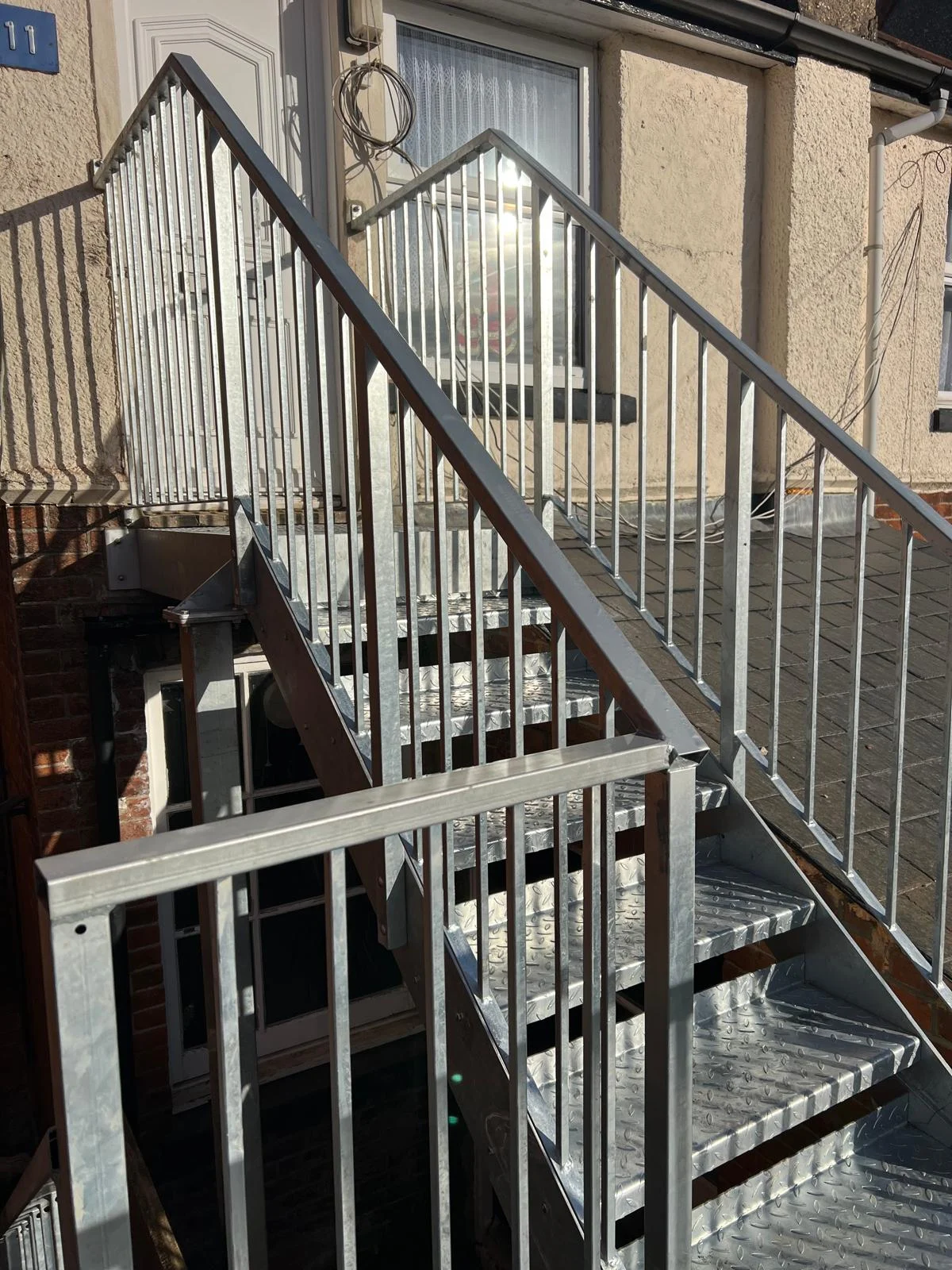


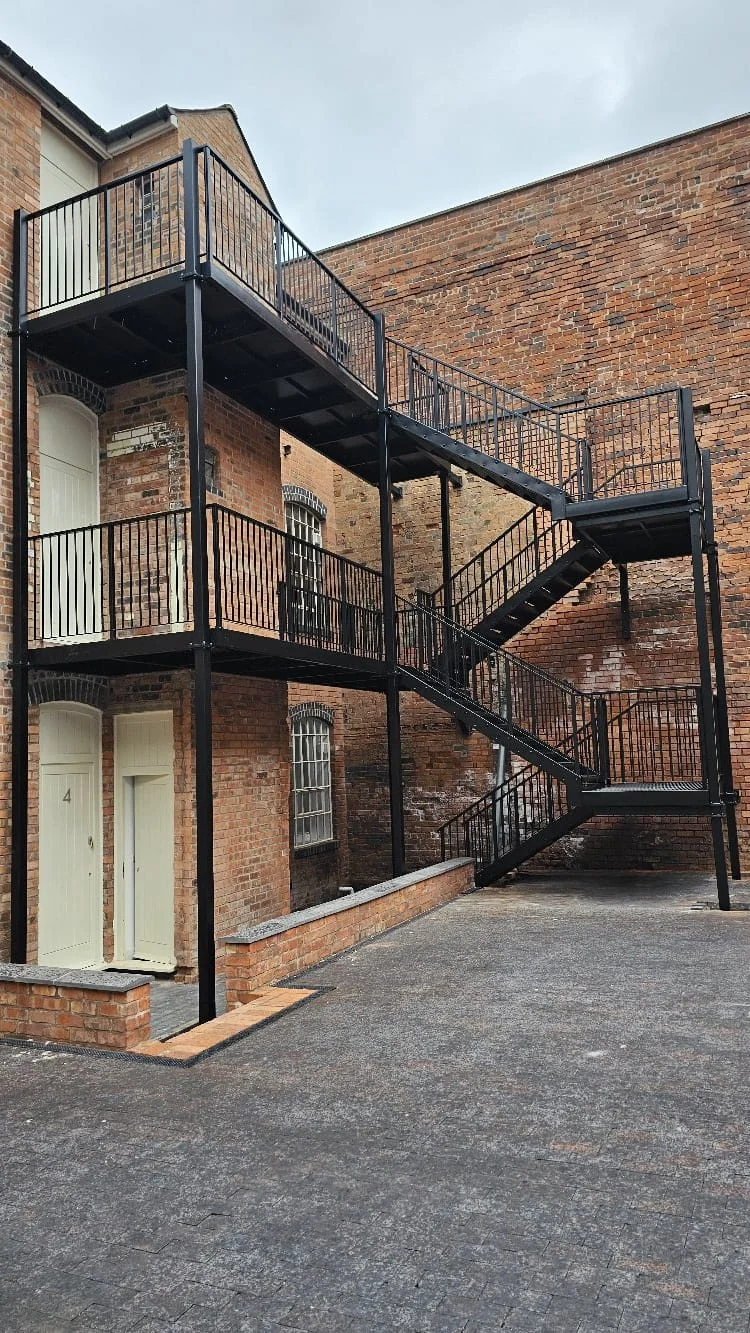
Confirm how the mezzanine will be used
The intended use is the starting point. It affects likely width, access route, comfort, guarding, fire safety considerations and whether other professionals should review the design.
Storage-only mezzanine
Used mainly by staff to access stored goods. The stair still needs to be safe and practical, but the traffic pattern may be lighter than a busy office or retail stair.
Warehouse working level
If staff use the mezzanine throughout the day for picking, packing or work tasks, width, tread comfort and landing layout become more important.
Office mezzanine
An office mezzanine may need a more comfortable stair, cleaner finish and clearer access route than a purely industrial storage stair.
Retail or customer-facing area
If customers or visitors use the mezzanine, the specification may need closer review. Appearance, accessibility, width and safety expectations are usually higher.
Plant or maintenance platform
Occasional maintenance access may allow a more functional industrial stair, but handrails, tread grip and safe standing space remain important.
Part of an escape route
If the stair forms part of a means of escape, the design should be reviewed in the context of the wider fire strategy, not treated as a simple access stair.
Core design areas to check before ordering
These are the practical areas that normally need attention before a mezzanine staircase is manufactured.
Stair geometry
Rise, going, pitch, headroom and overall stair length all affect whether the staircase feels usable and whether it suits the project requirements.
- Floor-to-floor height
- Available footprint
- Rise and going
- Headroom and clearance
Landings and access points
Landings should not be an afterthought. The user needs enough space to step on and off the mezzanine safely, especially at the top edge.
- Top landing size
- Intermediate landings
- Door or gate positions
- Clear routes at top and bottom
Handrails and guarding
The stair and mezzanine edge need suitable protection. Guarding should be coordinated with the stair, landing, mezzanine perimeter and any gates.
- Handrails to stair flights
- Guarding to open edges
- Toe boards where required
- Connection to existing edge protection
Common regulation-related questions
This table is not a legal checklist. It is a practical way to start the conversation before drawings are finalised.
| Question | Why it matters | Who may need to confirm it |
|---|---|---|
| Who will use the stair? | Staff-only, public, office, warehouse or maintenance use can change the expected stair width, comfort and approval route. | Client, architect, Building Control, landlord |
| Is the stair part of an escape route? | If the stair contributes to means of escape, it should be reviewed with the wider fire strategy and building layout. | Fire consultant, Building Control, approved inspector |
| What width is required? | Width affects usability, steelwork, landings, guarding and whether the stair suits the intended occupancy and traffic. | Architect, Building Control, project designer |
| Are landings large enough? | Top and intermediate landings affect safe access, turning, door/gate use and transition onto the mezzanine. | Project designer, structural engineer, Building Control |
| What guarding is needed? | Open edges, stair sides, mezzanine perimeters and platform edges need suitable protection. | Architect, Building Control, structural engineer |
| Is the stair internal or external? | External stairs may need galvanising, slip-resistant tread choice, drainage awareness and weather-resistant fixing details. | Client, fabricator, project designer |
| Is structural review required? | The stair needs to connect safely to the mezzanine, slab, platform or building structure. | Structural engineer, contractor, fabricator |
Four areas that often cause delays
These points are worth checking early because they can affect drawings, cost, manufacture and approval.
Unclear stair width
If width is guessed too early, the stair may later need to be redesigned. The required width should reflect use, traffic and any project-specific approval route.
- Staff-only or public use
- Likely number of users
- Goods or equipment carried
- Clear route at top and bottom
Mezzanine edge not coordinated
The stair has to meet the mezzanine edge safely. Guarding, gates, handrails and top platform details should be agreed together.
- Top landing position
- Existing guarding line
- Gate or opening detail
- Handrail continuity
Fire strategy ignored
If the mezzanine changes occupancy, travel routes or escape arrangements, the stair should be considered as part of the wider fire safety review.
- Means of escape role
- Travel distance and routes
- Occupancy and use
- Building Control comments
External exposure underestimated
Outdoor mezzanine stairs need more than standard painted steel. Exposure, moisture and drainage should be considered from the start.
- Hot-dip galvanising
- Open mesh or grating treads
- Drainage and water run-off
- Corrosion protection expectations
What Continox can provide
Continox can manufacture mezzanine stairs to agreed drawings, dimensions and project specifications. Where approval is needed, the final design should be checked by the relevant professional or authority before fabrication.
Steel stair fabrication
Steel stringers, treads, landings, platforms, handrails and guarding fabricated around the agreed mezzanine layout and access requirements.
- Mezzanine stairs
- Industrial access stairs
- Warehouse stairs
- External steel stairs
Finish options
The finish should match the environment. Internal warehouse stairs, external service stairs and customer-facing commercial stairs may all need different treatment.
- Hot-dip galvanised steel
- Painted steel
- Powder coating
- Open mesh or chequer plate treads
Project coordination
Continox can review drawings and site information before quoting, helping identify practical points that should be clarified before the stair is made.
- Drawing review
- Specification discussion
- Supply-only options
- Installation where suitable
Information to prepare before ordering mezzanine stairs
A good stair quote starts with clear project information. If Building Control or a professional designer is involved, it is better to share their comments before the staircase is finalised.
Where you only have early-stage information, Continox can still review the basic layout and advise what needs to be confirmed before a firm price or manufacture-ready design is agreed.
Useful details to send
Need a mezzanine staircase designed around your project?
For a full service overview, visit the main Mezzanine Stairs UK page. If your project is more industrial or warehouse-focused, the related guides below may also help.
Mezzanine stairs regulations FAQ
Common questions about mezzanine staircase design considerations, Building Control and project approval.
Discuss your mezzanine stair requirements
Send your mezzanine drawings, floor-to-floor height, intended use and any Building Control or engineer comments. Continox can review the information and help prepare a practical steel stair specification for your project.