

Mezzanine Staircase Cost UK: What Affects the Price?
A practical guide for contractors, warehouse owners, commercial landlords and project managers comparing the cost of steel mezzanine stairs in the UK. Learn why height, width, tread type, landings, finish, documentation and installation can change the final quotation.
There is no single fixed price
Mezzanine staircases are normally priced from drawings, dimensions and use case. A simple internal warehouse stair is a very different project from an external galvanised stair with platforms and guarded landings.
The biggest cost drivers are structural
Floor-to-floor height, stair width, number of flights, landings, supports and fixing details usually affect the quote more than the visible finish.
Good information gives a better quote
The most useful details are drawings, floor-to-floor height, preferred width, photos of the area, internal or external location and how the mezzanine will be used.
Why mezzanine stair prices vary so much
A mezzanine staircase is not just a set of steps. It is a steel access structure that has to fit a real building, connect two levels safely and work with the way the mezzanine is used every day.
For one client, the brief may be a straightforward steel stair to a warehouse storage floor. For another, it may be a cleaner powder-coated stair in a showroom, a compact access stair for a plant platform, or a galvanised external stair with a landing and handrails. The material may look similar, but the design, fabrication time and installation work can be very different.
Mezzanine stairs are priced around use, layout and specification
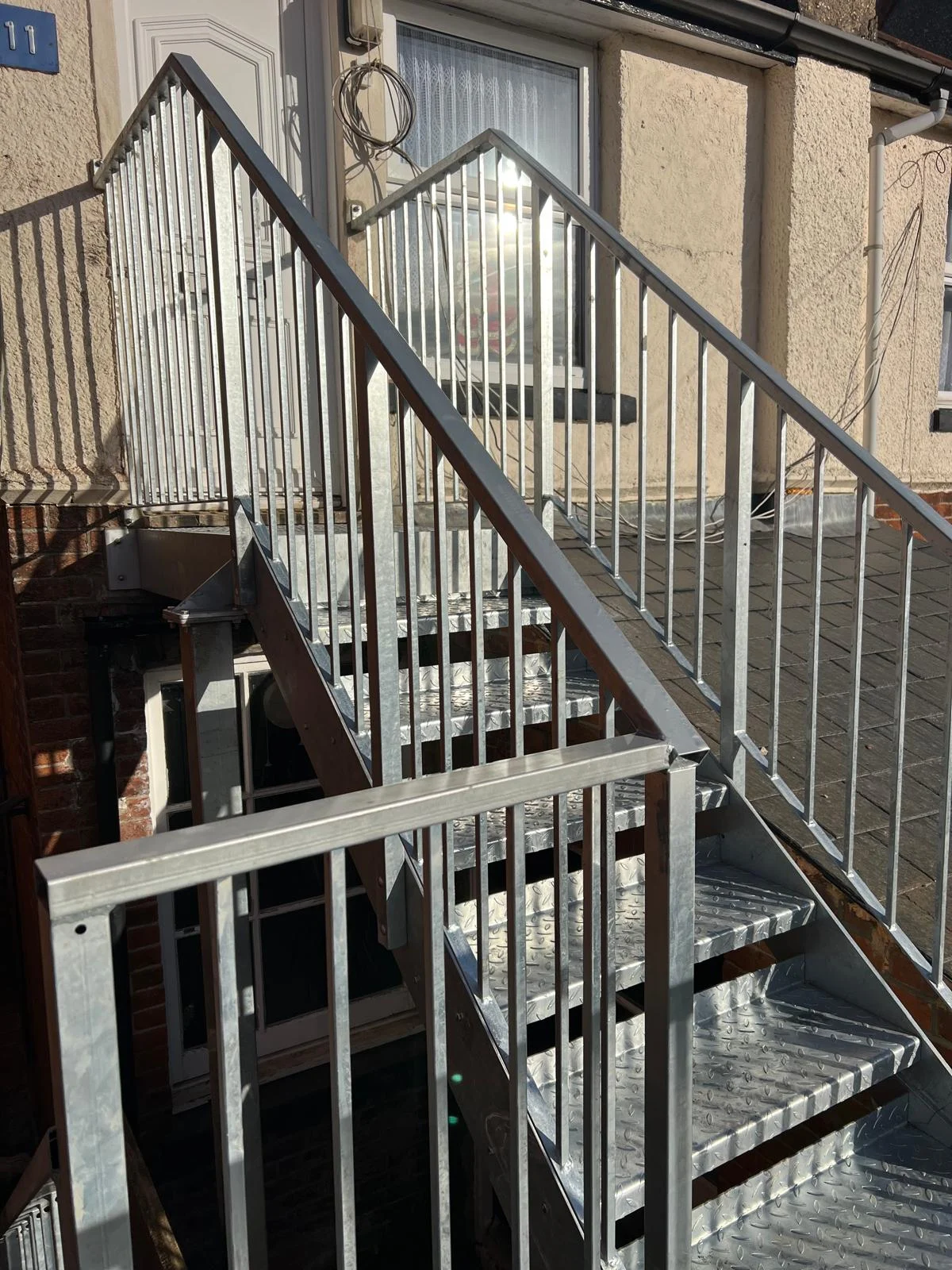


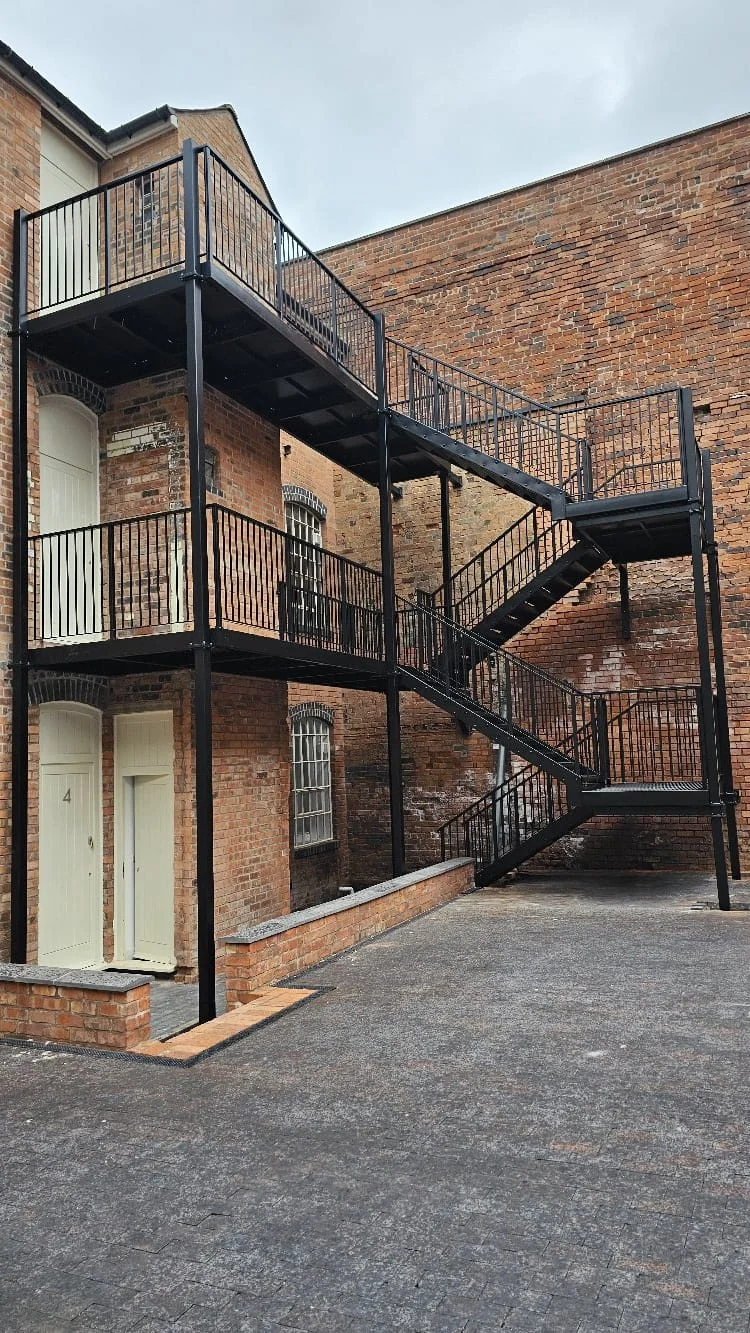
Typical mezzanine staircase cost factors
The table below is not a fixed price list. It shows how each part of the specification usually affects the cost of a steel mezzanine staircase quotation.
High-impact cost items
| Item | Why it changes the price |
|---|---|
| Floor-to-floor height | Controls the number of risers, stair length, steel quantity and whether an intermediate landing may be needed. |
| Stair width | Wider stairs need more steel, wider treads, more guarding and different handling during manufacture and installation. |
| Landings and platforms | Additional platforms add frames, supports, decking, guarding, fixings and more installation time. |
| Fixing conditions | Connection into existing steelwork, concrete, masonry or a new mezzanine frame can change the structural detail. |
These items usually have the biggest effect because they change the structure itself, not just the appearance.
Medium-impact cost items
| Item | Why it changes the price |
|---|---|
| Tread type | Mesh, open grating, chequer plate and anti-slip nosings all have different material and fabrication costs. |
| Finish | Hot-dip galvanising, powder coating or a combined finish will affect cost, especially for external or visible staircases. |
| Handrails and guarding | Specification depends on the use of the mezzanine, stair layout, required guarding and the client’s design preference. |
| Supply or installation | Supply-only pricing is different from a package that includes survey, delivery, site labour and installation coordination. |
These items can still make a noticeable difference, especially when the staircase is external, customer-facing or part of a wider commercial project.
Eight things that affect mezzanine stair pricing
If you want a realistic quote, these are the details that matter most. Even small changes in width, landing layout or tread specification can change the amount of steel, labour and finishing work required.
Floor-to-floor height
The vertical height between the lower floor and the mezzanine level controls the number of steps, the stair pitch and the overall footprint. A taller mezzanine can mean a longer flight or a landing-based layout.
Available footprint
Some sites have plenty of room for a straight flight. Others need a dog-leg, return flight or compact layout to avoid doors, racking, machinery or walkways. Restricted space usually means more design work.
Required stair width
A staff-only access stair, warehouse stair and customer-facing commercial stair may all have different width expectations. Wider stairs are more comfortable but increase material, tread and guarding costs.
Tread specification
Mesh, grating and chequer plate are all common on mezzanine stairs. The best option depends on internal or external use, slip resistance, cleaning, appearance and how the stair will be used day to day.
Landings and top platforms
Landings make the stair more practical and may be necessary for the layout, but they add extra steelwork, guarding, support and connection details. Large platforms can become a significant part of the quote.
Internal or external location
External mezzanine stairs usually require hot-dip galvanising and weather-friendly detailing. Coastal, exposed or industrial environments may need a more robust finish than a simple internal warehouse stair.
Guarding and handrails
Handrail and guarding requirements depend on the use of the stair, the building type and the layout. A basic industrial handrail is different from a more refined commercial balustrade detail.
Delivery and installation
Access to site, unloading, working hours, lifting requirements, existing structure and whether installation is included all affect the total project cost. Supply-only can be simpler if a contractor is already managing the site.
Supply-only vs full installation
One of the most important pricing questions is whether you need the staircase manufactured to agreed drawings for your own contractor, or whether you want Continox to handle a fuller package.
Supply-only mezzanine stairs
This route is often suitable for contractors, main builders, mezzanine floor companies or commercial clients who already have a site team and approved drawings.
- Fabrication to agreed specification or drawings
- Steel stringers, treads, landings and handrails as required
- Galvanised or powder-coated finish options
- Delivery to site or agreed collection arrangement
- Good option when the site team handles installation
Design, manufacture and installation
This route is better when the client needs more support with the layout, survey, site coordination and final installation of the mezzanine staircase.
- Review of layout, floor-to-floor height and stair position
- Design and fabrication based on the agreed project scope
- Manufacture, finish, delivery and installation coordination
- Useful for commercial and more complex access projects
- Subject to project location, access and scope confirmation
How to get a more accurate mezzanine staircase quote
The fastest way to price mezzanine stairs is to start with the right information. A quick description can help, but drawings, dimensions and photos make the quote much more reliable.
If you do not have full drawings yet, send what you have. Even a basic layout with floor-to-floor height, stair position and photos of the area is enough for an initial conversation.
Send these details if available
Need a bespoke steel mezzanine staircase?
Continox designs, manufactures and supplies steel mezzanine staircases for warehouses, factories, retail units, offices, storage floors and industrial access platforms across the UK. For the full service overview, visit our main Mezzanine Stairs UK page.
Mezzanine staircase cost FAQ
Common questions about steel mezzanine stair pricing, specification and quotation requirements.
Request a mezzanine staircase price
Send your drawings, floor-to-floor height, preferred stair width, photos and any project requirements. Continox can review the information and provide an initial budget estimate for your steel mezzanine staircase.