
UK Staircase Trends 2026 — What's Actually Being Built
Most "trends" articles are written from a Pinterest scroll. This one is written from the workshop floor. After ten years of designing, fabricating and installing bespoke staircases across the UK, we have a clear view of what homeowners and architects are specifying right now — and which ideas have quietly disappeared from briefs over the past 18 months. This guide covers the seven staircase trends defining UK projects in 2026: floating designs, frameless glass balustrades, the oak + black steel pairing, factory-integrated LED, sculptural curves, monolithic stone treads, and the broader move toward quiet luxury. Each section explains what the trend looks like, why it's working, and the specification choices that separate a 2026 staircase from a 2018 one.
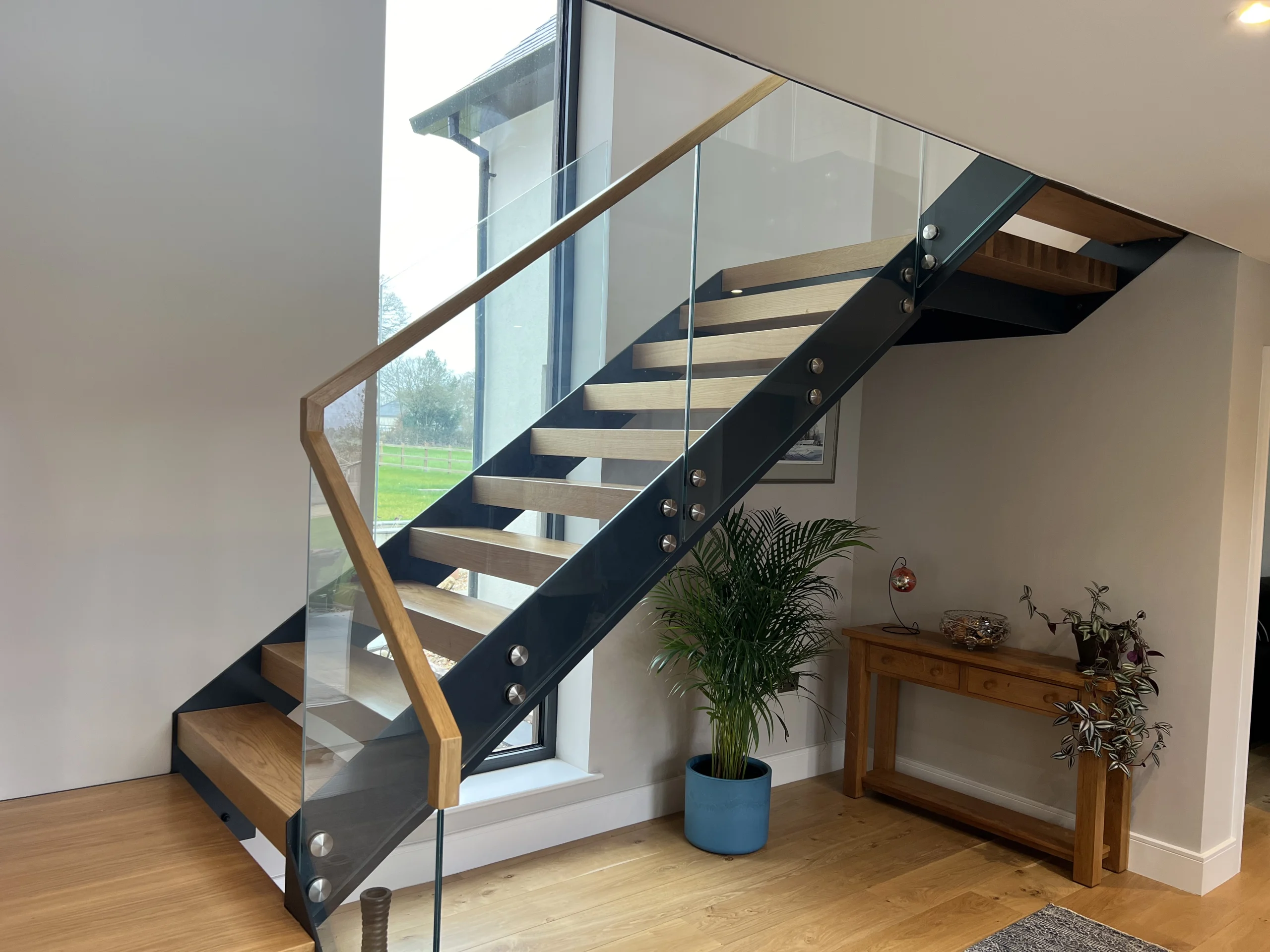
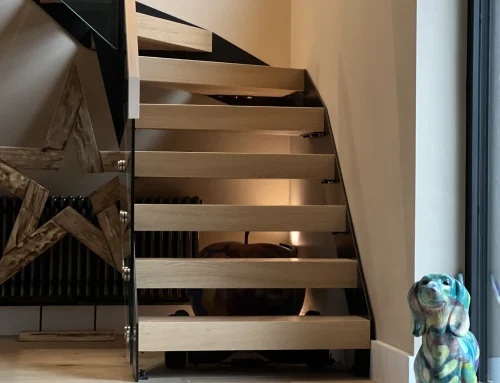
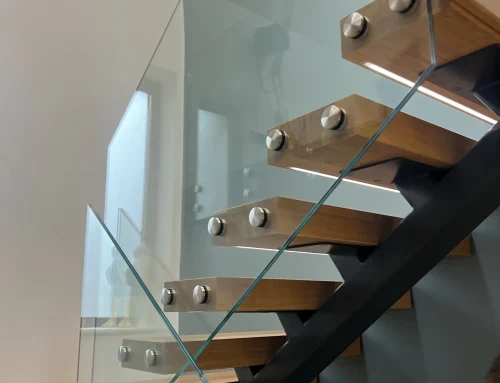
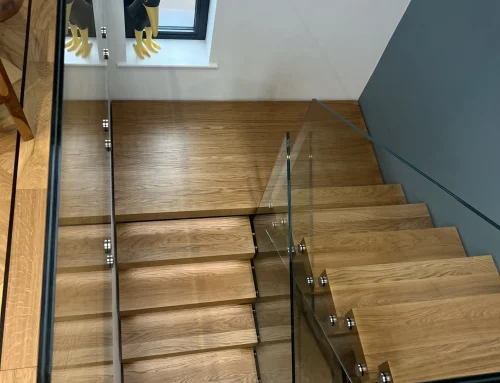
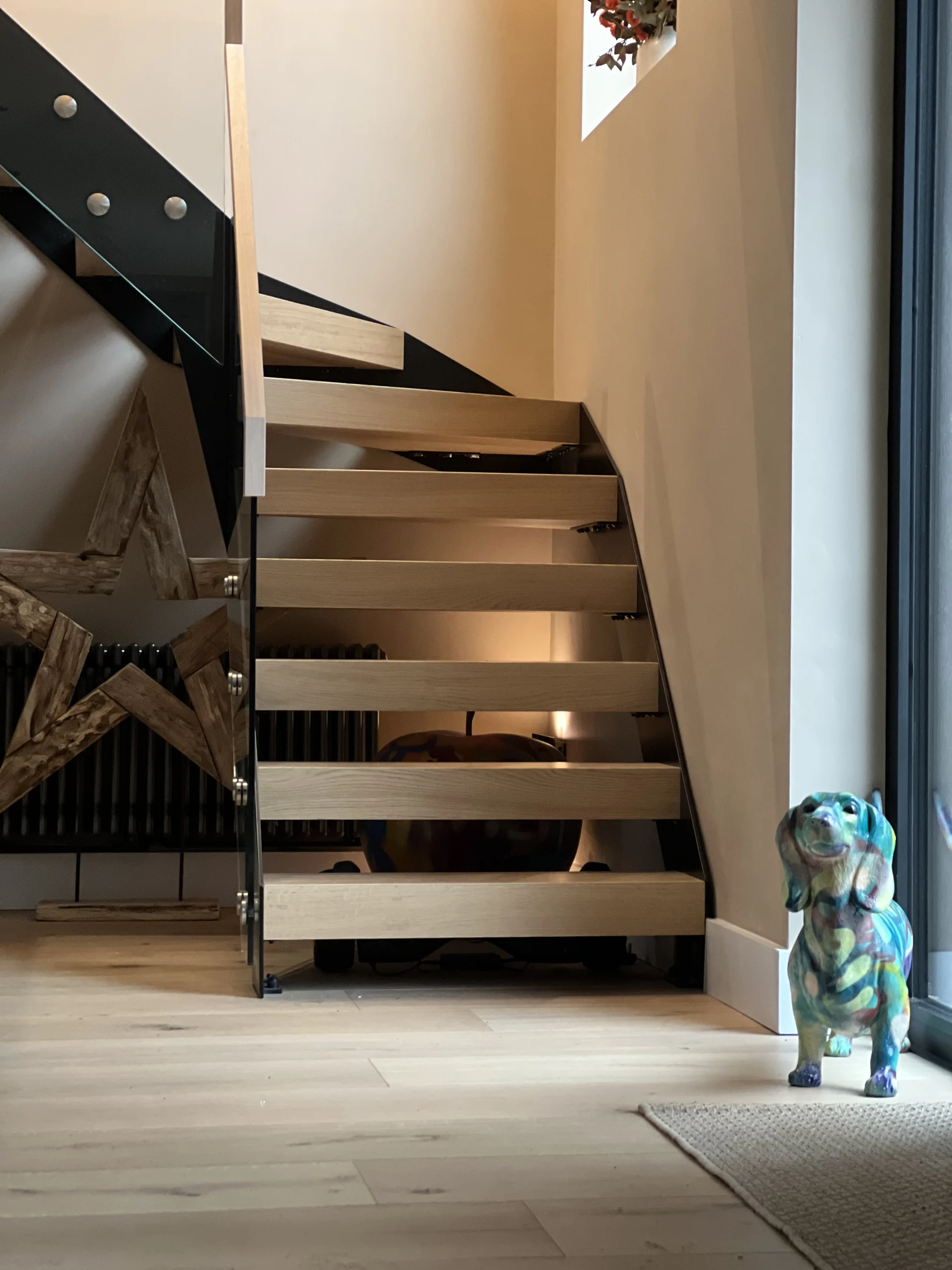
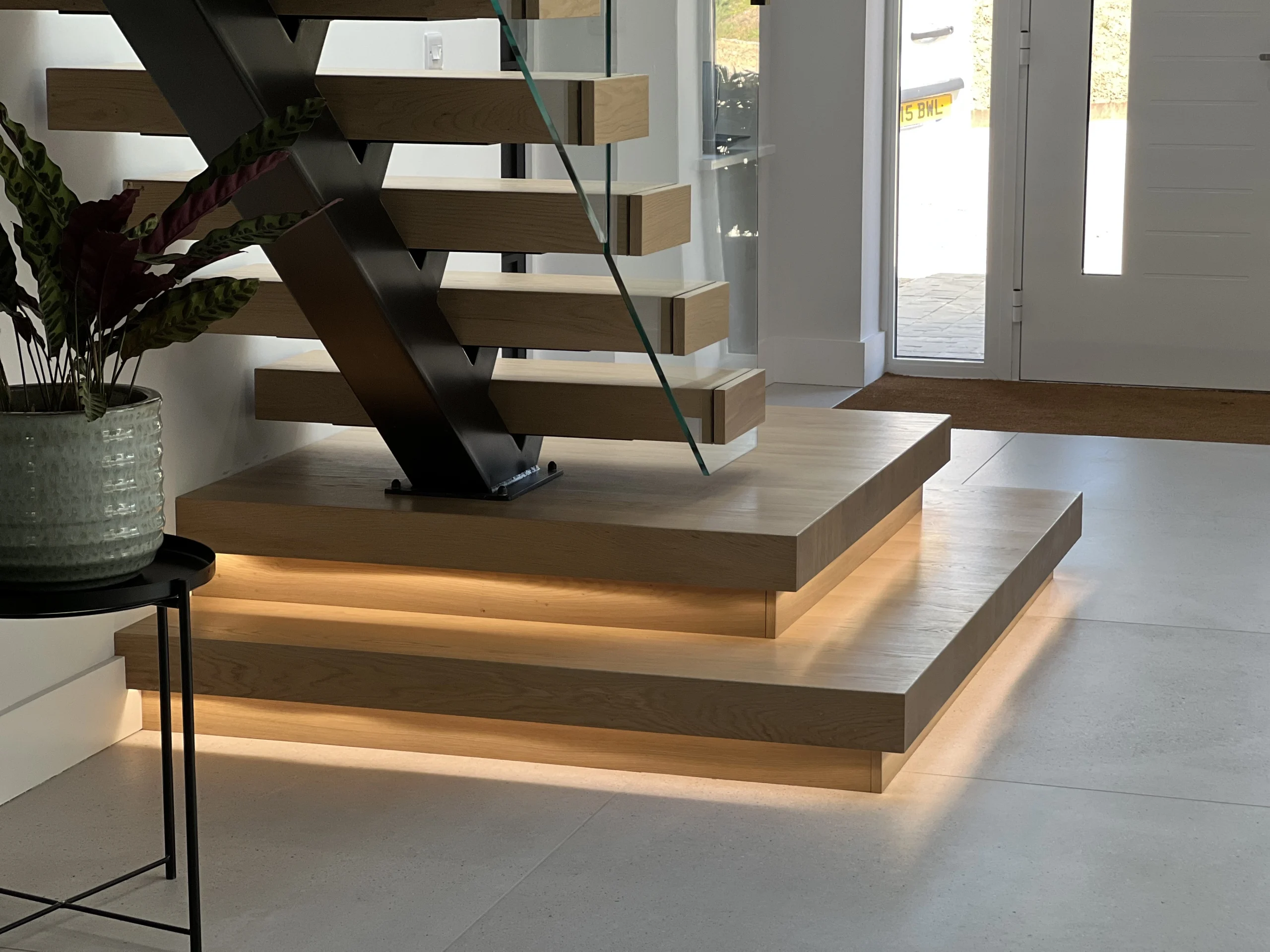
Floating staircase, frameless glass balustrade, oak treads on a black steel central spine — the four design moves that define UK staircase trends in 2026.
The seven UK staircase trends defining 2026 are: floating staircases (visually weightless treads on a hidden central spine), frameless glass balustrades (now the default specification for premium projects), oak treads paired with black steel (warmth + precision), factory-integrated LED tread lighting, sculptural curved and helical forms, monolithic stone or solid timber treads at 80–100mm thickness, and quiet luxury detailing — minimal hardware, considered proportion, no decorative noise. Together these define a single direction: the staircase as a piece of architecture, not a piece of joinery.
Why 2026 Looks Different From 2018
The shift over the past five years has been quieter than the previous decade's revolution from carpeted timber to glass-and-steel, but it's just as significant. The 2018 brief asked for "modern" — typically meaning tubular steel posts, framed glass infill, lacquered oak treads, and chrome handrails. The 2026 brief asks for "calm" — frameless glass, satin or matte black steel, untreated or oil-finished oak, and either no handrail or a recessed one. The volume of material has gone down. The thickness of what remains has gone up.
Two forces are driving this. First, homeowners now treat the staircase as part of the architecture rather than a piece of joinery — which means it has to integrate with the broader interior scheme rather than announce itself. Second, frameless glass and structural steel have both become more accessible, so what used to be a £25,000+ specification now starts at around £8,500 for a properly engineered floating staircase. The premium end has moved with it; what was premium in 2018 is mid-market in 2026.
The 7 Staircase Trends — Defining 2026
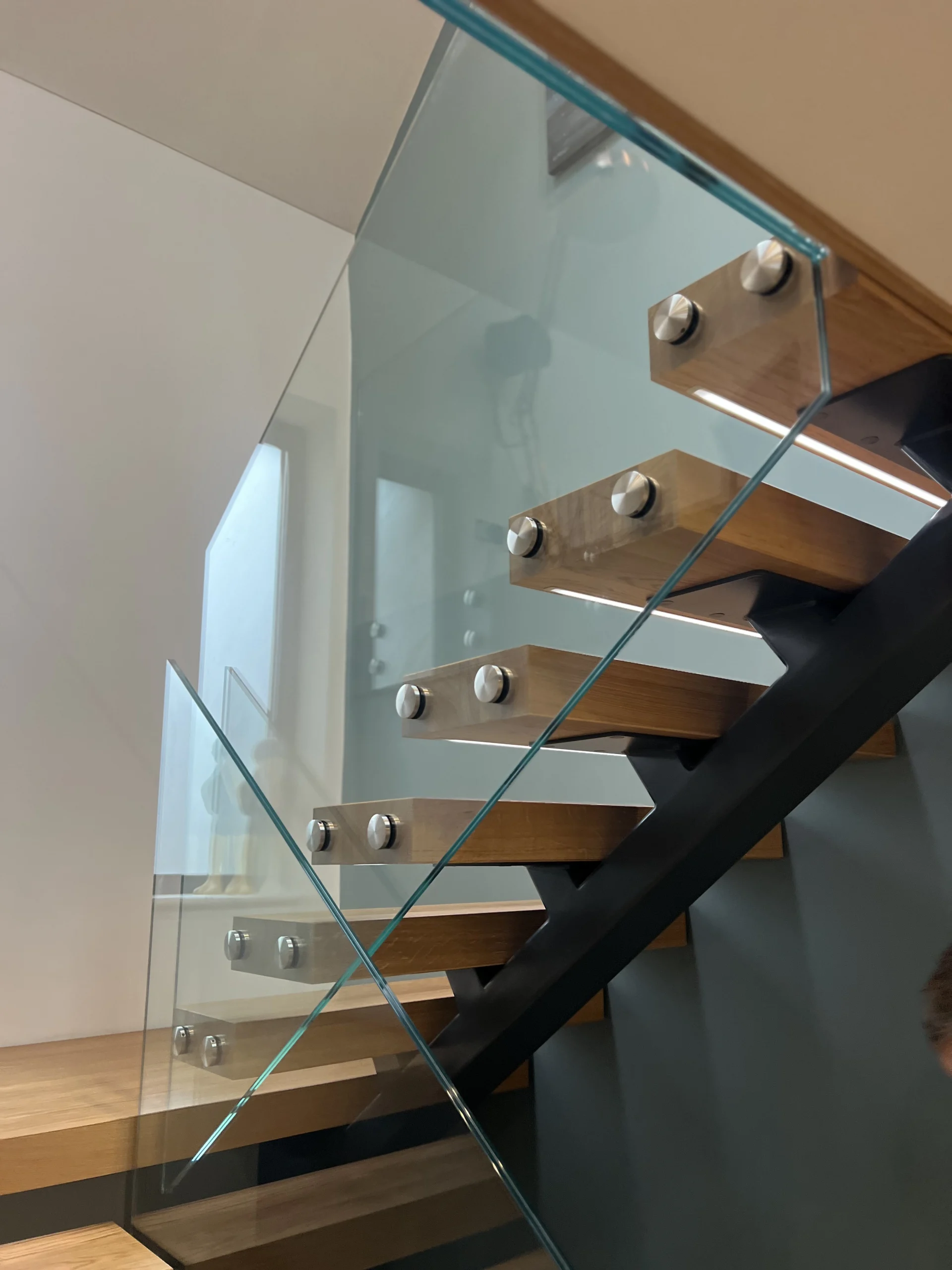
Floating staircases are the single most-specified design on UK premium projects in 2026. The treads appear suspended — no visible stringers, no spindles, no underside structure — typically supported on a single steel spine running through the centre of the flight, with hidden tread brackets cantilevered out to each tread. The visual effect is dramatic and architectural; the structural reality is that the spine carries everything, with tread loads transferred back to a single beam and out to a wall or floor connection.
The reason floating designs dominate is partly aesthetic — they read as light and contemporary — and partly practical. In open-plan layouts, removing visual mass below the staircase preserves sightlines, lets daylight travel, and makes the space feel larger. The detail work matters: tread thickness, bracket geometry, and how cleanly the spine meets the floor and the wall determine whether the staircase reads as architectural or as a kit assembly. Floating staircases at Continox start at £7,900 and are engineered around a 150×100mm RHS central spine with concealed tread supports.
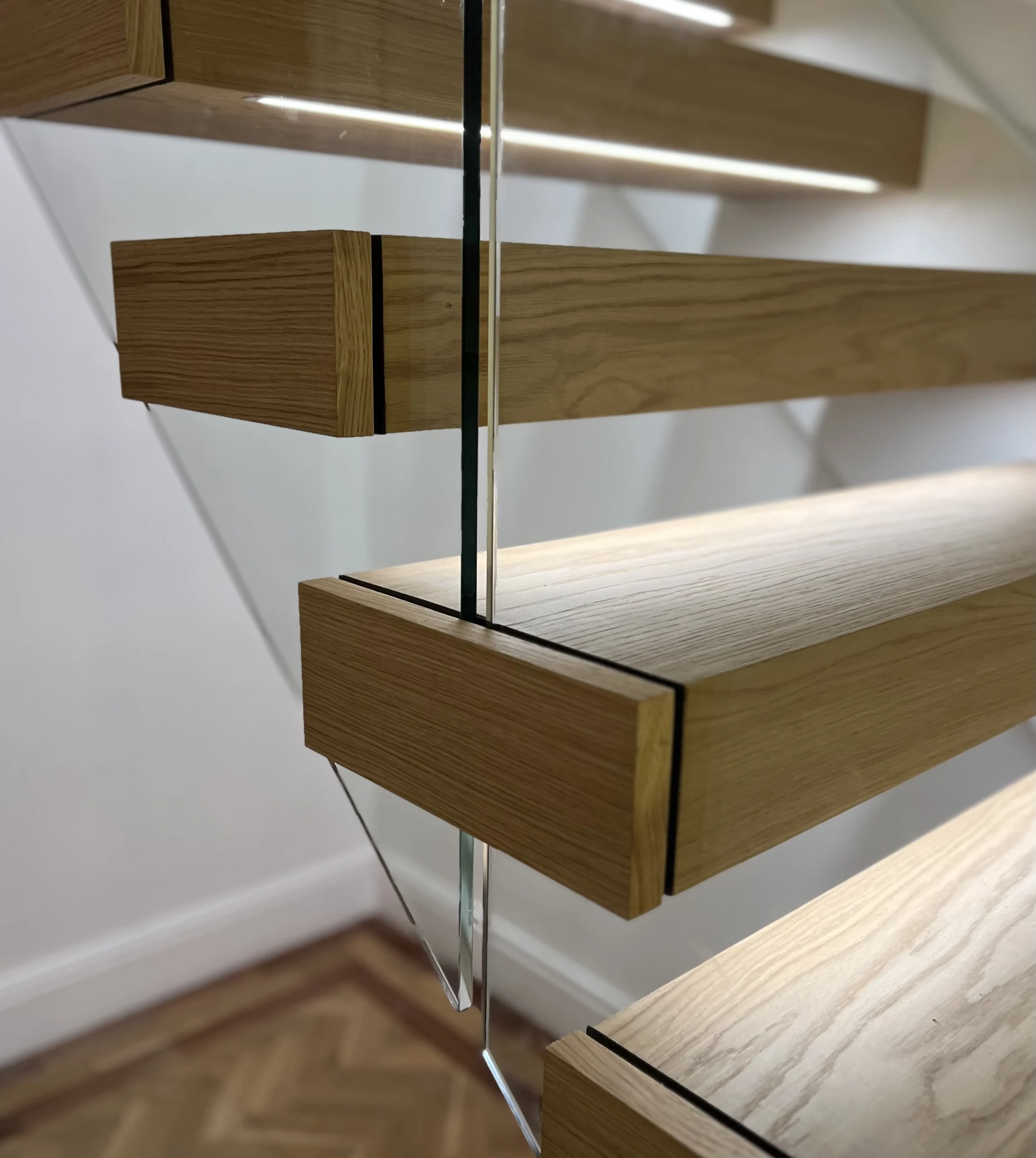
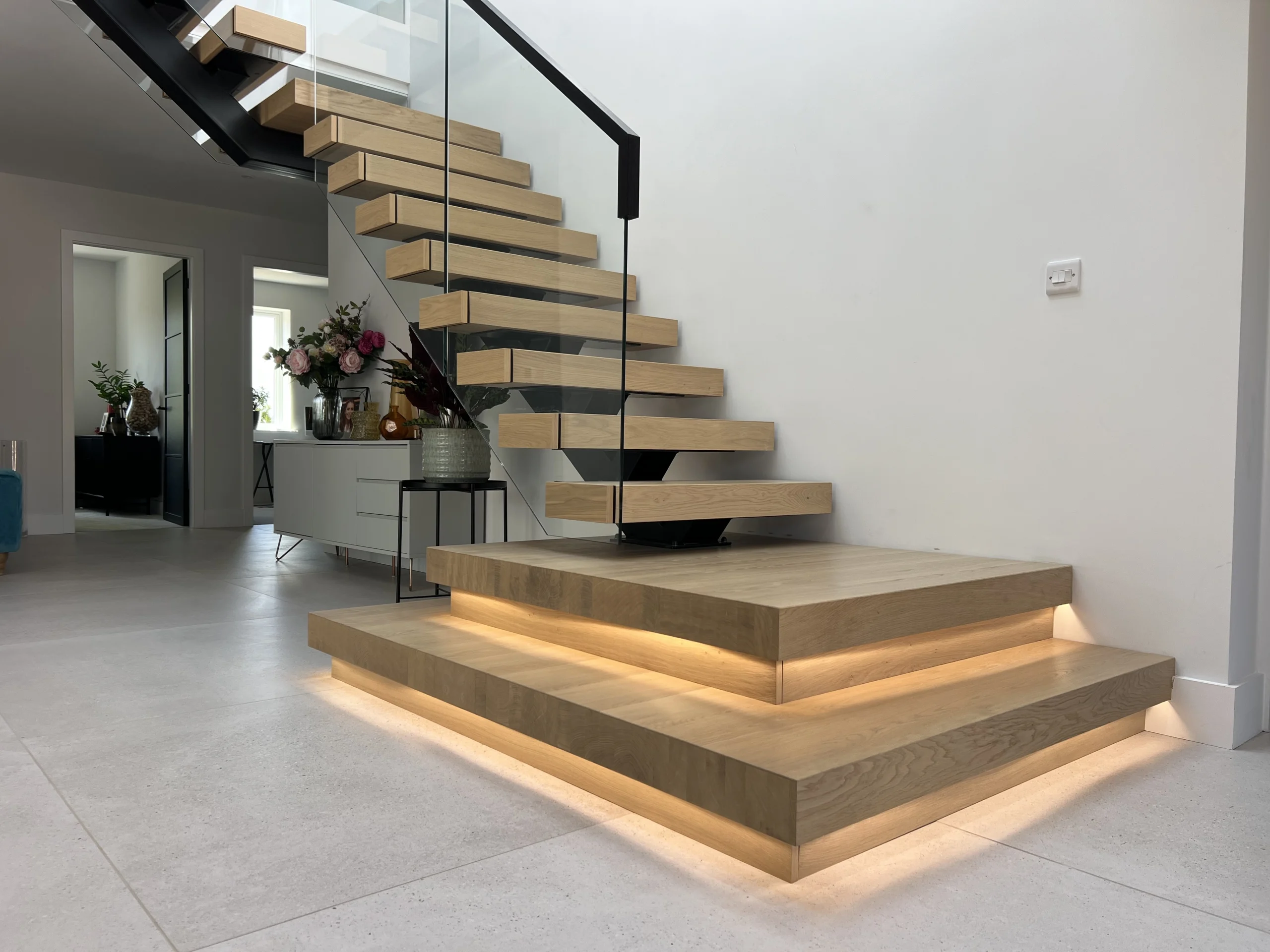
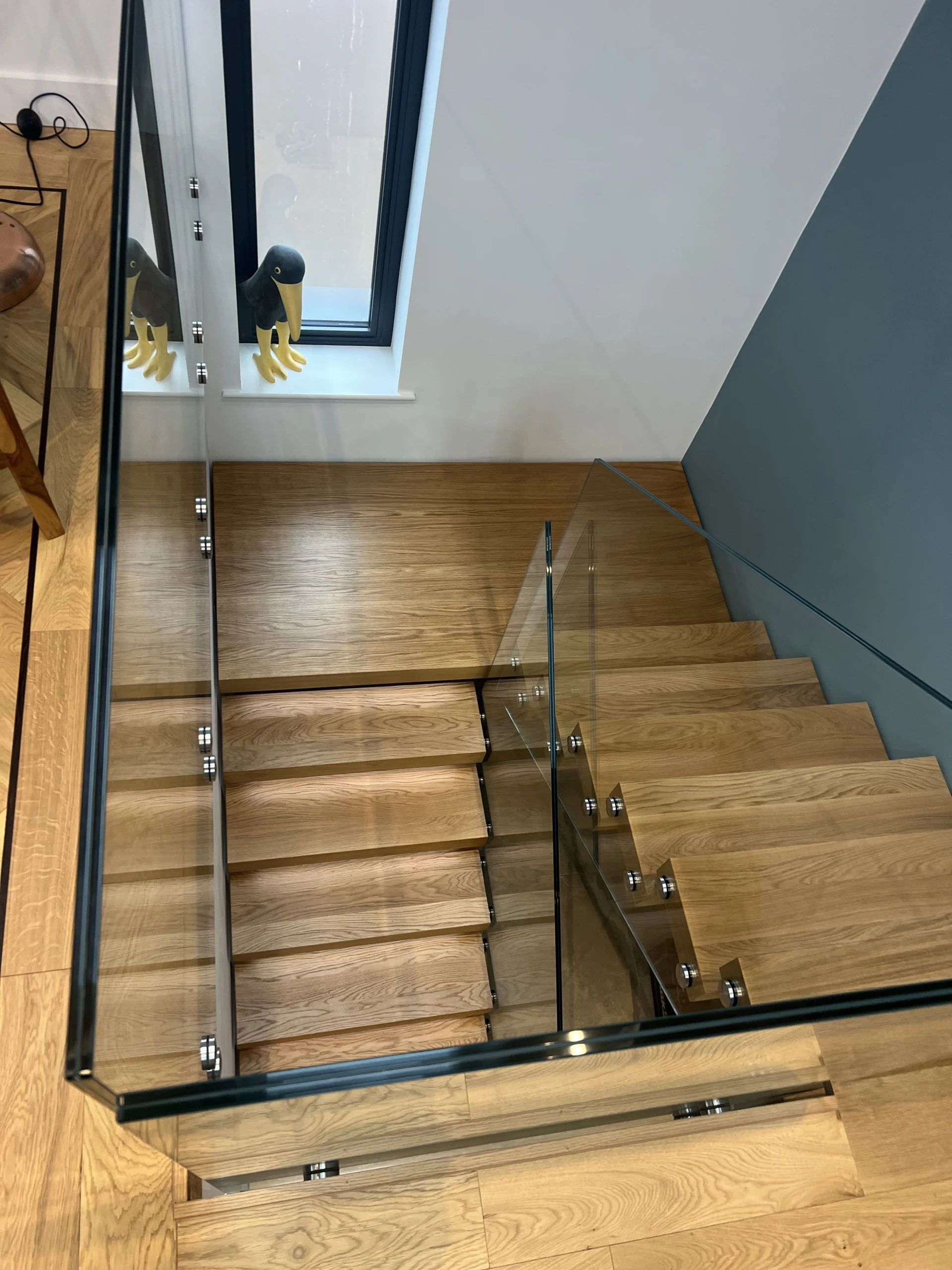
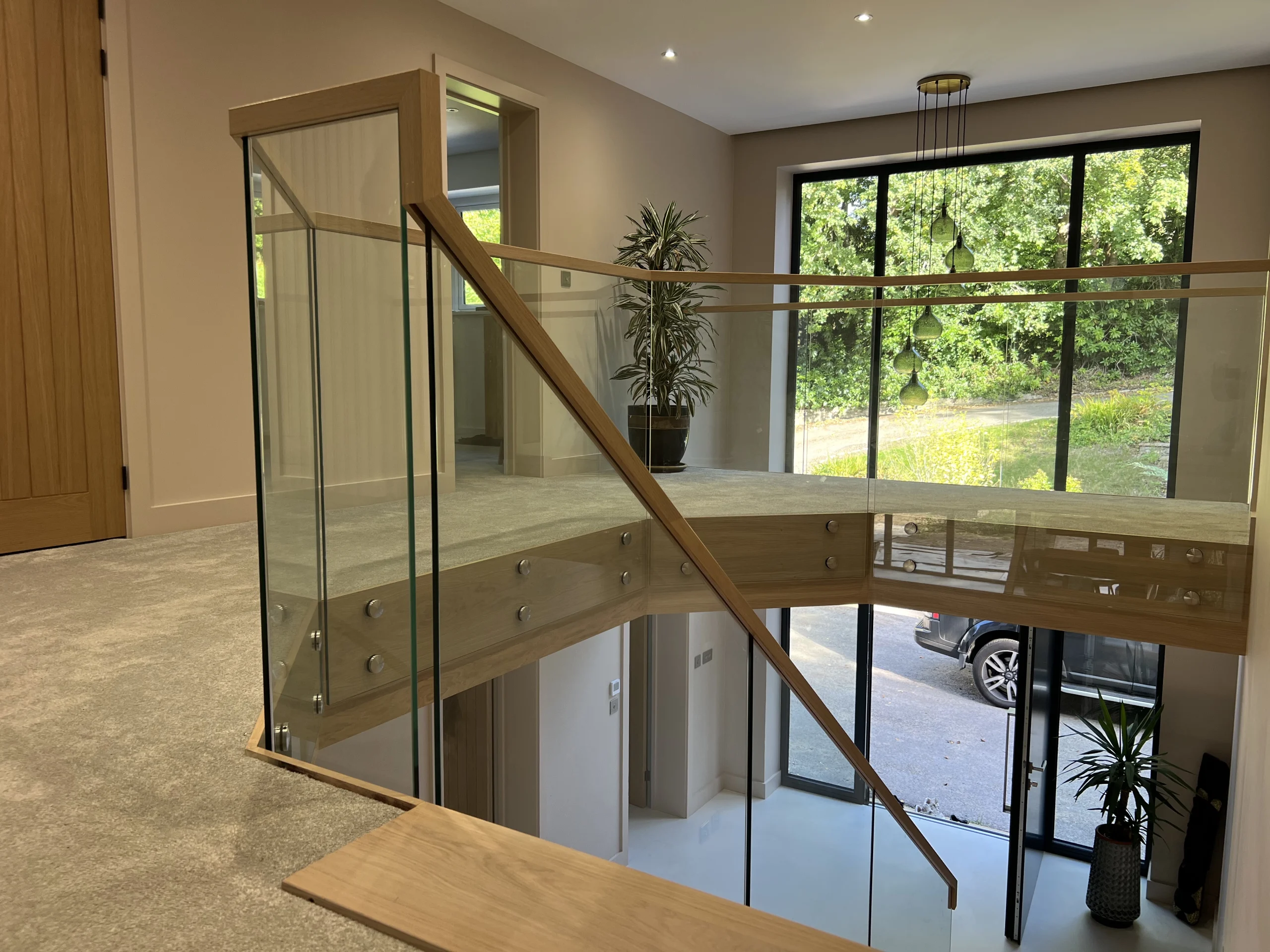
Framed glass — toughened panels held by a top rail, bottom channel, and intermediate posts — was the default premium specification for over a decade. In 2026, framed glass has been quietly demoted to mid-market. The premium specification is now frameless: structural glass at 17.5–25mm toughened-and-laminated, base-fixed into a slot channel cast or bolted into the floor, with no top rail and no posts breaking the line. The eye reads only the glass and the staircase behind it.
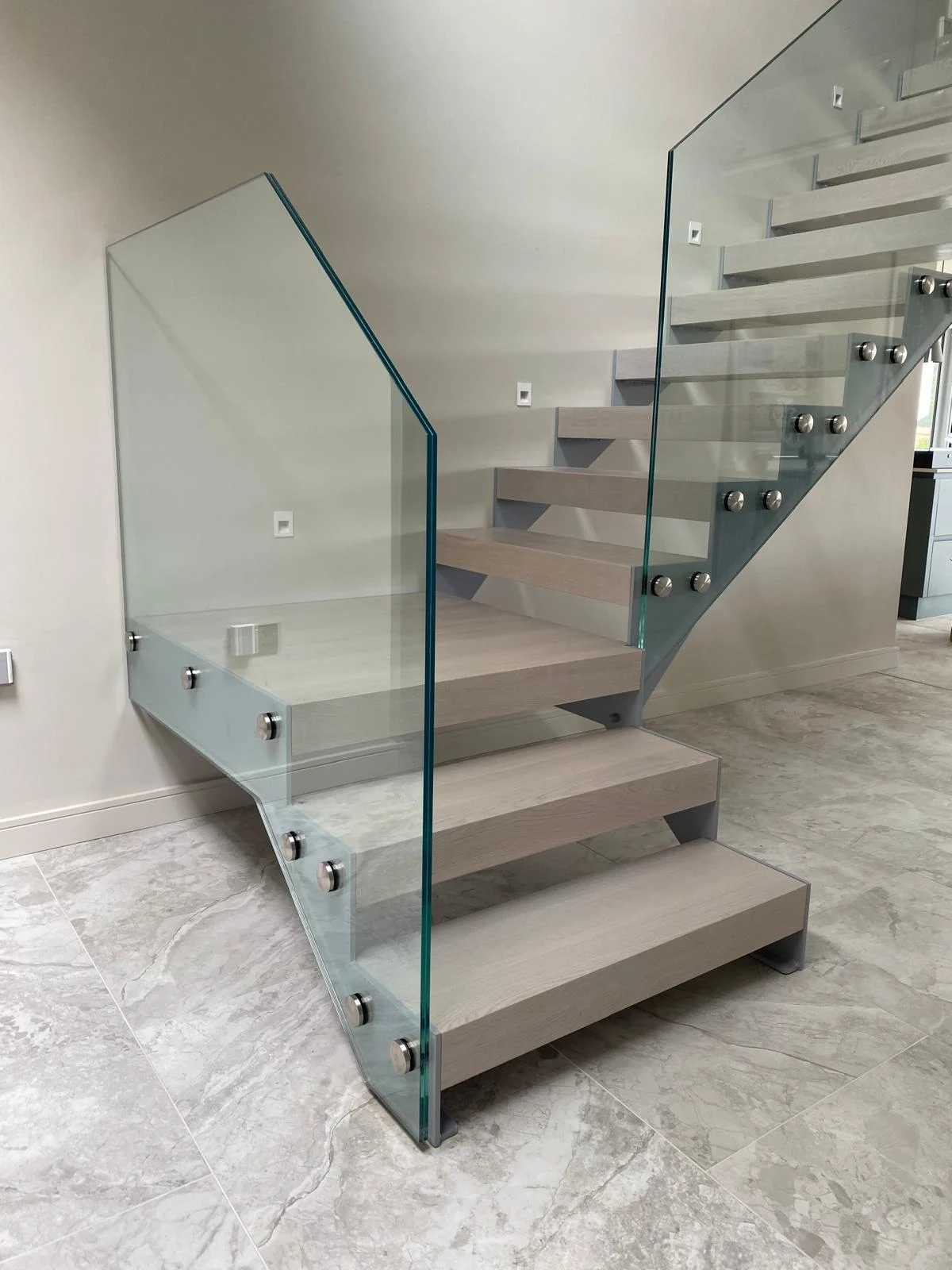
The technical move that made frameless mainstream was the wider availability of laminated structural glass meeting BS EN 14449 at a price point that no longer reads as bespoke-only. Frameless glass balustrade starts at £450/m at Continox; framed at £350/m. The price gap has narrowed enough that frameless wins on most projects unless the floor build-up cannot accommodate the channel detail.
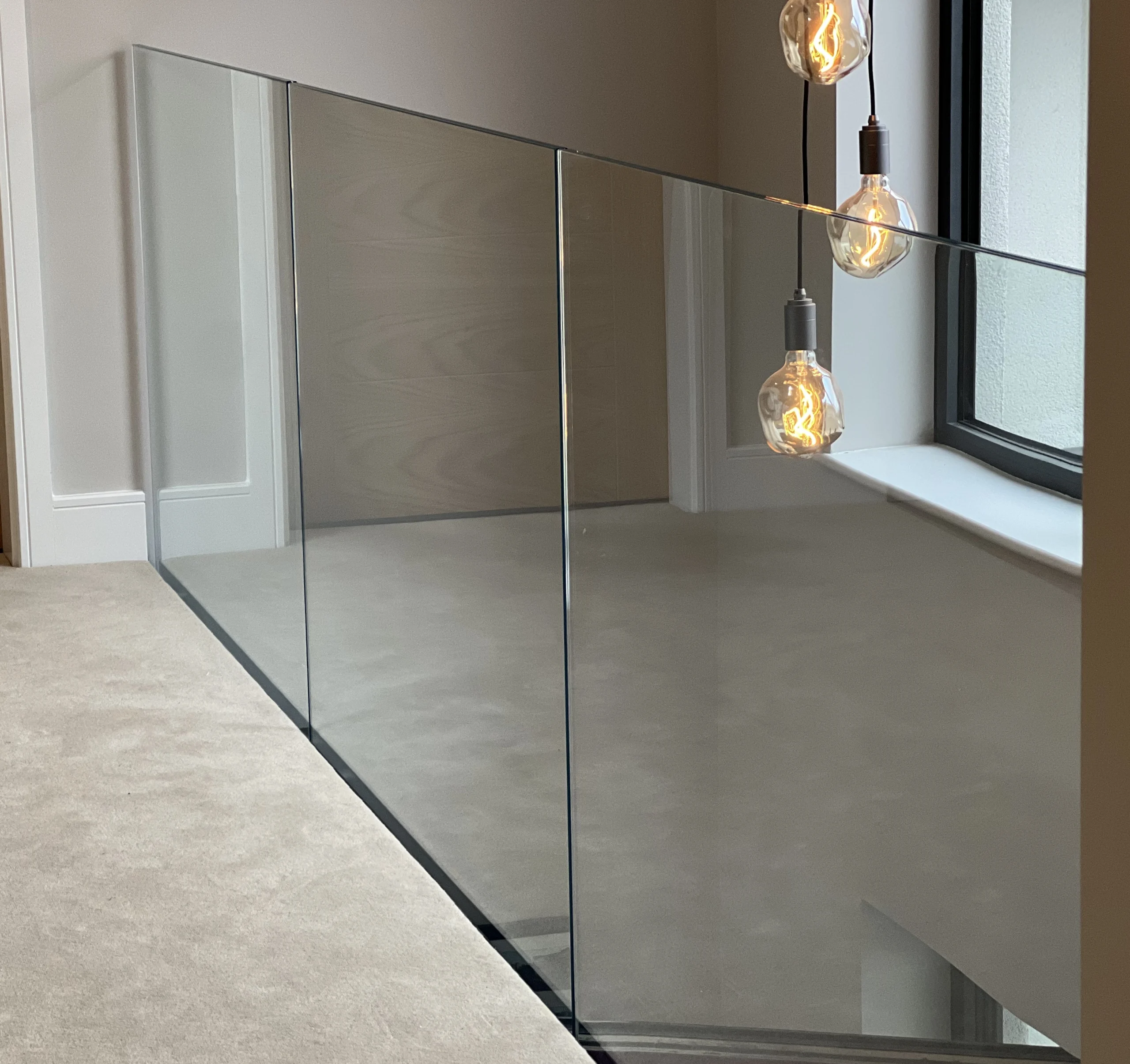

The frameless glass specification checkLook at the top of the panel. If the eye sees the edge of the glass against the room beyond, with no aluminium or steel cap, it's true frameless. If there's a slim aluminium top rail running across the glass, it's "semi-frameless" — a common compromise for retrofit projects where the floor channel cannot be installed.
The single most-requested material pairing on UK staircase briefs in 2026 is solid oak treads against a satin or matte black steel structure — typically powder coated to RAL 9005 jet black. The combination works because it does two things at once: the warm, grained oak provides tactile and visual softness, while the black steel reads as architectural precision. Each material amplifies the other; neither competes for attention.
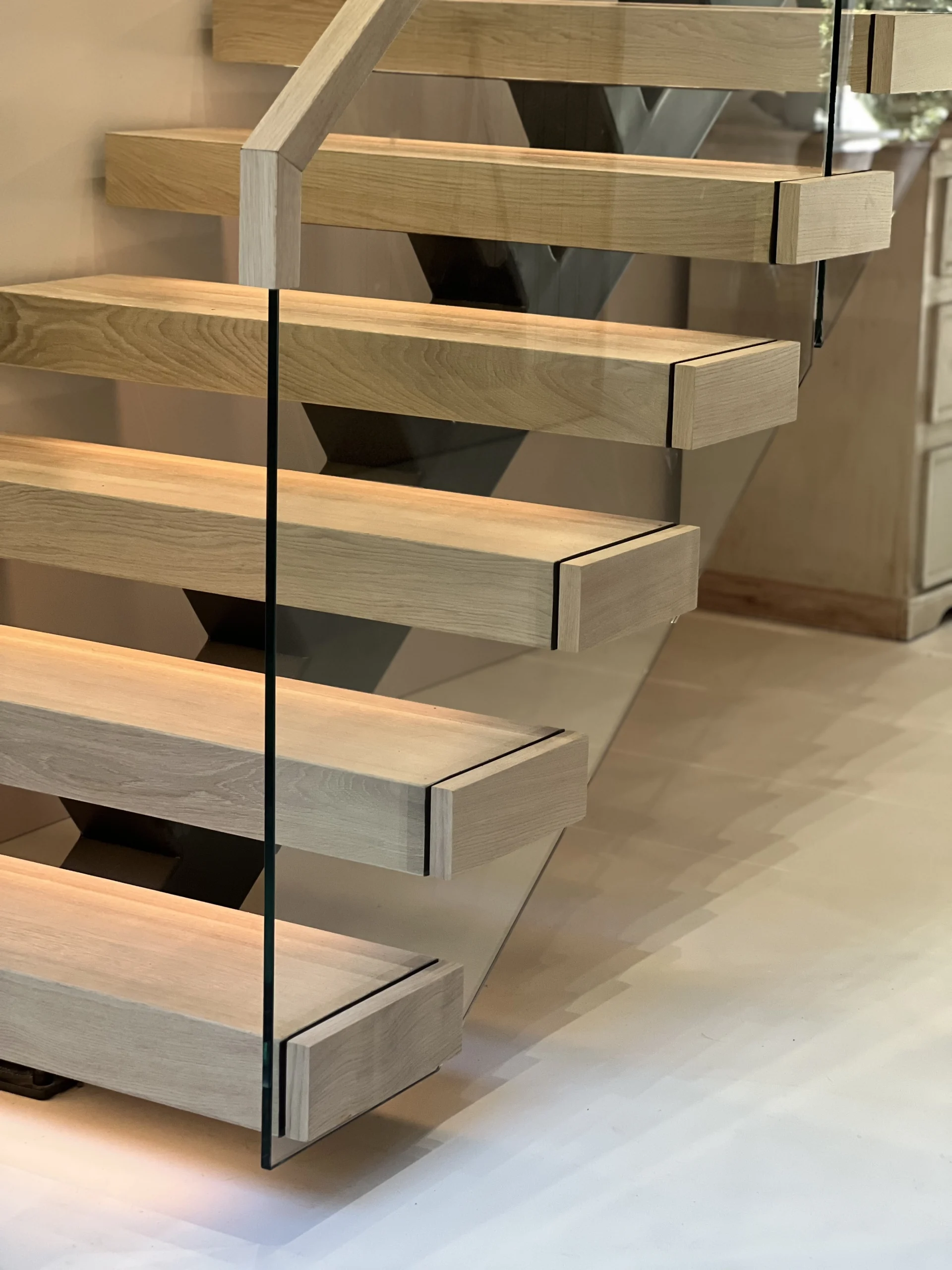
On premium projects, the oak is specified as solid stock at 60–100mm thickness rather than veneered. The visible end grain of a 100mm tread cantilevered out from a 5mm-thick black steel bracket is the signature detail of the moment. Finish is typically a hardwax oil rather than lacquer — it shows the grain rather than glazing over it, and it ages with use rather than scratching.

Why veneered treads age badlyVeneered oak — a 3–5mm oak skin glued to a plywood or MDF substrate — looks acceptable on day one and then ages visibly worse than solid timber. Edges chip back to the substrate, scratches expose the glue line, and refinishing is impossible because there's not enough timber to sand. A solid oak tread at 60mm minimum can be sanded and re-oiled three or four times over its life.
Tread lighting is no longer an aftermarket addition — on premium projects it's specified at the design stage and integrated during fabrication. The detail that distinguishes a 2026 specification from earlier work is the continuous recessed channel: the LED strip sits in a routed groove on the underside or front edge of the tread, behind a frosted diffuser, with cabling concealed inside the steel structure. There are no visible fittings, no joins between strip segments, no surface-mounted aluminium profile, and no cable trunking visible underneath the staircase.
Specification matters. Colour temperature is warm white — 2700K for traditional homes, 3000K for contemporary — and CRI must be at least 90 for accurate rendering of timber and stone tones. Driver placement is a fabrication question, not a site question: the driver sits in a serviceable cavity engineered into the staircase, accessible without dismantling. Add £600–£1,200 to the base staircase cost for fully integrated LED on a typical UK domestic flight.
Straight flights still dominate by volume — they're cheaper, easier to fit, and suit most floor plans. But the brief that comes in for a renovation of a Georgian townhouse, a barn conversion, or a large new build now frequently asks for something sculptural: a curved flight, a helical sweep, or a spiral as a feature element. Where 2018 specifications treated a curve as a way to fit a staircase into an awkward footprint, 2026 specifications treat it as the point — a sculptural object that organises the space around it.
Curved and helical staircases are the most demanding work in our shop. The string (the structural side of the flight) is a continuous curve, fabricated from steel formed on a jig or from laminated timber. Treads are unique — every one has different geometry — so the cutting list is bespoke per tread. Glass balustrades on a curved flight require either bent toughened panels or a series of flat panels following a faceted polygon along the curve, each detail with implications for cost and lead time. Budget for £20,000–£35,000 for a feature curved flight in a domestic property.


The 38mm oak tread of a 2010 staircase looks thin to a contemporary eye. The 2026 specification is monolithic — solid timber, stone or steel plate at 60–100mm thickness, with the visible end grain (or end profile) becoming a feature in itself. The technical reason this works on a floating staircase is that the tread has to be deep enough to conceal the bracket connections back to the spine; the aesthetic reason is that the visible mass reads as quality and permanence.
Material options have widened. Solid oak at 60–100mm remains the most-specified, with walnut as the premium upgrade. Steel plate treads at 6–10mm thickness — typically powder coated or with a patinated finish — give a different read: industrial, precise, slightly cooler than timber. Stone treads (typically limestone or basalt) at 30–50mm thickness with a steel substrate carry the most weight and the highest cost, but produce the most permanent-looking result. Modern staircase systems at Continox support all three.
| Tread Material | Thickness | Per-Tread Cost |
|---|---|---|
| Solid Oak | 60–100mm | £130–£180 |
| Solid Walnut | 60–100mm | £190–£270 |
| Solid Ash | 60–100mm | £110–£150 |
| Steel Plate | 6–10mm | £180–£240 |
| Stone (limestone / basalt) | 30–50mm | £220–£380 |
| Glass T&L | 2× 12mm laminated | £280–£400 |


"Quiet luxury" is a phrase that crosses into staircase design from broader interiors language, and it describes the attitude that ties the previous six trends together. The 2026 staircase doesn't announce itself with chrome posts, decorative spindles, or carved newels. It announces itself through proportion — tread thickness in correct relationship to spine width, riser height in correct relationship to going, handrail diameter in correct relationship to grip — and through the absence of unnecessary parts.
Practically, this means: no visible fixings (every screw, bolt, and bracket is concealed or recessed); no off-the-shelf hardware bolted to a bespoke staircase (handrail brackets, glass clamps, and tread fixings are designed and made for the specific project); no decorative noise (no twisted spindles, no scrolled balustrade, no etched glass); and material honesty (oak is finished to show grain, steel is finished to show its colour and texture rather than mimic something else). The staircase reads expensive because it reads considered, not because it reads expensive.
Trend Pulse — What's Hot, What's Cooling
Trends move in two directions. Tracking what's leaving briefs is as informative as tracking what's arriving. Here's what we're seeing across the projects we quote in 2026.
Frameless glass balustrades — now default on premium briefs.
Solid oak at 80–100mm — replacing engineered oak veneer.
Black RAL 9005 powder coat — replacing chrome and stainless steel.
Factory-integrated LED — replacing aftermarket strip kits.
Hidden brackets and fixings — replacing exposed hardware.
Hardwax oil finish — replacing high-gloss lacquer.
Chrome posts and spindles — read as dated.
Framed glass with aluminium top rail — demoted to mid-market.
Engineered veneer treads under 40mm — fail premium briefs.
Decorative wrought iron spindles — restricted to heritage projects.
Stainless steel handrail tube — replaced by black or oak handrail.
Acrylic and laminate finishes — read as kit, not bespoke.
The Trends Have to Comply With Part K
A 2026 staircase still has to meet UK building regulations. The trends above don't change the underlying compliance requirements: maximum private rise of 220mm, minimum private going of 220mm, maximum pitch of 42°, minimum 2,000mm headroom, balustrade height of 900mm on the flight and 1,100mm on landings above 600mm. Floating staircases must demonstrate adequate structural performance under Part A loading; frameless glass must meet BS 6180 imposed loads (0.74 kN/m residential, 1.5 kN/m for general spaces); and any glass used as a balustrade infill or barrier must be toughened-and-laminated to BS EN 14449.
For a deeper read, see our UK staircase regulations guide and the glass balustrade regulations guide. Both cover the technical specification points that distinguish a compliant trend-led design from a specification that fails building control sign-off.
The compliance check that catches most peopleThe 100mm sphere rule on balustrades. Open risers, glass panel gaps, balustrade infill spacing — every gap on a domestic staircase must be small enough that a 100mm sphere cannot pass through. On glass balustrades the gap between panel edges is the typical failure point; on open-riser floating staircases the gap between treads is the issue. Both are fixable at design stage, both are expensive to remediate after install. Always specify with this rule in mind.
Frequently Asked Questions
Everything UK homeowners and architects ask about 2026 staircase specifications.
Free Survey + 3D Design
Free on-site survey across the UK, photorealistic 3D visuals with the materials and finishes you specify, fixed-price quotation within 24 hours. Bespoke staircases from £7,900 — designed, manufactured and installed by Continox.