
BS 9991:2024 Compliance — What London Building Owners Need to Know
BS 9991:2024 is the updated UK fire safety standard for residential buildings, in force from 27 November 2024. It introduces an 18m single-staircase limit, mandatory second staircase from 30 September 2026, expanded scope covering care homes, sprinkler thresholds at 11m+, and tighter competency frameworks. This guide explains what London building owners, RTM committees, HMO landlords and developers need to do — practical implications, timeline, and how Continox supports compliance for fire escape stairs.
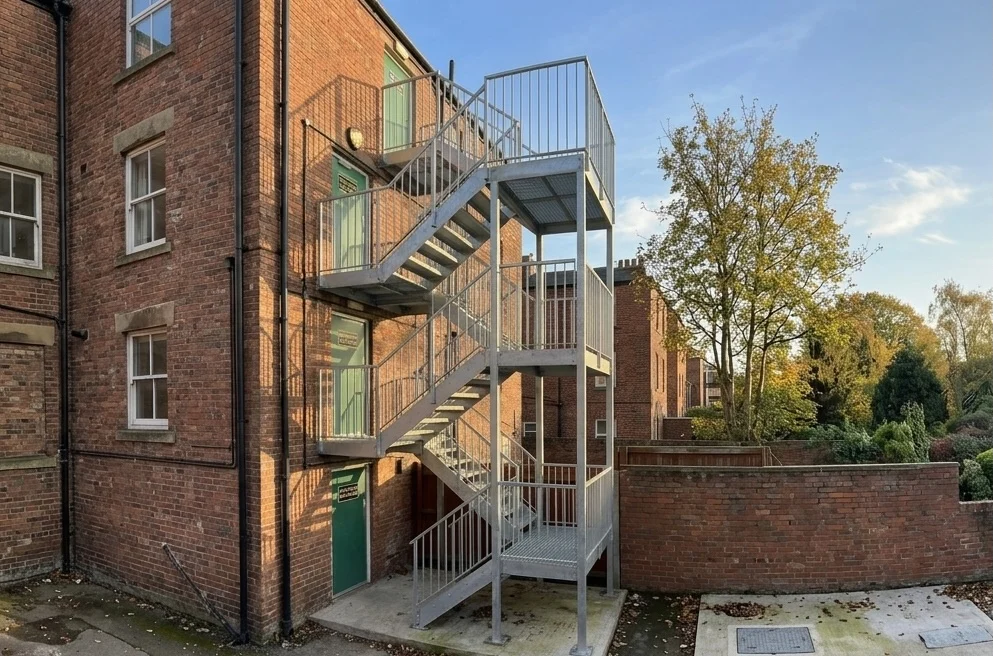
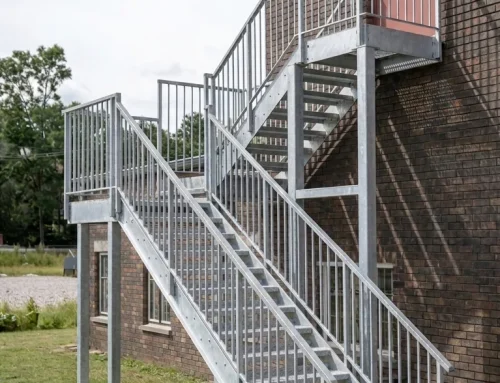
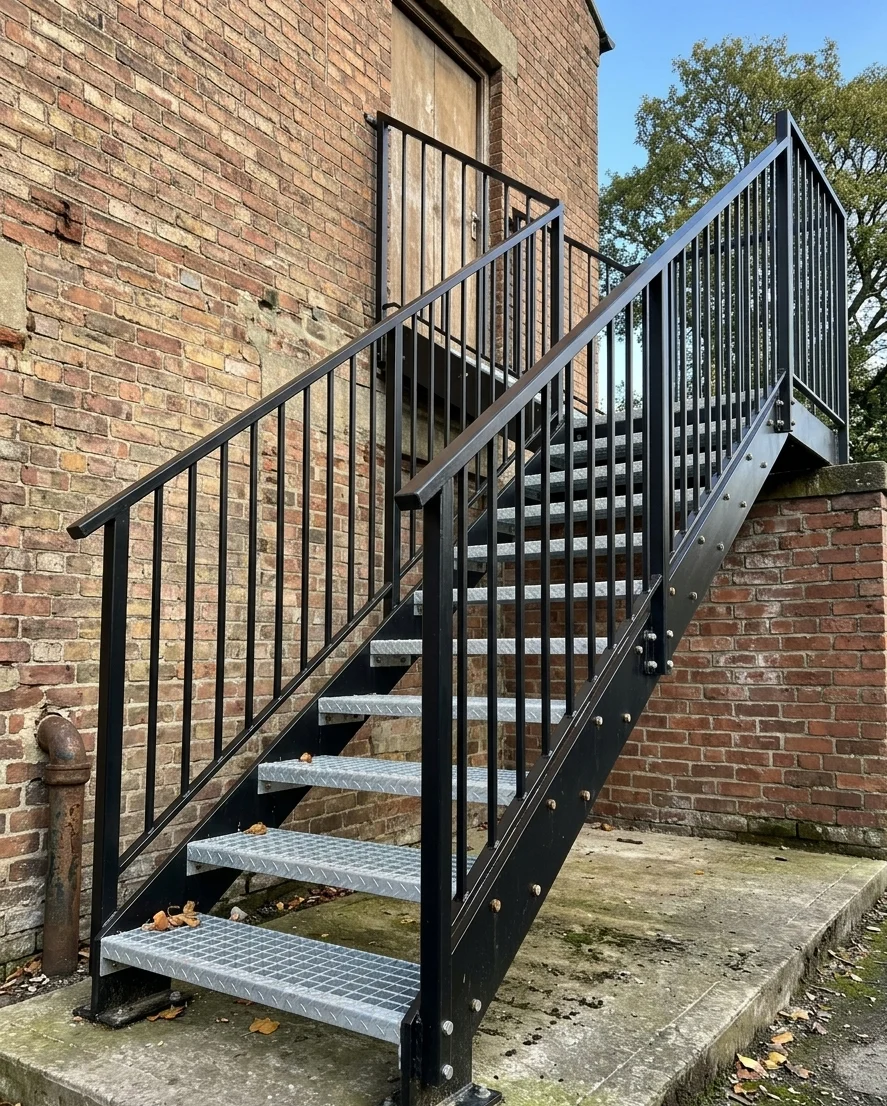
BS 9991:2024 compliant fire escape — multi-flight galvanised steel, intermediate landings, supplied with full compliance documentation
BS 9991:2024 replaces BS 9991:2015 and came into effect 27 November 2024 as the UK code of practice for fire safety in residential buildings. Key changes affecting London building owners: single-staircase buildings limited to 18m, mandatory second staircase from 30 September 2026 for new residential buildings above 18m, sprinklers required for buildings above 11m, expanded scope to include residential care homes (Section 10), revised European fire door classifications replacing national BS 476 by 30 September 2029, and stricter competency frameworks for designers, contractors and fire risk assessors. London-specific implication: building control applications at Gateway 2 from 30 September 2026 must use BS 9991:2024 if adopting code recommendations. Continox supplies fire escape stairs fully compliant with BS 9991:2024 as standard with every quotation — no separate compliance fees.
What Is BS 9991:2024 and Why It Matters
BS 9991:2024 — Fire Safety in the Design, Management and Use of Residential Buildings — Code of Practice is the British Standards Institution's updated guidance for fire safety in residential buildings across England, Wales, Scotland and Northern Ireland. It was published by BSI on 27 November 2024 and immediately superseded the previous 2015 edition.
The standard is a code of practice, which means compliance is not directly mandated by legislation. However, BS 9991:2024 represents the recognised industry benchmark for residential fire safety design, and its recommendations are routinely required by London Building Control, the Building Safety Regulator (BSR), the National Fire Chiefs Council (NFCC), and Local Authority Building Control. Building control applications adopting BS 9991 from 30 September 2026 onwards must use the 2024 edition.
For London building owners specifically, BS 9991:2024 carries particular weight because the capital's building stock includes a high concentration of buildings affected by the new requirements: 19,000 listed buildings, 60,000+ HMOs, around 250 buildings above 18 metres, extensive period mansion block conversions, post-war high-rise residential, and ongoing redevelopment of warehouse conversions into mixed-use residential. Each of these typologies has specific compliance implications under the updated standard.
BS 9991:2024 vs Approved Document B. BS 9991 is a flexible standard offering tailored fire-safety solutions, while Approved Document B (AD B) provides prescriptive Building Regulations compliance for England. They are complementary — AD B is the minimum legal compliance route, while BS 9991:2024 represents best practice. The 2026 amendments to Approved Document B (effective 30 September 2026) incorporate many BS 9991:2024 recommendations into formal Building Regulations requirements.
BS 9991:2024 Compliance Timeline
Six key dates define the BS 9991:2024 compliance landscape for London building owners. The 30 September 2026 deadline is particularly significant because it marks the transition from voluntary BS 9991:2024 adoption to formal Building Regulations integration.
Published by BSI on 27 November 2024. Immediately superseded BS 9991:2015. Building control applications from this date intending to adopt BS 9991 should use the 2024 edition.
UK transitions from BS 476 fire testing standards to European BS EN 13501 classification system. Affects fire door specifications, structural fire resistance ratings, and reaction-to-fire classifications.
Ban on PFAS-containing aqueous film-forming foam fire extinguishers comes into force, requiring replacement with environmentally safe alternatives.
2026 amendments to Approved Document B come into effect. Mandatory second staircase requirement for new residential buildings above 18 metres. Building Control applications at Gateway 2 must use BS 9991:2024 if adopting code recommendations.
Final removal of BS 476 fire resistance classifications. Complete UK transition to European BS EN 13501 standards for all fire performance testing.
Six Key Changes That Affect London Buildings
BS 9991:2024 introduces around 20 significant updates compared to the 2015 edition. The six changes below represent the most material implications for London residential building owners, RTM committees, HMO landlords and developers.
Single-stairway residential buildings now limited to 18m total height. Above 18m, a second staircase is required (or fire-engineered alternative approved by BSR). Mandatory in formal Building Regulations from 30 September 2026.
All new residential buildings above 11m must have sprinkler systems compliant with BS 9251 (Category 4 in buildings over 18m) and BS EN 12845 in ancillary spaces over 100m². Significant cost driver for mid-rise.
New Section 10 explicitly covers residential care homes, recognising specific evacuation challenges for vulnerable occupants. Personal Emergency Evacuation Plans (PEEPs) tailored to individual residents.
All buildings with provision for accessibility lifts must have at least one evacuation lift. Access from protected waiting space within staircase or lobby. Aligns with BS 8629 evacuation alert standard for buildings above 18m.
National BS 476 fire door classifications replaced with European BS EN 13501. Affects fire door specifications, reaction-to-fire classifications, and structural fire resistance ratings. Full transition by 30 September 2029.
Stricter competency requirements for designers, contractors and fire risk assessors. Aligns with BS 8670-1:2024 competency framework. Building owners increasingly required to confirm contractor qualifications.
Why these changes matter for London: London has a higher concentration of affected building types than any other UK region. Around 250 buildings above 18 metres in residential use, around 60,000+ HMOs, hundreds of care homes, and ongoing redevelopment of mansion blocks and warehouse conversions all sit within the BS 9991:2024 scope. RTM committees, leaseholder consultation processes, and Section 20 procurement decisions on fire escape replacement projects all need to demonstrate BS 9991:2024 compliance from project inception. View the Continox fire escape stairs page for full BS 9991:2024 compliant specifications.
Three Building Height Categories Under BS 9991:2024
BS 9991:2024 organises means-of-escape requirements into three building height categories. Each category has its own escape strategy, sprinkler requirement, smoke ventilation specification and stair provision. Determining which category your London building falls into is the first step in establishing compliance scope.
Most Victorian/Edwardian terrace conversions, small mansion blocks. Single staircase acceptable. No sprinkler mandate. Standard fire door specification. Means of escape via protected stairway to final exit.
Most 4–6 storey apartment blocks, larger mansion blocks. Sprinklers required. Single staircase acceptable up to 18m. Smoke control to corridors and lobbies. 15m standard escape distance. Evacuation alert system per BS 8629.
High-rise apartment buildings, post-war social housing, modern luxury developments. Two staircases mandatory from 30 September 2026. BSR approval required (Building Safety Act 2022). Evacuation lift mandated. Pressurisation per BS EN 12101-13:2022.
For a deeper breakdown of the second staircase requirement specifically, see the second staircase requirements UK guide. For Approved Document B 2026 amendment detail see the AD B changes breakdown.
BS 9991:2024 Quick-Reference Compliance Table
The table below summarises the key compliance requirements introduced or revised under BS 9991:2024 by building category. London building owners should use this as a starting point for compliance review — full compliance assessment requires fire engineering input and survey-stage technical review.
| Requirement | Below 11m | 11–18m | Above 18m |
|---|---|---|---|
| Number of staircases | 1 | 1 acceptable | 2 mandatory (Sep 2026) |
| Sprinklers | Not mandatory | Required | BS 9251 Category 4 |
| Evacuation lift | Not required | If lift provided | Mandatory |
| Evacuation alert (BS 8629) | Not required | Recommended | Mandatory |
| Smoke control corridors | Standard provisions | Active ventilation | Pressurisation BS EN 12101-13 |
| Standard escape distance | 9m one direction | 15m | 15m |
| BSR approval (Gateway 2) | Not required | Not required | Required |
| Lobby door to stair entrance | N/A | 7.5m max | 7.5m max |
| Care home Section 10 scope | Yes | Yes | Yes |
| Fire door classification | BS EN 13501 | BS EN 13501 | BS EN 13501 |
| Compartmentation | 30 min minimum | 60 min minimum | 60–120 min |
Who Is the Responsible Person?
Under the Regulatory Reform (Fire Safety) Order 2005 — the legal framework that BS 9991:2024 supports — every non-domestic premises and the common parts of every multi-occupancy residential building must have a designated Responsible Person (RP). The Responsible Person carries legal liability for ongoing fire safety compliance, fire risk assessment, evacuation planning, and maintenance of fire safety provisions including escape staircases.
For London residential buildings, the Responsible Person varies by ownership and management structure:
Owner-occupied freeholder: The freeholder is typically the Responsible Person. Common in mansion block scenarios where freehold remains with original developer or freeholder company.
Right To Manage (RTM) company: Where leaseholders have exercised RTM rights, the RTM company directors collectively assume Responsible Person duties. Increasingly common across London — Camden, Westminster, Wandsworth and Tower Hamlets see particular RTM activity.
Managing agent on behalf of freeholder: Where management is delegated, the managing agent operates as Responsible Person on behalf of the named freeholder. Common in larger institutional ownership.
Local authority / housing association: For social housing and local authority residential blocks, the housing provider acts as Responsible Person with delegated facilities management responsibilities. Highest concentration in Tower Hamlets, Hackney, Newham and Lambeth.
HMO landlord: Under the Housing Act 2004 and the Fire Safety Order 2005, HMO landlords carry Responsible Person duties for licensed properties. London has the highest HMO density in the UK — around 60,000+ licensed properties — concentrated in Tower Hamlets, Newham, Hackney, Brent and Westminster.
Responsible Person Liability — Key Risk for London Building OwnersNon-compliance with BS 9991:2024 / Fire Safety Order 2005 / Building Regulations on the part of the Responsible Person carries serious consequences. The 2024 update strengthens Responsible Person duties around competency framework verification, digital record-keeping, and building safety case documentation. Penalties include fines up to £30,000 per breach, unlimited fines on conviction, prosecution, and in the most serious cases involving injury or death, custodial sentences. Insurance implications also apply — non-compliant fire safety provisions can void building insurance cover and carry direct civil liability.
BS 9991:2024 Implications for Fire Escape Stairs
BS 9991:2024 has direct implications for fire escape stair design, replacement, and ongoing maintenance across London building types. Five practical considerations apply to any fire escape project commissioned under the updated standard.
1. Width and configuration must match occupancy load. BS 9991:2024 reinforces width requirements driven by occupancy calculation rather than minimum prescriptive dimensions. Residential minimum 800–900mm; commercial minimum 1100–1200mm; dual-flight provision required at higher occupancy. Fire engineering input is required for non-standard buildings.
2. Material specification must meet BS EN 13501 classifications. National BS 476 classifications are being phased out by 30 September 2029. New fire escape installations should specify materials with BS EN 13501 reaction-to-fire classifications. For galvanised steel structural elements, this typically means A1 or A2-s1, d0 classifications.
3. Compartmentation continuity must be maintained. Where a fire escape stair forms part of a protected stairway, structural fixings into compartment walls must maintain compartmentation integrity. Through-bolting through fire-rated walls without appropriate fire-stopping breaches BS 9991:2024 provisions.
4. Documentation must support Responsible Person duties. BS 9991:2024 reinforces digital record-keeping expectations. Fire escape installations must be supplied with structural calculations, BS EN 1090-2 declaration of performance, UKCA marking, BS 9991:2024 / BS 9999 compliance schedule, BS EN ISO 1461 galvanising certificate, and (where applicable) BS EN 14449 glass certification. Continox supplies all of these as standard with every quotation.
5. Competency framework verification. Building Control increasingly requires confirmation that fire escape installation contractors meet BS 8670-1:2024 competency framework. Continox installation is undertaken exclusively by the in-house qualified team — no subcontractors, with documented competency credentials supplied as part of the project documentation pack.
Three London Compliance Scenarios Under BS 9991:2024
Three scenarios below illustrate how BS 9991:2024 affects typical London fire escape projects. Each represents a different building type and different compliance pathway under the updated standard.
Hackney — 4-Storey Mansion Block (16m total height)
Building category: Mid-rise (11–18m). Sprinkler retrofit not retrospectively mandated for existing buildings, but recommended where major refurbishment underway. Single staircase acceptable.
Fire escape implications: Existing external fire escape replacement requires BS 9991:2024 compliant specification — 1100mm width, structural calculations, BS EN 1090-2 declaration, galvanised steel A2-s1 d0 reaction-to-fire classification. RTM-led project, Section 20 consultation incorporates BS 9991:2024 compliance schedule.
Outcome: Fire escape replacement under BS 9991:2024 — fully compliant, documented, signed off by Hackney Building Control. Lifecycle 25–40+ years. RTM fund expenditure transparent with full compliance evidence.
Tower Hamlets — Licensed HMO (3-storey conversion, 9m total)
Building category: Below 11m small building design. No sprinkler mandate. Single staircase acceptable. Standard fire door classifications.
Fire escape implications: HMO licensing requires fire escape provision — Tower Hamlets borough licensing officer specifies BS 9991:2024 alongside LACORS Housing Fire Safety guidance. New external fire escape staircase required (existing wooden staircase failing inspection). 900mm width, anti-slip chequer plate, BS EN 13501 classified materials.
Outcome: HMO licensing renewal achieved with BS 9991:2024 compliant fire escape. Avoids £30,000 fine risk under Housing Act 2004 / Fire Safety Order 2005 non-compliance. Insurance position maintained.
Westminster — New Build Above 18m (post-September 2026)
Building category: High-rise (above 18m). BSR approval required at Gateway 2. Two staircases mandatory under September 2026 amendments. BS 9251 Category 4 sprinklers. BS 8629 evacuation alert. Pressurisation per BS EN 12101-13:2022.
Fire escape implications: Building must be designed with two staircases from inception. Fire engineering input mandatory. External fire escape (where provided as supplementary means of escape) must integrate with internal stairway provision and evacuation lift access. BSR approval pack includes BS 9991:2024 compliance demonstration.
Outcome: BSR Gateway 2 approval achieved with BS 9991:2024 compliant design. Two-staircase provision integrated with overall fire strategy. Continox supports developer brief with structural input and external fire escape coordination where required.

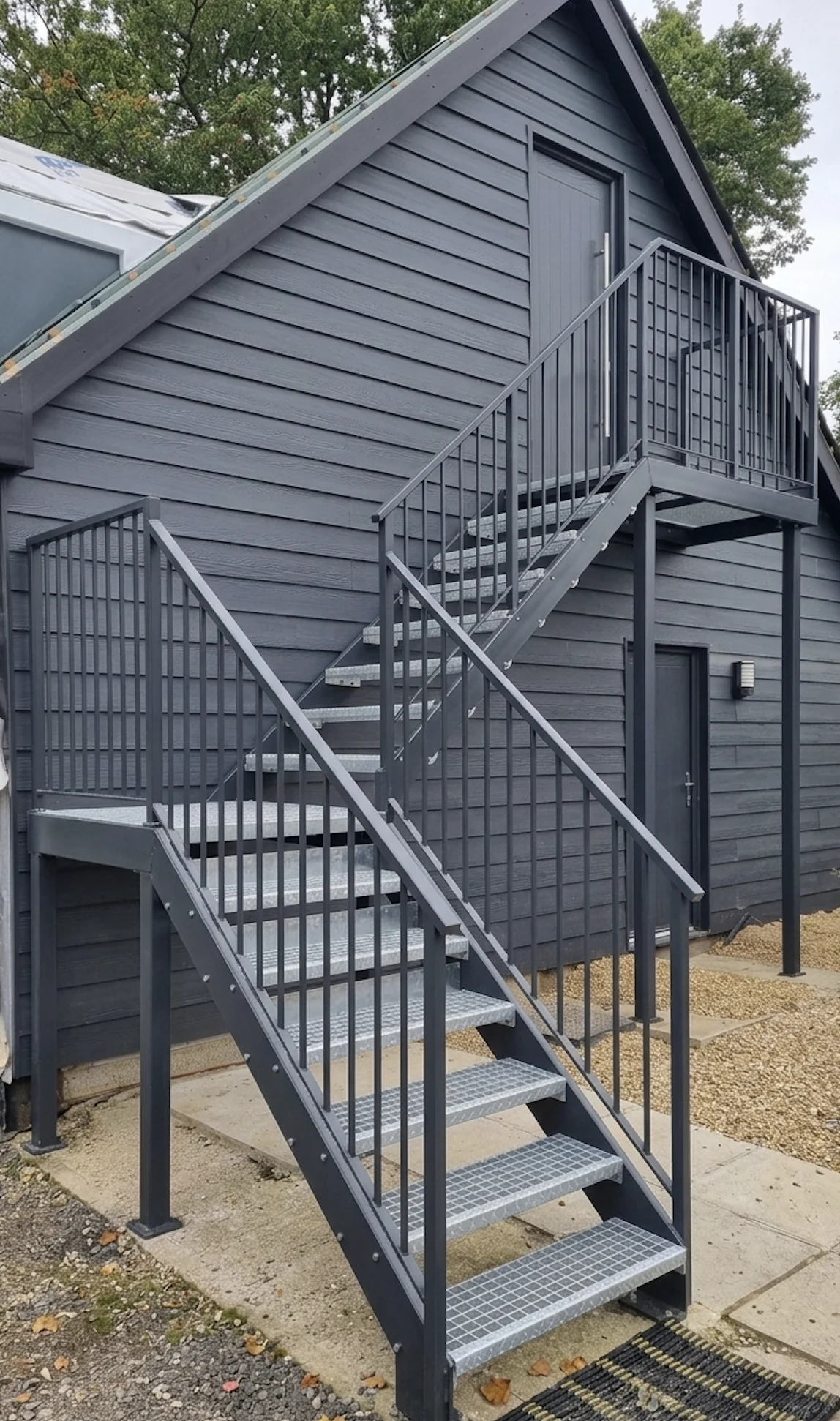
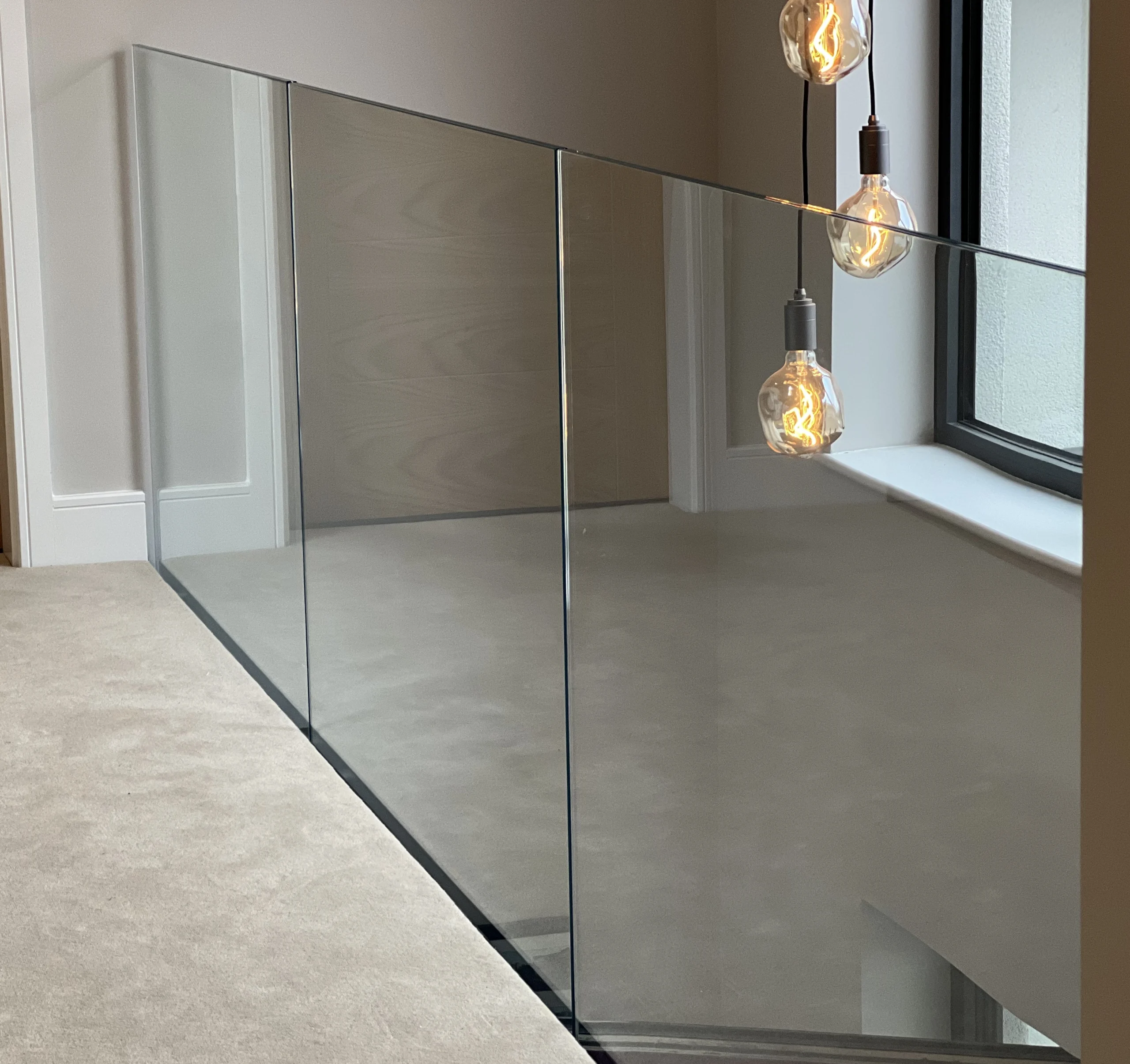
BS 9991:2024 Compliant London Project Portfolio
The Continox project portfolio includes BS 9991:2024 compliant fire escape installations across London apartment blocks, HMOs, mansion blocks, listed buildings and care homes. Each project documented with BS 9991:2024 compliance schedule, structural calculations, BS EN 1090-2 declaration of performance, UKCA marking, and full Building Control sign-off documentation. Real projects, real compliance evidence.
Browse Project Portfolio →What London Building Owners Should Do Now
BS 9991:2024 came into effect more than a year ago, but many London building owners — particularly RTM committees, smaller HMO landlords, and managing agents on behalf of overseas freeholders — have not yet conducted formal compliance review against the updated standard. Six practical actions apply.
1. Confirm building height category. Below 11m, 11–18m, or above 18m. The category drives the entire compliance scope. Measurement should be from ground level to the top of the topmost storey, excluding plant rooms. London's mid-rise mansion block stock frequently sits at 14–17m — borderline 11–18m category requiring sprinkler review.
2. Review existing fire risk assessment for BS 9991:2024 compliance. Fire risk assessments under PAS 79:2020 should reference current standards. Pre-November 2024 assessments referenced BS 9991:2015 and require update. The Responsible Person bears liability for keeping FRAs current.
3. Audit existing fire escape stairs for compliance. Galvanising condition, structural integrity, balustrade height (1100mm communal, 900mm private), tread anti-slip rating, handrail provision, supporting documentation. Continox provides free audit visits across all 32 London boroughs.
4. Plan for September 2026 deadlines. If the building is above 18m and currently has only one staircase, planning for second staircase provision (or fire-engineered alternative) needs to begin now. Lead time for design, BSR approval and construction is typically 18–24 months from inception.
5. Verify contractor competency. Confirm fire escape installation contractors meet BS 8670-1:2024 competency framework. Documentation should include qualifications, BS EN 1090-2 manufacturing certification, UKCA marking authorisation, and prior project evidence.
6. Maintain digital documentation. BS 9991:2024 reinforces digital record-keeping. Fire safety case file should include current fire risk assessment, fire escape installation documentation, compliance certificates, maintenance records, and Responsible Person identification. Continox supplies all installation documentation in digital format as standard.
BS 9991:2024 — FAQ for London Building Owners
Practical answers on BS 9991:2024 compliance for residential buildings across all 32 London boroughs
BS 9991:2024 Compliant Fire Escape Stairs
Free on-site survey across all 32 London boroughs. Bespoke fire escape design fully compliant with BS 9991:2024, BS 9999, BS 6180, BS EN 1090-2 and Approved Document B. All compliance documentation included as standard — no separate fees. Fixed-price quotation within 24 hours. UKCA marked, BS EN ISO 1461 hot-dip galvanised, BS EN 13501 classified materials.