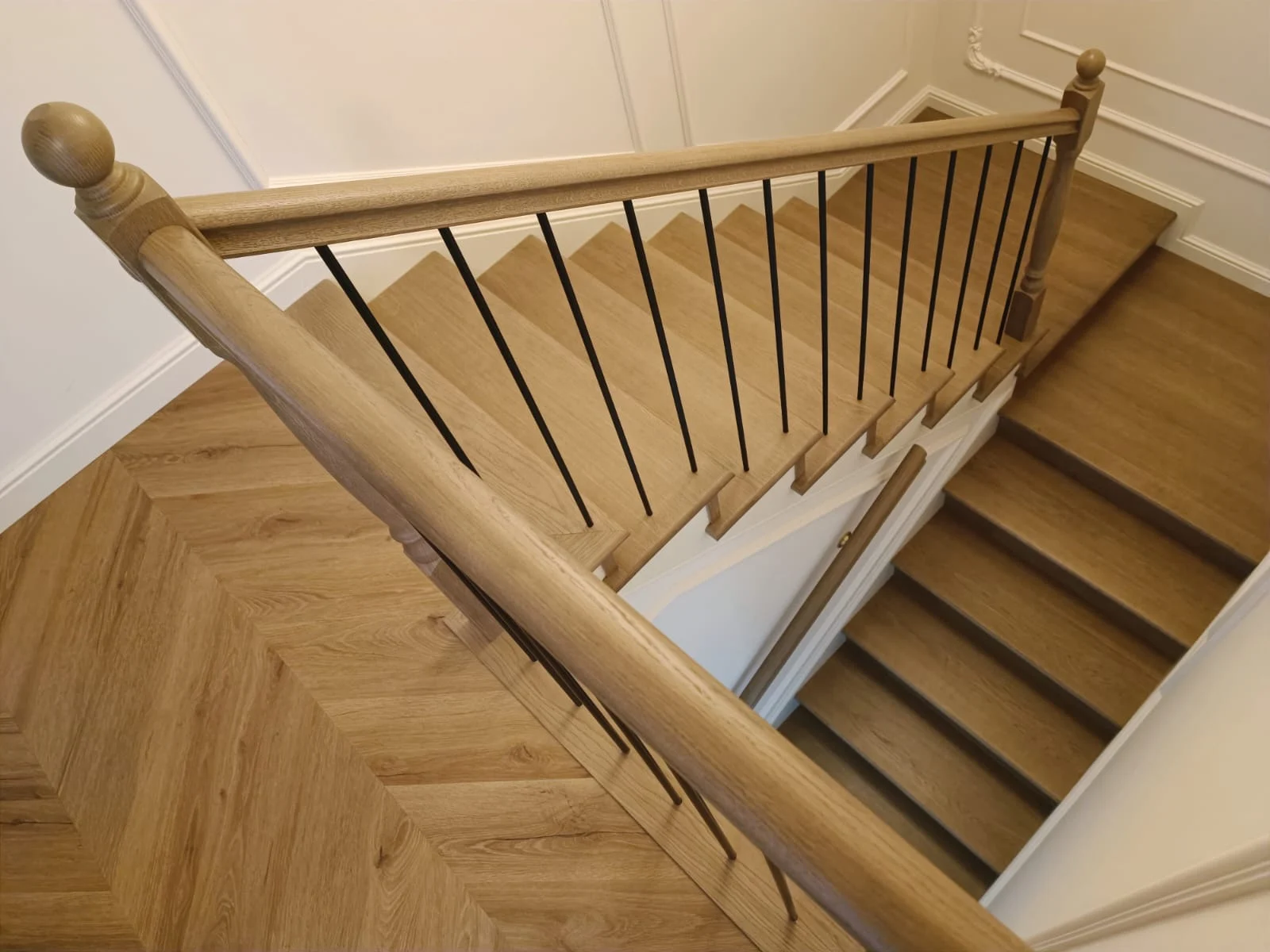

A contemporary staircase is the most transformative single design decision you can make in a UK home. More than any other element, the staircase defines the spatial quality of an open-plan interior — its material, form and detailing setting the architectural tone for the entire house. This guide covers everything you need to design a contemporary staircase that works for your space, your budget and your life: from structural types and material combinations to UK Building Regulations and realistic costs.
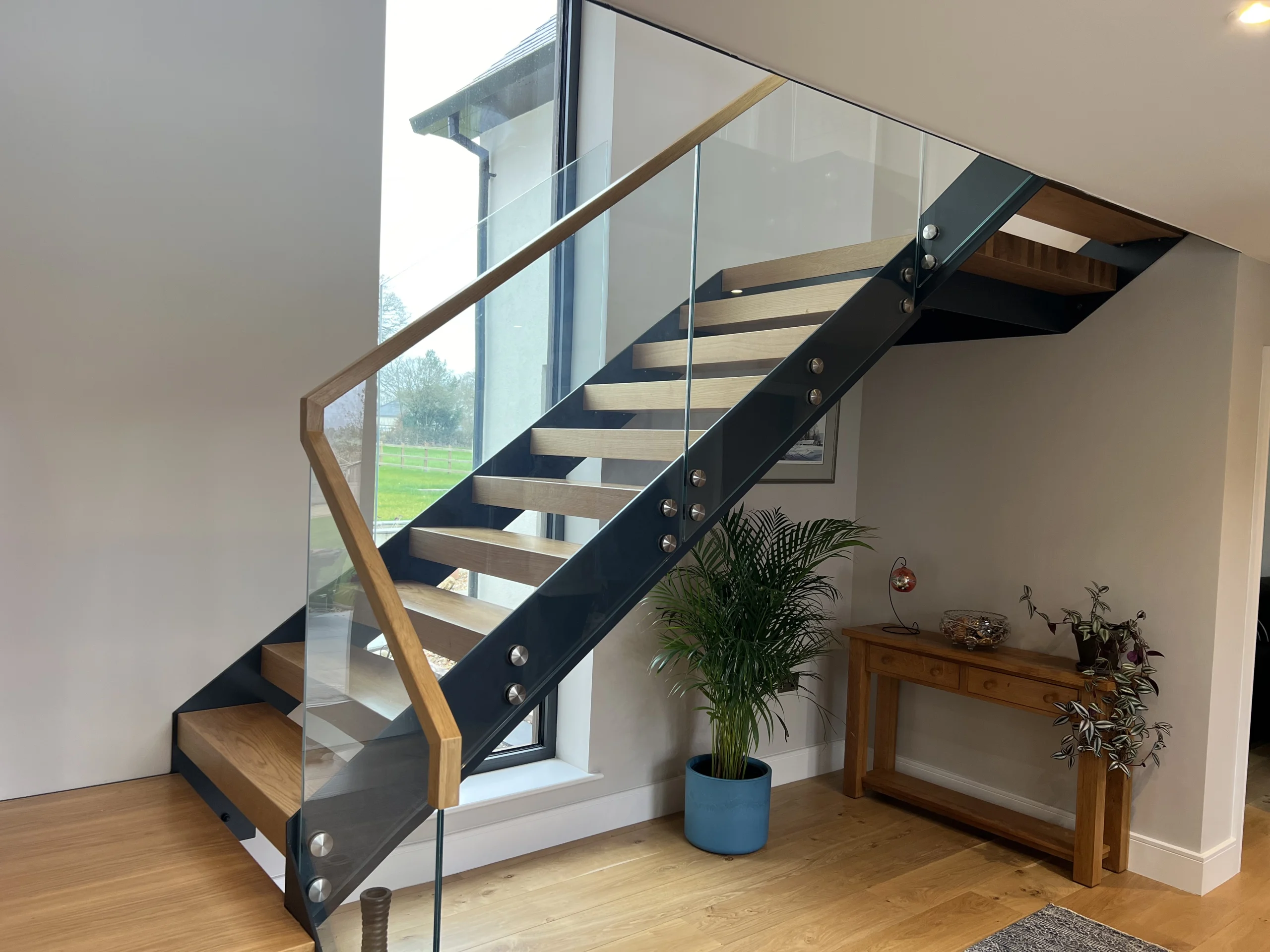
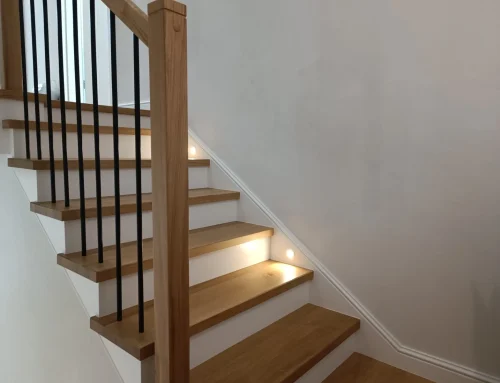
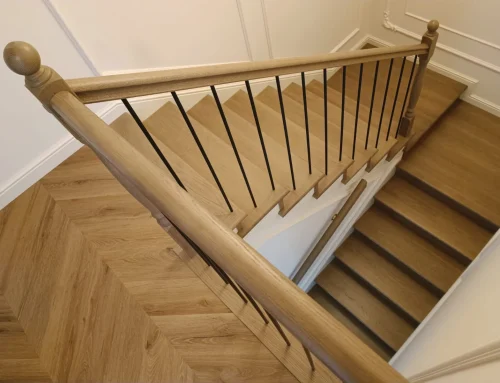
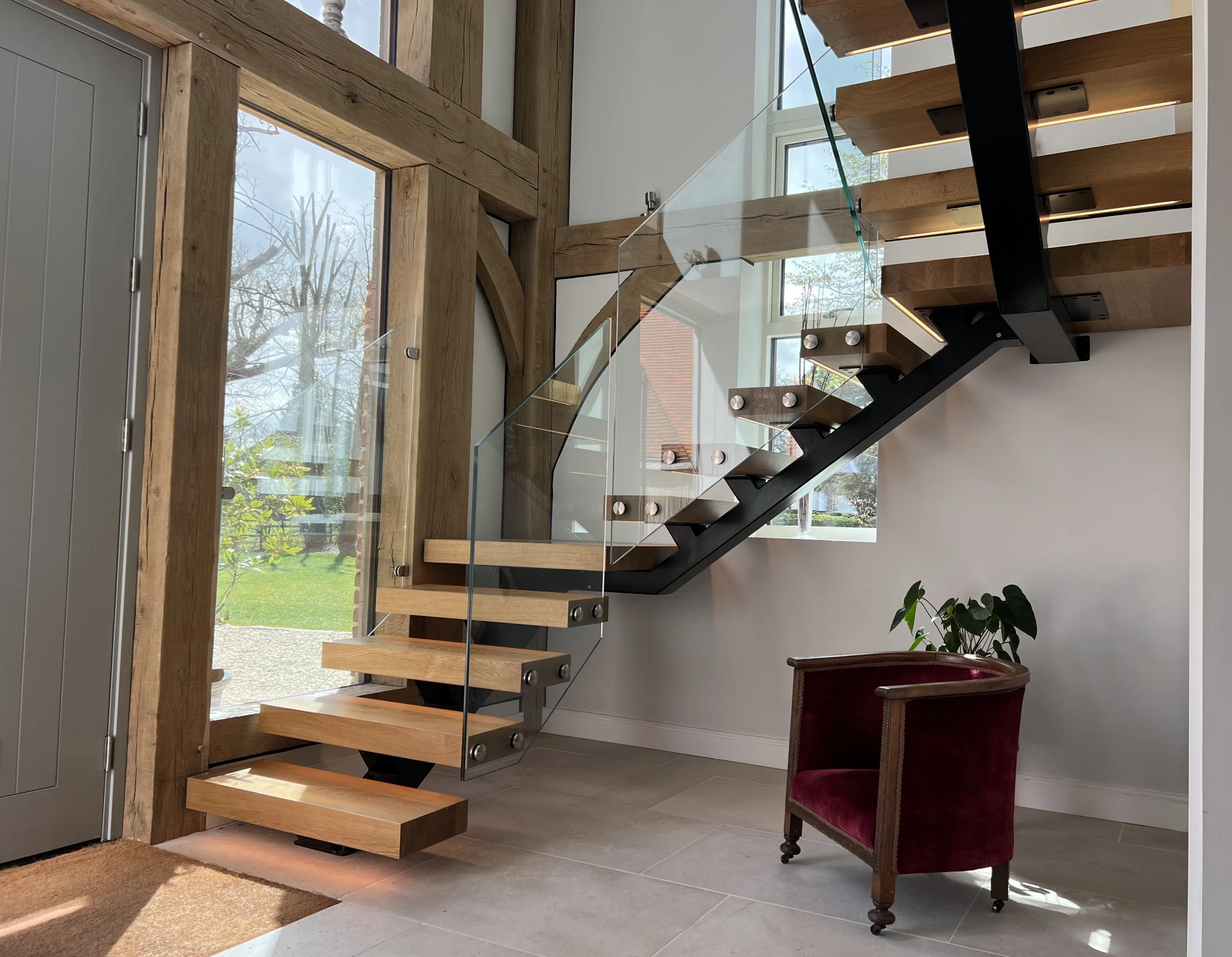
Bespoke contemporary staircase designed and installed by Continox — central spine, oak treads, frameless glass balustrade.
The 5 Elements of Contemporary Staircase Design
Every successful contemporary staircase is the product of five design decisions made together — not independently. Resolving each one in relation to the others is what separates a staircase that works from one that merely looks the part in a photograph.
Structure
How the staircase is supported — spine, stringer, wall-fixed or hybrid
Treads
Material and profile — oak, walnut, steel, stone or combination
Balustrade
System type — frameless glass, framed glass, cable, flat bar
Handrail
Profile and material — steel round, flat bar, timber cap on steel
Finish
Frame colour — powder coat RAL, brushed steel, raw or painted
These five elements interact. A frameless glass balustrade requires a thicker glass specification and a different fixing system than a framed one. A central spine structure dictates a different tread attachment method than a wall-fixed stringer. Getting the combination right from the start — rather than designing each element in isolation — is why Continox begins every project with an on-site design consultation rather than an online quote.
Contemporary Staircase Types
The structural type of a staircase determines its spatial presence and design possibilities more than any other single decision. These are the four principal types used in contemporary UK residential design.
Central Spine Staircase
A single structural steel spine runs up the centre of the staircase, with treads cantilevering from each side. No visible stringers, no wall fixings — the spine is the structure. The result is a staircase that appears to float, with unobstructed views through from every angle.
The central spine works in virtually any plan configuration — straight, L-shape, U-shape or curved. The open underside creates a dramatic negative space that defines the staircase as an architectural object rather than a purely functional element.
From: £9,500
Floating Staircase
Treads are cantilevered directly from a wall stringer or wall-fixed support system — with no visible structure beneath. The wall stringer is typically concealed within the wall finish, leaving only the treads and glass balustrade visible. Works particularly well in narrower hallways and stairwells.
The floating staircase maximises light flow and visual openness in restricted spaces. Combined with a frameless glass balustrade, it creates the cleanest and most minimal staircase aesthetic available.
From: £7,900
Steel Plates Staircase
Flat steel plate treads — powder-coated or raw — on a central spine or twin stringer structure. The industrial material language of plate steel creates a very different aesthetic to timber treads: sharper, more precise, and visually lighter due to the thinner profile of a steel tread compared to a solid oak board.
Steel plate treads are particularly effective in spaces with exposed structural elements, polished concrete floors or dark interior palettes. Paired with a black powder-coated structure and frameless glass, this is the specification most frequently chosen for high-specification residential new builds.
From: £9,500
Bespoke Design
Where none of the standard configurations quite fits — curved plans, double-height voids, feature staircases in commercial or high-end residential settings — a fully bespoke design is required. Continox's engineering team designs from scratch around the specific spatial, structural and aesthetic requirements of the project.
Bespoke designs include any combination of structure, tread, balustrade and finish — including LED integration, mixed materials, curved glass panels and non-standard plan geometries. Photorealistic 3D visuals are included as standard before any fabrication begins.
From: £11,500

Material Combinations: Making the Right Choice
The tread material and frame finish combination defines the character of a contemporary staircase more than any other design decision. The following table sets out the most popular combinations, their aesthetic character and the interior styles they suit best.
| Combination | Character | Best Interior Style | Price Indication |
|---|---|---|---|
| Black steel + Oak treads + Frameless glass | Warm contemporary | Open-plan residential, new build | £9,500+ |
| Black steel + Walnut treads + Frameless glass | Premium, rich contrast | High-end residential, luxury interiors | £10,500+ |
| Black steel + Steel plate treads + Framed glass | Industrial-contemporary | New build, exposed structure, dark palette | £9,500+ |
| Brushed steel + Oak treads + Frameless glass | Light Scandinavian | Minimal, white or light interiors | £9,000+ |
| Black steel + Oak treads + LED + Glass | Dramatic, architectural | Open-plan, double-height spaces | £11,000+ |
| Black steel + Oak treads + Cable balustrade | Nautical-contemporary | Coastal, barn conversion, industrial | £8,500+ |
Choosing the Right Layout for Your Space
The plan layout of the staircase is determined first by the available space — then by the desired aesthetic. These are the four principal configurations and the conditions that suit each.
Straight Flight
The simplest configuration — a single continuous run from bottom to top. Requires the greatest linear floor footprint but is the most efficient structurally. Works well where the staircase runs parallel to an external wall with adequate length available. Not suitable where the staircase must change direction.
L-Shape (Quarter Turn)
Changes direction by 90° at an intermediate landing. The most common plan configuration for domestic staircases. Allows the staircase to fit into a corner — particularly useful where the straight-flight footprint would project too far into the living space.
U-Shape (Half Turn)
Returns through 180° at a mid-level landing — the most compact plan configuration for a given floor-to-floor height. Commonly used where headroom is available above the mid-landing. Creates a strong visual presence when viewed from below or above.
Curved or Helical
The most complex and most dramatic configuration. Requires bespoke structural engineering throughout and significantly higher fabrication cost. Suited to double-height entrance halls and architectural showcase applications. Consult Continox at early design stage for feasibility assessment.

Balustrade Options: Glass, Cable & Flat Bar
The balustrade is the element most visible from the staircase itself and from the floor levels it connects. The right balustrade choice depends on the structural type of the staircase, the aesthetic character desired, and the regulatory requirements of the application.
Frameless Glass — The Contemporary Standard
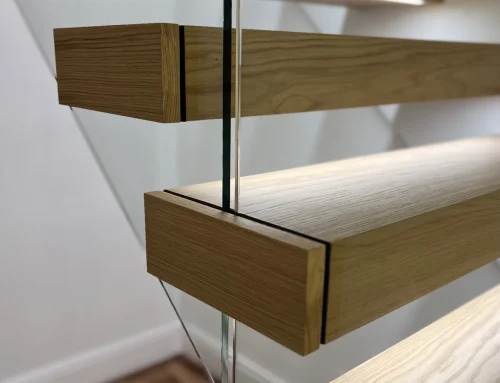
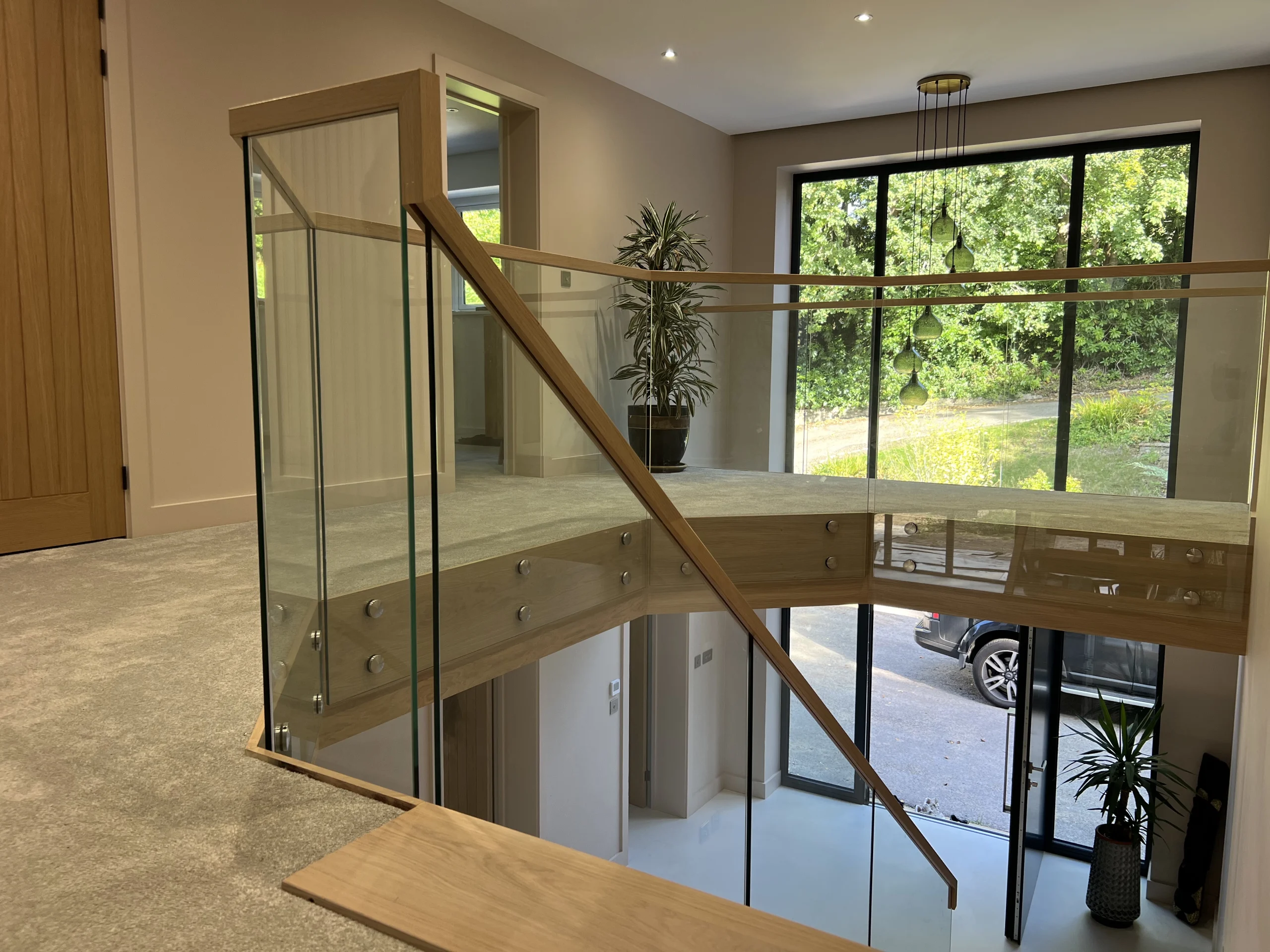
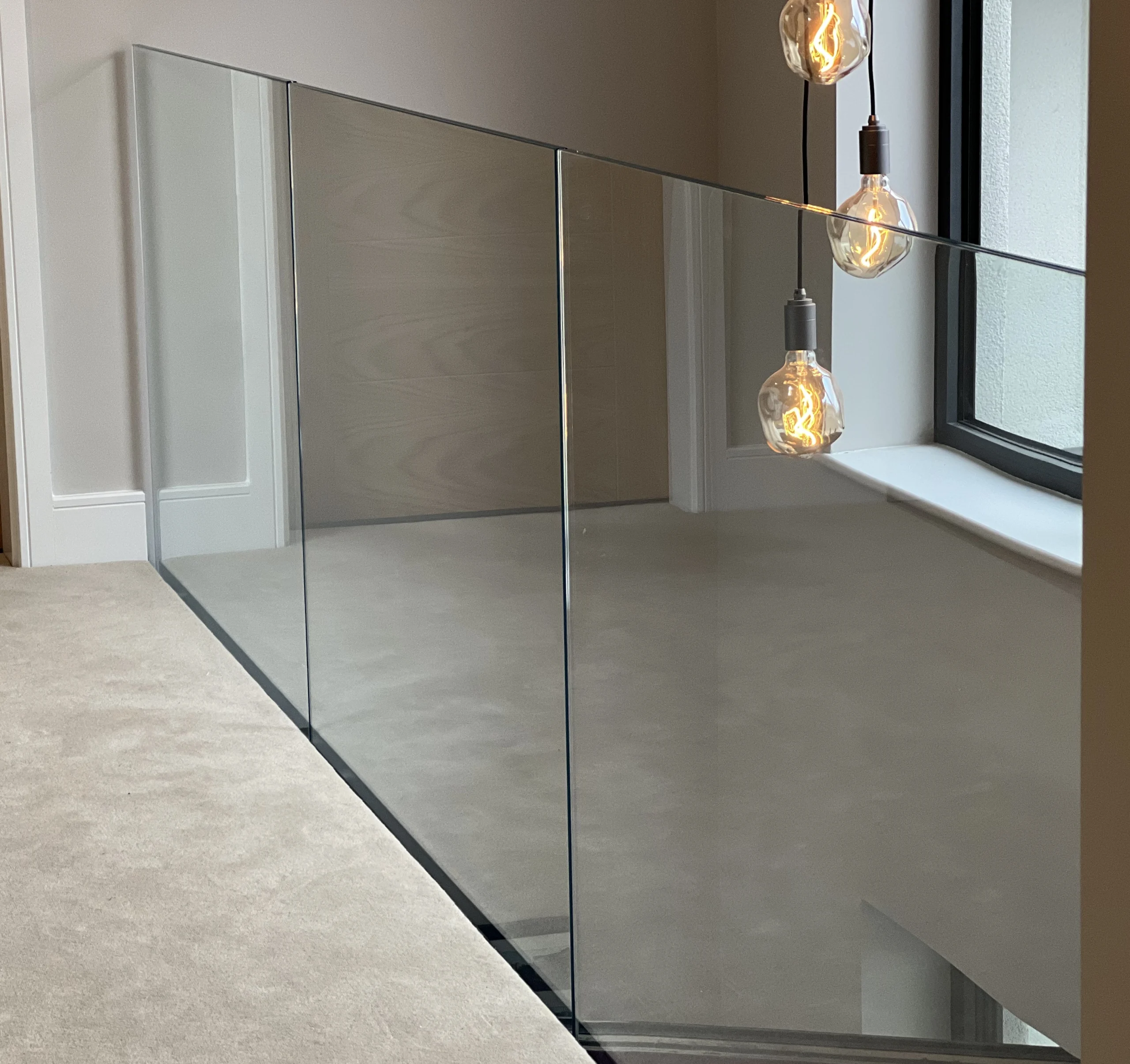
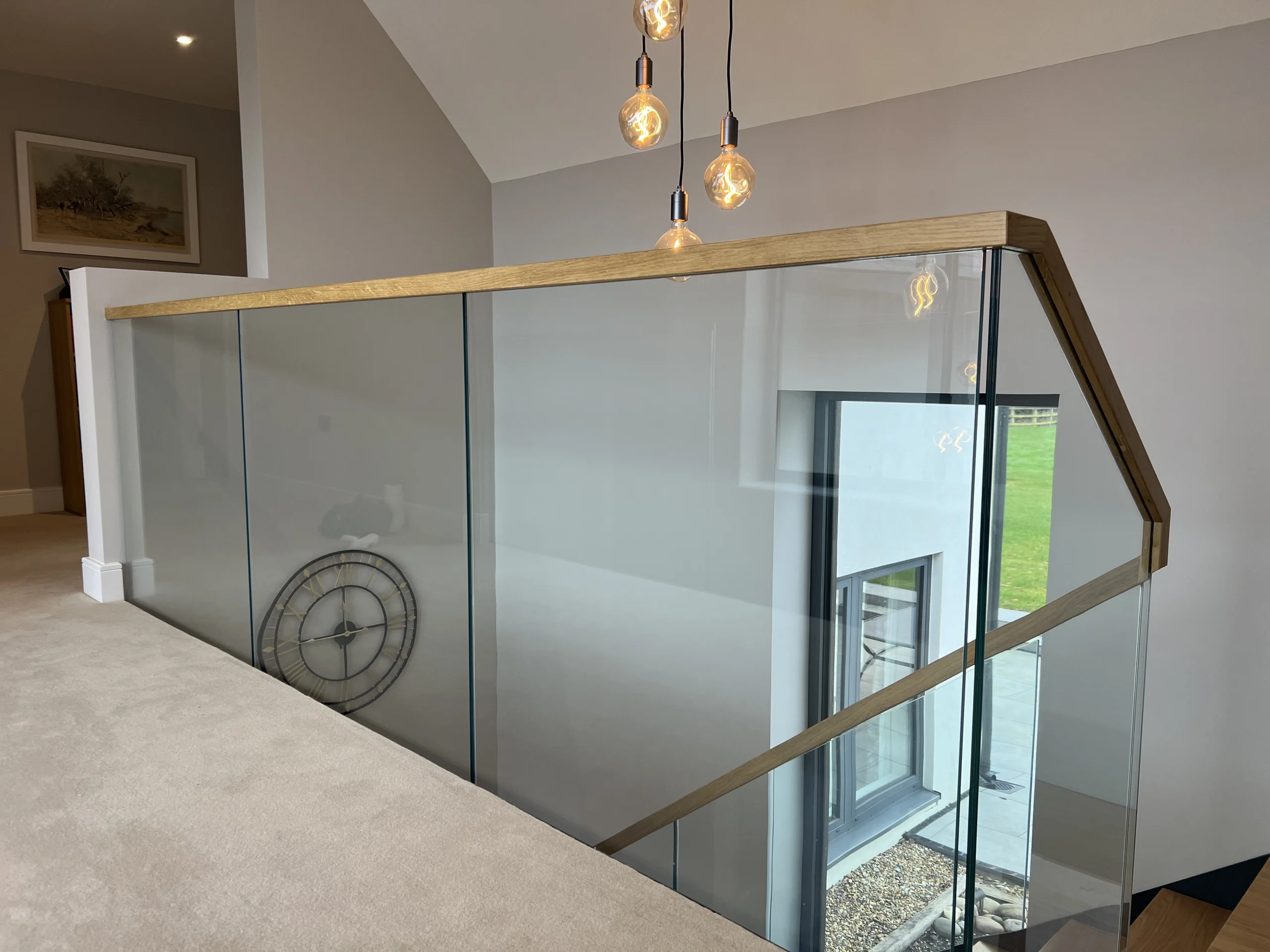
Frameless glass panels fixed using patch fittings or a base channel system — no visible posts or rails. 17.5–25mm toughened & laminated glass is required (BS EN 14449) as the glass itself provides the structural barrier. This is the most popular balustrade specification for contemporary residential staircases in the UK — the absence of visible fixings creates a visual transparency that maximises light flow and spatial openness.
Framed Glass — Structural Definition
Glass panels within a steel post-and-rail frame. 10–12mm toughened glass is used as the frame provides structural support. Slightly lower cost than frameless and easier to retrofit on existing structures. Provides more architectural definition — the post rhythm creates a visual cadence along the staircase that some designers prefer.
Cable Balustrade — Open & Nautical
Tensioned stainless steel cables between steel posts — the most open balustrade system. Maximum light transmission, minimal material presence. Subject to the 100mm sphere rule like all other systems — cable spacing must not exceed 100mm. Popular for coastal properties, barn conversions and contemporary industrial interiors. See our Glass Balustrade Regulations guide for full compliance details.
LED Lighting: The Architectural Finish
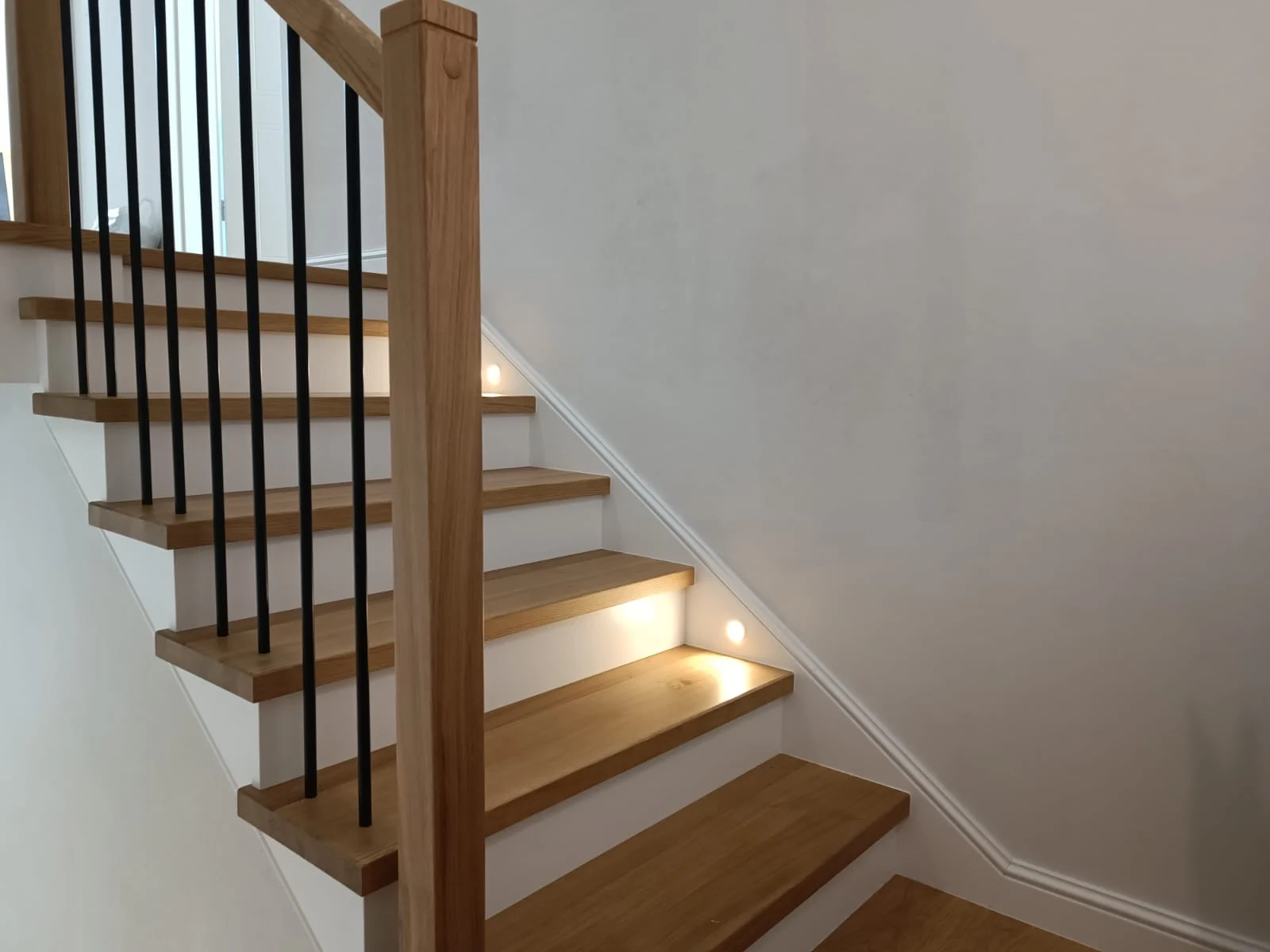
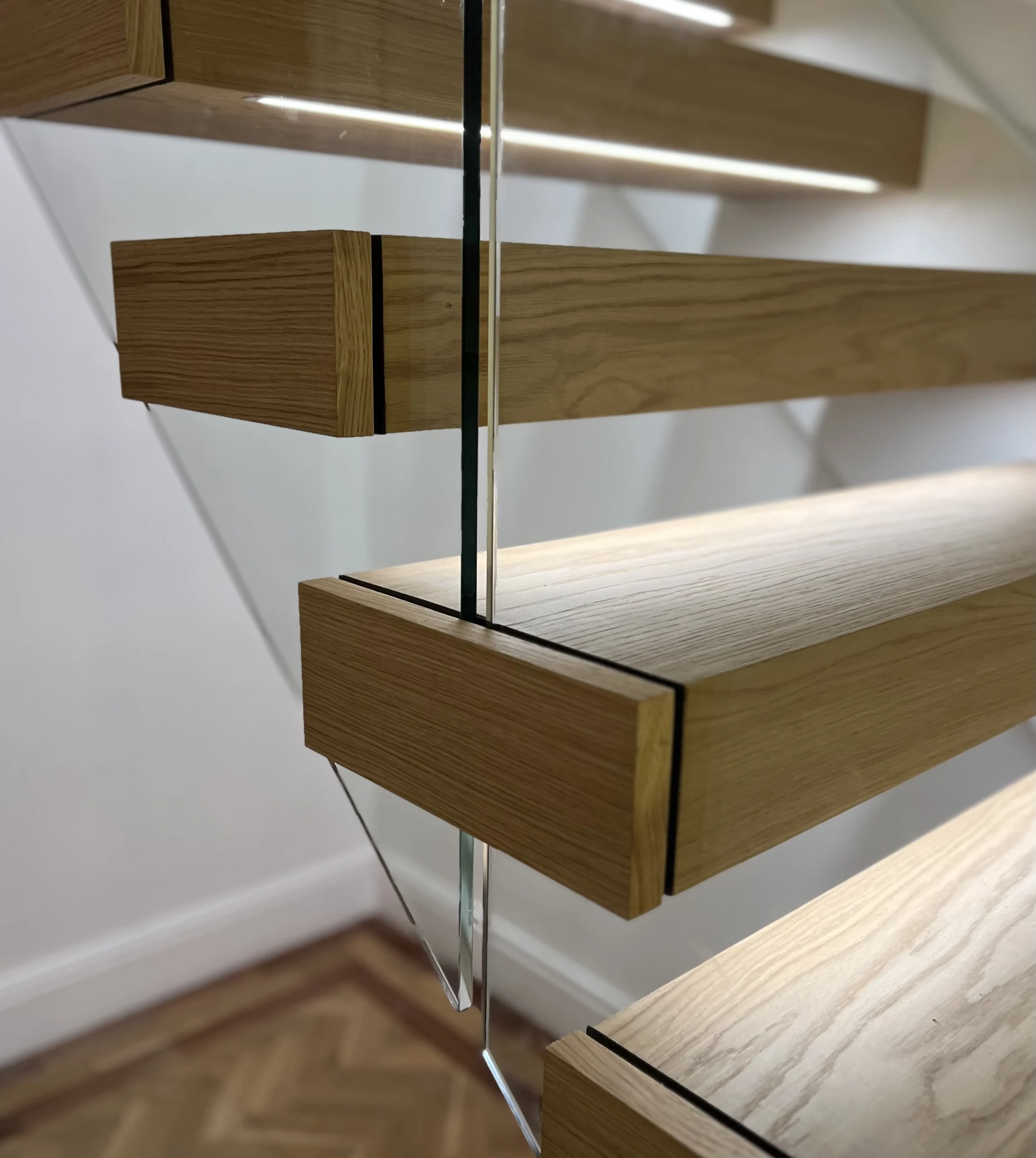
LED tread lighting transforms a contemporary staircase — particularly after dark, when the staircase becomes the dominant light source in an open-plan space. Recessed LED strips fitted beneath each tread create a continuous horizontal light line that outlines every step against the staircase structure, producing an effect that is both functional and highly dramatic.
Continox integrates LED lighting during fabrication — not as a post-installation addition. Channels are machined into the tread support brackets, the LED strip is fitted and wired in the workshop, and the complete system arrives on site ready for connection to a switched spur. Warm white (2700–3000K) is the most popular specification for residential staircases, producing a light quality consistent with the ambient lighting of a contemporary home. RGB options are available for commercial or high-specification residential applications.
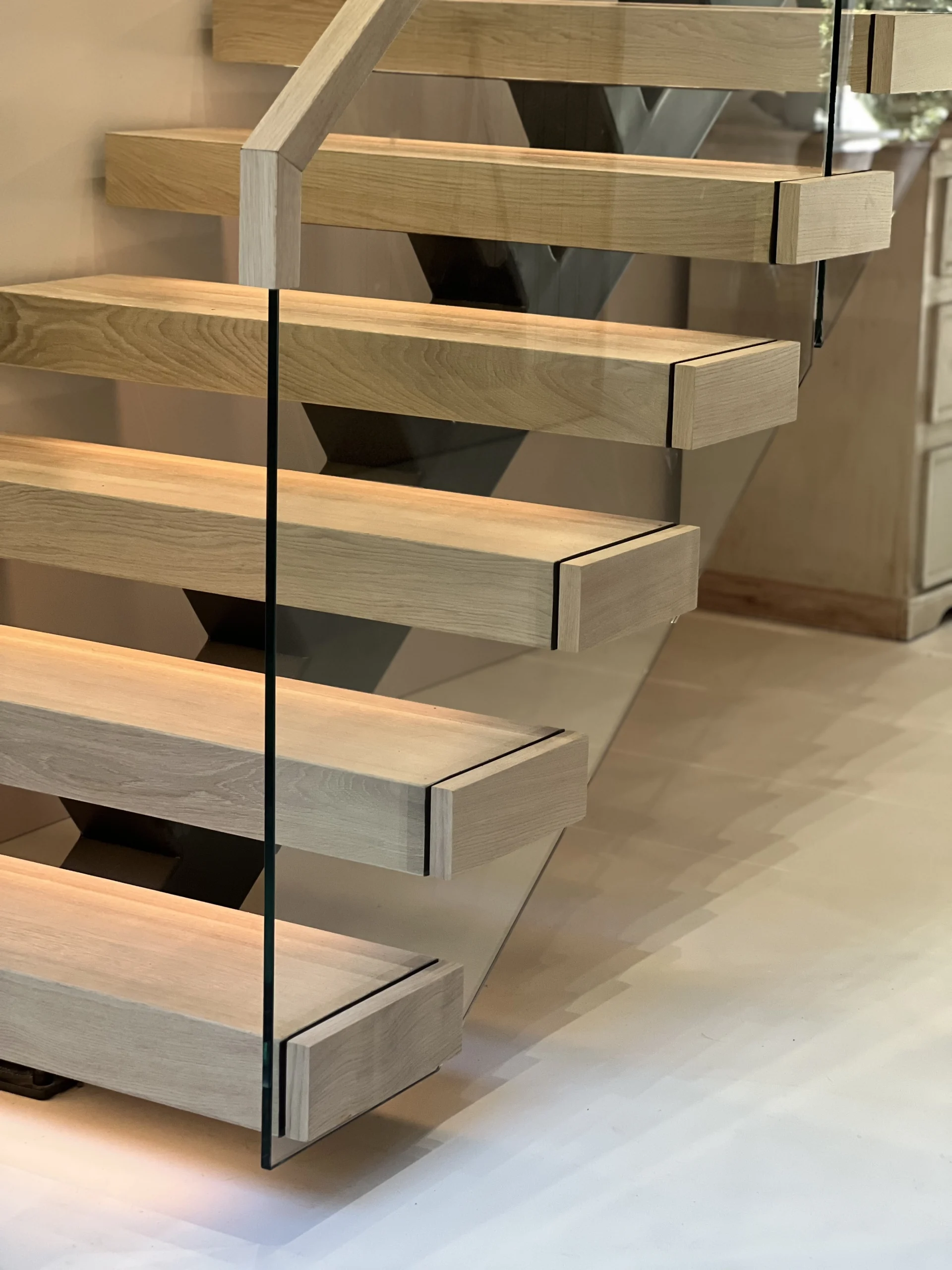
Contemporary staircase with factory-integrated LED tread lighting by Continox — central spine, oak treads, frameless glass balustrade.
UK Regulations: What You Need to Know
Every new contemporary staircase in the UK must comply with Approved Document K (protection from falling) — covering tread dimensions, headroom, handrail heights and balustrade specifications. Building Regulations approval is required for all new staircase installations and material alterations.
Key requirements at a glance: Max rise per step: 220mm (private), 190mm (common/shared). Min going per step: 220mm (private), 250mm (common). Handrail height: 900–1000mm above pitch line. Landing balustrade: 900mm (domestic ground floor), 1100mm (elevated/commercial). 100mm sphere rule applies to all balustrade openings including glass panel gaps. For frameless glass: minimum 17.5mm toughened & laminated glass required. See our UK Staircase Building Regulations guide for full details.
Continox provides full compliance documentation as standard on every project — structural calculations, CAD drawings and Declaration of Performance — making Building Control submission and sign-off straightforward. All staircase systems are engineered to Part K before manufacture begins.
The Continox Design Process
Every contemporary staircase Continox designs begins with a free on-site consultation — not an online configurator or a generic quote. Here is what the process involves from first contact to completed installation.
On-Site Survey & Design Brief
We visit your property, take precise measurements, assess the structural context and discuss your design preferences and budget. A guide price is provided within 24 hours.
Photorealistic Visuals
Our design team produces photorealistic 3D visuals of your staircase accurately placed in your space — including the correct materials, finish and glass specification. Review and refine until you're completely satisfied.
Structural Calculations & Fixed Price
Full structural engineering to BS EN 1090 and Approved Document K. Detailed CAD drawings for Building Control. Fixed-price quotation — the price we quote is the price you pay.
Fabrication & Installation
Precision fabricated in our own workshop. Installed by our in-house team — no subcontractors, no surprises. Typical lead time: 6–10 weeks from approved design to completed installation.
Contemporary Staircase Cost Guide
Contemporary bespoke staircase costs vary depending on the structural type, tread material, balustrade specification and any additional features such as LED lighting. The following guide prices apply to Continox installations, including design, manufacture and installation.
All prices include free 3D photorealistic visuals, structural calculations, CAD drawings and compliance documentation. For a full breakdown of what affects the cost, see our Bespoke Staircase Cost UK guide. For design inspiration, see our Modern Staircase Ideas UK guide.
Contemporary Staircase Design — FAQ
Common questions from homeowners, architects and developers about designing a contemporary staircase in the UK.
Free 3D Visuals of Your Contemporary Staircase
Free on-site survey, photorealistic 3D visuals included, fixed-price quotation within 24 hours. Bespoke contemporary staircases from £7,900 — designed, manufactured and installed across the UK.