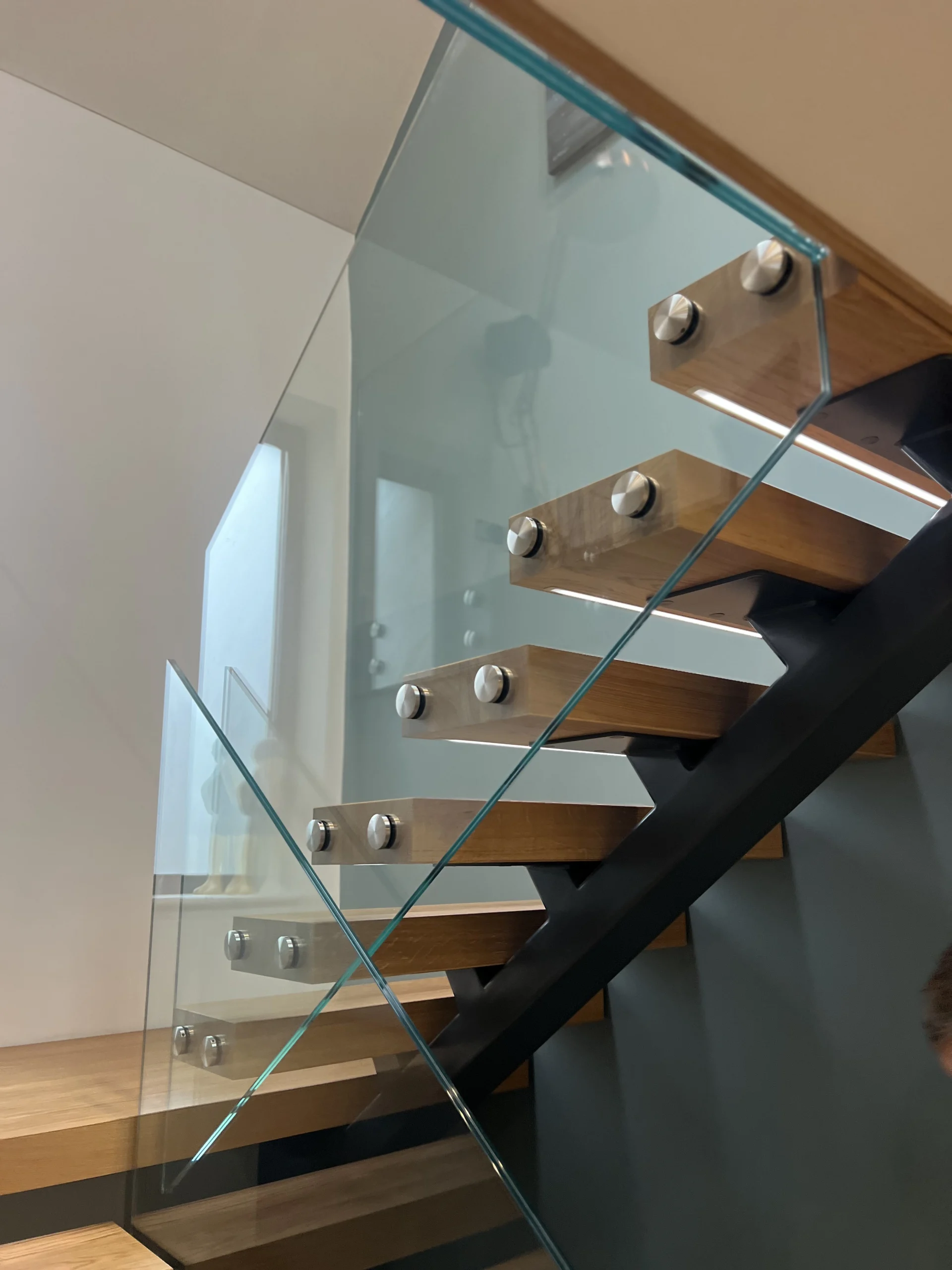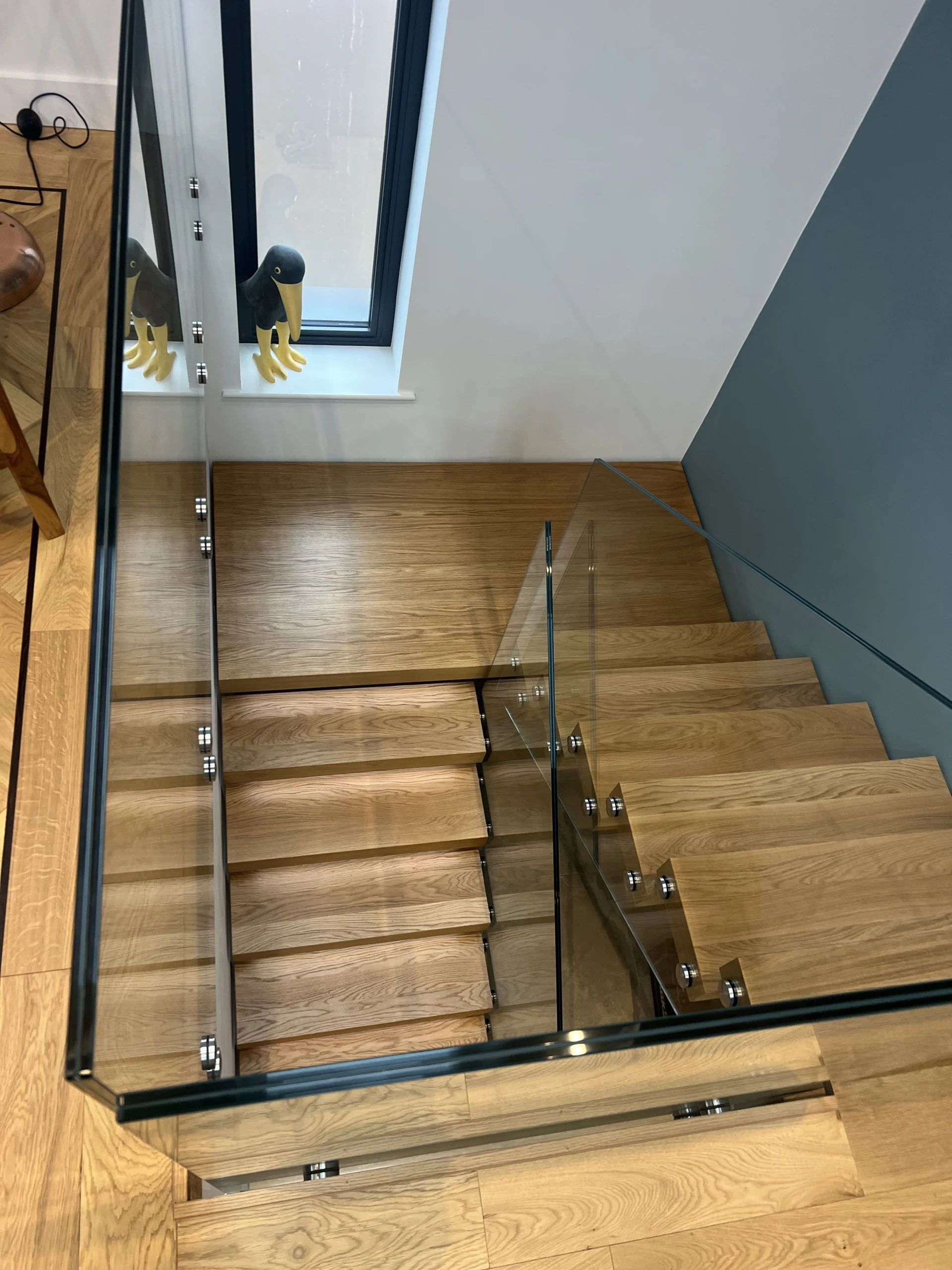

A glass staircase transforms the feel of a home more completely than almost any other single design element. The combination of structural transparency, light flow and minimalist aesthetic has made glass balustrade staircases the most requested design choice for contemporary UK homes — from open-plan new builds to high-end loft conversions. This guide covers every practical aspect: system types, glass specifications, UK regulations, design combinations and cost.
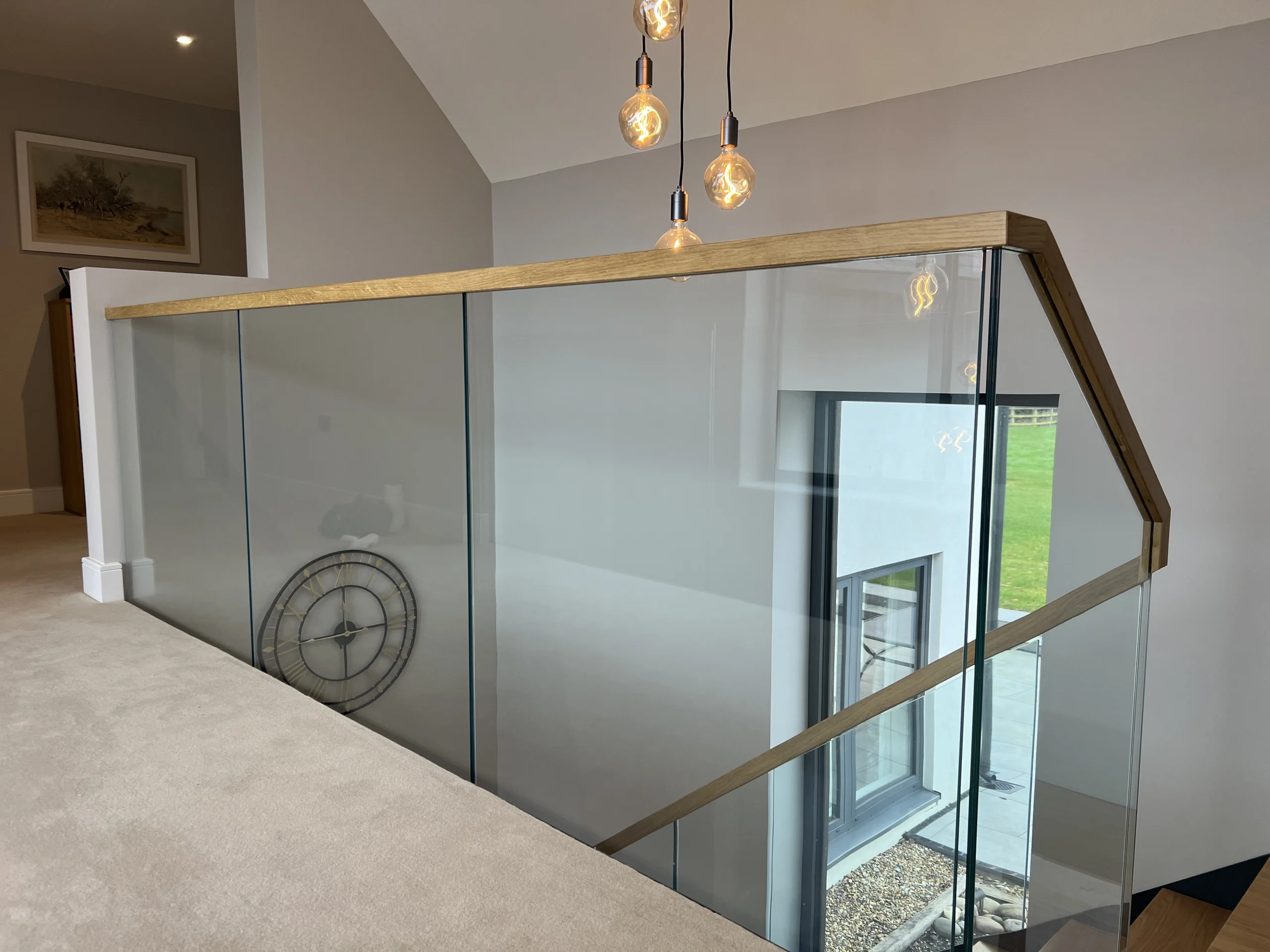
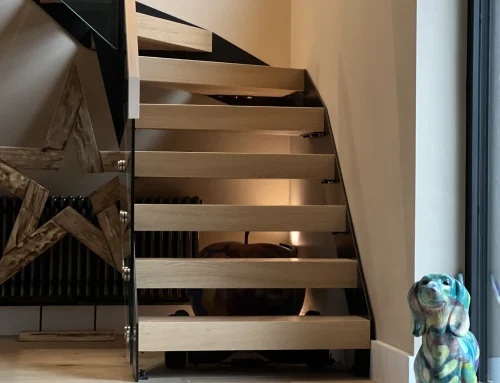
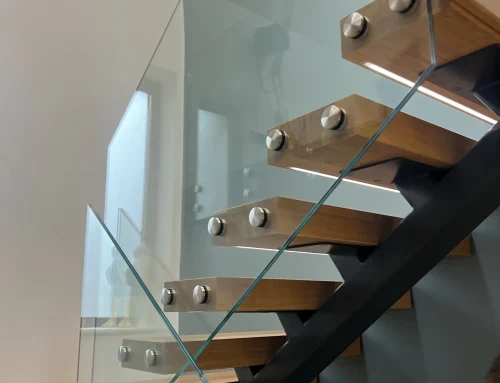
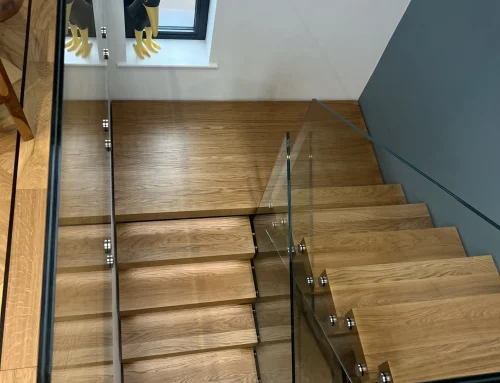
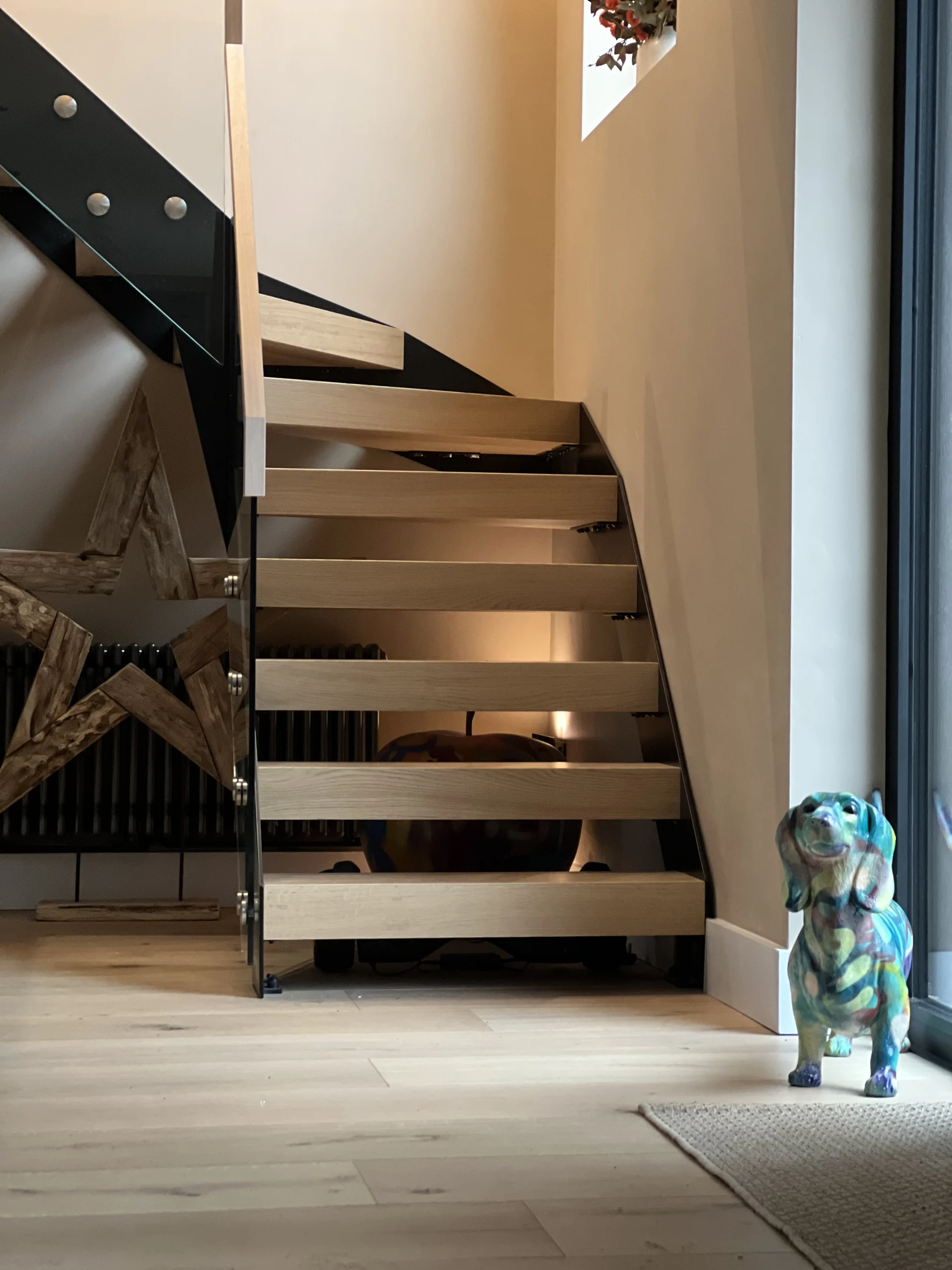
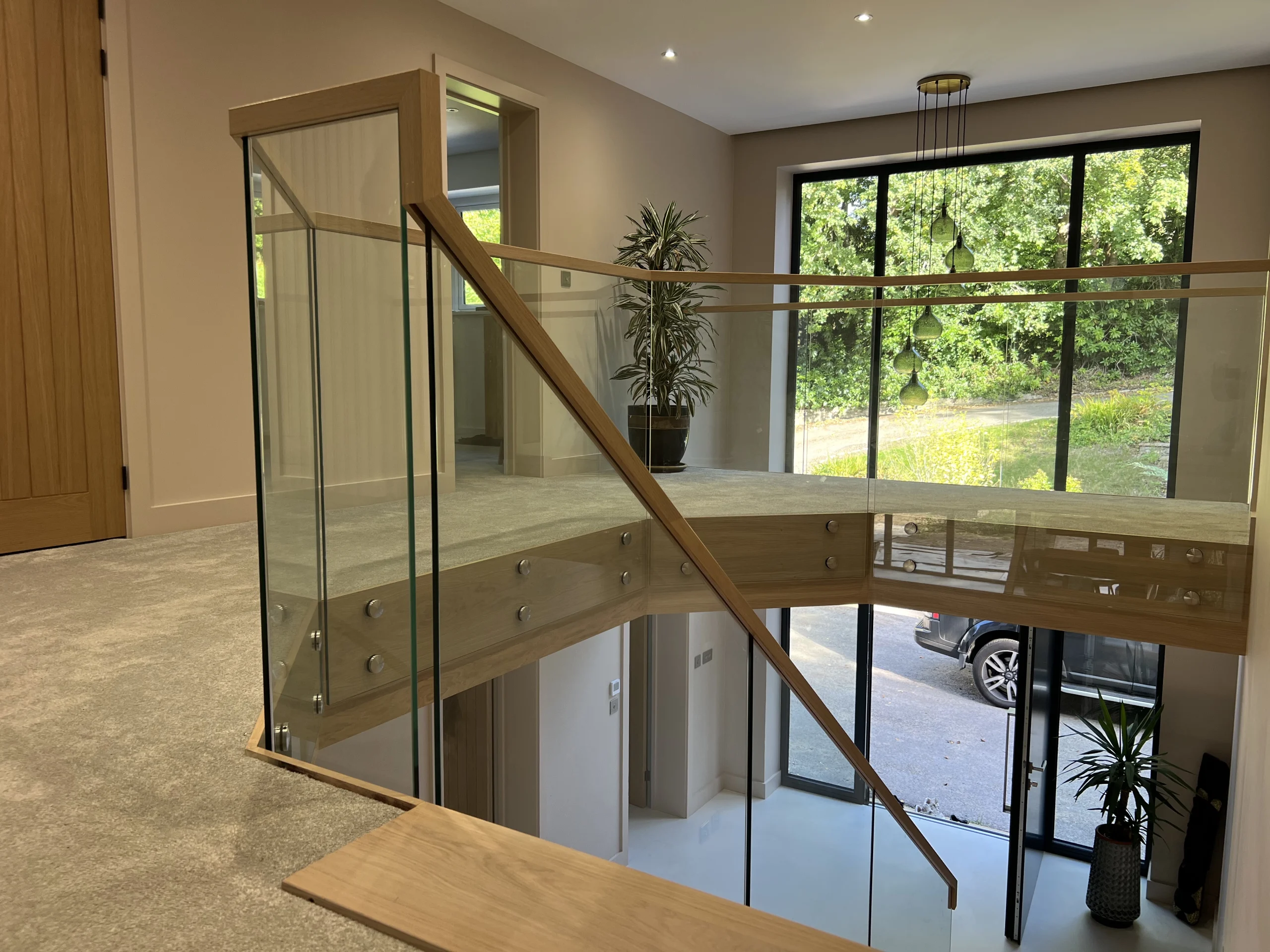
Bespoke glass staircase balustrade designed and installed by Continox — frameless system, Part K compliant.
Types of Glass Staircase Systems
"Glass staircase" is a broad term covering several distinct systems — each with different structural approaches, glass specifications and aesthetic results. Understanding which system suits your project is the starting point for any glass staircase design.
Frameless Glass Balustrade
Glass panels fixed directly to the stair structure using patch fittings or a channel system — no visible metal frame. The cleanest, most minimalist aesthetic. Combined with open-tread steel or oak stairs for maximum visual impact.
- 17.5–25mm toughened & laminated glass
- Patch fittings or base channel fixing
- Near-invisible fixings
- Part K & BS 6180 compliant
- Steel or oak handrail options
Framed Glass Balustrade
Glass panels within a steel or aluminium post-and-rail frame. Provides structural definition and is slightly more cost-effective than frameless. Popular on commercial staircases and where a more architectural, defined aesthetic is preferred.
- 10–12mm toughened glass panels
- Brushed steel or powder-coated posts
- Wider range of post profiles
- Part K & BS 6180 compliant
- Easier to retrofit on existing stairs
Open Tread Staircase + Glass
Floating steel or oak treads combined with a frameless glass balustrade — the full contemporary glass staircase effect. Each tread appears to float against the glass panels, with maximum light flow through the stairwell from top to bottom.
- Open risers (100mm sphere rule applies)
- Steel plate, timber or combination treads
- Frameless glass balustrade
- Wall-fixed or central spine support
- LED lighting integration available
Central Spine + Glass
A single structural steel spine with cantilevered treads and a frameless glass balustrade — the most architecturally striking glass staircase configuration. Equally impressive from every angle. The preferred design for high-end residential projects.
- Steel spine — S275 or S355 structural grade
- Oak, walnut or steel treads
- Frameless glass balustrade both sides
- L-shape, U-shape or straight
- 3D photorealistic visuals included
Glass Specification: What You Need to Know
Not all glass is the same — and the specification matters both for safety and aesthetics. UK Building Regulations and British Standards set out the minimum glass specifications for balustrade applications. Understanding the options helps you make the right choice for your project.
Toughened vs Toughened & Laminated
Toughened glass (BS EN 12150) is approximately four times stronger than standard float glass and fractures into small, blunt fragments rather than sharp shards — a significant safety improvement. It is the minimum specification for framed glass balustrade systems where the frame provides structural support.
Toughened & laminated glass (BS EN 14449) adds a PVB or SGP interlayer between two panes of toughened glass. If the glass breaks, the interlayer holds the fragments in place — maintaining a barrier until replacement. For frameless glass balustrade systems, toughened & laminated glass is required because the glass itself provides the structural barrier. Without the lamination, a broken panel leaves no barrier at all. Continox specifies 17.5mm–25mm toughened & laminated glass for all frameless applications.
| Glass Type | Thickness | Standard | Application |
|---|---|---|---|
| Toughened (framed) | 10–12mm | BS EN 12150 | Framed post systems |
| Toughened & Laminated | 17.5mm | BS EN 14449 | Frameless (standard) |
| Toughened & Laminated | 21.5mm | BS EN 14449 | Frameless (elevated/commercial) |
| Toughened & Laminated | 25mm | BS EN 14449 | Frameless (high-load/commercial) |
| Low-iron toughened & lam. | 17.5–25mm | BS EN 14449 | Ultra-clear frameless (premium) |
Standard Clear vs Low-Iron Glass
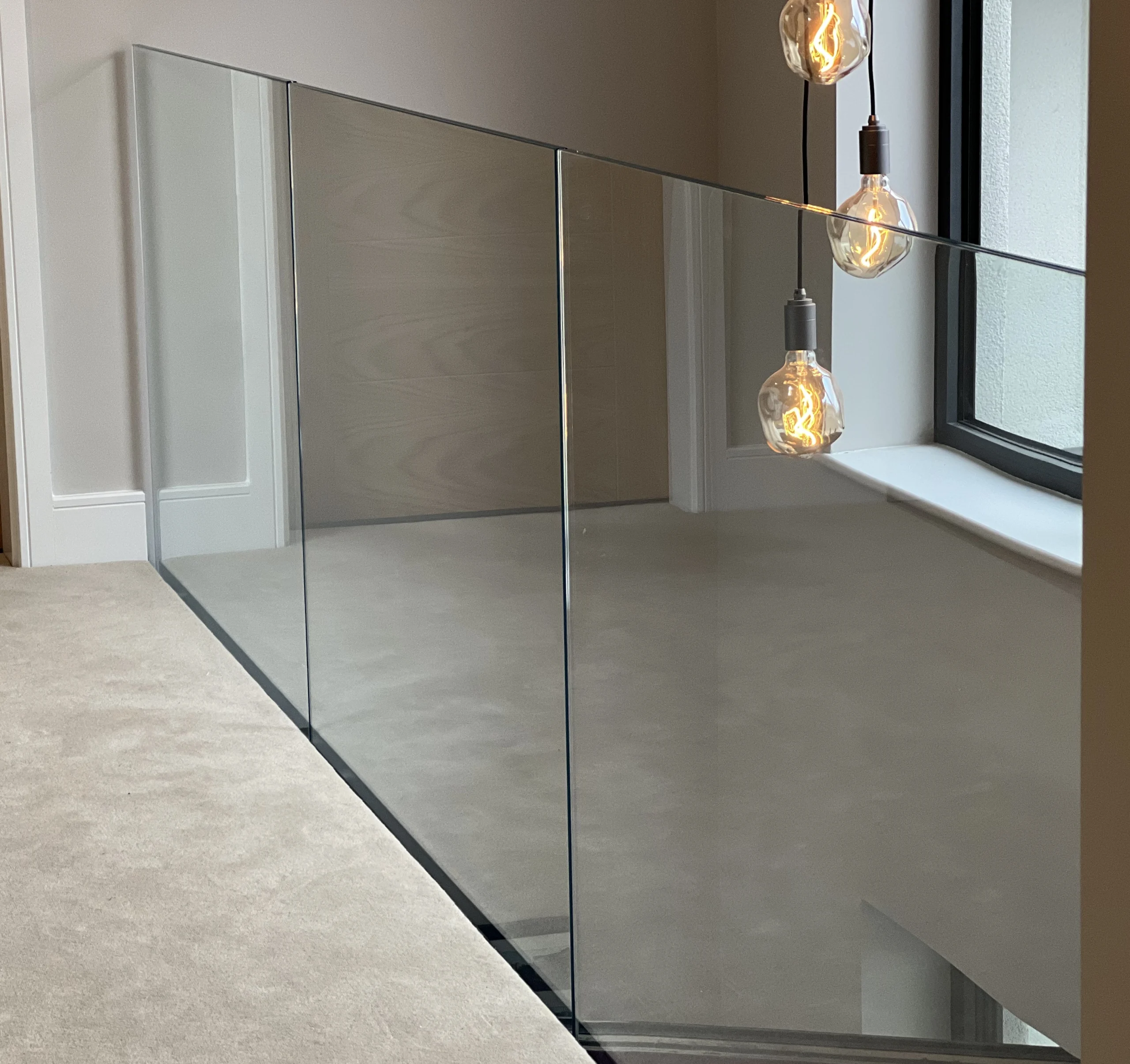
Standard toughened glass has a faint green tint — most visible when looking at the edge of the panel. For most residential applications this is perfectly acceptable. Low-iron glass (sometimes called ultra-clear or Optiwhite) has a significantly reduced iron content, eliminating the green tint entirely and producing a water-clear appearance. It is the premium specification for high-end frameless installations where the absolute clarity of the glass is part of the design intent.

Design Combinations: Tread, Frame & Handrail
The glass balustrade is one element of the staircase design — the tread material, stair structure and handrail profile combine with it to create the overall aesthetic. These are the most popular design combinations for contemporary UK homes.
Oak Treads + Frameless Glass
The most popular combination for residential new builds and refurbishments. Warm natural oak against transparent glass — classic contemporary. Works across a wide range of interior styles.
Steel Plate Treads + Glass
Industrial-contemporary look. Flat steel plates with brushed or powder-coated finish. Particularly effective in open-plan spaces with steel structural elements elsewhere in the building.
Walnut Treads + Glass
Premium material combination for high-end residential projects. Dark walnut grain against clear glass creates a dramatic visual contrast. Often paired with a matching walnut or brushed steel handrail.
Glass + Steel Handrail
Round or flat brushed stainless steel or powder-coated mild steel handrail — the most common specification for frameless glass systems. Clean, minimal, and structurally robust.
Glass + Timber Handrail
Oak or walnut timber handrail capping on a steel core. Provides a warmer feel than an all-steel handrail and is popular on residential projects with oak treads for material consistency.
LED Integrated Glass Staircase
Recessed LED strip lighting under each tread, in the base channel of the glass balustrade, or at the stair spine. Creates a dramatic effect at night and improves visibility. Available on all Continox bespoke staircase designs.


UK Regulations for Glass Staircase Balustrades
Glass staircase balustrades in the UK must comply with Approved Document K (protection from falling), BS 6180 (barriers in and about buildings) and the glass specification standards BS EN 12150 and BS EN 14449. Here are the key requirements:
Handrail height: 900–1000mm above the pitch line of the stair. Landing balustrade height: minimum 900mm for domestic use, 1100mm for elevated positions (above ground floor) and all commercial applications. 100mm sphere rule: no opening in the balustrade system — including the gap at the base of the glass panel — may permit the passage of a 100mm diameter sphere. Structural load: residential balustrades must resist 0.74 kN/m horizontal load (BS 6180). Commercial applications require 3.0 kN/m.
For full details on all glass balustrade regulations, dimensions and glass specification requirements, see our comprehensive Glass Balustrade Regulations UK guide. For staircase dimension requirements see our UK Staircase Building Regulations guide.
Frameless glass requires toughened & laminated glass. Building Regulations require that frameless glass balustrades — where the glass is the primary structural barrier — use toughened & laminated glass to BS EN 14449. A frameless system installed with toughened-only glass is non-compliant. All Continox frameless installations specify toughened & laminated glass (17.5mm–25mm) as standard.
Glass Staircase Cost UK: What to Expect
Glass staircase costs in the UK vary significantly depending on whether you are specifying a glass balustrade for an existing staircase or a complete new bespoke staircase with glass balustrade. The following guide prices cover both scenarios.
All Continox staircase prices include free 3D design visuals, structural calculations, CAD drawings and compliance documentation. Glass balustrade prices include free on-site survey and fixed-price quotation. For a full cost breakdown see our Bespoke Staircase Cost UK guide.
Maintaining Your Glass Staircase
Glass staircases are genuinely low maintenance — particularly by comparison with timber staircases which require periodic sanding, staining and varnishing. The following tips will keep your glass staircase looking its best with minimal effort.
Regular Cleaning
Clean glass panels with a soft microfibre cloth and a diluted glass cleaner or warm soapy water. Avoid abrasive cleaners or scouring pads — they scratch the glass surface permanently. A squeegee finish prevents water marks.
Fingerprints — Low-Iron Glass
Low-iron glass shows fingerprints more obviously than standard glass because of its higher transparency. An anti-fingerprint coating can be applied at manufacture. Otherwise, a weekly wipe with a glass cleaner is sufficient for most households.
Metal Fixings & Hardware
Brushed stainless steel patch fittings and handrail brackets require only an occasional wipe with a stainless steel cleaner to maintain their appearance. Check fixings annually for security — any movement should be investigated immediately.
Timber Treads & Handrails
Oak or walnut treads should be treated with a hardwax oil every 2–3 years depending on foot traffic — or more frequently in high-use areas. Avoid wet mopping directly onto timber treads — use a damp cloth and dry immediately.
Recent Glass Staircase Projects
Every Continox glass staircase is designed from scratch for the specific space, material preference and budget. Here is a selection of recent installations across the UK.

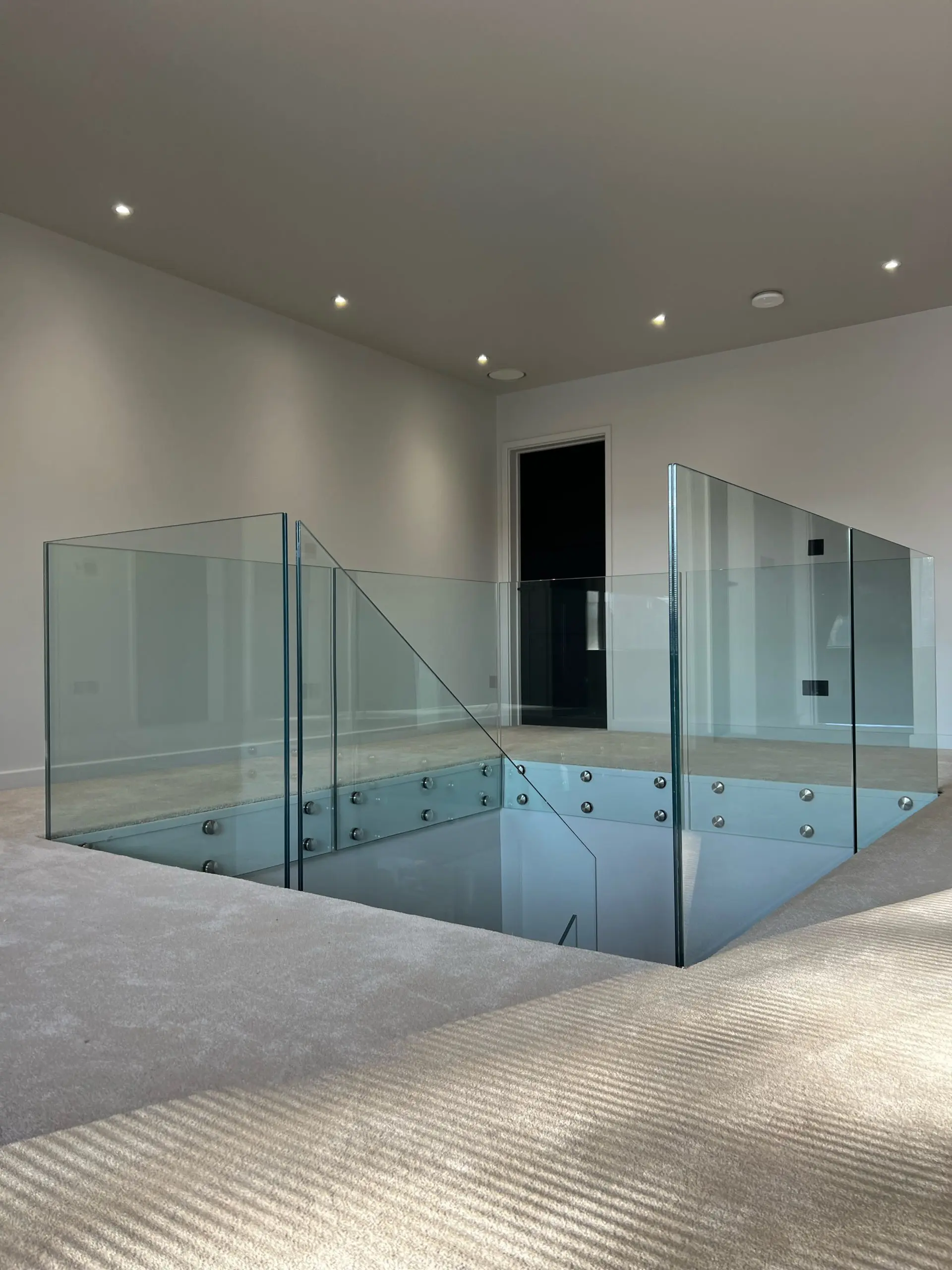
View more glass staircase and balustrade projects in our project gallery, or see design inspiration in our Modern Staircase Ideas UK guide.
Glass Staircase UK — FAQ
Common questions from homeowners, architects and developers about glass staircases in the UK.
Free 3D Design Visuals & Fixed-Price Quote
Free on-site survey, photorealistic 3D visuals included, fixed-price quotation within 24 hours. Bespoke glass staircases from £7,900 — designed, manufactured and installed across the UK.