
10 Signs Your Staircase Needs Replacing — UK Homeowner's Guide 2026
Most UK staircases last 30–60 years before they need either significant repair or full replacement. The challenge is recognising when a staircase has crossed the line from "needs maintenance" to "needs replacing" — get it wrong, and you either spend thousands on repairs that don't fix the underlying problem, or you live with a staircase that fails Building Control on resale. This guide covers the 10 specific warning signs UK surveyors and joiners look for, with a self-assessment checklist at the end and clear repair-vs-replace cost comparisons. If three or more signs apply, run our UK staircase cost calculator for an instant replacement estimate.
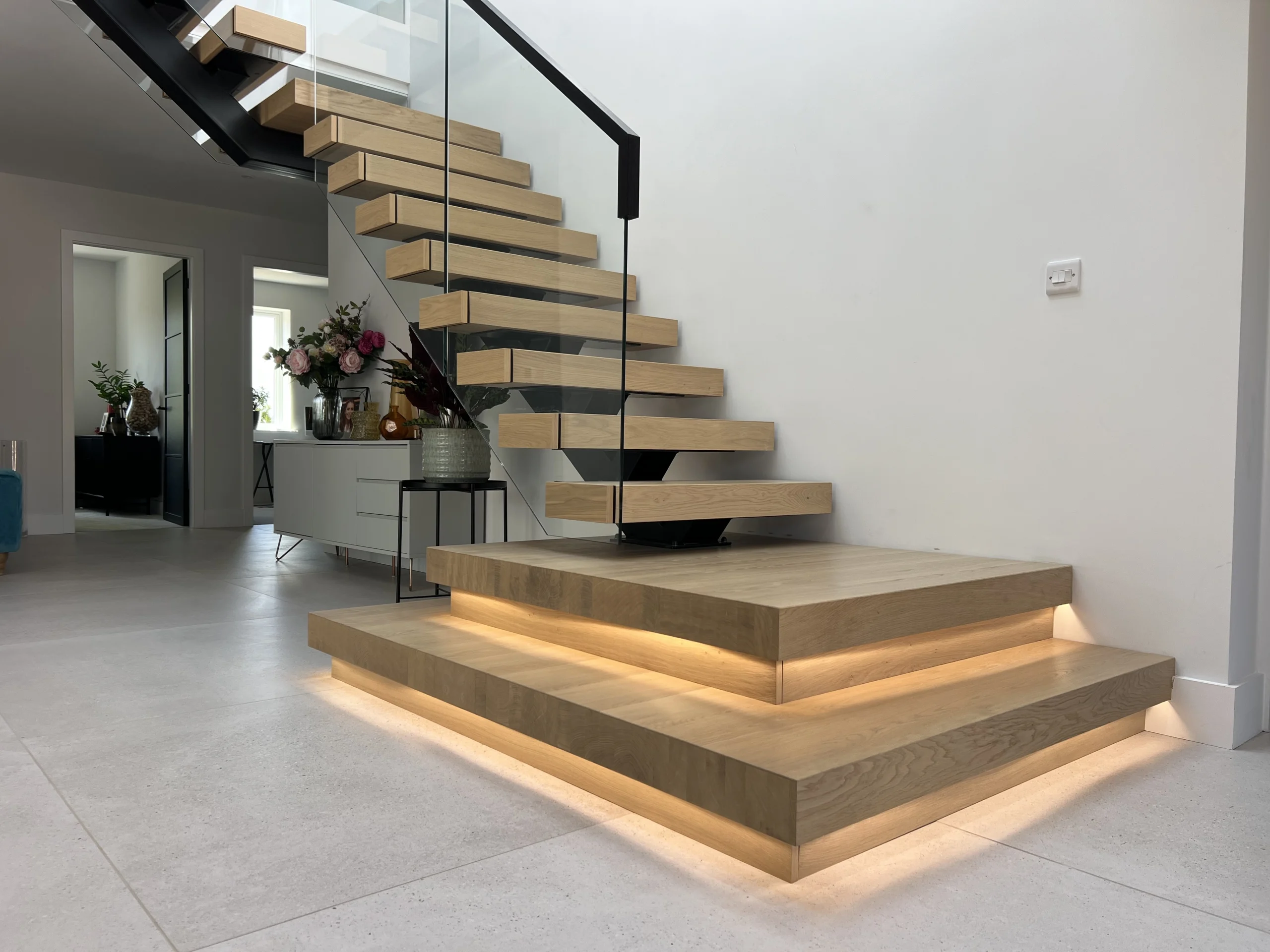
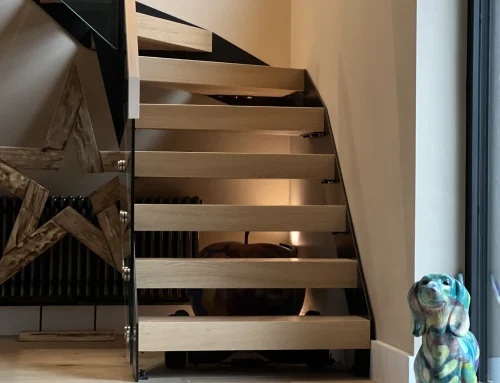
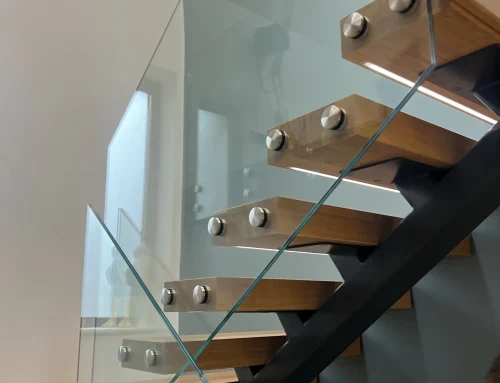
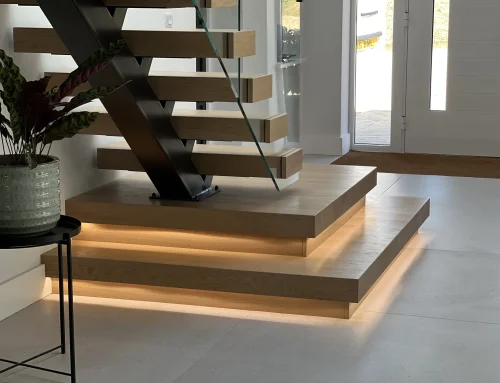
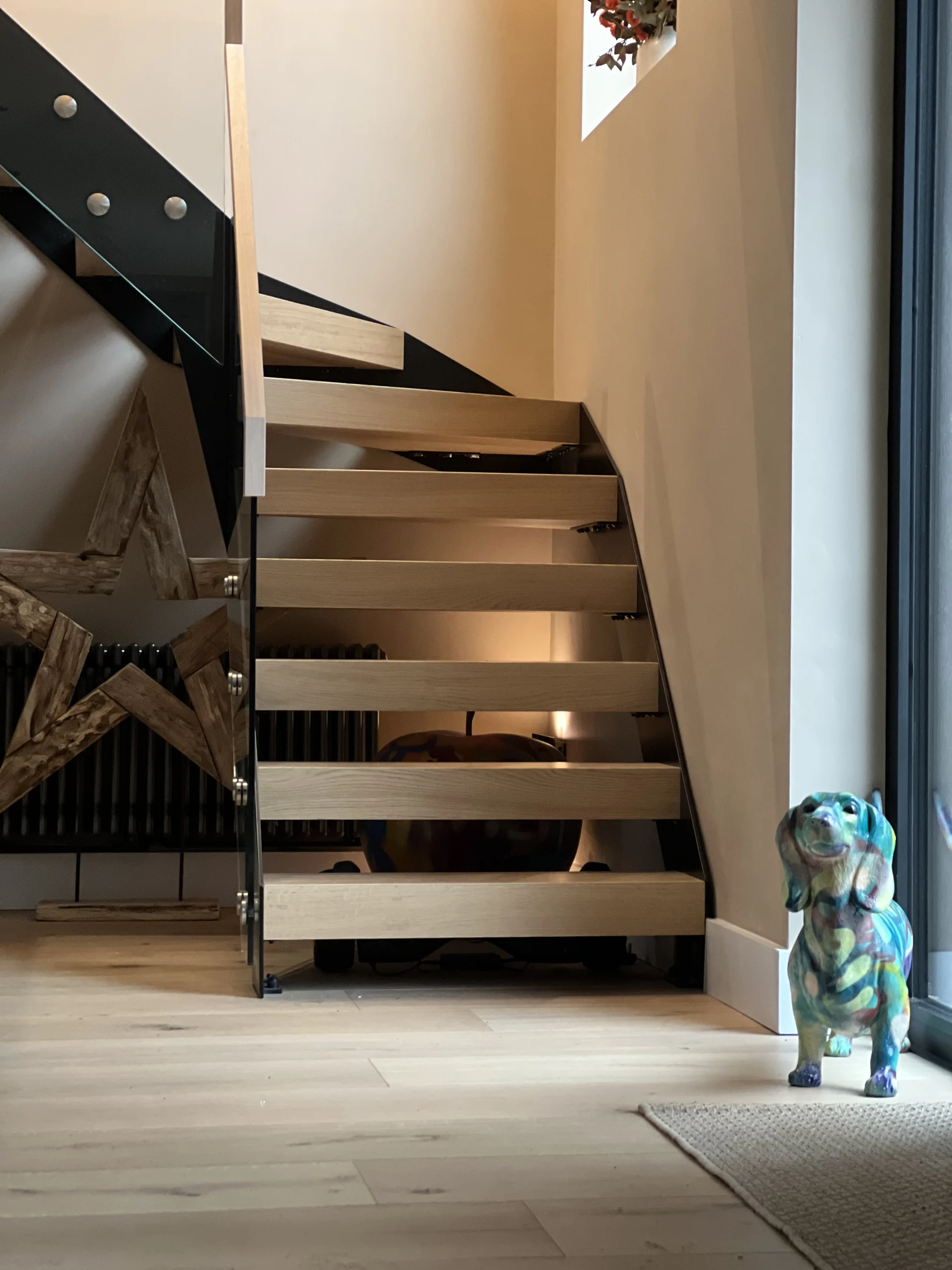
When repair is no longer enough — a bespoke replacement staircase by Continox transforms safety, compliance and property value in one project.
The 10 signs your UK staircase needs replacing: (1) cracked or splitting treads, (2) persistent multi-step squeaking, (3) visible bounce or flex underfoot, (4) loose or wobbly handrails and balustrades, (5) sagging or uneven steps, (6) wet rot or damp smell, (7) failing Part K compliance (rise, going, headroom or pitch), (8) dated design blocking light or property value, (9) worn or dangerous nosings, and (10) negative surveyor or estate agent feedback. 3+ signs = consider replacement. Single-issue cosmetic problems can be repaired for £500–£2,500. Structural or compliance issues require full replacement at £3,500–£25,000 depending on specification.
The 10 Warning Signs — What to Look For
The signs below are listed in rough order of severity — the first three are typically cosmetic or wear-related and can sometimes be repaired, while signs 5–7 are structural or compliance issues that almost always require full replacement. Read carefully — don't assume a single sign means you must replace, but don't ignore a combination of three or more.
Visible cracks running across or along the tread surface are the most common early warning sign. Hairline cracks (under 1mm wide) are usually cosmetic — caused by seasonal humidity changes shrinking and expanding the timber. Cracks wider than 2mm, or cracks that propagate further each month, indicate the timber has lost integrity and is approaching failure.
Pay particular attention to the front edge of treads (the nosing) — this takes the highest stress and is where structural failure begins. A cracked nosing is a slip risk and a tripping hazard, especially if the crack extends below the visible surface.
Replace individual cracked tread, sand and refinish surrounding treads to match. Works for 1–2 treads on an otherwise sound staircase.
If 3+ treads show cracks, the staircase has reached end of life — full replacement is more cost-effective than serial tread replacement.
Every staircase squeaks a bit. The issue is when squeaking is loud, occurs on multiple consecutive steps, and gets worse over time. Squeaks are caused by friction between treads and the supporting structure (strings, risers, glue blocks) — a sign that fixings have loosened or that timber has shrunk away from its joints.
A single squeaky step is almost always a fixable issue (re-glue, re-screw, add a wedge). Squeaks across 5+ consecutive steps suggest the entire staircase substructure has loosened — typical on staircases over 40 years old where the original mortise-and-tenon joints have weathered through decades of seasonal movement.
Joiner can re-glue, re-screw and add wedges from underneath the staircase if accessible. Works on isolated squeaks.
Multi-step squeaks indicate substructure failure — fix one squeak, the next emerges. End-of-life staircase signal.
A well-built staircase feels solid — when you place your weight on a tread, the tread should not visibly deflect. If you can feel the tread move down by 2mm+ under normal weight, or if the entire flight feels "spongy" as you climb, the structural members supporting the staircase have weakened.
The cause is typically string failure (the diagonal members carrying the treads) or joist failure where the staircase top connects to the upper floor. Both are structural issues — neither can be safely "repaired" with surface-level work.
Safety risk — act nowA staircase that flexes underfoot is structurally compromised and at risk of partial or total collapse under load. This is particularly dangerous for households with elderly residents, young children, or anyone who uses the staircase carrying heavy items. If you can feel meaningful bounce or flex, stop using the staircase for heavy loads and arrange a structural survey within 30 days.
Adding sister joists or reinforcing strings can buy 2–5 years on isolated cases — but the underlying timber is already failing.
Structural failure = full replacement. This is the point at which keeping the existing staircase becomes false economy and a safety risk.
The balustrade and handrail are the single most safety-critical components of a staircase — they exist specifically to catch a falling user. Under UK Building Regulations Part K, balustrades on domestic staircases must withstand a 0.36 kN/m horizontal load (equivalent to a 36 kg adult leaning into them). A wobbly balustrade fails this requirement and is a Building Control non-compliance.
Test it: grip the handrail near the top newel post and pull horizontally. A sound balustrade should not move at all. Any visible movement, creaking, or "give" indicates the fixings have loosened or the structure has deteriorated. The 100mm sphere rule (no gap large enough for a child's head to pass through) also fails when spindles loosen and shift.
Re-tightening fixings, replacing individual spindles, re-bedding handrail brackets. Works if the issue is isolated to one section.
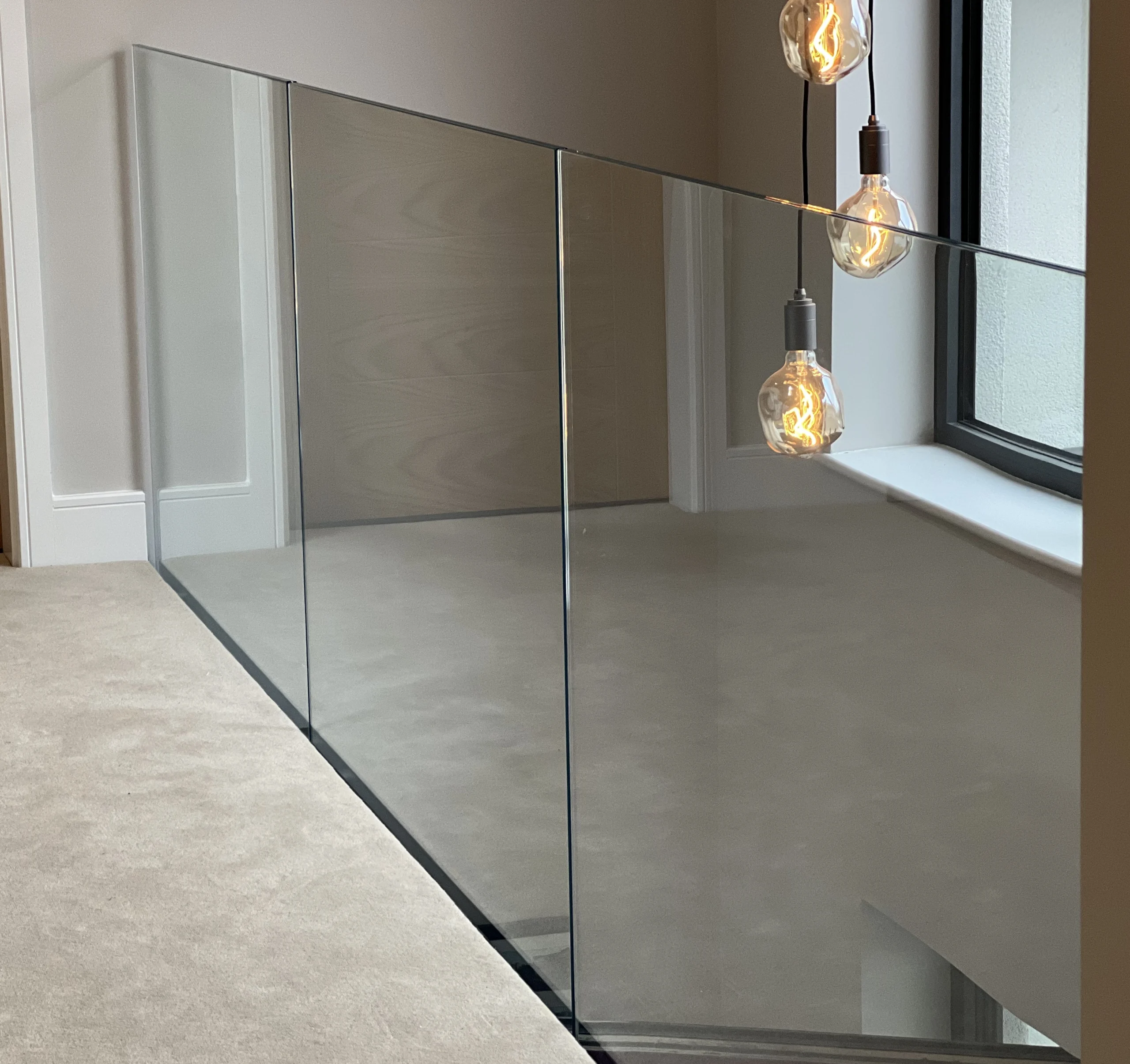
Replace the entire balustrade — keep the existing staircase. Modern glass balustrade from £350/m framed, £450/m frameless.

Walk slowly down your staircase, looking at the tread surfaces. They should all sit at the same angle and the same depth. If you see treads dipping in the middle (creating a hollow), tilting toward one side, or projecting at different distances, the strings carrying them have deflected or the tread fixings have moved.
This problem doesn't fix itself — it gets worse. A tread that has dropped 5mm this year will drop further next year as the load redistributes onto compromised structure. At some point a step gives way unexpectedly, typically when someone is mid-stride. Pay attention to one specific issue: if the rise (the vertical distance between consecutive treads) varies by more than 5mm across the flight, the staircase is non-compliant with Part K — every step in a flight must have identical rise. Read more in our UK 2R+G stair formula guide.
Adjusting individual treads on a sagging structure rarely holds — the underlying string or substructure is at fault.
Structural failure of strings or substructure = full replacement is the only durable fix.
Timber staircases are vulnerable to wet rot when exposed to sustained moisture — typically from a leaking roof above, a faulty bathroom seal nearby, or a damp wall the staircase is fixed against. Wet rot weakens timber from the inside out: a tread or string that looks intact on the surface can be soft and crumbly internally.
Test for wet rot: press a screwdriver firmly into the timber at suspect locations (under-tread, where strings meet walls, at floor level). Sound timber resists; rotten timber accepts the screwdriver with little force. A musty damp smell in the stairwell, visible mould patches, or dark staining on timber are also warning signs.
Address the moisture source firstReplacing a rot-damaged staircase before identifying and fixing the moisture source is futile — the new staircase will rot in turn. Common sources: leaking roof valleys above stairwells, faulty bathroom waste seals, condensation on cold north-facing walls, rising damp through unsealed concrete floors. A surveyor can identify the source; a Continox survey will flag it before any replacement quote is issued.
Localised wet rot in 1–2 components can occasionally be cut out and replaced — but the rot has typically spread further than visible.
Full replacement after the moisture source is fixed. Modern designs (steel + oak) are inherently more rot-resistant than all-timber.
Spotted 3+ Signs? Calculate Your Cost
Adjust staircase type, material and balustrade for instant 2026 UK pricing. Includes regional adjustment for London, South, Midlands, North and Scotland.
UK Building Regulations Approved Document Part K sets minimum standards for staircase geometry: maximum 220mm rise, minimum 220mm going, maximum 42° pitch, minimum 2,000mm headroom (or 1,800mm for loft conversions). Many older UK staircases — particularly Victorian and early-20th-century homes — fail one or more of these requirements.
Like-for-like replacement of a non-compliant staircase still triggers full Part K compliance — you can't legally replace a non-compliant staircase with another non-compliant staircase. If the existing geometry fails Part K, your replacement design must resolve it (longer footprint, added quarter-turn, lowered headroom obstruction, etc.). This is a design issue best addressed at survey stage, not after the new staircase is built. Read our UK staircase headroom requirements guide for the full breakdown.
Quick Part K self-check: Measure your existing staircase rise (vertical distance between consecutive tread surfaces) and going (horizontal tread depth). If rise > 220mm OR going < 220mm OR pitch > 42°, the staircase fails. Headroom is harder to self-measure accurately — a surveyor can confirm. Property surveys regularly flag Part K failures during sale.
Not every staircase replacement is driven by structural failure. Many UK homeowners replace functioning staircases for aesthetic and property value reasons — a heavy timber-and-spindle staircase from the 1970s blocks light into the hallway, makes the entrance feel cramped, and signals "dated property" to potential buyers viewing the home.
The visual transformation from a closed-in timber spindle balustrade to a frameless glass design is one of the most cost-effective ways to modernise a UK home. Our Romsey L-shape floating staircase project shows the before/after impact on a similar mid-1980s property — full case study with material specifications and project timeline.
Replacement on aesthetic grounds typically pays back in property value uplift. Estate agents and surveyors consistently identify a 3–7% property value uplift on premium staircase replacements with oak treads and glass balustrades. On a £350,000 UK property, that's £10,500–£24,500 of added equity from a £6,000–£15,000 investment.
The nosing is the front edge of each tread — the part your foot lands on as you descend. After 30+ years of use, nosings on timber staircases wear down, lose their sharp edge, and become slippery. On older painted staircases the nosing wear extends to bare timber visible through worn paint, indicating the tread has lost its protective surface.
Worn nosings are particularly dangerous in the descent direction — your foot doesn't get the expected grip, and a slip becomes likely. UK home accident statistics consistently identify staircase falls as one of the leading causes of injury, with worn nosings a contributing factor on a meaningful percentage of incidents.
Self-adhesive anti-slip nosing strips — temporary fix while you plan replacement. Typical lifespan 12–24 months.
Worn nosings on a full flight = end-of-life staircase. Combined with other signs, replacement is the right call.
If you've put your home on the market and received feedback that "the staircase needs work" — from buyers, surveyors, or estate agents — it's a market signal you should take seriously. Buyers regularly factor staircase replacement into their offers (typical deduction £5,000–£15,000), and surveyors can flag staircase condition on Home Buyer Reports, which gives buyers leverage to renegotiate price.
The decision is straightforward: replace before listing, or accept the price deduction. The numbers usually favour replacement — a £6,000 investment that protects against £10,000+ in price negotiation makes commercial sense. The replaced staircase also improves viewing-stage appeal, which can move a property from "interesting" to "must-have" for the right buyer.
Self-Assessment Checklist — How Many Signs Apply?
Tick the boxes below that describe your current staircase. Counting 3 or more = serious consideration of replacement. Counting 5 or more = replacement is almost certainly the right call. The result also gives you a calculator link to estimate cost based on what you'd want to replace it with.
10-Point Staircase Health Check
Tick everything that applies to your staircase. Result updates instantly.
Tick the boxes above that apply to your staircase to see your assessment.
Repair vs Replace — Decision Matrix
Based on the 10 signs above, the decision usually falls into one of three buckets. Use the table below as a starting point — and confirm with a professional survey before committing to either path.
| Signs Present | Recommended Action | Typical Cost |
|---|---|---|
| 0–1 cosmetic only | Routine maintenance — clean, polish, minor touch-ups | £0–£300 |
| 1–2 cosmetic / wear | Targeted repair — replace 1–2 treads, refinish, re-tighten balustrade | £300–£1,200 |
| 2–3 cosmetic + 1 minor structural | Refurbishment — replace balustrade only, sand and refinish treads, re-fix substructure | £1,500–£3,500 |
| 3+ signs, any structural / compliance | Full replacement — new staircase to current Part K standards | £3,500–£25,000 |
| Wet rot OR major structural failure | Full replacement — non-negotiable, safety-critical | £3,500–£25,000 |
| Aesthetic / property value driven | Full replacement — typically pays back in resale uplift | £6,000–£25,000 |
The "false economy" trapSpending £2,500 on partial repair of a staircase that needs full replacement is a common mistake. The repair holds for 12–24 months, then the next failure surfaces, costing another £1,500. Within 3 years you've spent £4,000+ on repairs and still need full replacement at £4,500–£6,500. Better to spend £6,500 once and have a 30-year asset. A site survey will identify which path the staircase is on.
The Cost of Doing Nothing
Ignoring 3+ warning signs has predictable consequences in three categories: safety, property value, and total spend.
Safety: A flexing or sagging staircase increases fall risk by an order of magnitude. UK home accident statistics consistently rank staircase falls among the top causes of preventable injury, with elderly residents and young children at highest risk. Insurance claims following a staircase collapse can be denied if structural defects were known and not addressed.
Property value: Surveyors and Home Buyer Reports identify staircase issues at sale time. Buyers factor replacement cost (£5,000–£15,000) into their offers, often plus a "hassle premium" of 10–20%. A £6,000 staircase issue can become a £10,000–£15,000 negotiation lever for the buyer.
Total spend: Repair costs accumulate. A staircase that needs replacement typically costs £1,500–£3,000 in incremental repairs over 3–5 years before forcing the issue — money that would have been better invested in the replacement project itself. The sooner the decision is made, the less money is wasted on stop-gap fixes.
Get an Instant Cost Estimate
From £800 DIY kit to £25,000 bespoke design — adjust type, material, balustrade and region for your specific replacement. UK 2026 pricing.
Signs Your Staircase Needs Replacing — FAQ
Common questions UK homeowners ask about when to replace a staircase.
Free Survey + Honest Recommendation
Continox surveyors give honest assessments — if your staircase is repairable, we'll tell you (and recommend a joiner). If it needs replacing, we provide fixed-price quotes with full 3D design visuals and a clear project timeline. No pressure, no surprise costs. Free on-site survey across Southern England.