
Treads and risers carry every step, every footfall, every spilled drink — and they define the aesthetic of the staircase more than any other element. Get the material specification right and the staircase stays beautiful, compliant and quiet for 20+ years. Get it wrong and you end up with treads that warp, creak, feel unsafe underfoot, or fail Part K compliance. This guide walks through every practical tread and riser option for UK staircases — hardwoods, engineered boards, steel plate, stone and glass — with real material specifications, pricing, and compliance notes from Continox's fifteen years of bespoke staircase manufacture.

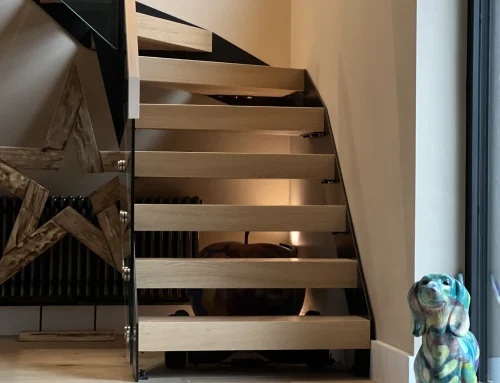
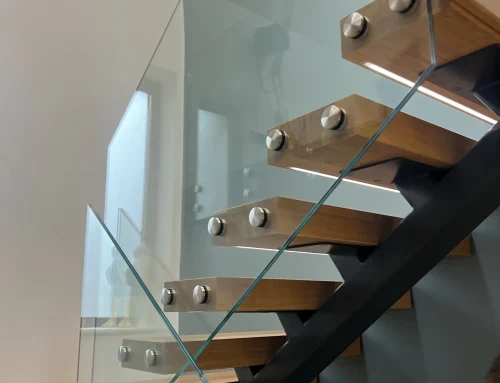
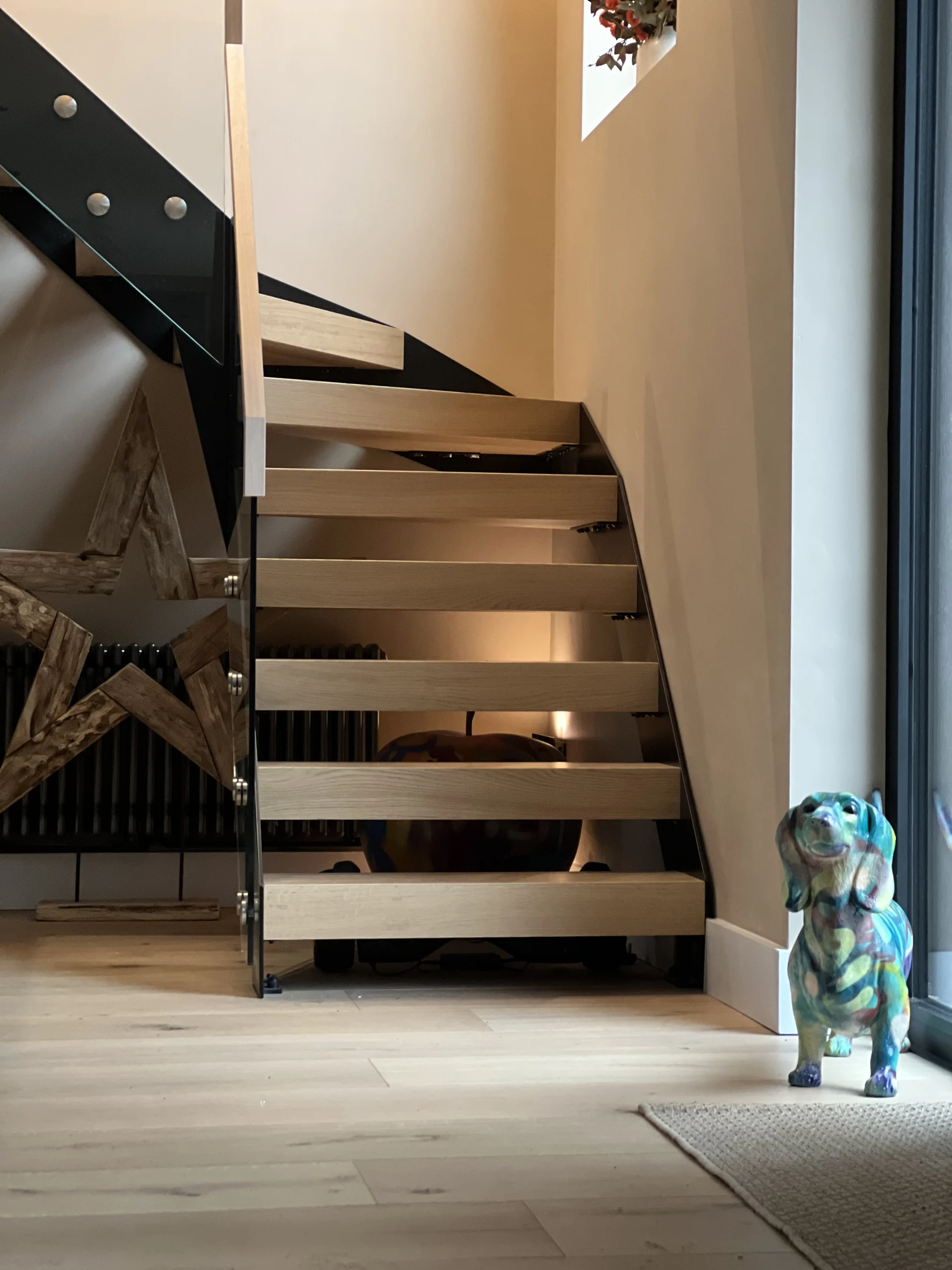
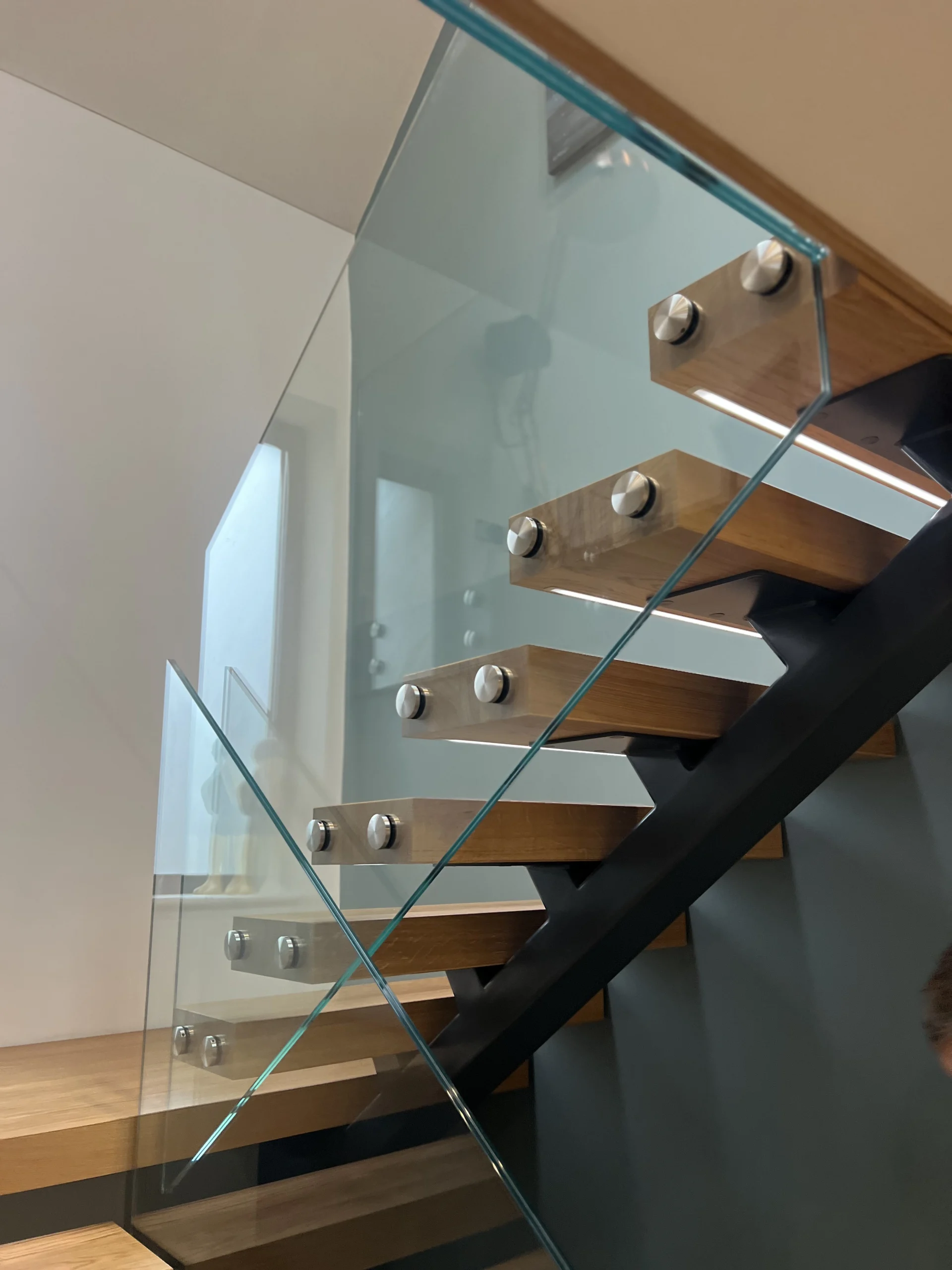
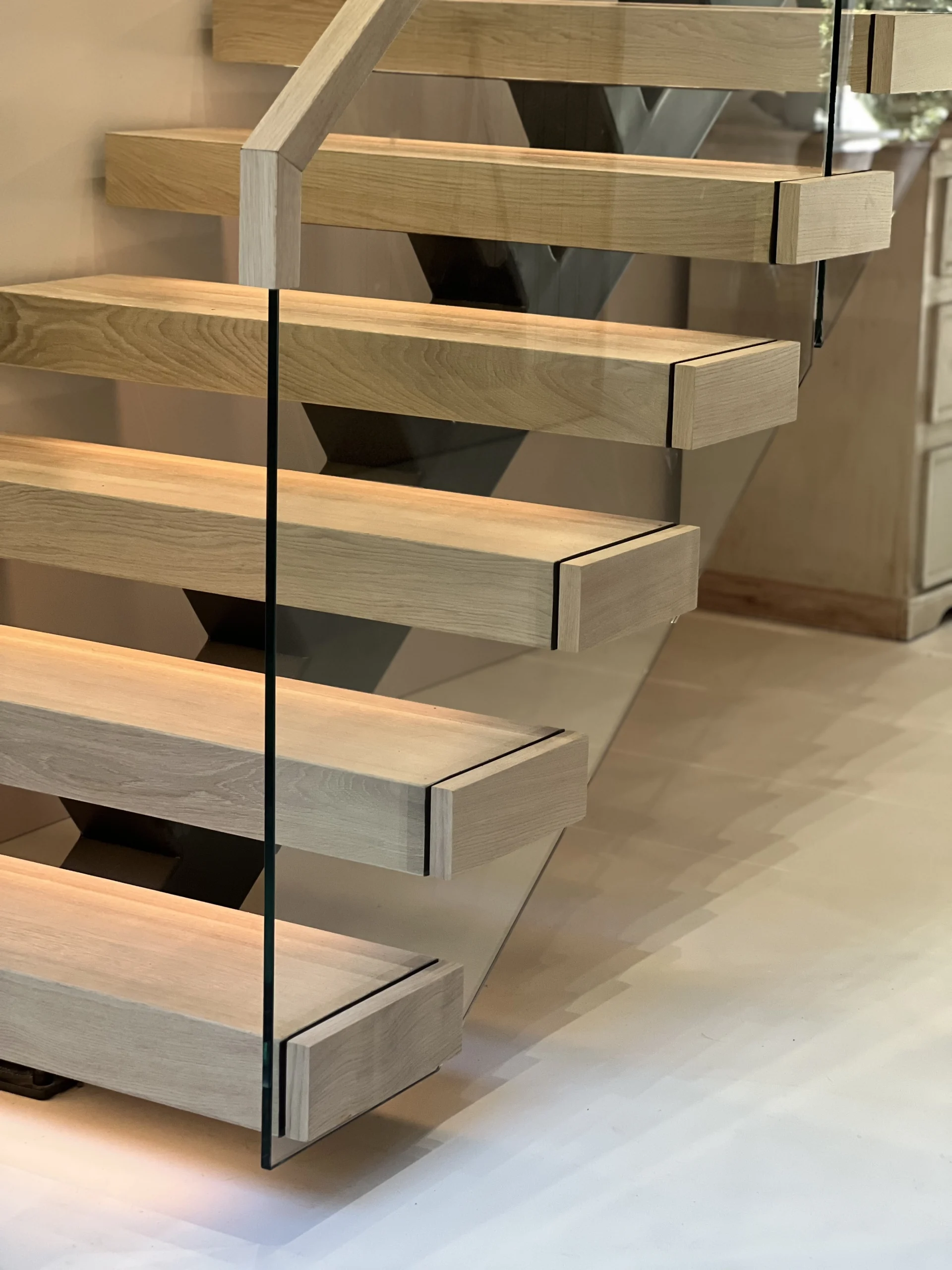
Solid oak treads with LED-integrated open risers by Continox — 40mm thickness, hard-wax oil finish, black powder-coated spine.
Part K dimensional requirements (private dwellings): Maximum rise 220mm, minimum going (tread depth) 220mm, maximum pitch 42°. The 2R + G formula (twice the rise plus the going) must fall between 550–700mm for comfortable proportions. These apply to every tread in the flight — inconsistent risers or goings are a common Part K failure on DIY and budget installations.
Tread Material Options — What Actually Works
Six tread materials cover virtually every contemporary UK residential staircase specification. Each suits a specific aesthetic, price point and structural context — and the wrong choice is expensive to reverse once installed.
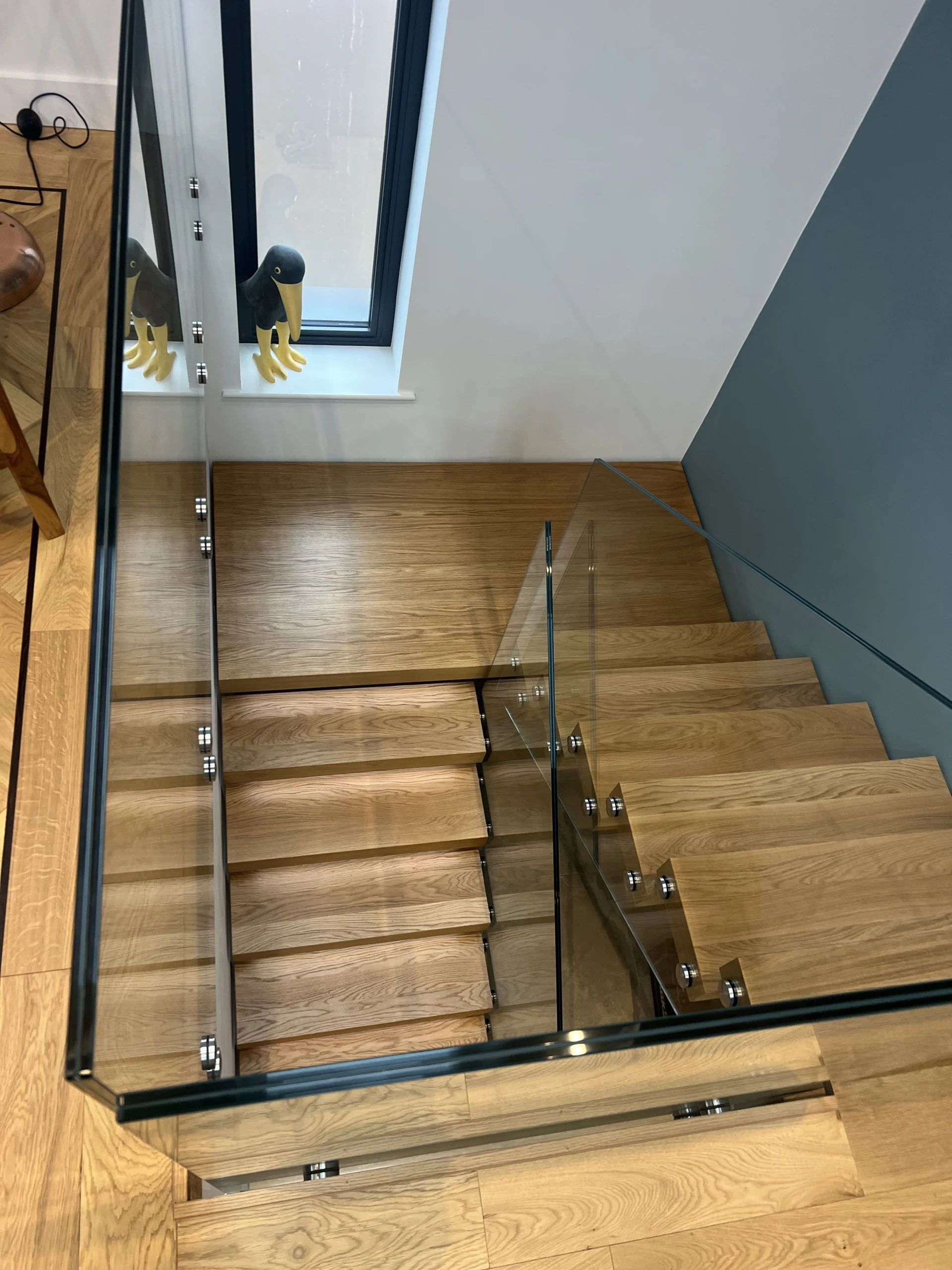
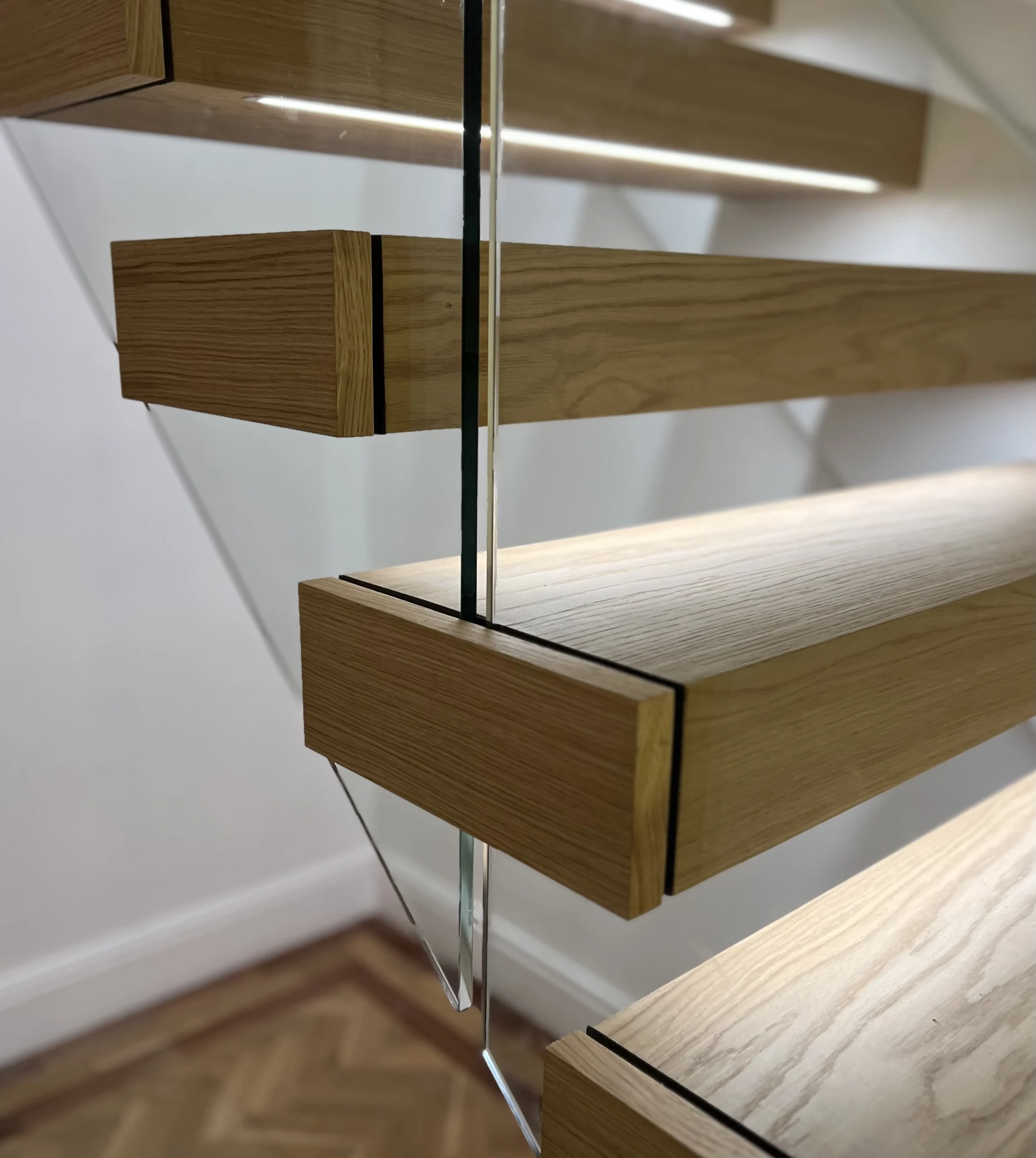
Solid European or American oak at 40mm thickness remains the most frequently specified tread material on bespoke staircases in the UK — and for good reason. Oak has a tight, predictable grain, dimensional stability once kiln-dried and finished correctly, and the hardness to resist everyday wear without denting under stiletto heels or dropped objects. It also takes finish exceptionally well, whether hard-wax oiled for a matt natural look or lacquered for a harder-wearing satin finish.
Specified correctly — FSC-certified boards, properly acclimatised before installation, finished all sides — oak treads last the lifetime of the staircase with only occasional re-oiling required on high-traffic flights.
American or European walnut sits one tier above oak in price and visual impact. The grain is richer, the colour significantly deeper — ranging from chocolate brown to near-black depending on cut and origin — and the finished effect reads as more dramatic in contemporary interiors. Walnut is slightly softer than oak (Janka hardness ~1010 vs ~1360 for white oak) so it shows wear marks slightly faster, but this is generally imperceptible over 10+ year cycles on a domestic staircase.
Walnut works particularly well with matt black powder-coated steel substructures — the warm, rich brown against the clean black creates one of the most sought-after contemporary combinations.
Ash is the lighter-toned alternative to oak — a pale, almost white timber with a distinctive open grain. It suits Scandinavian and minimalist interiors where the design brief calls for maximum brightness and minimum contrast. Ash is structurally comparable to oak (Janka hardness ~1320), takes finish well, and is significantly cheaper than walnut while still reading as a premium material.
One consideration: ash yellows slightly over time under UV exposure. For staircases in strong natural light, a UV-protective finish is worth specifying to preserve the pale tone.
Powder-coated steel plate treads — typically 6–10mm plate with a fine surface texture or chequered pattern for grip — are the specification of choice for all-black or all-steel contemporary staircases. The aesthetic is deliberately industrial: clean plate, visible welds, flat powder coat. Steel treads are structurally stronger than timber at equivalent weight, can be specified for longer unsupported spans, and are the standard tread for commercial fire escape and external staircase applications.
Surface finish matters: a plain smooth plate fails slip-resistance requirements under Part K and in commercial contexts. Continox specifies either an integrated surface pattern (chequer plate, round-stud, or perforated) or a applied slip-resistant coating for every steel tread installation. For complete steel plate stair designs see our modern staircase range.
Stone treads are the premium specification for period conversions, luxury new builds, and any staircase where the design brief calls for material weight and permanence. Natural stones — marble, travertine, limestone — deliver a distinctive aesthetic but come with cost and practical caveats: significant weight (loading requires engineering check on first-floor installations), porosity that requires sealing, and surface vulnerability to acidic spills (especially on marble and limestone). Engineered quartz stone addresses most of these issues at a slightly lower price and reduced aesthetic depth.
Stone treads must always be specified with slip-resistant finish — honed or brushed surface, never polished on stairs. A polished marble tread is one of the most slippery surfaces in a UK residential property, and is a common cause of domestic stair accidents.
Structural check requiredStone treads weigh 50–80kg each depending on thickness and stone type. Total staircase stone load on a 14-tread flight can exceed 1 tonne — which requires confirmed support capacity in the substructure. Stone on a floating steel staircase needs engineering sign-off before specification.
Glass treads appear in ultra-contemporary staircases — typically 30–40mm toughened & laminated construction, with a fritted or sandblasted pattern on the top surface for slip resistance. The aesthetic is striking and minimalist, and the specification works particularly well when paired with frameless glass balustrades for a fully transparent staircase effect. Light passes through the entire flight rather than being blocked at each tread.
Glass treads are the most expensive tread specification, require the most precision in substructure fabrication, and are the slowest to manufacture due to lamination cycle times. They suit specific design briefs rather than being a mainstream choice.
Tread Materials Compared
| Material | Price / Tread | Hardness | Service Life | Best Suited To |
|---|---|---|---|---|
| Solid Oak | £130–£180 | High (Janka ~1360) | 25+ years | Default premium choice |
| Solid Walnut | £190–£270 | Medium-high (~1010) | 20+ years | Luxury contemporary |
| Solid Ash | £110–£150 | High (~1320) | 25+ years | Scandinavian / minimalist |
| Steel Plate | £180–£240 | Very high | 30+ years | Industrial / all-black / external |
| Natural Stone | £220–£380 | Very high | 50+ years | Luxury / period conversion |
| Glass (T&L) | £280–£400 | Very high | 25+ years | Ultra-contemporary / minimalist |
Riser Options — Closed, Open or Clad
The riser is the vertical surface between one tread and the next. It has structural, aesthetic and compliance implications — and it is the single design decision that most changes the perceived style of the staircase.
Closed Risers
The traditional specification: a solid vertical panel behind each tread, usually in the same material as the tread or in a contrasting colour. Closed risers give the staircase visual mass, block sightlines through the flight, and reduce the echo of footfall on hard-surface treads. They are the safer default for households with small children (impossible to slip a foot through) and for period and traditional interiors.
Open Risers
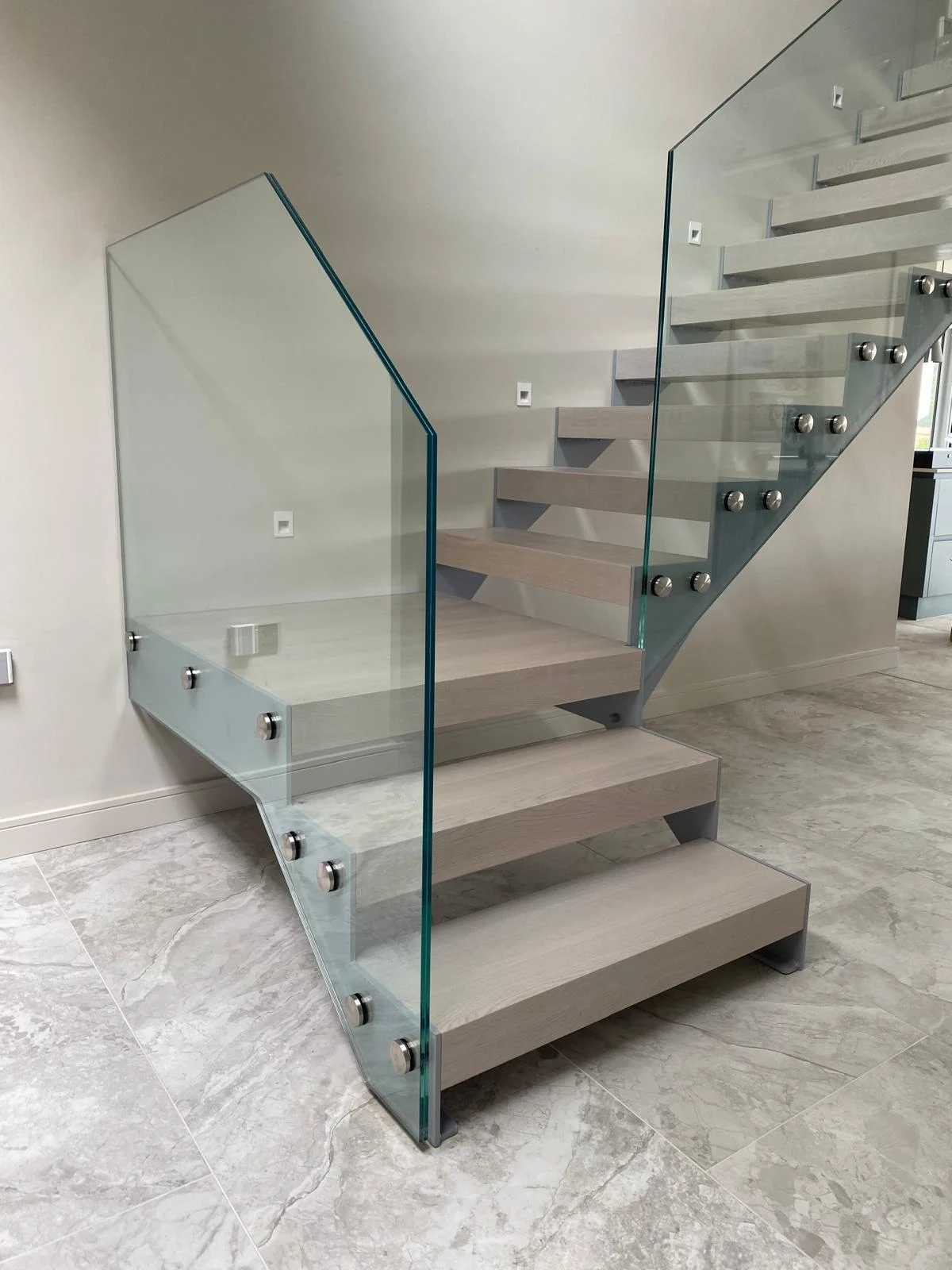
The defining feature of contemporary floating and cantilevered staircase designs. The riser position is simply empty — you can see through the flight from any angle. Open risers maximise light flow through the staircase, emphasise the sculptural quality of individual treads, and are essential to the "floating" visual effect. Under Part K, open risers must comply with the 100mm sphere rule — no gap can be large enough for a child's head to pass through. In practice, this caps the riser height on open-riser flights at around 180mm.
Painted or Contrast Risers
Where you want the aesthetic of closed risers but need visual lightness, painting the riser in a contrasting light colour (usually white) while keeping the treads in natural timber is a classic and versatile approach. The effect reads as traditional-with-contemporary-edge and works in almost any interior. This is also the cheapest riser upgrade — a £40–£80 per-tread cost increase compared to natural timber throughout.
The 100mm sphere ruleThe single most common Part K failure on open-riser staircases is specifying a riser height where a 100mm sphere can pass through the open gap. If the gap between tread and tread exceeds 99mm in any direction — accounting for the tread thickness — the staircase fails sign-off. Continox engineers every open-riser design to sit within 95mm clear to allow tolerance for building control inspection.
Tread-Riser Combinations That Work
These are the specification combinations most frequently chosen from Continox's portfolio across UK homes — each delivering a distinct aesthetic outcome.
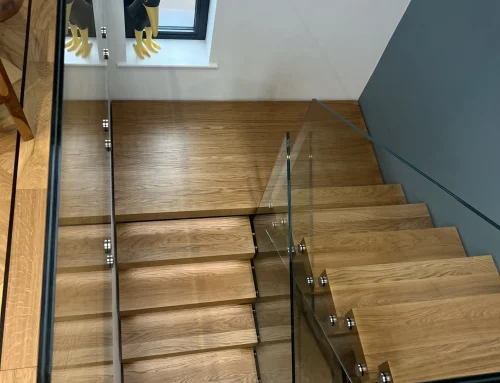
The contemporary default — solid oak treads cantilevered from a matt black central spine, fully open risers, frameless glass balustrade. Delivers the floating effect with maximum light flow.
The premium upgrade — dark walnut against matt black steel for a richer, more dramatic contrast. Suits high-ceiling open-plan spaces where the staircase is a visible centrepiece.
The traditional-contemporary bridge — oak treads with bright white-painted closed risers in a classic Scandinavian palette. Works in period properties and modern builds alike.
The all-black industrial finish — powder-coated steel plate treads with matching solid risers. Suits architect-designed homes with exposed concrete or dark wall finishes.

Slip Resistance & Part K Compliance
Treads must provide adequate slip resistance in both dry and wet conditions — a requirement that applies equally to all materials. For timber treads, the standard hard-wax oil or matt lacquer finish delivers sufficient grip; high-gloss polished timber does not. For steel plate, an integrated chequer/stud/perforated pattern or an applied slip coating is required. For stone, honed or brushed finish only — never polished. For glass, the top surface must be fritted, sandblasted or have an applied slip-resistant film.
Compliance Checklist for Every Tread Material
For a full breakdown of UK staircase regulations see our UK staircase regulations guide.
LED Tread Integration — Factory vs Retrofit
LED strip lighting under each tread transforms the staircase after dark — creating one of the most dramatic interior design effects available in a domestic setting. The technical distinction matters, though: factory-integrated LED is engineered into the tread support structure during fabrication, with cables routed internally and the strip recessed into a purpose-machined channel. Retrofit LED is stuck on afterwards with adhesive and surface-mounted cable trunking.
The visual result is unmistakably different. Factory-integrated LED produces a continuous even light line across the entire flight. Retrofit LED shows visible cables, hot spots where strips join, and inevitably fails at some joint within 2–3 years. If LED is desired, specify it at the design stage — adding £600–£1,200 to the project cost, but delivering a finish that lasts the life of the staircase.
Maintenance by Tread Material
| Material | Routine | Periodic | Typical 20-Year Cost |
|---|---|---|---|
| Solid Oak / Walnut / Ash | Damp cloth, wipe only | Re-oil every 5–7 yrs | £150–£300 |
| Steel Plate (Powder Coat) | Damp cloth, no solvents | Touch-up any chips | £50–£150 |
| Natural Stone | Mild pH-neutral cleaner | Reseal every 2–3 yrs | £250–£500 |
| Engineered Stone | Mild pH-neutral cleaner | No sealing required | £50–£100 |
| Glass (T&L) | Glass cleaner + microfibre | None | £50 |
Stair Tread & Riser — FAQ
Common questions from homeowners specifying treads and risers for bespoke staircases across the UK.
Free Survey + 3D Visuals
Free on-site survey across the UK, photorealistic 3D visuals showing your exact tread material and riser specification in your space, fixed-price quotation within 24 hours. Bespoke staircases from £7,900 — designed, manufactured and installed by Continox.