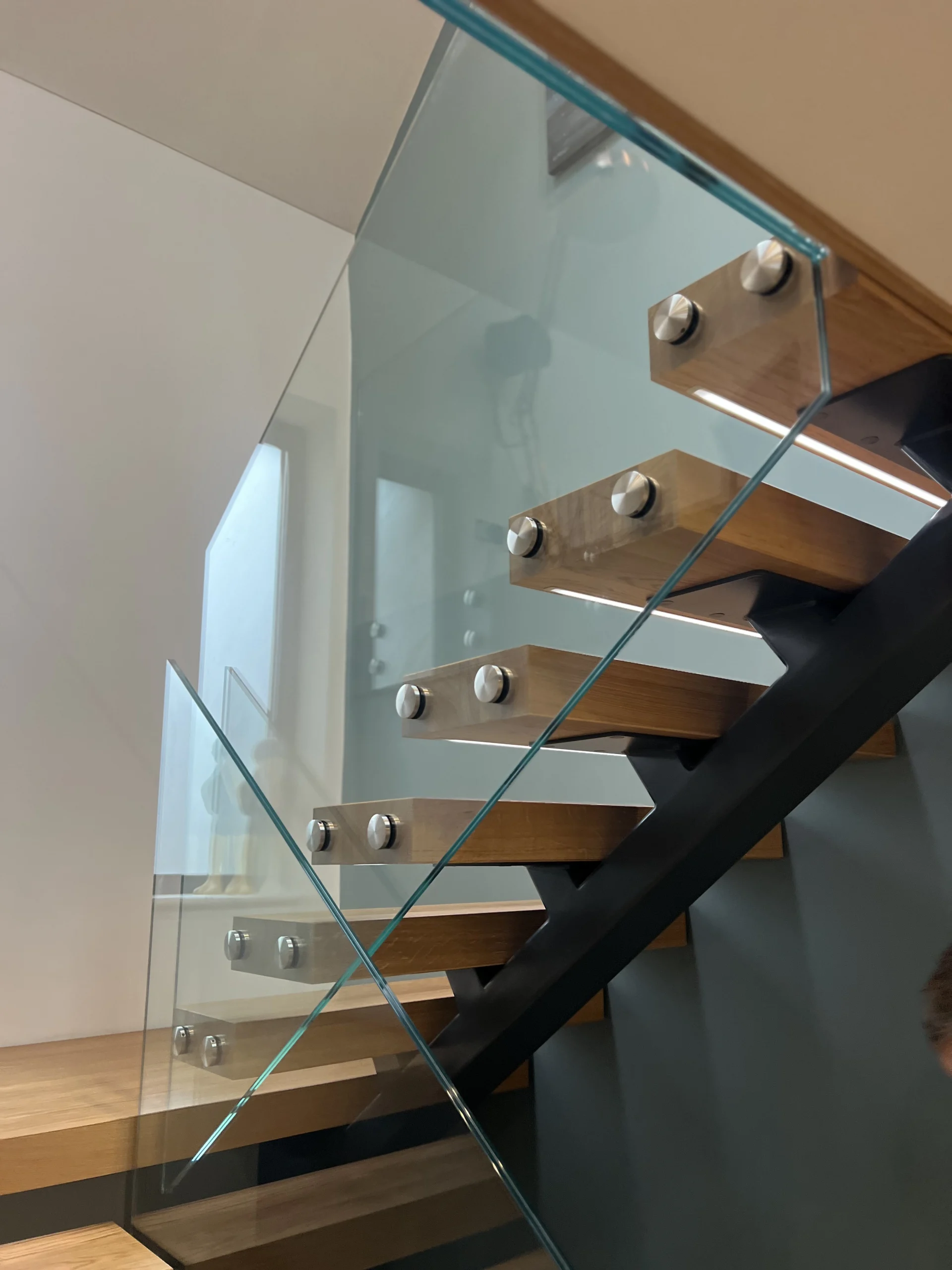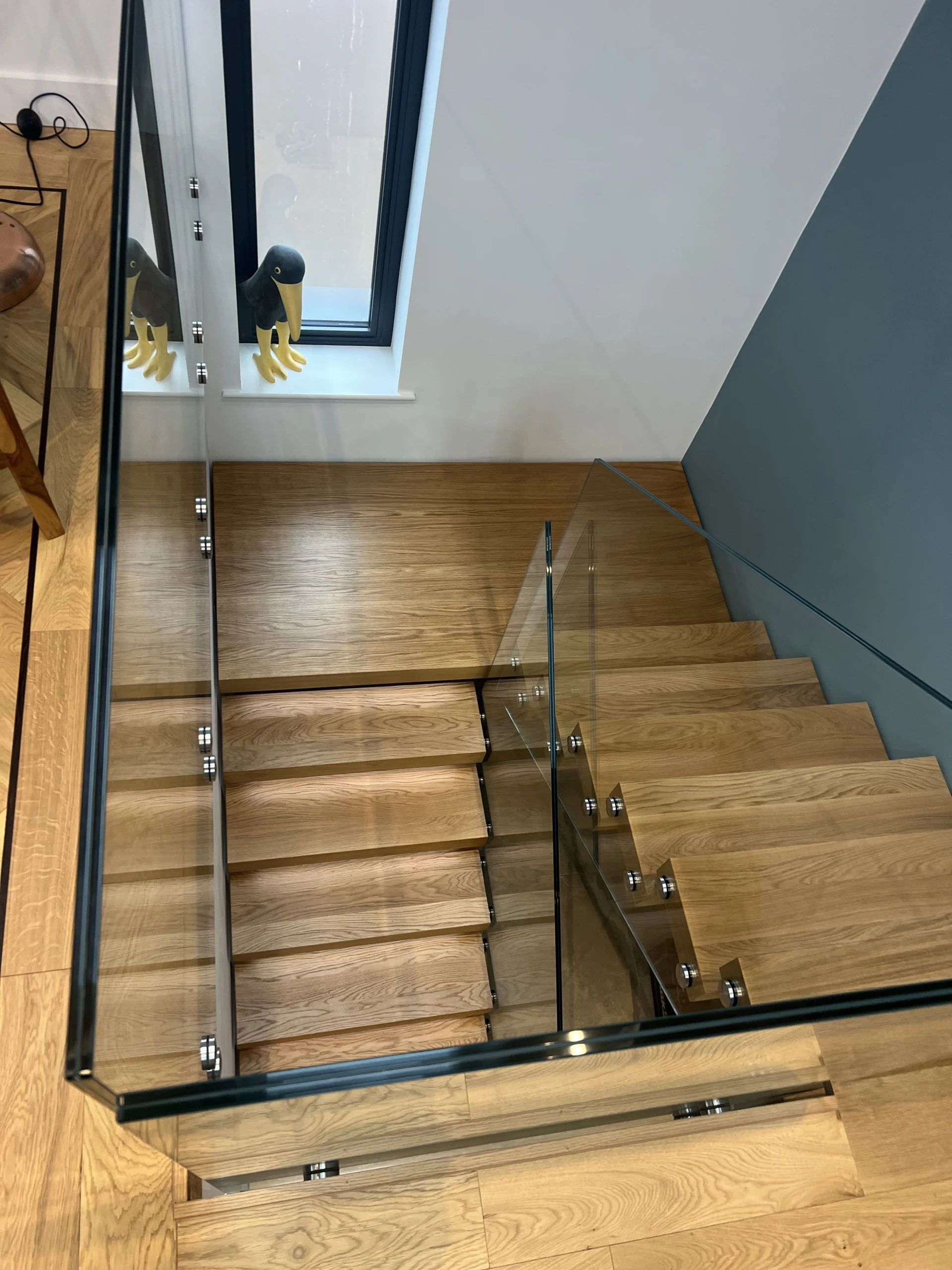

Open riser staircases — where the risers between treads are absent, leaving the space between each step open — are among the most requested designs for contemporary UK homes. They create a lighter, more open feel than traditional closed-riser stairs, maximise light flow through a stairwell and produce a genuine floating effect when combined with a glass balustrade. But they come with specific regulatory requirements and are not the right choice for every situation. This guide covers all of it.
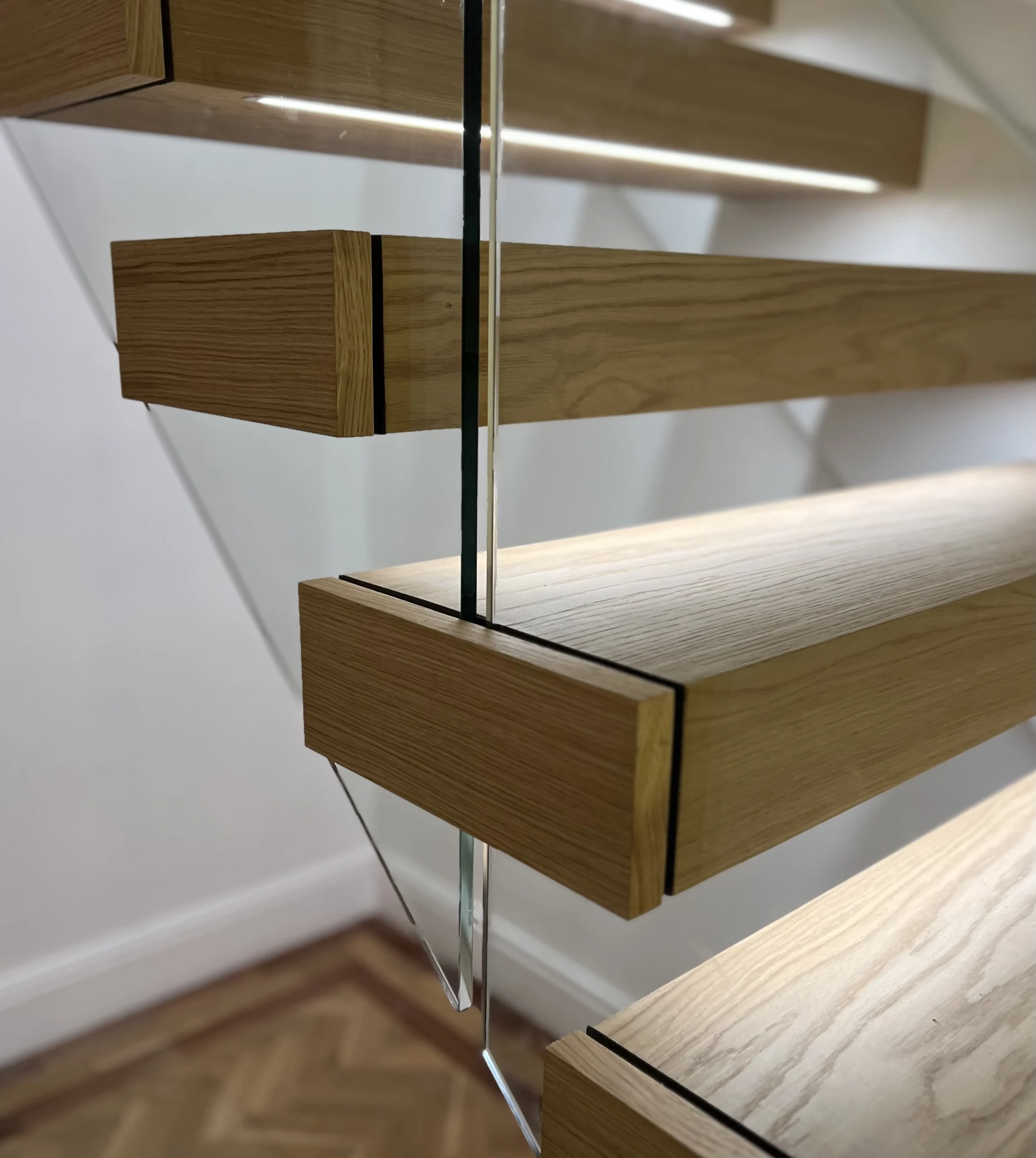
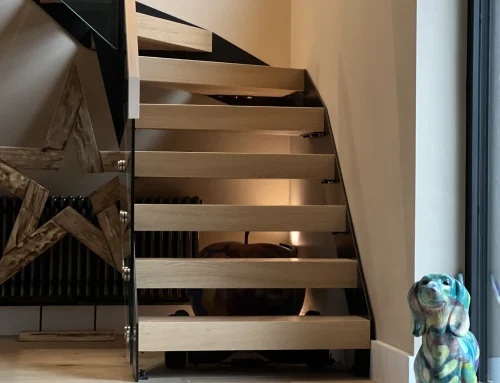
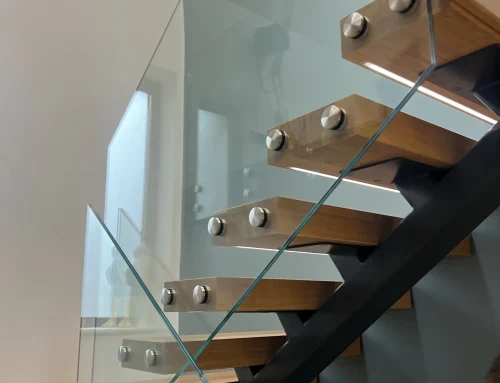
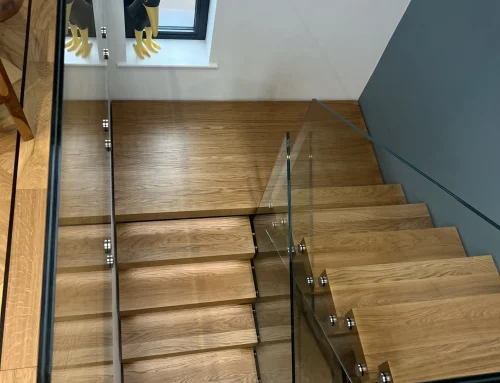
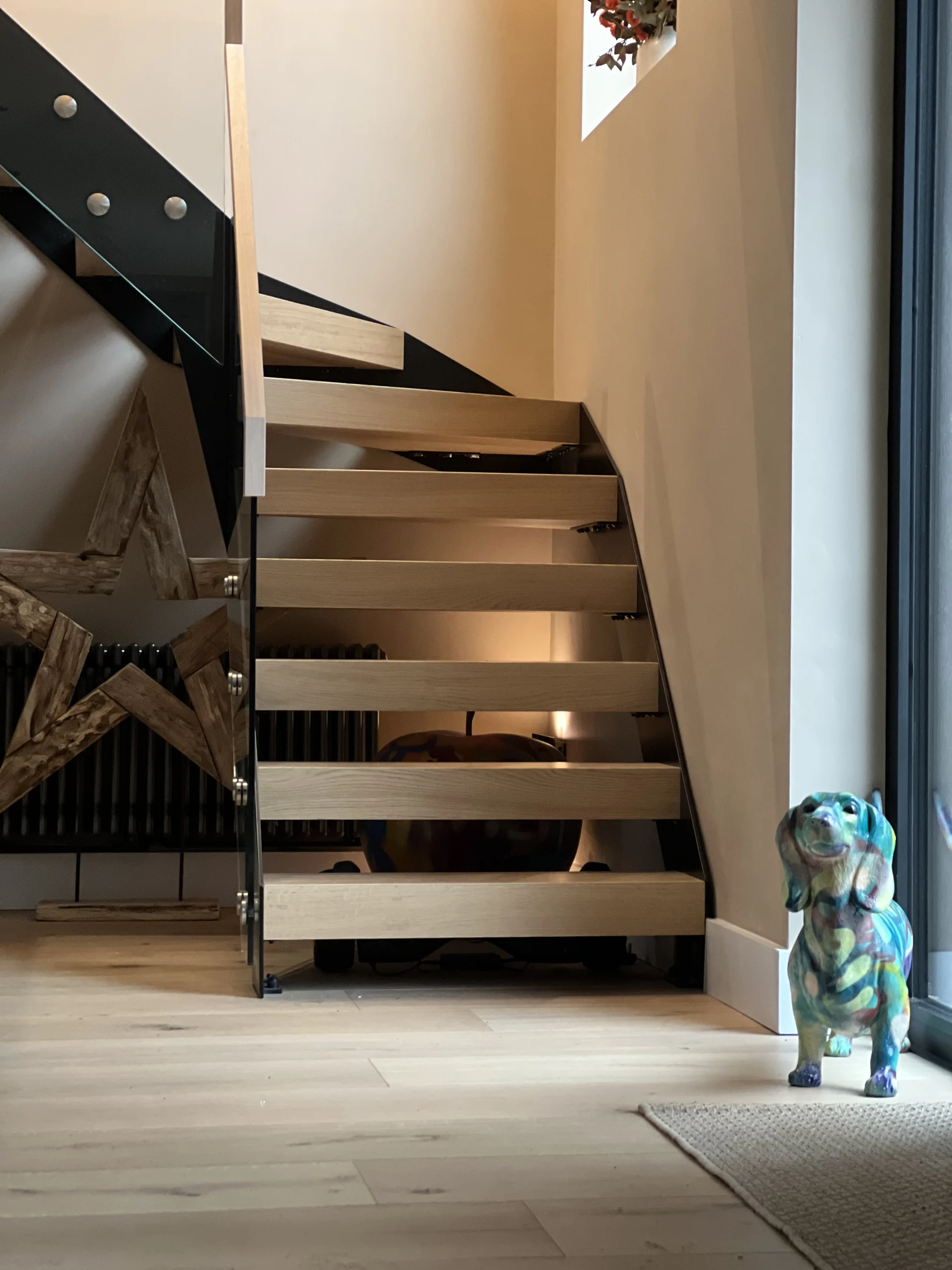
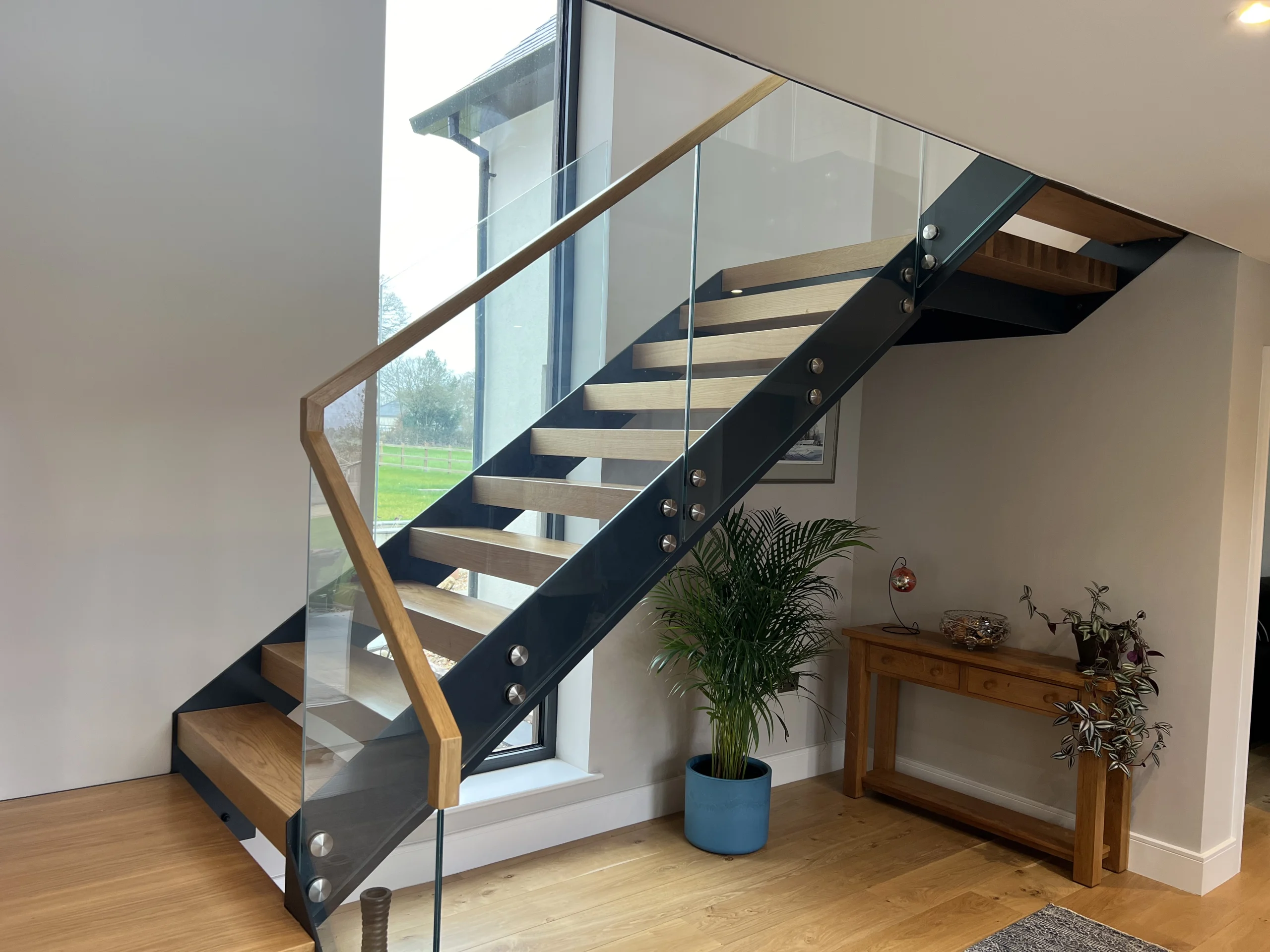
Open riser floating staircase by Continox — steel structure, oak treads, frameless glass balustrade, Part K compliant.
What Is an Open Riser Staircase?
An open riser staircase is defined by the absence of vertical panels (risers) between each tread. In a traditional staircase, each step has both a horizontal tread surface and a vertical riser board closing the gap between it and the step above. In an open riser design, that vertical panel is removed — leaving an open gap between each tread that you can see through from front to back and side to side.
This absence of risers is what creates the characteristic floating appearance. When combined with a frameless glass balustrade and a structural spine hidden behind or beneath the treads, the result is a staircase that appears to be a sequence of floating horizontal planes — with no visible support and maximum transparency.
Open Riser vs Open Tread — The Same Thing?
Yes — "open riser" and "open tread" describe the same design: treads without closing risers. Both terms are used interchangeably in the UK market. "Floating staircase" is a broader term that can apply to both open and closed riser designs, depending on how the structure is supported.
5 Reasons to Choose an Open Riser Staircase
Maximum Light Flow Through the Stairwell
The single most significant practical advantage of open risers is light. In a traditional closed-riser staircase, the riser boards form a solid visual barrier that blocks light from passing through the stairwell. Open risers eliminate this barrier entirely — natural light from windows at any level passes freely through the staircase structure, illuminating the floor below and reducing the need for artificial lighting in darker stairwells. In open-plan spaces with roof lights or high-level glazing, the effect is particularly pronounced.
The Floating Aesthetic
Open risers are what make the floating staircase effect possible. When each tread cantilevers from a central spine or wall stringer with nothing above or below it visible, the steps appear to float in space. This is one of the most striking architectural effects available in a domestic interior — and it is only achievable with open risers. Closed risers, however minimally detailed, always read as a solid staircase structure rather than a sequence of floating planes.
Visual Space in Compact Stairwells
In narrow or compact stairwells — common in UK terraced houses and period conversions — open risers make the space feel significantly larger than it is. The visual depth created by looking through the treads to the floor below extends the perceived depth of the space, counteracting the claustrophobic effect of a traditional closed staircase in a tight enclosure.
Architectural Versatility
Open risers work with virtually any tread material — solid oak, walnut, steel plate, glass — and any structural system. They are compatible with central spine, wall-stringer and floating configurations. This makes them the most versatile structural choice for contemporary staircase design: the same open-riser approach can produce a warm Scandinavian aesthetic with oak treads or a sharp industrial look with black steel plate treads.
Easier to Clean and Maintain
Without risers, there are fewer surfaces to clean and no riser boards to collect dust. Tread surfaces can be swept or vacuumed with full access to the tread edge. For timber treads, the absence of riser boards also removes a common source of staircase creak — the movement between tread and riser that produces noise in traditional timber staircases over time.
3 Challenges — and How to Solve Them
The 100mm Sphere Rule
The vertical gap between treads on an open riser staircase must not permit the passage of a 100mm diameter sphere — a requirement under Approved Document K specifically designed to prevent young children's heads from becoming trapped between treads.
Not Ideal for Very Young Children
Even with the 100mm sphere rule satisfied, some families with very young children (under 3 years old) prefer a closed-riser staircase as a precaution. Open risers with correctly specified nosing overhang are compliant — but the open visual of the gap can be a concern for some parents.
Underfoot Feel
Some users feel less secure on open riser treads than on a traditional closed staircase — particularly at height. This is primarily a psychological response to the visible gap rather than a structural one: the treads are structurally identical.
UK Regulations for Open Riser Staircases
Open riser staircases are fully compliant with UK Building Regulations when correctly designed. The key regulation is found in Approved Document K (Protection from Falling, Collision and Impact) and concerns the gap between treads.
The 100mm Sphere Rule — Approved Document K For open riser staircases, the vertical gap between the underside of one tread and the top surface of the tread below must not permit the passage of a 100mm diameter sphere. In practice, this means either: (a) the tread has a nosing overhang of 16–25mm that reduces the effective vertical opening, or (b) a horizontal bar or fin is fitted between treads to close the opening. This rule applies in all domestic and commercial open riser applications. Continox designs all open riser staircases to satisfy this requirement as standard.
Other Regulatory Requirements
Beyond the 100mm sphere rule, open riser staircases must comply with the same dimensional requirements as any other residential staircase: max rise 220mm (private) or 190mm (common/shared), min going 220mm (private) or 250mm (common), handrail at 900–1000mm above the pitch line, and headroom of minimum 2000mm. For full details see our UK Staircase Building Regulations guide.
A Building Regulations application is required for all new staircase installations and material alterations. Continox provides full compliance documentation — structural calculations, CAD drawings and Declaration of Performance — as standard on every project.
Open Riser vs Closed Riser: Comparison
| Factor | Open Riser | Closed Riser |
|---|---|---|
| Light flow | Maximum — fully transparent | Blocked by riser boards |
| Floating aesthetic | Yes — full floating effect | Partial at best |
| Part K compliance | Yes — with 100mm sphere rule | Yes — straightforward |
| Suitable for young children | Yes — with correct nosing | Yes — no gap concern |
| Structural complexity | Slightly higher (tread fixing) | Standard |
| Cleaning & maintenance | Easier — fewer surfaces | More surfaces to maintain |
| Creak potential | Lower — no tread/riser joint | Higher — tread/riser movement |
| Contemporary aesthetic | Excellent | Traditional to contemporary |
| Cost | From £7,900 (floating) | From £7,900 (floating) |
Open Riser Design Combinations
Open riser treads work with any structural configuration and any material. These are the four most popular open riser combinations from Continox's portfolio.
Open Riser Oak + Central Spine + Frameless Glass
The definitive contemporary staircase. Solid oak treads cantilevering from a black powder-coated steel spine, with a frameless glass balustrade on each side. Maximum transparency, warmth of oak, precision of black steel.
Open Riser Oak + Floating + Frameless Glass
Wall-fixed or stringer-supported open riser treads — ideal for narrower stairwells. The frameless glass balustrade on the open side maximises the sense of space. Works particularly well in period conversions and new build extensions.
Open Riser Steel Plates + Central Spine + Framed Glass
Black steel plate treads on a black central spine — all-black industrial-contemporary aesthetic. Particularly effective in open-plan spaces with concrete floors, exposed steel structure or dark interior palettes.
Open Riser Walnut + Central Spine + LED + Glass
Solid walnut treads with factory-integrated LED strip lighting under each tread, frameless glass both sides. The richest material combination available — creates a dramatic effect after dark with the LED outlining each floating walnut step.


How Continox Designs Open Riser Staircases
Every Continox open riser staircase begins with a free on-site survey — we visit your property, take precise measurements, confirm the substrate and structural conditions, and assess the regulatory requirements for your specific application. A guide price is provided within 24 hours.
Once the design is agreed, we produce photorealistic 3D visuals of your staircase in your space — accurately showing the tread material, glass specification, frame finish and any LED lighting integration. You review and approve the design before a fixed-price quotation is issued and before any fabrication begins.
All Continox open riser staircases are fabricated in our own workshop and installed by our in-house team — no subcontractors at any stage. Full structural calculations, CAD drawings and UKCA Declaration of Performance are provided as standard. Typical lead time: 6–10 weeks from approved design to completed installation. For more design inspiration, see our Modern Staircase Ideas UK guide and our complete staircase range.
The 100mm sphere rule is not an obstacle — it is a design parameter. Many clients are concerned that the open riser gap requirement will compromise the floating aesthetic or require an unattractive addition to the design. It does not — the nosing overhang that satisfies the 100mm rule is a standard tread detail that actually enhances the appearance of the tread profile. Continox resolves it at the design stage, not as a retrofit.
Open Riser Staircase — FAQ
Common questions from homeowners, architects and developers about open riser staircases in the UK.
Free 3D Design Visuals & Fixed-Price Quote
Free on-site survey, photorealistic 3D visuals included, fixed-price quotation within 24 hours. Bespoke open riser staircases from £7,900 — designed, manufactured and installed across the UK.