
Fire escape staircases are a legal requirement for the majority of apartment buildings, HMOs and multi-occupancy residential properties in the UK. Getting them right — in terms of design, materials and compliance — protects your tenants, satisfies Building Control and avoids costly enforcement action. This guide covers everything you need to know: the legal framework, technical specifications, design options, costs and the installation process.
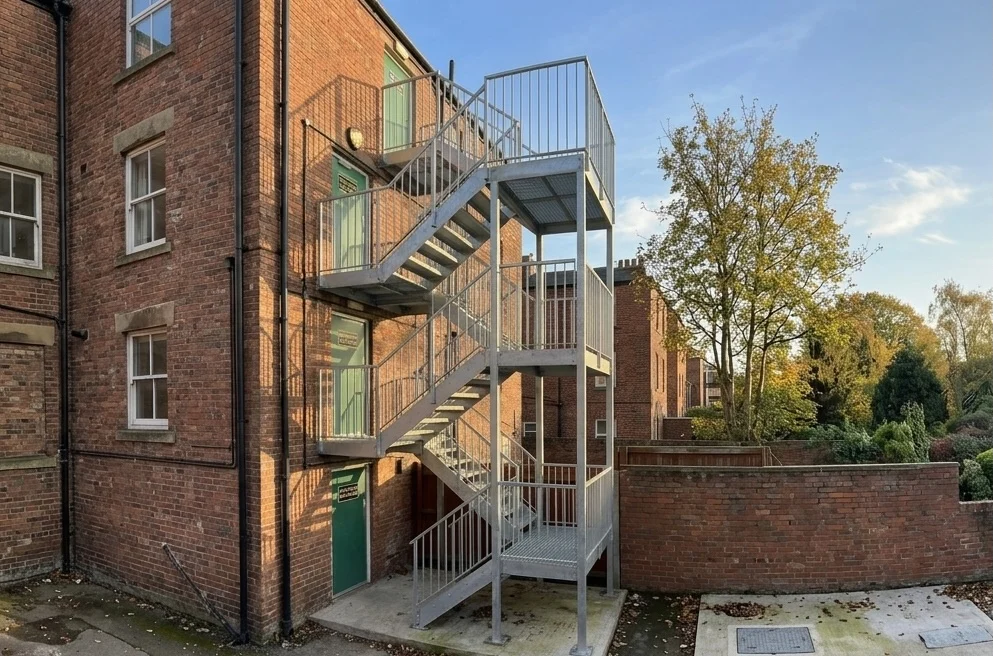
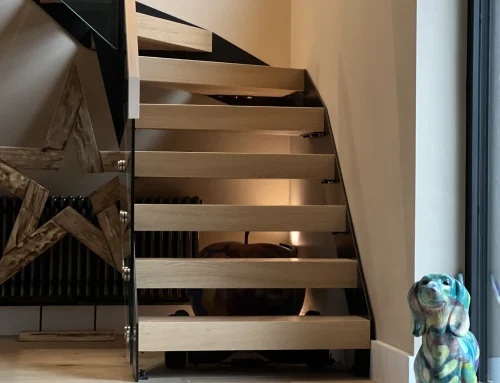
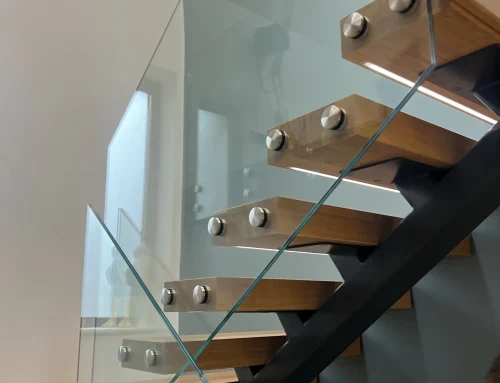
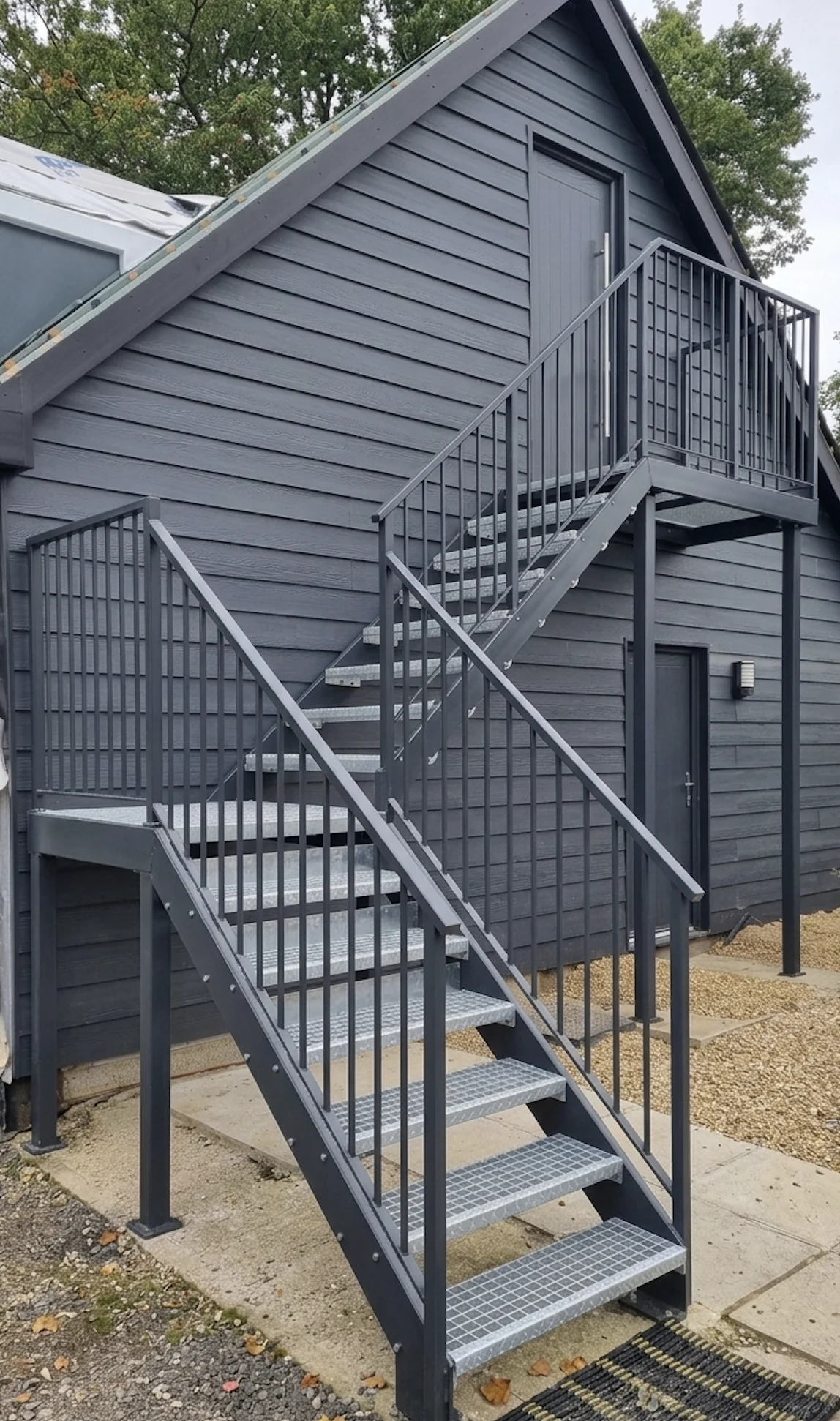
External fire escape staircase installed by Continox — BS 9991 compliant, UKCA marked.
UK Legal Requirements for Apartment Fire Escapes
Fire escape provision in apartment buildings is governed by several overlapping pieces of legislation and British Standards. Understanding which applies to your property is the first step in specifying a compliant solution.
The Regulatory Reform (Fire Safety) Order 2005
The primary piece of legislation governing fire safety in England and Wales is the Regulatory Reform (Fire Safety) Order 2005. This places a legal duty on the "responsible person" — typically the building owner, landlord or managing agent — to carry out a fire risk assessment and implement adequate means of escape. For apartment buildings where internal corridors pass through high-risk areas, or where multiple households share a building, an external fire escape staircase frequently forms part of the required means of escape.
Approved Document B (Fire Safety)
Approved Document B sets out the technical guidance for complying with Building Regulations in relation to fire safety. For residential buildings, it specifies minimum staircase widths, enclosure requirements, travel distances, and the structural and material requirements for means of escape stairs. All new fire escape installations require Building Regulations compliance under Approved Document B.
BS 9991: Fire Safety in the Design of Residential Buildings
BS 9991 is the British Standard specifically applicable to residential buildings — including apartment blocks, HMOs and residential conversions. It sets requirements for means of escape including external fire escape staircase design, minimum clear widths of 1000mm, and structural performance. All Continox fire escape staircases are engineered to BS 9991 and carry UKCA marking with a Declaration of Performance. For full staircase dimension requirements, see our UK Staircase Building Regulations guide.
Who is responsible? Under the Fire Safety Order 2005, the "responsible person" for a residential building must ensure adequate means of escape are provided and maintained. For HMOs, this is typically the landlord or licence holder. For apartment blocks, it is usually the building owner or managing agent. Failure to comply can result in enforcement notices, prohibition of use and unlimited fines.
Technical Specifications: What the Regulations Require
UK Building Regulations and BS 9991 set out specific dimensional and performance requirements for fire escape staircases in apartment buildings. These are minimum requirements — your specific installation may require more stringent specifications depending on the building type, number of occupants and local Building Control authority.
| Requirement | Application | Dimension |
|---|---|---|
| Min clear width | All fire escape stairs (BS 9991) | 1000mm |
| Min rise (per step) | Residential | 150mm |
| Max rise (per step) | Residential / Common areas | 190mm |
| Min going (tread depth) | Straight flight | 220mm |
| Max pitch | External fire escape | 42° |
| Min headroom | Vertically above pitch line | 2000mm |
| Handrail height | Above pitch line | 900–1000mm |
| Balustrade height (landing) | At landings & platforms | 1100mm |
| Max balustrade opening | 100mm sphere rule | 100mm |
| Tread surface | All external fire escapes | Non-slip required |
Source: Approved Document K (2013) · Approved Document B · BS 9991. See also our full staircase regulations guide for detailed dimension requirements.
Fire Escape Stairs for HMOs
Houses in Multiple Occupation represent the most common application for external fire escape staircases in the UK residential sector. Under the Housing Act 2004 and associated HMO licensing regulations, landlords of licensable HMOs must demonstrate adequate means of escape as a condition of their licence. Where internal escape routes pass through areas of high fire risk — kitchens, communal corridors with significant fire loading — an external steel fire escape staircase providing direct egress from upper floors to ground level is frequently the most practical and cost-effective solution.
An external HMO fire escape typically provides a means of escape from first and second floor windows or door sets onto a landing platform, with the staircase descending directly to ground level. The staircase must comply with BS 9991 and Approved Document B — including a minimum clear width of 1000mm and non-slip treads — and must be accessible from each floor it serves.
HMO Licensing Requirement Local authority HMO licensing officers will specify whether an external fire escape is required as part of your licence application or renewal. Failure to provide adequate means of escape can result in licence refusal, enforcement action or — in serious cases — a prohibition notice preventing occupation of the building. Continox works regularly with HMO landlords and letting agents to design, supply and install compliant fire escape solutions within the 4–6 week timeframes that HMO licensing deadlines frequently demand.
HMO fire escape staircases from Continox start from £3,500 excl. VAT for a single-flight residential installation, including structural calculations, CAD drawings and UKCA marking. For more details, see our fire escape staircase page.

Fire Escapes for Commercial & Multi-Storey Apartments
For larger residential developments — purpose-built apartment blocks, mixed-use developments and multi-storey conversions — fire escape requirements are more demanding. Buildings with multiple floors, high occupant densities or complex layouts typically require multi-landing fire escape systems with intermediate platforms at each floor level, providing independent means of escape from every storey.
Commercial and multi-storey fire escape staircases must meet the more stringent structural load requirements of BS EN 1090 for structural steel execution, as well as the means of escape requirements of Approved Document B for the relevant occupancy type. All Continox structural steel components are fabricated to BS EN 1090-1 and carry UKCA marking — a requirement many suppliers cannot meet.
Multi-landing commercial fire escape systems from Continox start from £5,500 excl. VAT, depending on the number of flights, platform configuration and finish specification. For details on glass balustrade options for apartment developments, see our Glass Balustrade Regulations guide.
Materials & Design Options
Why Steel?
Structural steel is the material of choice for UK fire escape staircases — and for good reason. Steel maintains its structural integrity at high temperatures where timber would fail, making it the preferred specification under Approved Document B for external means of escape. Continox fabricates all fire escape staircases from structural grade S275 or S355 steel, hot-dip galvanised or powder-coated to BS EN ISO 1461 for long-term corrosion protection.
Galvanised vs Powder-Coated
Hot-dip galvanising provides the most durable protection for exposed external fire escapes — a zinc coating applied at high temperature that bonds metallurgically to the steel surface. It is self-repairing at cut edges and provides 30–50 years of protection in most UK environments. Powder coating offers a wider range of RAL colours and a smoother aesthetic finish, typically applied over a galvanised primer for external applications. Both finishes are available from Continox.
Tread Surfaces
UK Building Regulations require non-slip tread surfaces for all fire escape stairs, particularly external installations exposed to rain and frost. Continox specifies open mesh or perforated steel treads as standard — both provide excellent slip resistance, allow water and debris to fall through, and require minimal maintenance. Solid plate treads with anti-slip nosings are available for applications where open treads are not appropriate.
Configuration Options
Fire escape staircases for apartment buildings are available in a range of configurations to suit different site constraints and building layouts:
Straight flight — the simplest and most common configuration; a single run of stairs descending directly from landing to ground. L-shape — changes direction through 90° at an intermediate landing; useful where building footprint is constrained on one side. U-shape (switchback) — returns through 180° at a mid-level landing; allows maximum height gain in a compact footprint. Spiral — highly space-efficient but subject to restrictions under BS 9991 for means of escape applications; confirmation with Building Control required.

Fire Escape Staircase Cost Guide UK
Costs for fire escape staircases in apartment buildings vary depending on the system type, number of flights, finish specification and site-specific installation requirements. The following guide prices are for supply and installation, excl. VAT, following a free on-site survey.
Factors that influence the final cost include: number of steps and floor-to-floor height, platform configuration and number of landings, finish specification (galvanised vs powder-coated), balustrade type, fixing substrate and access requirements. Continox provides a fixed-price quotation following a free on-site survey — so the price you receive is the price you pay. For a broader overview of staircase costs, see our Bespoke Staircase Cost UK guide.
The Installation Process
Continox manages the entire fire escape staircase project from initial survey through to final installation — with no subcontractors at any stage. Here is what to expect:
Free On-Site Survey
We visit your property, assess the structural fixing points, measure the elevation and confirm the design requirements before providing a fixed-price quotation within 24 hours.
Structural Drawings & Fixed Price
Our engineering team produces detailed CAD drawings and structural calculations to BS EN 1090 and BS 9991. You receive a firm fixed-price quotation with a full scope of works document.
Precision Fabrication
Your fire escape is fabricated to exact specification in our own workshop — galvanised or powder-coated, UKCA marked, and quality-checked before leaving the facility. Typical fabrication: 3–5 weeks.
Professional Installation
Our experienced in-house team installs your fire escape to the highest standard — fully compliant with BS 9991 and Approved Document B. No on-site welding, no subcontractors, no surprises. Installation: 1–2 days typically.
Total lead time: 4–6 weeks. From initial enquiry to completed installation, our typical lead time for a residential fire escape staircase is 4–6 weeks — making Continox one of the fastest compliant suppliers for HMO licensing deadlines across the UK.

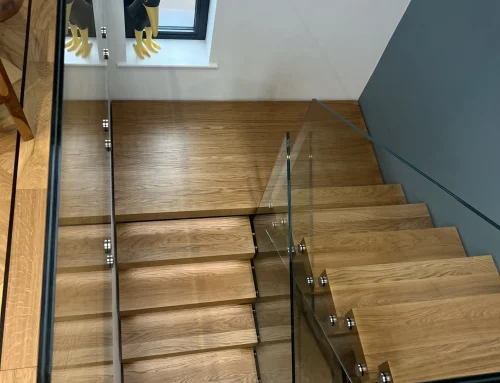
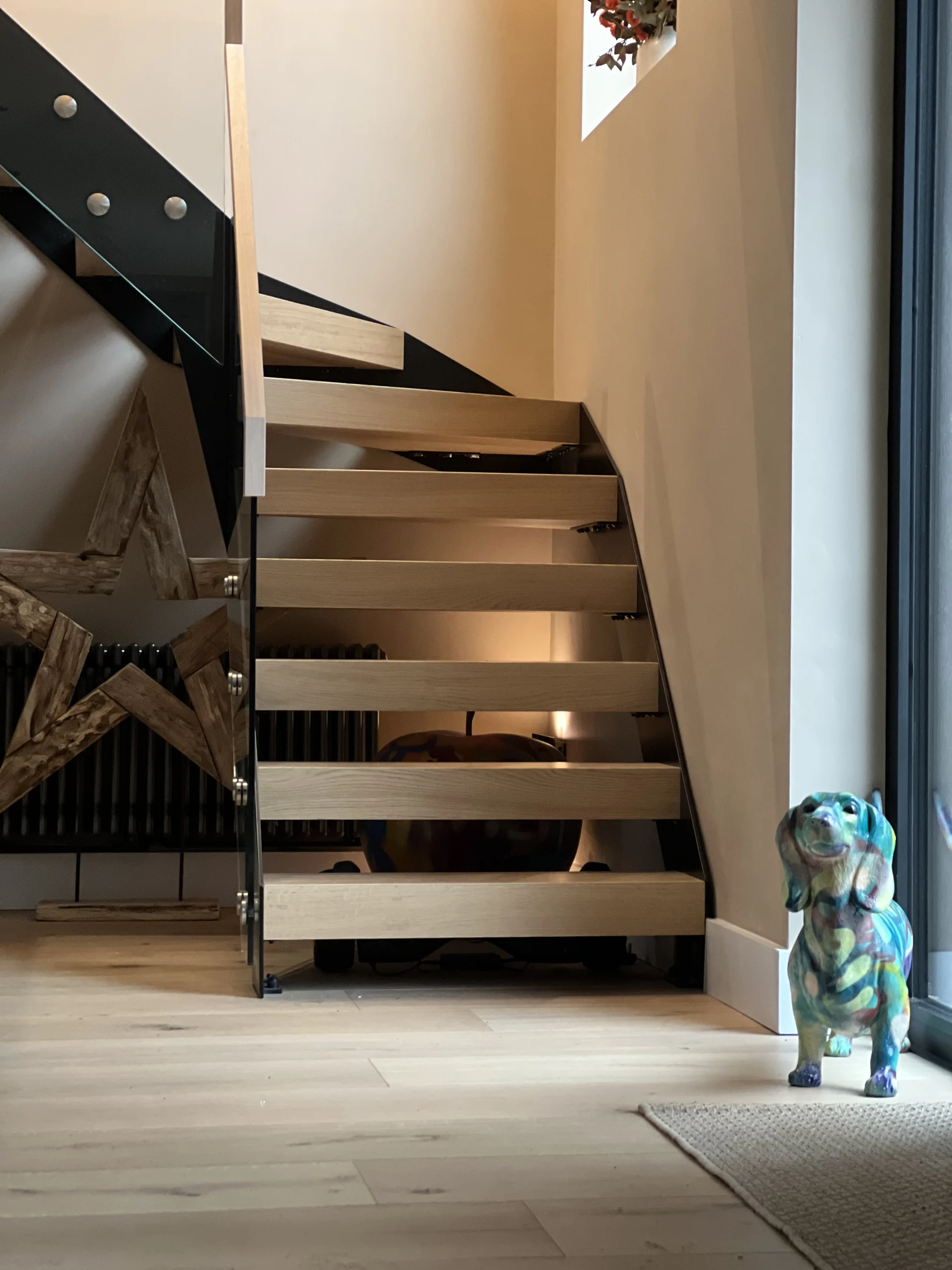
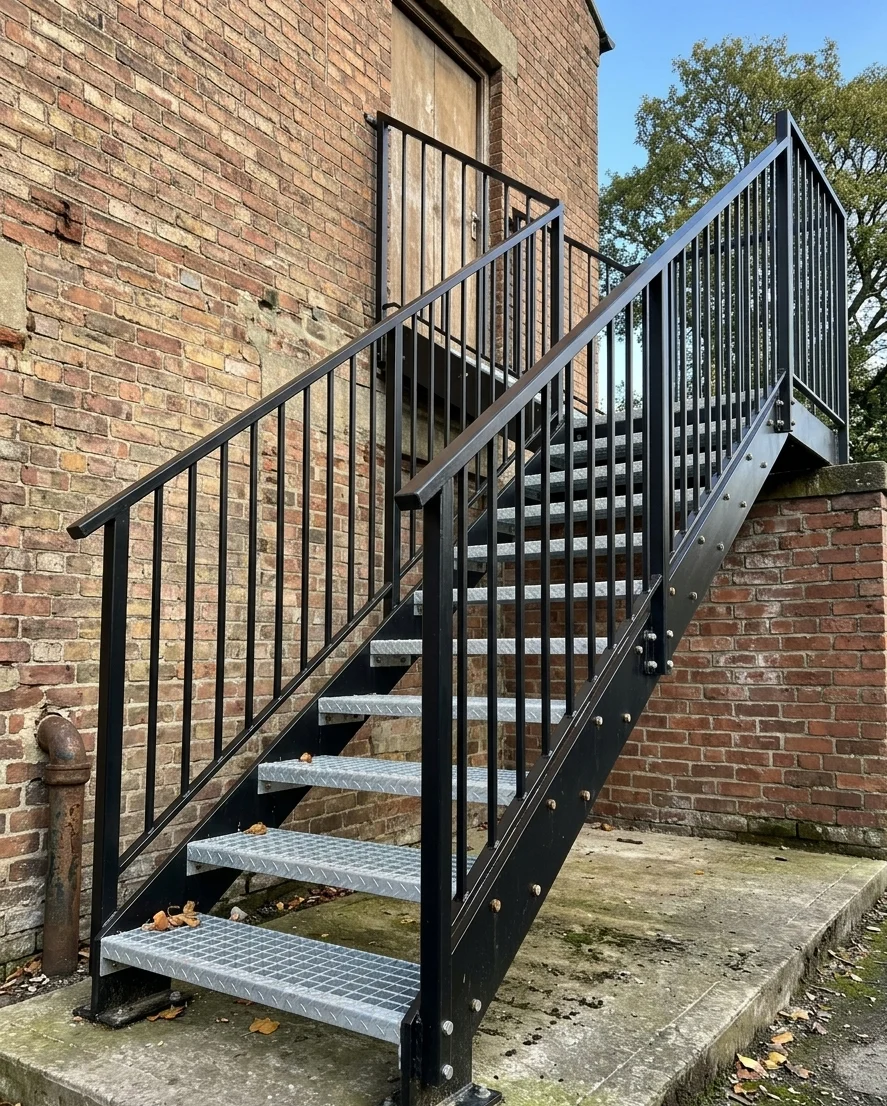
Completed fire escape staircase installation by Continox — designed, manufactured and installed by our in-house team.
Fire Escape Stairs for Apartments — FAQ
Common questions about fire escape staircase requirements, regulations and costs for apartments and HMOs.
Get a Compliant Solution
Within 4–6 Weeks
Free on-site survey, fixed-price quotation within 24 hours. BS 9991 compliant, UKCA marked, installed by our in-house team across the UK.