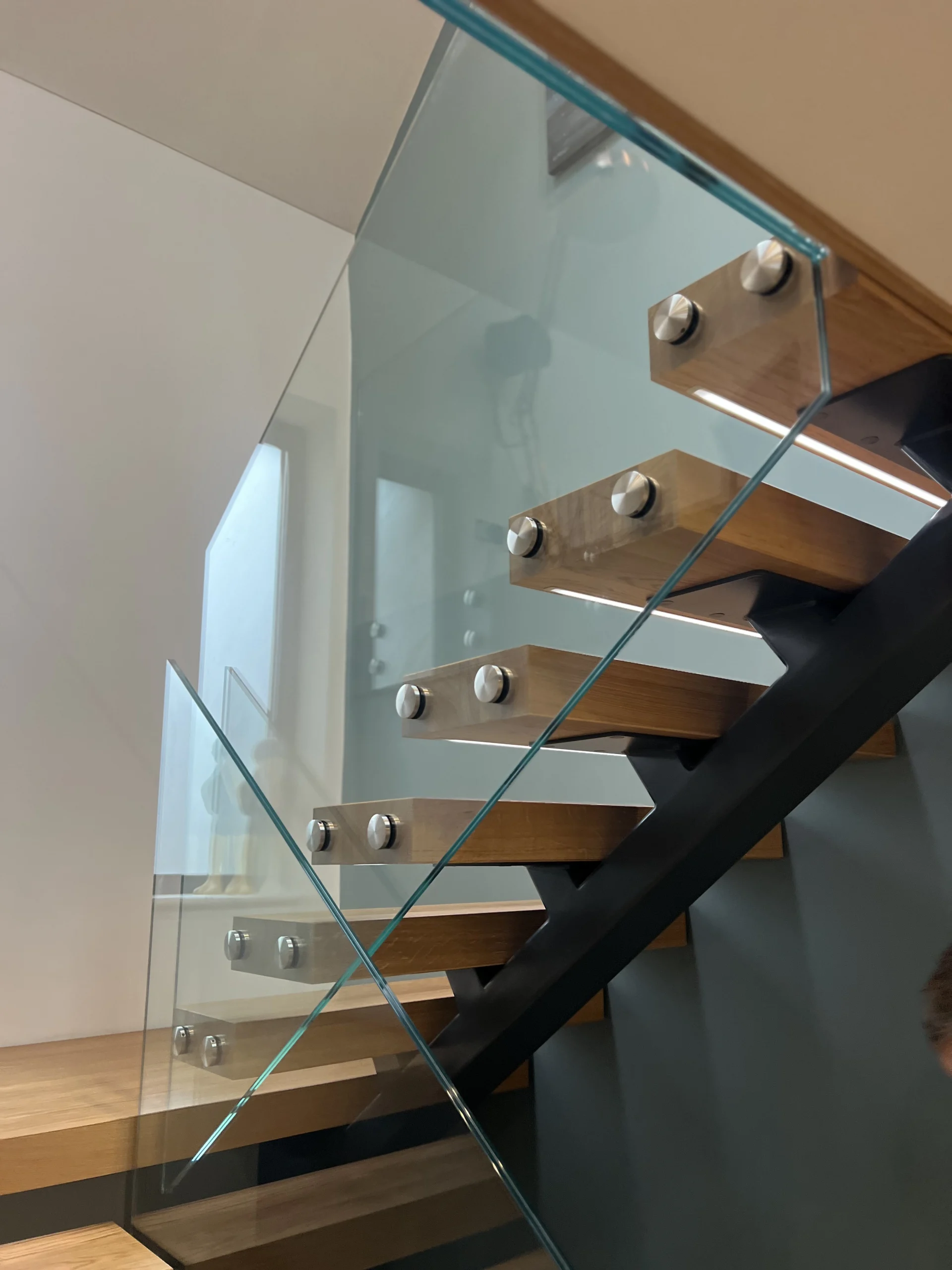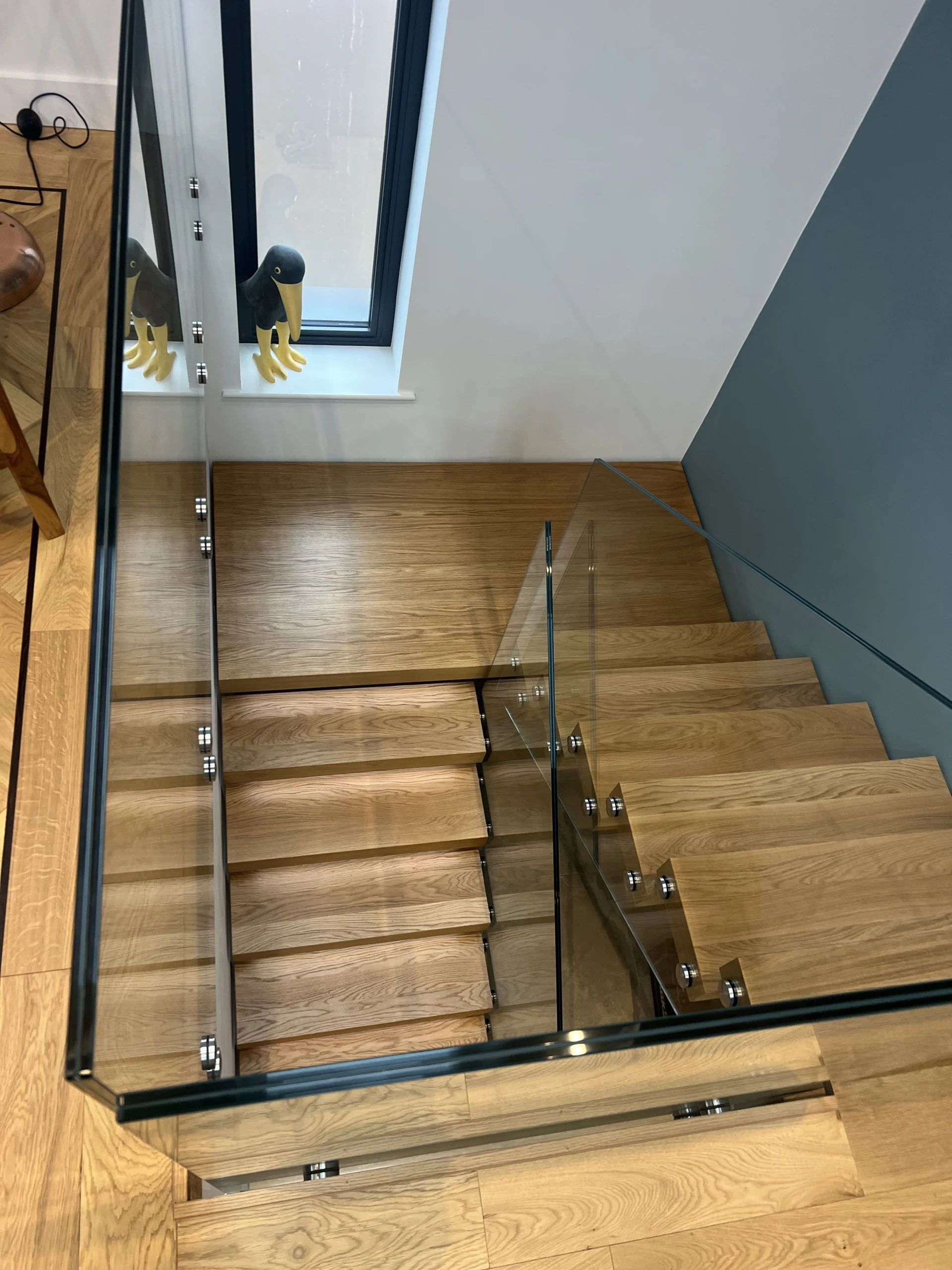

Headroom is the dimension that fails more staircase projects at Building Control sign-off than any other single measurement. The number itself — 2,000mm minimum on primary stairs, 1,800mm at the centre line of a loft conversion stair, 1,900mm at the sides — is straightforward. Where projects come unstuck is in how the measurement is taken: the angle, the reference points, the projection of the upper floor structure across the flight, and the exact point along the pitch line where the available headroom is at its tightest. This guide covers everything Approved Document Part K specifies on staircase headroom, plus the practical methodology Continox uses on every bespoke project to verify compliance before fabrication. For complete UK staircase regulations see our Part K guide.
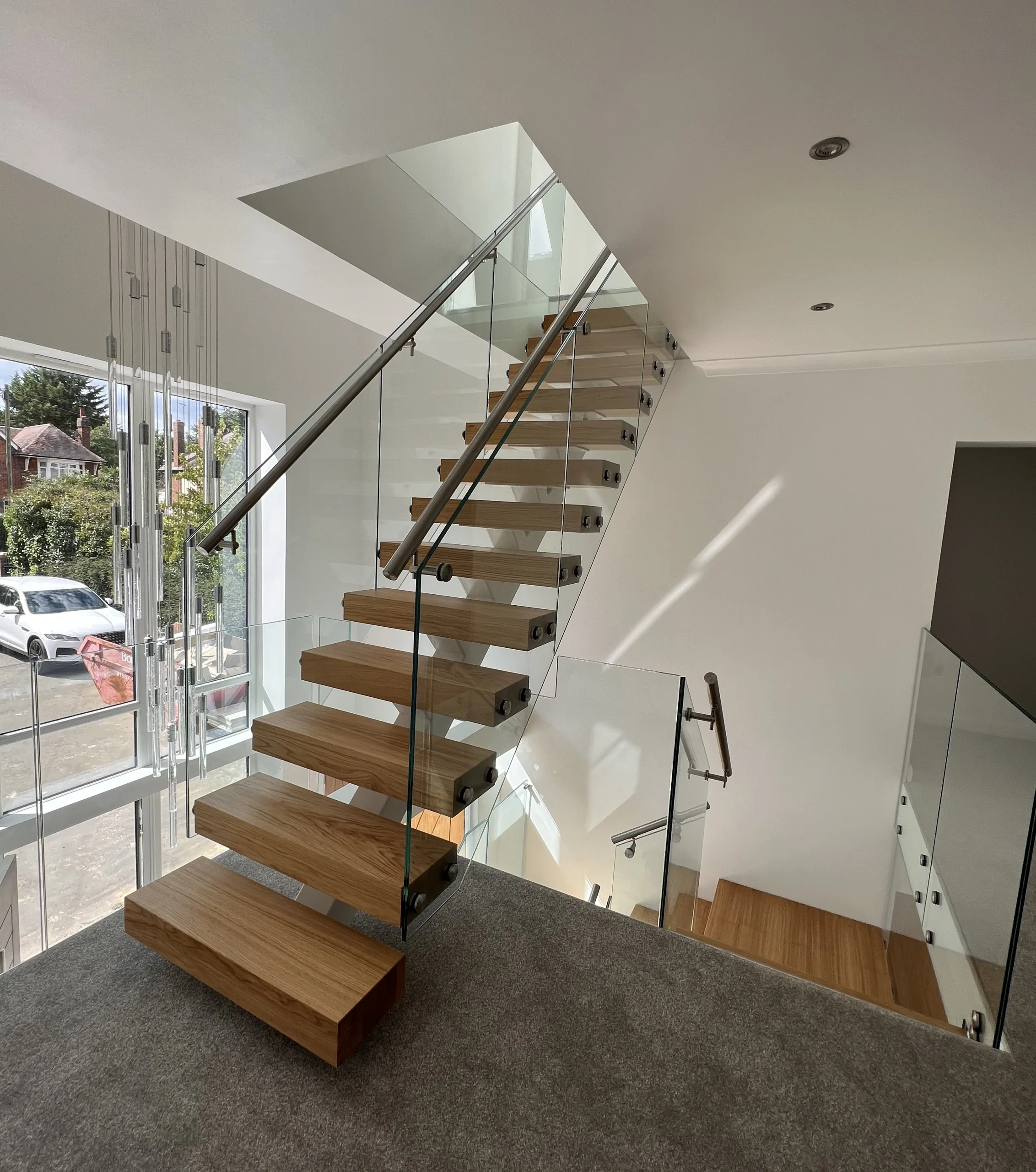
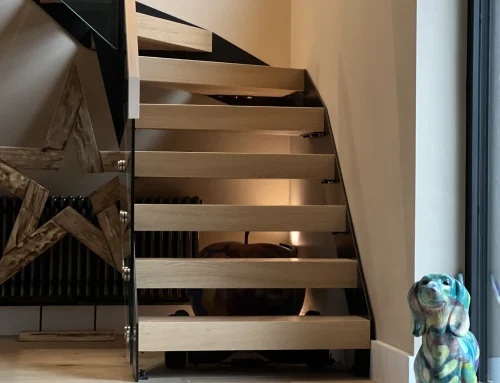
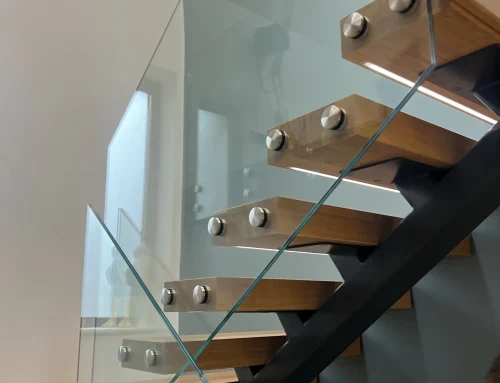
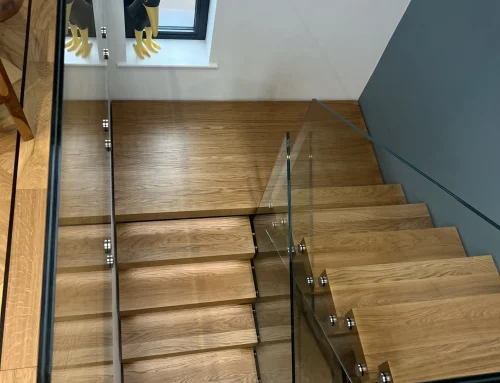
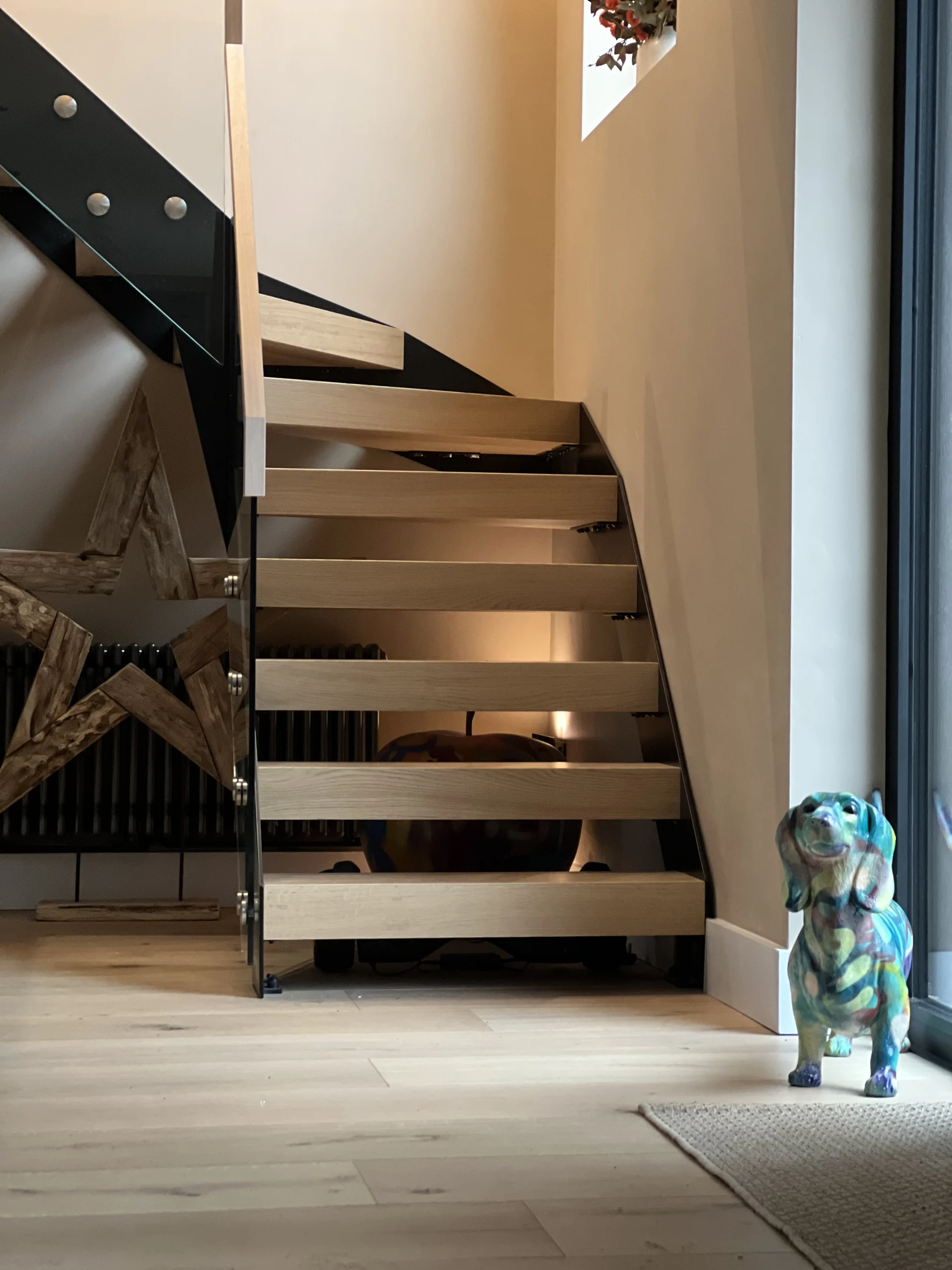
Loft conversion staircase by Continox — 1,900mm headroom at sides verified on completed installation, with 2,000mm at the head of the flight and the relaxed 1,800mm centre-line clearance.
UK Approved Document Part K requires a minimum 2,000mm clear headroom over the entire length of a primary domestic staircase, measured vertically from the pitch line of the flight to the underside of any structure above. Loft conversion staircases benefit from a relaxation: 1,800mm at the centre line of the flight, 1,900mm at the sides — applied where existing roof structure makes 2,000mm impractical. Headroom is measured to any obstruction including ceilings, beams, ducts, and the underside of the flight above on multi-storey installations. Common stairs in flats, fire escapes, and commercial premises require the full 2,000mm with no relaxation.
Why Headroom Matters
The 2,000mm number isn't arbitrary — it accommodates the 99th percentile UK adult male standing height (approximately 1,890mm) plus a buffer for footwear, posture, and the occasional taller user. Below 2,000mm, a measurable percentage of users will instinctively duck on the stairs, which becomes a fall risk over repeated daily use. The figure is borrowed from BS 5395-1 on stair design and incorporated as a hard requirement in Approved Document Part K.
The reason headroom fails Building Control more often than other Part K dimensions is that it's the only one set by the structure above rather than the staircase itself. Rise, going, pitch, and width are all controlled by the staircase design — if the geometry is wrong, the staircase manufacturer can adjust. Headroom depends on the existing or proposed floor structure, ceiling height, and any beams, ducts, or service runs above the flight. Get the headroom calculation wrong and the fix is structural, not stair-related.
This is also why headroom is one of the underrated arguments for bespoke fabrication. A stock staircase comes with fixed pitch and going dimensions that may produce inadequate headroom against an existing structure. A bespoke flight is designed around the available headroom envelope, not against it.
How Headroom is Measured
The measurement methodology is more specific than most Part K dimensions. Headroom is measured vertically from the pitch line of the flight to the underside of any structure above. The pitch line is the imaginary line touching the nosings of the treads — not the tread surface itself. This distinction matters: measuring from the tread surface overstates available headroom by approximately 100mm (the average tread thickness), and produces a flight that fails inspection.
Headroom measurement methodology — vertical from pitch line (touching tread nosings) to the underside of the structure above. Continox standard.
The measurement applies over the full length of the flight, not just at the head. A common failure mode is adequate headroom at the foot and head of the stairs but reduced clearance at the midpoint where a beam, joist, or duct projects across the flight. Building Control inspectors will check every point along the pitch line, not just the entry and exit.
What is the pitch line? The pitch line is an imaginary straight line passing through the front edge (nosing) of every tread on the flight. It represents where users actually walk — the foot lands on the nosing, not on the back of the tread. Headroom measured from the tread surface overstates available clearance by the tread thickness (typically 30–100mm), so the regulations specifically reference the pitch line to capture the worst-case scenario for users on the stairs.
Headroom Requirements by Staircase Type
The 2,000mm minimum applies to most UK staircases, but there are five recognised exception scenarios where Approved Document Part K permits reduced headroom under defined conditions. Understanding which applies determines whether a project needs structural intervention or can proceed within the relaxed standard.
The main staircase in a single-occupancy dwelling — the flight everyone uses every day. Approved Document Part K requires the full 2,000mm minimum clear headroom over the entire pitch line, with no relaxation. This is the dimension Continox specifies on every primary staircase project, with verification at the design stage and again on completed installation before sign-off.
The most common cause of inadequate headroom on primary stairs is the upper floor structure crossing the flight — typically where the staircase passes under the floor joists or trimmer beam at the head of the flight. On bespoke projects this is identified at the survey stage and the staircase geometry adjusted to suit; on stock or off-the-shelf flights it's typically a discovery at the installation stage with limited remediation options.
The single recognised relaxation in Part K. Where the existing roof structure makes 2,000mm headroom impractical, a loft conversion staircase can be specified with 1,800mm at the centre line of the flight, increasing to 1,900mm at the sides. This recognises the geometry of a typical pitched roof — the lowest ceiling is over the centre of the flight, where the rafter or collar tie crosses the staircase.
The relaxation applies only to loft conversions and only where structural adaptation to deliver 2,000mm would be disproportionate. It cannot be applied to a primary domestic stair simply because the design has produced inadequate headroom. For full loft conversion stair specifications see our loft conversion staircase ideas and loft staircase regulations guides.
Staircases serving two or more dwellings — block of flats, converted house in multiple occupation, any building where the stairs form the means of escape for residents who don't share a household. The full 2,000mm minimum applies with no relaxation, regardless of footprint constraint or existing structure. This is the dimension Building Control measure on flat conversions, HMO compliance inspections, and care home premises.
Where existing structure produces inadequate headroom on a converted property, the building cannot be signed off as flats or HMO without structural modification — typically removing the offending beam, raising the ceiling, or relocating the staircase. The cost of structural intervention is significant and is one of the reasons that flat conversions in older properties stall at the Building Control stage. See our HMO fire escape requirements and care home fire escape guides.
External fire escape stairs and dedicated escape routes within commercial, school, retail, and care home premises require the full 2,000mm headroom minimum under BS 9991 and Approved Document Part B. Headroom on external stairs is rarely an issue in itself — the open structure means there's no overhead obstruction in the conventional sense — but is measured to any landing canopy, projecting balcony, or upper-floor walkway crossing the escape route.
For dedicated escape stairs serving high-occupancy buildings, the operational requirement is for users to descend at speed during evacuation without ducking or breaking stride. The 2,000mm minimum accommodates this. For external staircase specifications see our external staircase range.
Offices, retail, restaurants, hotels, schools — buildings used by staff, customers, or visitors during normal occupancy. The headroom minimum is 2,000mm with no relaxation, applied to both primary stairs and secondary escape routes. Some buildings (typically commercial spaces under accessibility standards Part M) require 2,100mm as a recommended specification, with 2,000mm as the absolute minimum.
Where commercial premises occupy older buildings with inadequate headroom, the building cannot be signed off for new commercial use without modification. This is encountered most often on retail conversions in listed properties, where structural intervention on the staircase requires Listed Building Consent in addition to standard Building Regulations approval.
UK Headroom Requirements — Complete Reference
Summary of headroom requirements across UK staircase types, with the applicable standard and any permitted relaxation.
| Staircase Type | Min Headroom | Reduced Areas | Standard |
|---|---|---|---|
| Primary domestic | 2,000mm | None | Part K (1.10) |
| Loft conversion | 2,000mm | 1,800mm centre / 1,900mm sides | Part K (1.11) |
| Common stairs (flats) | 2,000mm | None | Part K / BS 9991 |
| External fire escape | 2,000mm | None | BS 9991 / Part B |
| Commercial primary | 2,000mm | None | Part K / BS 9999 |
| Accessibility (Part M) | 2,100mm recommended | 2,000mm absolute min | Part M |
| Spiral staircase | 2,000mm | None | BS 5395-2 |
| Industrial premises | 2,000mm | None | Part K / BS EN ISO 14122 |
Common Headroom Failures
Six recurring scenarios produce headroom failures on UK staircase projects. Recognising these at the survey stage avoids structural intervention later.
1. Trimmer beam at head of flight
The structural opening at the top of the staircase is framed with a trimmer beam supporting the upper floor joists. Where the trimmer projects below the finished ceiling line — typical on older properties with shallow floor zones — headroom at the head of the flight drops below 2,000mm. The fix is either structural (deeper trimmer set higher into the floor zone) or geometric (steeper flight, shorter going, more risers). Continox identifies this at the proposal drawing stage.
2. Service runs across the flight
Heating ducts, soil pipes, electrical trunking, and structural bracing routed across the staircase opening will reduce headroom at the point they cross. Modern building regulations tolerate this — if the obstruction can be relocated — but in retrofits the obstruction is often integral to the building services. Headroom needs to be measured to the underside of any service projecting into the staircase opening, not just the structural ceiling.
3. Pitch too shallow for available rise
A staircase designed at the regulatory minimum pitch (around 30°) consumes more horizontal distance per riser, and may push the head of the flight forward into the upper floor structure. A steeper pitch (closer to the 42° maximum) shortens the flight horizontally and brings the head out from under the floor zone — improving headroom at the head while marginally reducing comfort. The 2R+G comfort formula (550–700mm) generally accommodates the steeper option.
4. Tread thickness misallocation
A 50mm-thick stone or hardwood tread changes the pitch line position significantly versus a 22mm timber tread. The pitch line moves up by approximately the tread thickness, reducing available headroom. On bespoke specifications with thick treads (oak at 100mm, stone at 60mm), the geometry must accommodate the actual tread depth, not the nominal nosing line.
5. Loft conversion centre/side confusion
The loft relaxation provides 1,800mm at the centre of the flight, 1,900mm at the sides — this is a single relaxation applied to a single point along the pitch line, not a blanket reduction. Building Control verify that the centre-line headroom is at least 1,800mm and that the side headroom is at least 1,900mm at the same point. Misapplying the relaxation as a blanket 1,800mm minimum across the flight is a common failure.
6. Existing ceiling sloped or uneven
Older properties often have ceilings that aren't level — joist deflection, lath-and-plaster sag, settled structure. The 2,000mm minimum has to be delivered against the actual ceiling, not the design intent ceiling. Site survey before fabrication is the only way to identify this and adjust the staircase geometry accordingly.
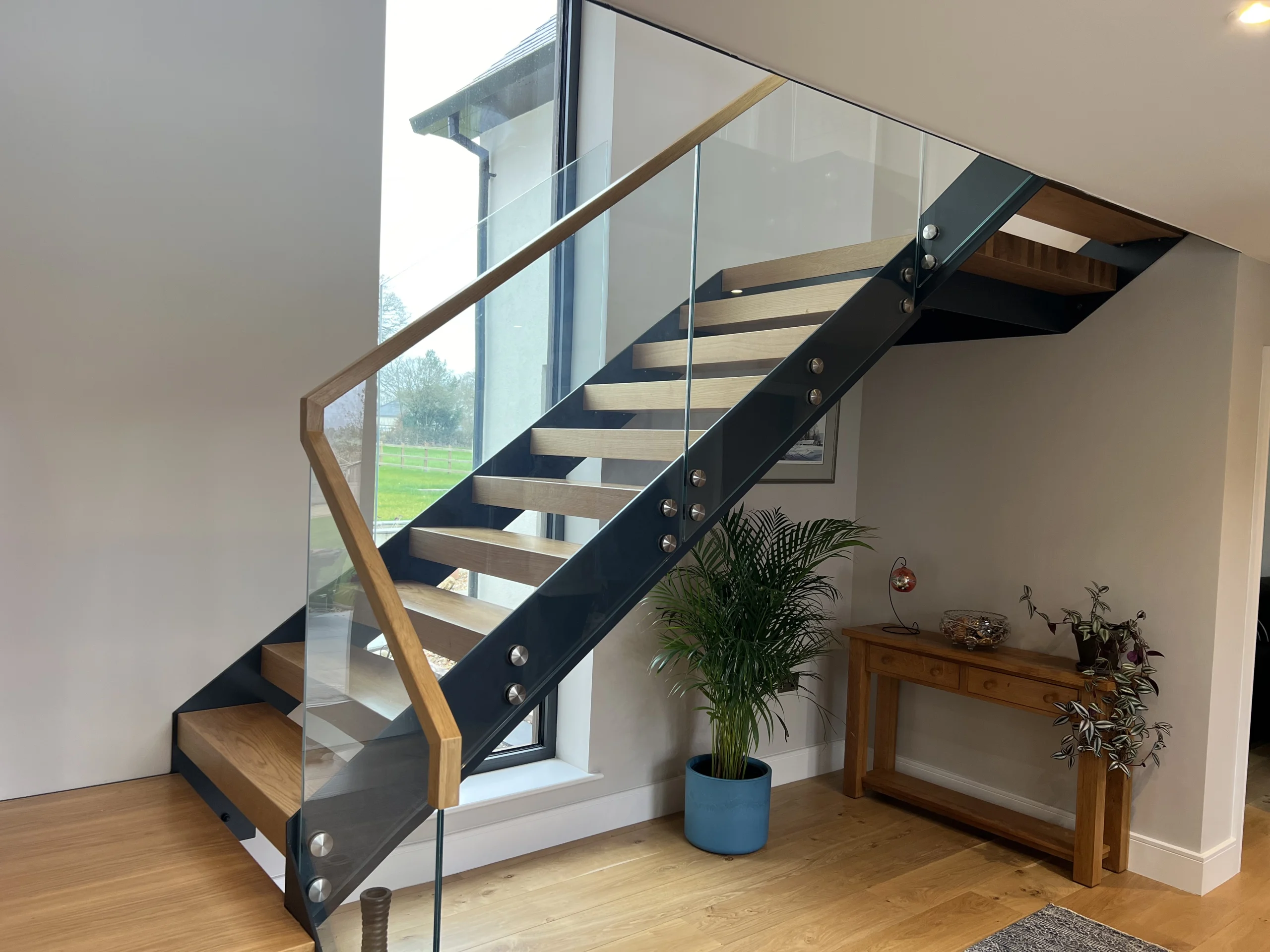
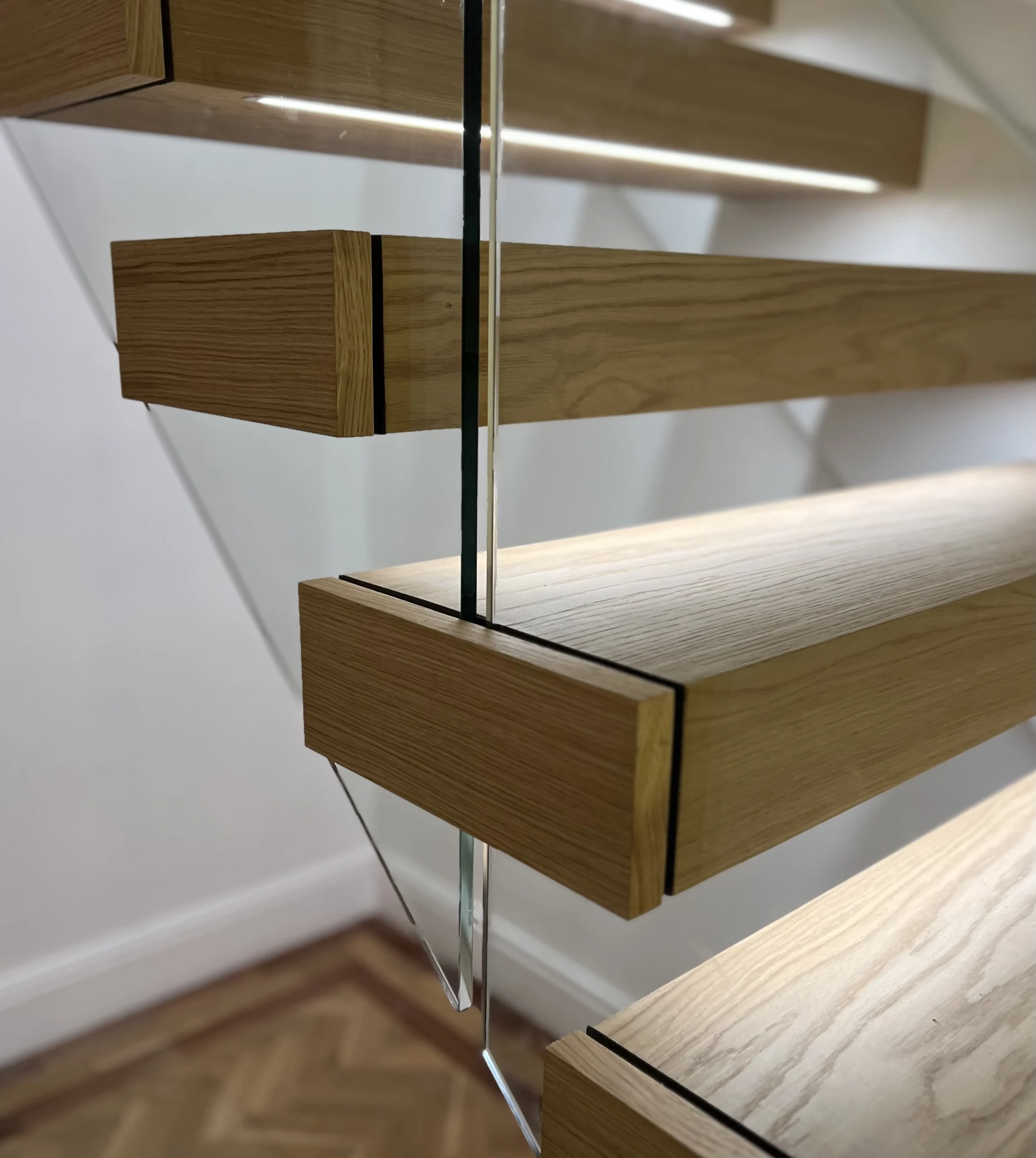
Site survey before fabrication — always. Headroom is the most consequential single dimension on a UK staircase project, and the only one that depends on the existing structure rather than the staircase design. Continox surveys every project before issuing fabrication drawings — pitch line, ceiling height, beam projection, and service runs all measured and verified. A staircase fabricated to the wrong headroom calculation is unrecoverable on site without significant rework, and the cost of getting this wrong typically exceeds the cost of the survey by an order of magnitude. On the recent Romsey floating staircase project, headroom measured at exactly 2,000mm — verified three times before fabrication, with zero margin for site variation.
Solutions When Headroom is Borderline
Where the available headroom on a project is below 2,000mm — or below 1,800mm at the centre line of a loft conversion — there are five recognised approaches, in order of cost and intervention.
Steepen the pitch (within Part K limits). Increasing the pitch from 38° to 42° shortens the flight horizontally and brings the head of the flight out from under the upper floor structure. This is often sufficient to recover 100–200mm of headroom and is the cheapest intervention. The flight is slightly less comfortable but remains compliant.
Relocate the head of the flight. Moving the staircase opening 200–400mm forward or backward in the floor plate often clears the trimmer beam or service runs, restoring full headroom. This requires structural modification of the floor zone but is significantly less invasive than raising the ceiling. The bespoke design process accommodates this iteratively.
Raise the ceiling locally. A coffered or recessed ceiling above the staircase recovers headroom by setting the ceiling line back into the floor zone above. This is invasive but architecturally elegant — many of the highest-end residential projects use this approach to deliver generous headroom on premium staircases.
Use the loft conversion relaxation (where applicable). If the project genuinely qualifies as a loft conversion, the 1,800mm centre / 1,900mm side relaxation is built into Part K — no special application needed. The relaxation cannot be retro-applied to primary domestic stairs.
Structural intervention. The last resort: replacing the trimmer beam, modifying the floor structure, or raising the ceiling height. Cost is project-specific but typically £8,000–£25,000 on a domestic property. Continox identifies these scenarios at the survey stage so they can be evaluated against the project budget before fabrication. For full pricing context see our bespoke staircase cost guide.
Width, Headroom, and the Combined Calculation
Headroom is one dimension in a system. The Approved Document Part K minimum 2,000mm clear headroom has to be delivered simultaneously with the minimum clear walking width — typically 800mm domestic, 1,000mm fire escape, 1,100mm commercial. A staircase compliant on width but failing on headroom (or vice versa) doesn't pass Building Control. See our staircase width requirements guide for the full width specification.
The 2R+G comfort formula (2 × Rise + Going = 550–700mm) is also independent of headroom but coupled to it through the pitch. A flight at 42° pitch consumes less horizontal distance and typically improves headroom at the head of the flight; a flight at 30° pitch is more comfortable but extends further under the upper floor structure. The bespoke design optimises all four dimensions simultaneously — width, headroom, rise/going, and pitch — to a single coherent specification.
Frequently Asked Questions
Verified Compliance, Not Estimated
Continox surveys every project before fabrication — pitch line, ceiling height, beam projection, service runs all measured and verified. Compliant with Part K, BS 5395, and BS 9991. Free site survey across the UK, photorealistic 3D visuals, fixed-price quotation within 24 hours. Bespoke staircases from £7,900.