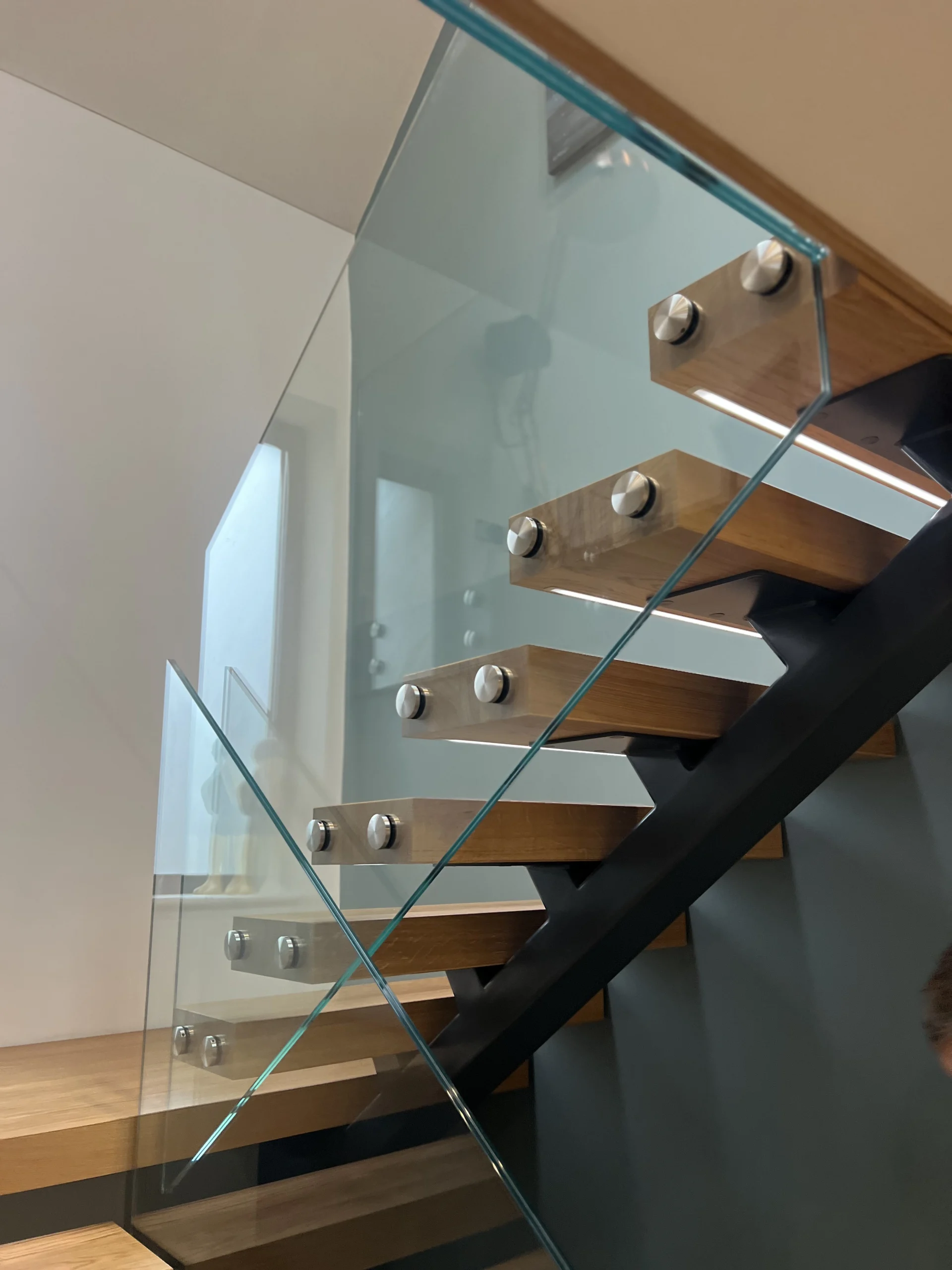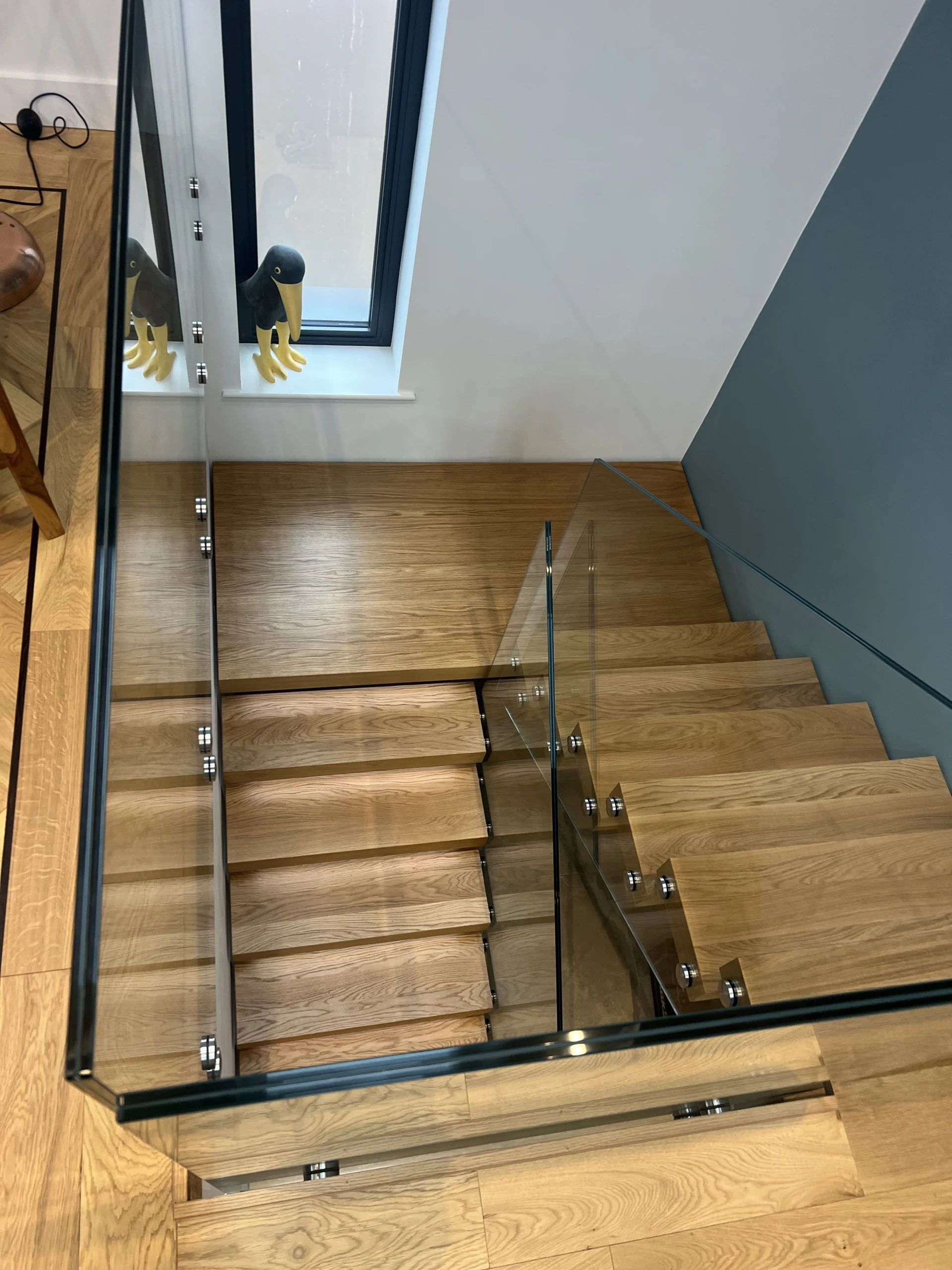

The 2R + G formula is the single most useful equation in UK staircase design — a one-line check that tells you whether a flight will feel comfortable or whether it will fight every user every day. It's not a regulatory minimum (Approved Document Part K sets rise and going limits separately), but it sits inside BS 5395-1 as the recognised comfort calculation, and it's the equation Continox uses on every bespoke design before fabrication. This guide explains where the formula comes from, how to apply it, why the 550–700mm range works, and what happens when a flight is engineered outside it. For full UK staircase regulations see our complete Part K guide.

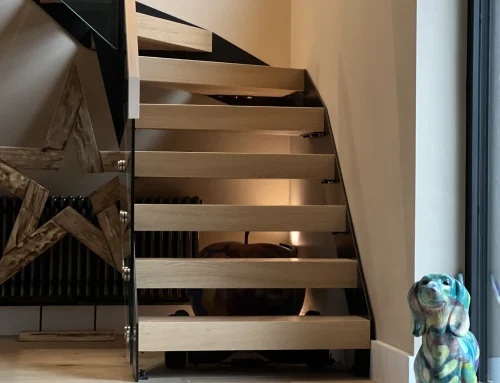
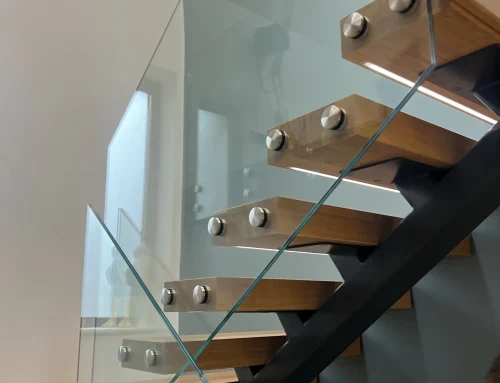
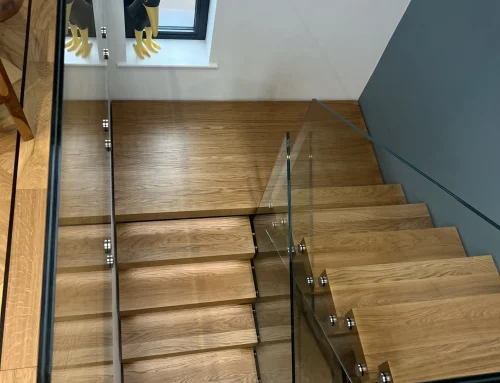
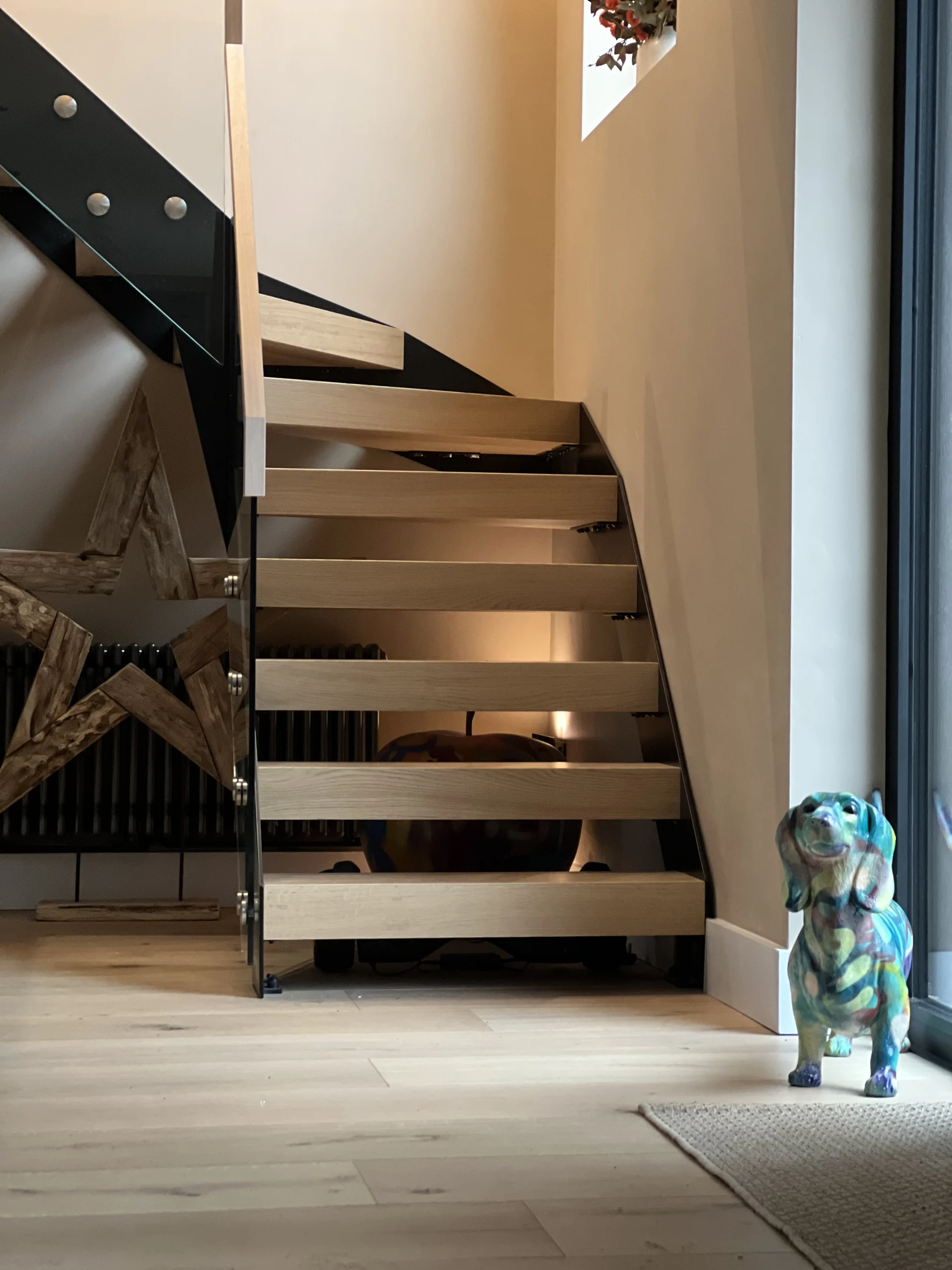
Bespoke contemporary staircase by Continox — rise 195mm, going 250mm, 2R+G = 640mm. Sweet-spot comfort specification on premium domestic projects.
The 2R + G stair formula is the UK comfort calculation for staircase rise and going: twice the rise plus the going should equal between 550mm and 700mm. Written algebraically: 2R + G = 550–700mm, where R is the rise (vertical height of one step) and G is the going (horizontal depth). The formula derives from average human stride length on stairs and is referenced in BS 5395-1. A flight inside this range feels natural to climb; outside it the user is forced to over-extend (above 700mm) or shuffle (below 550mm). The sweet spot is approximately 630mm — a rise of 190mm with a going of 250mm produces 2(190) + 250 = 630mm.
Sweet spot: 600–650mm — the natural human stride on stairs
Where the Formula Comes From
The 2R + G formula was developed in the 17th century by François Blondel, a French architect and mathematician, who observed that comfortable staircase climbing maintained a consistent relationship between vertical rise and horizontal stride. Blondel noted that on level ground a person's average stride is approximately 600–650mm, but on stairs each unit of vertical rise consumes twice the energy of horizontal travel — so the effective stride needs to account for the rise twice. His formula, refined and adopted into modern design standards, has held up remarkably well across three centuries of staircase ergonomics research.
In the UK the formula sits within BS 5395-1 (Stairs — Code of practice for the design, measurement and construction of stairs and stepped pavements). It's not an absolute minimum the way Part K rise and going limits are — a flight slightly outside the 550–700mm range is still legal — but it's the recognised comfort target, and it's what an experienced staircase designer aims for on every project.
The reason it survives in modern design is that human gait dimensions haven't meaningfully changed since Blondel's time. The average UK adult stride length on level ground is still 650–710mm; the energy cost of vertical climbing relative to horizontal walking is still approximately 2:1; and the rise/going relationships that produce a comfortable climb haven't shifted. The formula remains the simplest accurate predictor of staircase comfort.
How to Apply the Formula
Three values are needed for any staircase calculation:
Floor-to-floor height (FFH). The vertical distance from the finished surface of the lower floor to the finished surface of the upper floor. Typical UK values: 2,400mm in older single-storey extensions, 2,600mm in most modern domestic builds, 2,700–3,000mm in higher-end residential and Victorian/Edwardian properties.
Number of risers. Calculated by dividing FFH by the target rise (typically 190–200mm). The number must be a whole number — fractional risers don't exist. A 2,700mm FFH at 200mm rise gives 13.5 risers, so the design uses either 13 risers at 207.7mm or 14 risers at 192.9mm.
Going. The horizontal depth of one tread, measured nosing to nosing. Set independently to suit the available footprint and the target 2R+G value.
The calculation runs in sequence: FFH ÷ chosen riser count = rise. Then 2R + G = comfort check. Adjust going to bring 2R + G into 550–700mm range.
Worked Examples — Real Project Numbers
Three real-world calculations covering the most common UK domestic scenarios. Each shows the FFH, the risers chosen, and the resulting 2R+G value with comfort assessment.
Standard new-build floor-to-floor height. Target a comfortable rise around 195mm, with a generous going around 240mm.
Risers = 13 (2,600 ÷ 13 = 200mm rise)
Going = 240mm
2R + G = (2 × 200) + 240 = 640mm
This is the configuration Continox specifies as default on most domestic floating and central spine projects. The 200mm rise is just under the 220mm Part K maximum, the 240mm going is above the 220mm minimum, and 2R+G = 640mm sits in the comfort sweet spot. Pitch works out at approximately 39.8°, comfortably under the 42° Part K limit.
Same 2,600mm FFH but limited horizontal space — typical mid-terrace or tight Victorian conversion. Going compressed to 220mm (Part K minimum).
Risers = 13 (2,600 ÷ 13 = 200mm rise)
Going = 220mm (Part K minimum)
2R + G = (2 × 200) + 220 = 620mm
The flight is compliant and the 2R+G value is inside the comfort range, but at 620mm it sits below the sweet spot. Users will notice the flight feels slightly cramped underfoot — particularly on descent, where the shorter going makes foot placement feel constrained. Pitch increases to 42.3° (just over the Part K limit), so the rise needs to drop to approximately 195mm to bring pitch back inside 42°.
Tall Victorian or Edwardian floor-to-floor — the bespoke staircase designer's favourite scenario. Generous footprint, tall FFH, opportunity for a comfortable shallow flight.
Risers = 16 (3,000 ÷ 16 = 187.5mm rise)
Going = 270mm
2R + G = (2 × 187.5) + 270 = 645mm
The 187.5mm rise is significantly below the Part K maximum, paired with a generous 270mm going. 2R+G = 645mm sits in the comfort sweet spot. Pitch works out at approximately 34.8° — a noticeably shallower flight than the regulatory limit. This is the configuration commonly specified on premium floating staircases and central spine projects in larger period properties.
The Comfort Zone — Visualised
The 550–700mm comfort range can be visualised as a rise-versus-going chart with the comfort band highlighted. Any combination of rise and going inside the band passes the comfort check; combinations outside it fail.
2R + G comfort zone visualised — gold band shows 550–700mm range. Sweet spot at R195/G250 sits at 640mm.
Why the 2:1 ratio? Climbing one unit of vertical rise consumes approximately twice the energy of one unit of horizontal walking — the human body has to lift its centre of mass against gravity in addition to moving forward. The 2R term in the formula accounts for this energy doubling. The result is that a comfortable stair stride matches a comfortable level-ground stride when rise is given twice the weight of going. Below 550mm the user shuffles (over-stepping); above 700mm the user has to lengthen stride excessively (under-stepping).
What Happens Outside the Range
A flight outside the 550–700mm range is technically legal in most cases (as long as Part K rise and going limits are respected) but produces measurable user discomfort. The two failure modes are different in feel and consequence.
Below 550mm — the cramped flight
A flight where 2R+G drops below 550mm forces the user into a shortened stride on every step. On ascent this feels effortful and "stair-y" — the user is conscious of climbing stairs rather than moving naturally between floors. On descent the cramped going limits foot placement and increases trip risk, particularly for users carrying objects or wearing footwear with heel projection. The fix is almost always to lengthen the going (typically by 20–30mm) which brings 2R+G back into range without changing rise.
Above 700mm — the over-extended flight
A flight where 2R+G exceeds 700mm forces the user into an over-extended stride. On ascent this feels labouring — the rise is generous, the going is long, and each step covers too much horizontal distance for natural walking pace. On descent the long going can produce a "rocking" feel where the user's foot lands further forward than expected. The flight often photographs beautifully (long shallow stairs are visually elegant) but feels wrong in use. The fix is to shorten the going or increase the rise to bring 2R+G back into range.
2R + G — Reference Combinations
Common rise/going combinations with their 2R+G values and comfort assessment. Use as a quick lookup at the design stage.
| Rise (mm) | Going (mm) | 2R + G | Pitch | Assessment |
|---|---|---|---|---|
| 170 | 280 | 620mm | 31.3° | Shallow comfortable |
| 180 | 260 | 620mm | 34.7° | Premium flight |
| 190 | 250 | 630mm | 37.2° | Sweet spot |
| 195 | 250 | 640mm | 37.9° | Continox default |
| 200 | 240 | 640mm | 39.8° | Standard domestic |
| 200 | 220 | 620mm | 42.3° | Steep — at Part K limit |
| 220 | 220 | 660mm | 45.0° | Above Part K — fails pitch |
| 150 | 300 | 600mm | 26.6° | Public/grand staircase |
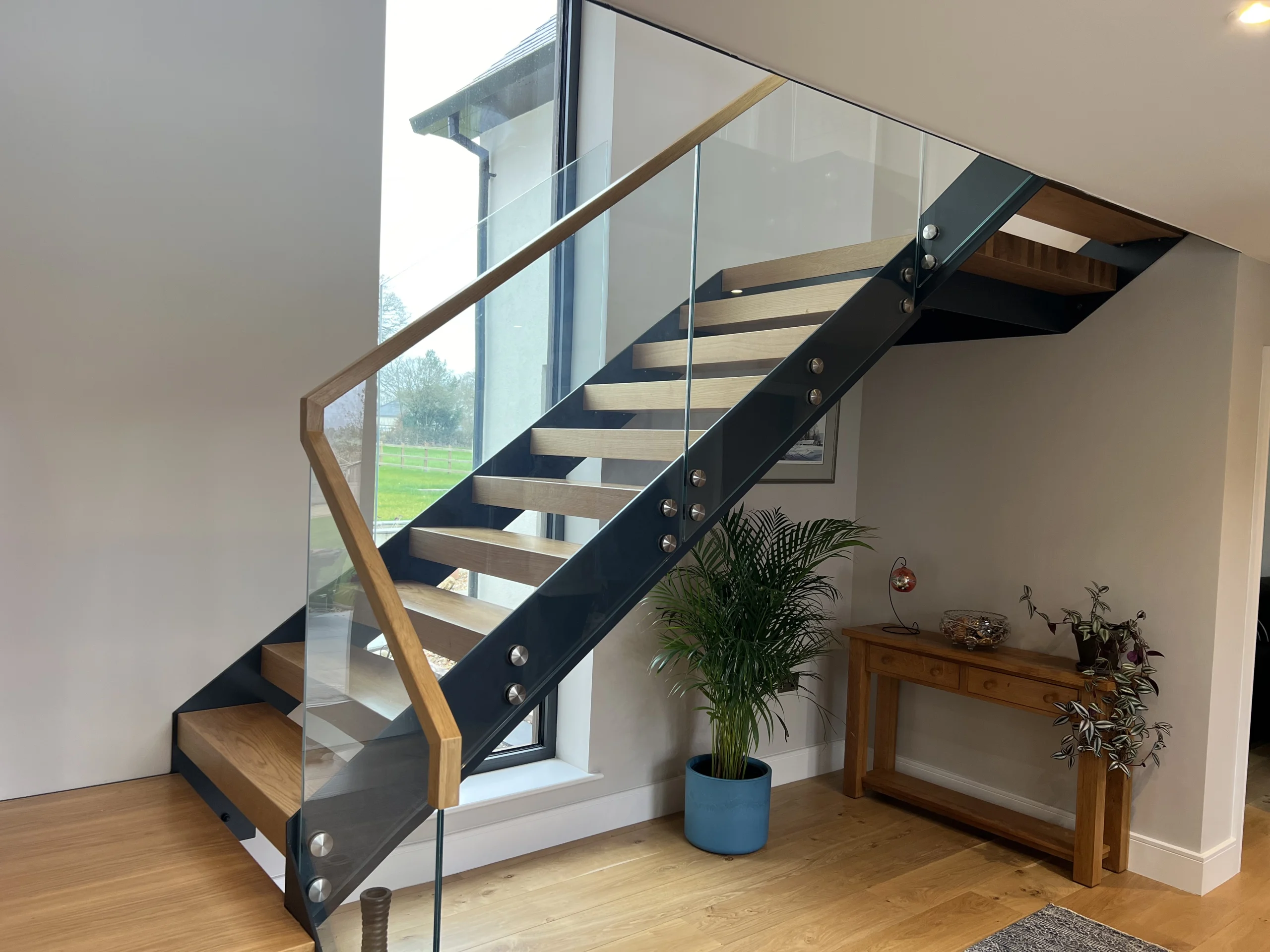
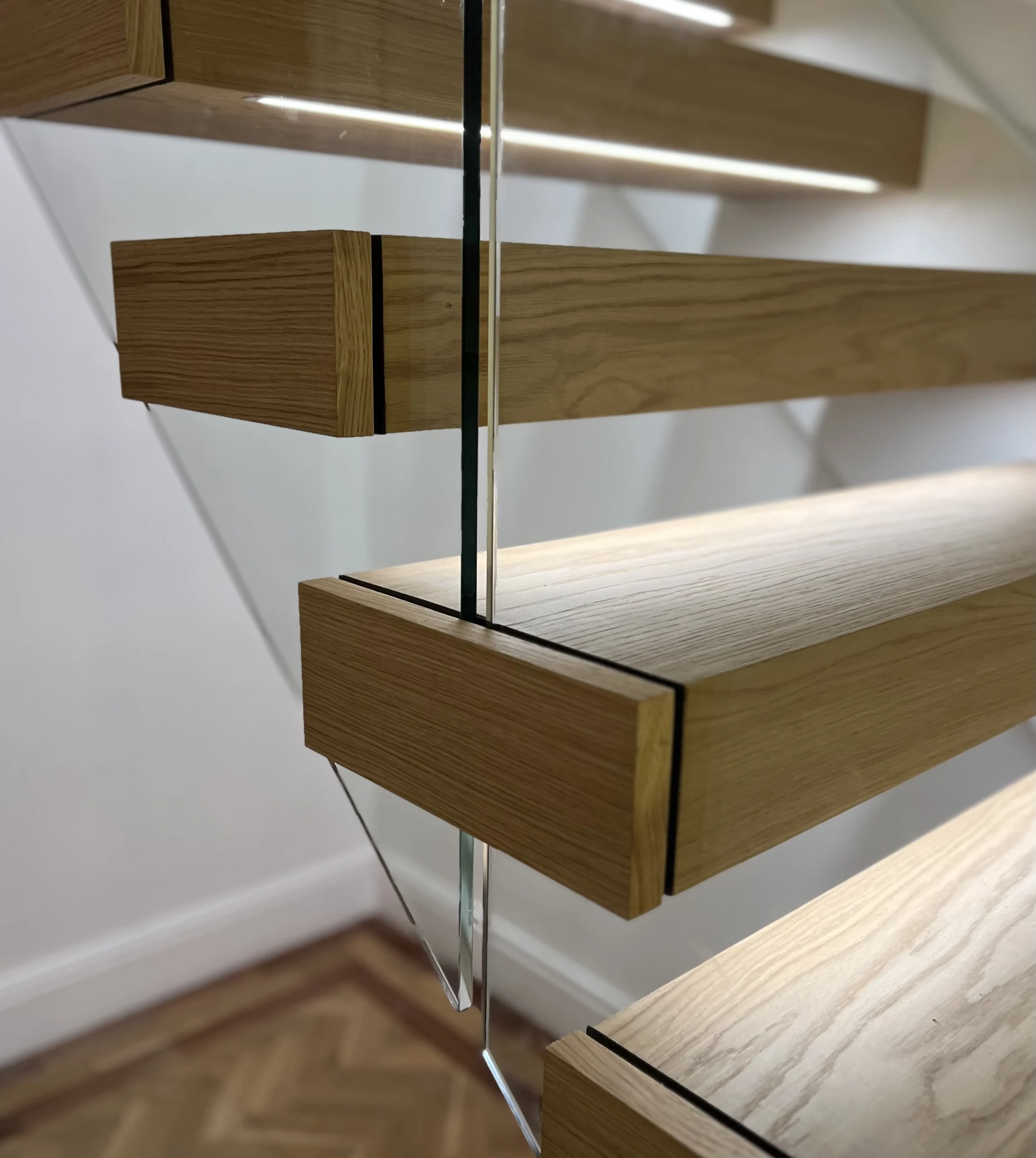
The formula is necessary but not sufficient. A flight that passes the 2R+G comfort check still has to comply with Part K's separate rise and going limits (rise max 220mm, going min 220mm, pitch max 42°), the 2,000mm headroom requirement, the minimum width requirement, and BS EN 12150 / BS EN 14449 for any glass balustrade. 2R+G is the comfort filter — it doesn't replace the regulatory checks. On the recent Romsey L-shape floating staircase, the calculation worked out to 2(197) + 245 = 639mm — sweet spot — but the project still required full Part K verification on rise, going, pitch, headroom, and glass specification before fabrication.
2R + G Across Staircase Types
The 550–700mm comfort range is universal but the position within the range varies by staircase use. The five common scenarios below show where to target 2R+G for each project type.
Premium domestic — 620–650mm. Sweet-spot specification for bespoke floating, central spine, and feature staircases. Pitch under 40°, generous going, and rise around 190mm. This is the comfort zone Continox targets on every premium project. See our bespoke modern staircase range for the full specification.
Standard domestic — 600–660mm. Typical new-build and renovation. Pitch around 38–42°, going 220–250mm, rise 195–210mm. Compliant, comfortable, and efficient on footprint.
Loft conversion — 580–650mm. Compressed footprint forces the going into the lower end of the range and the rise toward the higher end. The flight feels steeper than a primary stair but remains compliant. Pitch up to 42° (the Part K maximum). For loft-specific guidance see our loft staircase regulations.
Public and commercial — 580–620mm. Higher rise/going ratio paired with longer going to accommodate fast simultaneous use during normal occupancy and emergency escape. Pitch under 38°, going typically 280–320mm, rise 170–185mm. The shallower pitch reduces fatigue on long descents. See our school staircase regulations for sector-specific specifications.
External and fire escape — 590–640mm. Designed for fast confident descent during evacuation. Pitch around 38°, going 250–280mm, rise 175–190mm. The geometry prioritises descent speed and landing predictability over ascent comfort. For full external specifications see our external staircase range.
Why Bespoke Staircases Hit the Sweet Spot
Stock and pre-fabricated staircases come with fixed rise and going values set by the manufacturer's standard production sizes. A typical off-the-shelf flight has a rise of 195–210mm paired with a going of 215–225mm — producing 2R+G values of 605–645mm. The flight is technically compliant and inside the comfort range, but the rise/going ratio is set to suit production economics rather than user comfort, and the result is usually a flight at the steeper end of the comfort zone.
On a bespoke staircase the rise and going are set independently to suit the floor-to-floor height, available footprint, and target pitch. A bespoke flight at 2,600mm FFH typically delivers 200mm rise paired with 240mm going — 2R+G = 640mm, sweet spot, comfortable to climb. The cost difference versus a stock flight is often less than expected because the bespoke design optimises material use against the actual project rather than rounding to standard sizes. See our bespoke staircase cost guide for detailed pricing.
For projects where the staircase is a feature element — open-plan layouts, double-height entrances, period properties — the bespoke advantage is amplified. The same FFH that produces a steep stock flight at 2R+G = 605mm can produce a generous bespoke flight at 2R+G = 645mm with no change in footprint, just by allocating the geometry differently.
Frequently Asked Questions
Designed Around How You Climb
Continox designs every staircase to hit the 2R + G comfort sweet spot — rise, going, and pitch optimised for the floor-to-floor height and footprint of your project. Compliant with Part K and BS 5395-1. Free site survey across the UK, photorealistic 3D visuals, fixed-price quotation within 24 hours. Bespoke staircases from £7,900.