

Modern Staircases for Tirol & Vorarlberg — Alpine Ultra-Luxury & Baukultur
Kitzbühel, Lech, Zürs, Sölden ultra-luxury chalet specification, Innsbruck-Igls premium residential, Vorarlberg Bregenzerwald Baukultur contemporary — the Continox regional reference for Austria's most demanding alpine projects, where altitude, snow load, and architectural ambition all meet.
The Alpine Ultra-Luxury Market — Two Bundesländer, One Specification Reality
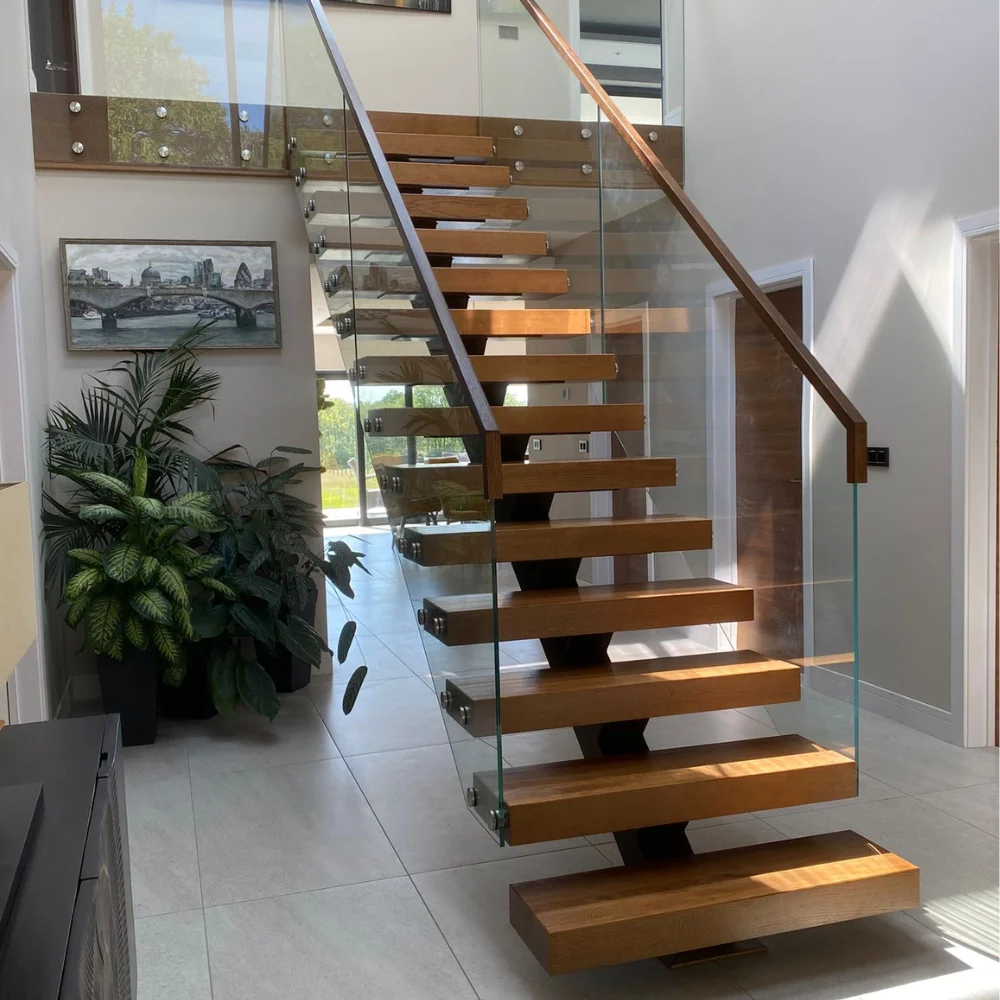
Tirol and Vorarlberg together form Austria's premium alpine staircase market, but with surprisingly different architectural cultures. Tirol — particularly Kitzbühel, Lech am Arlberg, Zürs and the Sölden Skigebiet — is the country's ultra-luxury chalet capital: international clientele, high-end ski resort property, premium oak and brass detailing, dramatic central spine and Y-Shape configurations. Vorarlberg — Bregenzerwald, Schruns, Hohenems — is the home of Austrian Baukultur: a contemporary architectural movement emphasising structural honesty, regional vernacular materials (often vieux-bois reclaimed timber), and minimalist detailing.
From a Continox specification perspective, both share the same cold-climate engineering envelope — altitudes 800–2,000+ m, service temperatures down to −30 °C in extreme alpine, similar wind loading and humidity cycles. The difference is aesthetic posture, not engineering. A Lech Arlberg chalet asks for a Premium Oak central spine making a sculptural statement; a Bregenzerwald Baukultur villa asks for a single-spine straight run with vieux-bois treads, deliberately reduced to its structural essence.
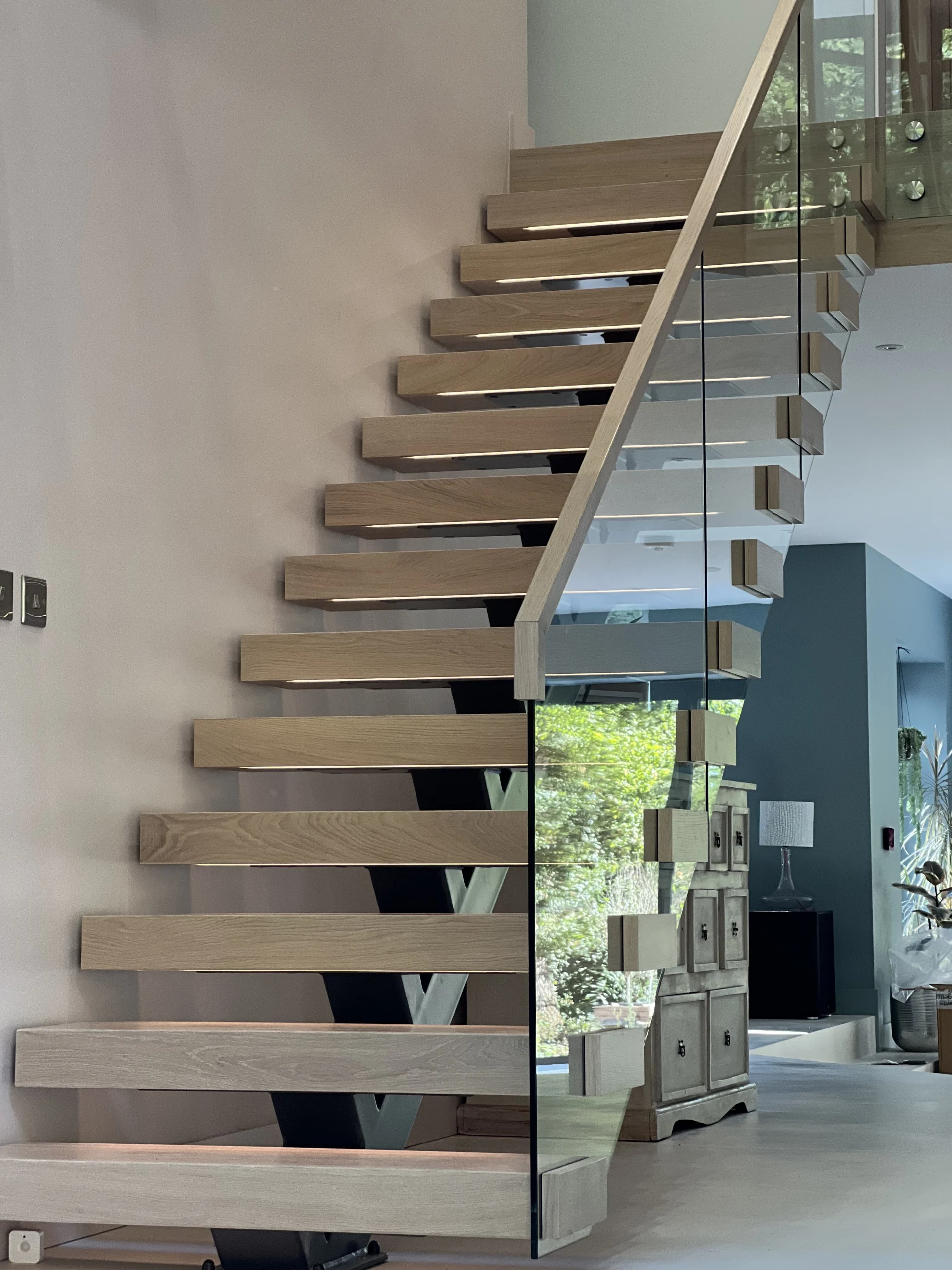
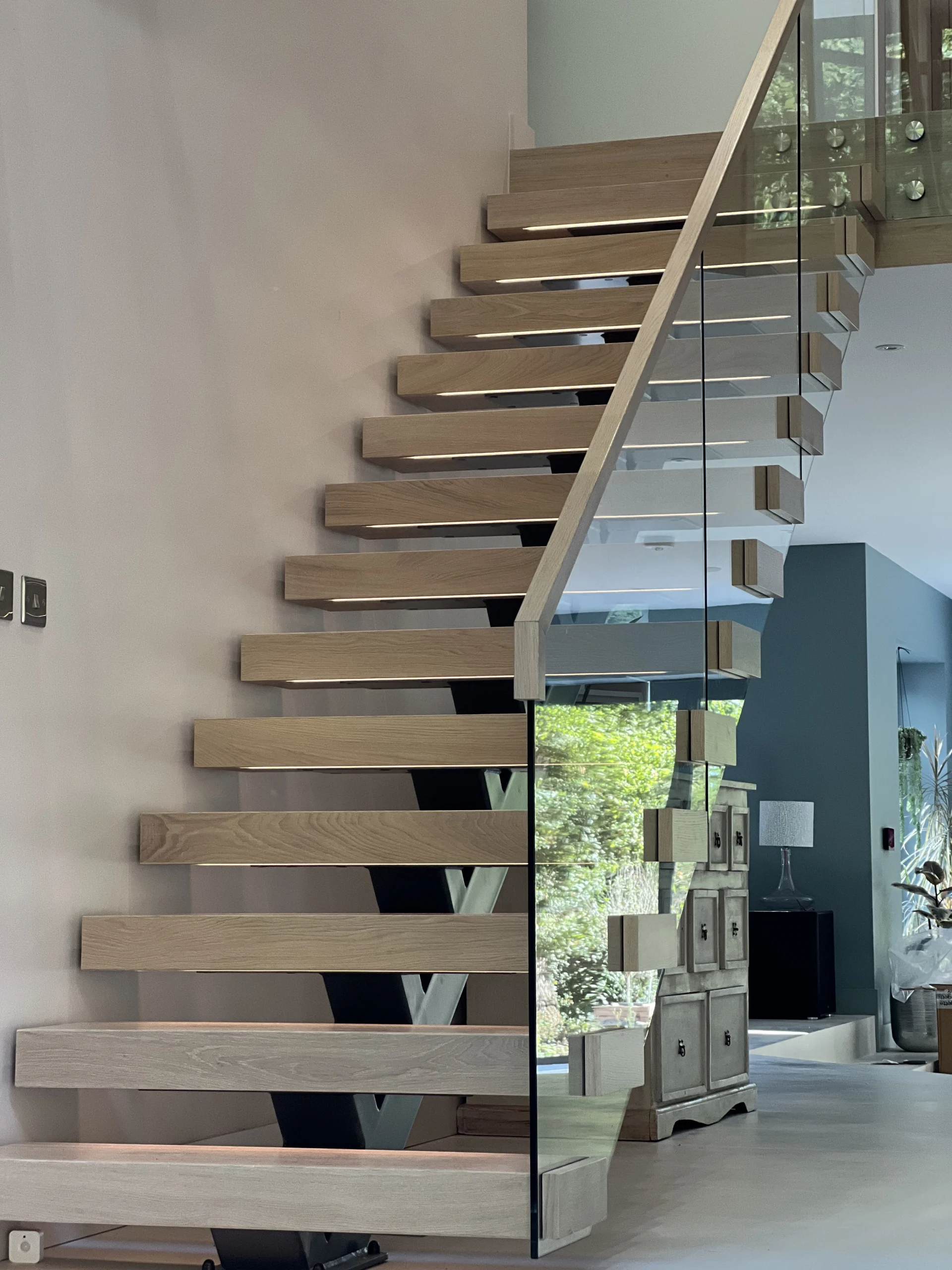
Single-spine architecture with light oak treads — equally at home in a Bregenzerwald Baukultur villa or a Kitzbühel premium chalet. The aesthetic register changes; the structural logic does not.
Tirol — Kitzbühel, Lech, Zürs, Sölden
Tirol's premium staircase demand concentrates in three distinct sub-markets, each with its own project archetype. The Kitzbühel area (Bichlalm, Aurach, Reith, Going) is the established luxury heartland — international clientele, large chalets 400–800 m² with elaborate Stiegenhaus statements. The Arlberg corridor (Lech, Zürs, St Anton, St Christoph) is the ultra-luxury winter-sport peak market — smaller individual project areas but the highest budgets per project. The Ötztal (Sölden, Hochsölden, Hochgurgl, Obergurgl) and Innsbruck-Igls round out the Tirol portfolio with mid-mountain ski property and the urban-alpine premium of greater Innsbruck.
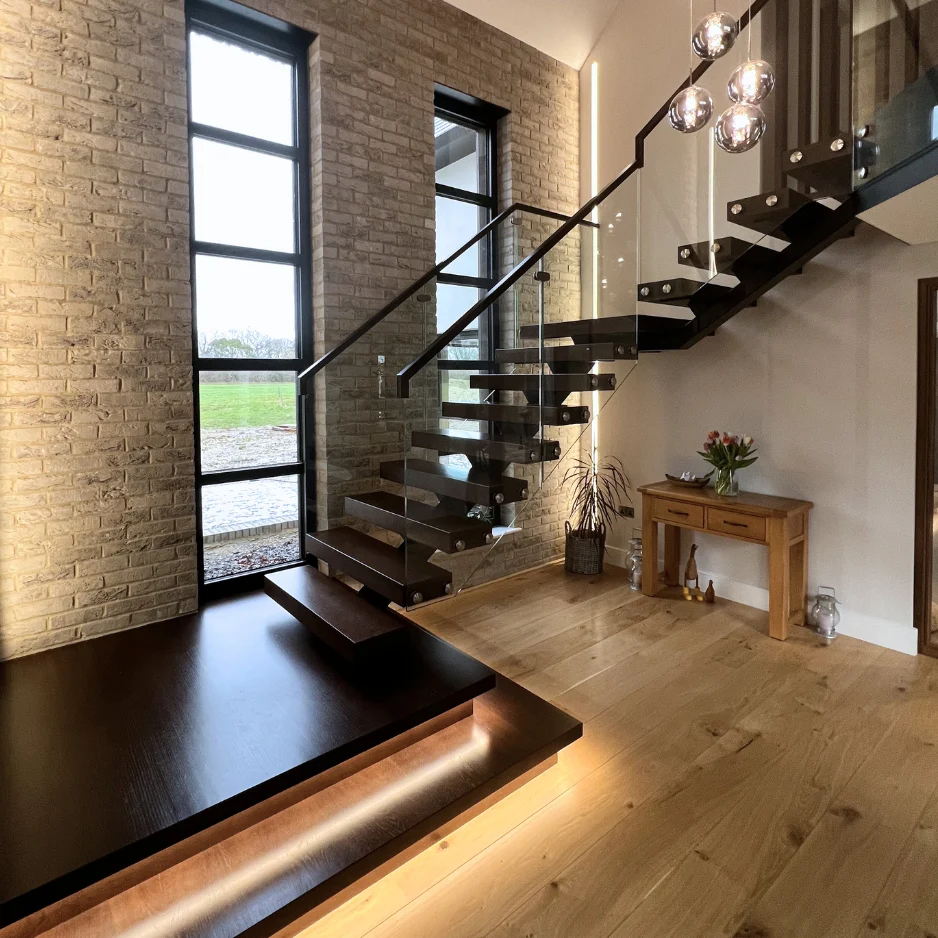
Kitzbühel — Bichlalm, Aurach, Reith
Austria's ultra-luxury chalet capital. Bichlalm hillside villas, Aurach valley estates, Reith bei Kitzbühel premium residential, Going am Wilden Kaiser, Schwarzsee waterfront — the classic Kitzbühel arc.
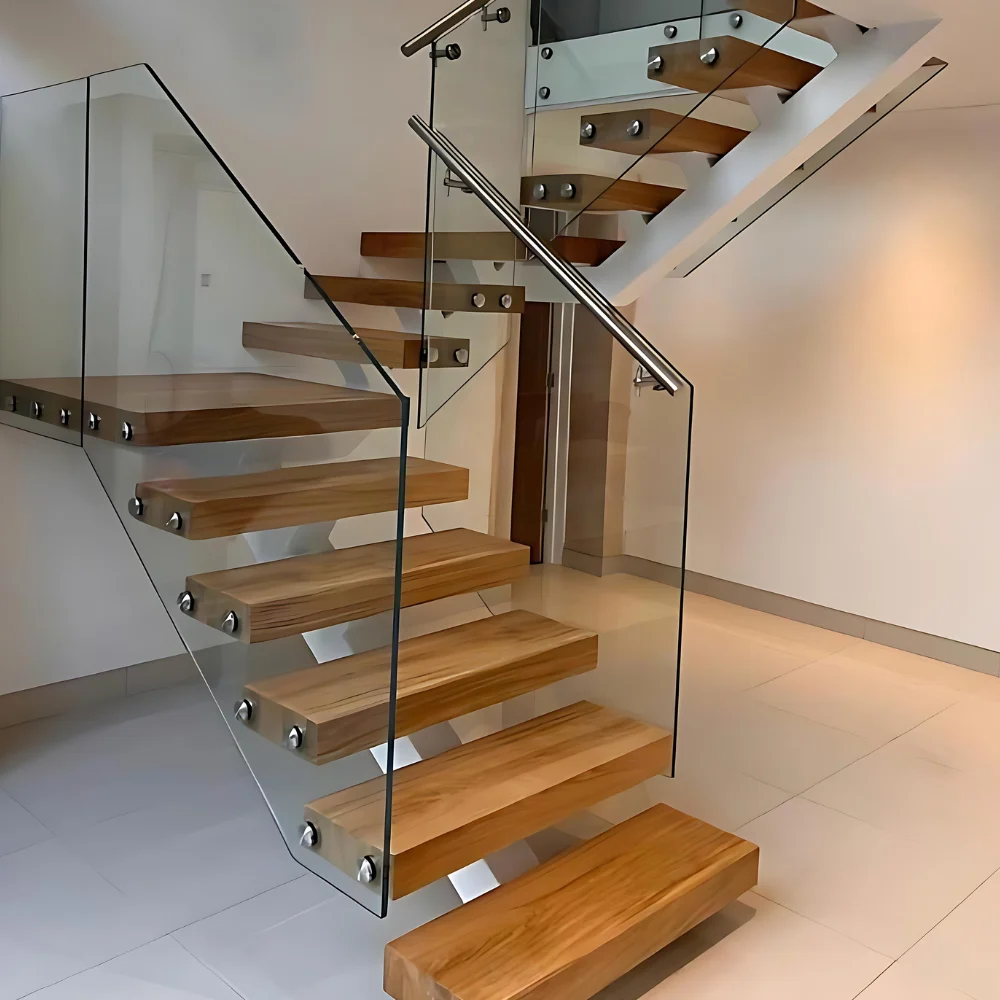
Lech, Zürs & St Anton
Ultra-luxury winter-sport peak market. Lech Stuben, Oberlech, Zürs am Arlberg ski-in/ski-out, St Anton, St Christoph — the highest-budget alpine projects in the Continox portfolio.
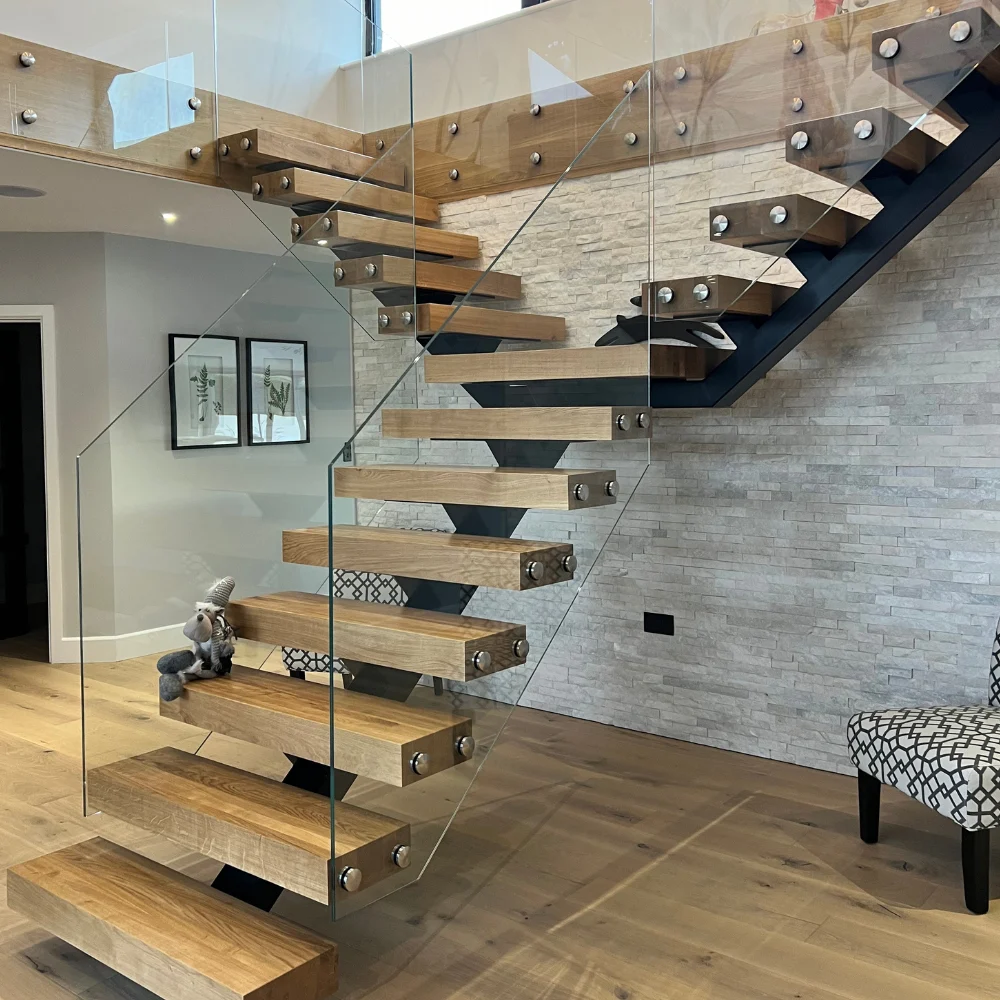
Sölden, Hochsölden & Obergurgl
High-altitude ski property with strong international demand. Sölden Skigebiet, Hochsölden penthouse residential, Hochgurgl mid-station chalets, Obergurgl traditional alpine vernacular updated.
Innsbruck-Igls & Hungerburg
Tirol's urban-alpine premium. Igls Lans Patscherkofel-side villas, Hungerburg slope properties, Mühlau and Hötting Altstadt premium residential, Pradl contemporary Mehrfamilienhaus.
Vorarlberg — Bregenzerwald Baukultur & Contemporary Vernacular
Vorarlberg occupies a different architectural register. While Tirol's premium market is fundamentally international ski-resort luxury, Vorarlberg has built — over the past 30 years — a distinct contemporary regional architecture: Vorarlberger Baukultur. Built around organisations like Vorarlberger Architektur Institut (vai) and exemplified by practices such as Hermann Kaufmann, Cukrowicz Nachbaur, and Marte.Marte, the Baukultur movement emphasises structural honesty, regionally-sourced timber (often vieux-bois reclaimed from old Stadl conversions), minimalist contemporary detailing, and high-performance building physics (Niedrigstenergie and Passivhaus targets are baseline expectations).
For Continox, Vorarlberg projects ask for different aesthetic register than Tirol Kitzbühel: less ornamental, less brass-and-marble, more honest steel-and-timber. A typical Bregenzerwald Baukultur villa specifies a single-spine straight run with vieux-bois reclaimed oak treads, raw black-painted steel structure, and minimal Geländer — often Kategorie B with continuous timber Handlauf. The resulting Stiege reads as part of the building's structural narrative, not as a sculptural statement.
Schwarzenberg, Schoppernau & Egg
The Vorarlberger Baukultur heartland. Schwarzenberg traditional + contemporary, Schoppernau valley villas, Egg residential, Bezau premium, Mellau high-altitude — Hermann Kaufmann's territory.

Schruns, Tschagguns & Gaschurn
Montafon valley premium. Schruns village contemporary, Tschagguns slope-side villas, Gaschurn high-altitude chalets, Partenen end-of-valley premium residential — secondary alpine market with growing demand.
Cold-Climate Specification by Tirol / Vorarlberg Location
Below is the Continox default specification matrix for the most-specified Tirol and Vorarlberg locations — the starting point for project-specific Tragwerksplaner verification. Altitude bands track our flagship Cold Climate guide; location-specific notes reflect operational reality (typical substrate, common project archetypes, regulatory overlay).
| Location | Altitude | Steel Grade | Coating | Typical Substrate |
|---|---|---|---|---|
| Innsbruck-Igls | ~574 m | S355JR (interior) / J0 | Powder-coat (interior) | Mauerwerk + Stahlbeton |
| Kitzbühel Bichlalm | ~762 m | S355JR / J0 | Duplex C5-M (exterior) | Stahlbeton (new-build) |
| Bregenzerwald Schwarzenberg | ~696 m | S355J0 | Powder-coat or natural | Holzbau + Stahlbeton |
| Aurach bei Kitzbühel | ~830 m | S355J0 | Duplex C5-M | Stahlbeton |
| St Anton am Arlberg | ~1,304 m | S355J0 / J2 | Duplex C5-M | Stahlbeton + thermal break |
| Lech am Arlberg | ~1,450 m | S355J2 | Duplex C5-M + UV stable | Stahlbeton + Schöck Isokorb |
| Sölden Skigebiet | ~1,377 m | S355J2 | Duplex C5-M | Stahlbeton |
| Zürs am Arlberg | ~1,716 m | S355J2 mandatory | Duplex C5-M + project review | Stahlbeton + thermal break |
| Hochsölden / Hochgurgl | ~2,090 m | S355J2 + project review | Duplex C5-M + UV stable | Stahlbeton + Schöck Isokorb |
The above table is project-preview specification — it represents the Continox starting point before project-specific verification. Final material grade, anchor specification, coating system, and thermal break detail are determined by Tragwerksplaner Befund and the project's Energieausweis calculations, particularly for Niedrigstenergie or Passivhaus-targeted villas where thermal bridge mitigation may dictate higher specifications than altitude alone suggests.
Four Project Archetypes — Tirol & Vorarlberg
Continox Tirol and Vorarlberg projects collapse into four recurring archetypes — each with its own typical configuration, structural logic, and finish specification. Architects beginning a new alpine project frequently fit into one of these four; understanding which one anchors the early-stage briefing.
Kitzbühel Premium Chalet
The classic Kitzbühel-area project — premium statement Stiegenhaus.
Configuration
Premium Central Spine or Y-Shape Central Spine, oak A-grade treads (often hand-selected from Bavarian forestry), brass or stainless detailing, glass Geländer with continuous Handlauf in matching brass or oxidised steel finish. The Stiege is the central architectural moment of the chalet's Wohnhalle.
Floor-to-floor heights typically generous (3.0–3.5 m), allowing for elaborate Steigungsverhältnis (often 16/30 cm — extra-comfortable). Wohnbau Klasse 1 single-family, Stiege classified as nicht-notwendig — design freedom maximised.
Lech / Zürs Ultra-Luxury
The highest-budget alpine projects — full bespoke fabrication.
Configuration
Fully Bespoke configuration, often Y-Shape with mid-platform integration into the chalet's Wohnhalle architecture, oak A-grade with optional brass inlay, frameless Kategorie C glass Geländer with point-fixed VSG 16.76 mm. Cold-climate-graded structure (S355J2 mandatory for any external exposure path), Schöck Isokorb thermal break for all external connections.
Project budgets at the very top of the range — Stiege alone €25,000–40,000+ fully fitted. Floor-to-floor often non-standard due to the chalet's vault-and-balcony architecture, requiring custom Schrittmaßregel calibration.
Bregenzerwald Baukultur Villa
Contemporary Vorarlberger architectural register — structural honesty.
Configuration
Single-spine straight run or quarter-turn, vieux-bois reclaimed oak treads (often sourced from local Stadl demolitions), raw black-painted or oxidised steel structure, minimal continuous timber Handlauf with frameless Kategorie B glass infill. Deliberately reduced detail — structural elements visible, no hidden fixings, no decorative cladding.
Typically integrated into Niedrigstenergie or Passivhaus building physics — thermal bridge mitigation is design-priority, often achieved by relocating spine fixings to internal Stahlbeton structure or using thermal-broken connectors throughout.
Sölden Penthouse Apartment
Mid-altitude resort apartment — spatially efficient.
Configuration
U-Shape Central Spine or U-Shape Steel Plates — making efficient use of multi-level apartment configurations within Sölden, Obergurgl, Hochgurgl ski-in/ski-out residences. Oak treads typical, mid-flight Podest landing for taller floor heights, glass Geländer Kategorie B.
Wohnbau Klasse 1 if single-residence configuration; potentially Klasse 2–3 if dual-key holiday rental with shared Hauptstiege — driving fire-resistance requirement upward (REI 30) for the Stiege itself.
Tiroler Bauordnung & Vorarlberger Bautechnikverordnung
Both Bundesländer adopt OIB Richtlinien (2 — fire and 4 — staircases) federally, but each implements through its own Landesbauordnung with project-specific submission process.
Tiroler Bauordnung (TBO 2018)
Tirol's framework is the Tiroler Bauordnung 2018 with the Tiroler Bautechnikverordnung adopting OIB Richtlinien. Submission is through the local Bezirkshauptmannschaft (BH Kitzbühel for Bichlalm/Aurach projects, BH Imst for Sölden, BH Landeck for St Anton, BH Reutte for Tannheimer Tal). The Bauanzeige process is broadly similar to Wien but slower in peak season — alpine local authorities process limited project volumes, summer season can extend approval to 8–12 weeks.
Vorarlberger Bautechnikverordnung
Vorarlberg implements through the Vorarlberger Bautechnikverordnung with the Bauanzeige supervised by the local Gemeinde (municipality) for smaller projects, escalating to Bezirkshauptmannschaft Bregenz/Dornbirn for larger or higher-Wohnbau-Klasse projects. The Vorarlberger framework emphasises building physics performance (a legacy of the regional Baukultur tradition), and project documentation typically requires more detailed thermal bridge analysis than typical Tirol submissions.
Logistics — Bayern Corridor Access to Tirol & Vorarlberg
Continox manufactures near Kraków, Poland, supplying Tirol and Vorarlberg via direct EU motorway corridors — no Brexit paperwork, intra-EU B2B with reverse-charge USt., 2–3 day transit door-to-door.
The two access corridors are Bayern–Tirol (A8 + A12 via Kufstein into Inntal) for Kitzbühel, Innsbruck, Sölden, St Anton — and Bayern–Vorarlberg (A8 + A14 via Bregenz into Rheintal) for Bregenzerwald, Schruns Montafon. Both routes are direct motorway with no transit borders requiring customs declarations.
Installation in alpine projects has additional logistical complexity: peak-season ski-resort access restrictions (some Lech–Zürs locations have winter delivery windows only mid-week or off-season), narrow village access routes requiring smaller delivery vehicles, and helicopter-only access for some Hochsölden and Hochgurgl mid-station residences. Continox project planning accounts for these constraints during quotation — the lead time for peak-altitude alpine projects can extend to 14–16 weeks vs the standard 12 to allow for delivery-window optimisation.
Tirol & Vorarlberg — Architect Questions
The questions Tirol and Vorarlberg Architekten and project developers ask Continox most frequently when starting a new alpine project.
What's the typical lead time for a Continox staircase to Kitzbühel or Lech?
Standard timeline is approximately 12 weeks from signed order. For peak-altitude alpine projects (Lech, Zürs, Hochsölden) with delivery-window restrictions, this can extend to 14–16 weeks, particularly for winter installations where ski-resort delivery access is constrained. Quotation in 48 working hours from receipt of project documents.
Why specify S355J2 for an interior staircase in Lech if it's heated?
Continox standardises on S355J2 for Lech and Zürs even for heated interior installations as a precautionary measure. Power outage scenarios in remote alpine locations during winter mean the steel can experience −25 °C+ for extended periods if heating fails — the J2 grade ensures verified Charpy impact toughness across this envelope. The cost premium is marginal (4–8% steel cost), and architects in this market value the engineering safety margin.
How does Vorarlberg Baukultur differ from typical Continox Tirol specifications?
Aesthetic register, not engineering. Vorarlberg Baukultur emphasises structural honesty — visible steel, vieux-bois reclaimed timber, minimal Geländer, no hidden fixings or decorative cladding. Tirol Kitzbühel projects more often request brass detailing, oak A-grade premium specifications, and elaborate Stiegenhaus configurations. Both are within Continox's standard production envelope; the briefing differs at architectural intent stage.
Can a Continox spine be anchored into traditional Tiroler Holzbau?
Generally not directly — traditional alpine Holzbau (timber post-and-beam) doesn't have the localised stiffness for cantilever spine reactions of 9–18 kN per anchor. The standard solution is to anchor into the building's primary Stahlbeton structure (foundation walls, internal shear walls) and route the architectural detailing through the Holzbau wrap. New-build Vorarlberger Baukultur villas typically have hidden Stahlbeton primary structure anyway, making this straightforward.
What's the typical project budget for a Lech ultra-luxury chalet staircase?
Lech and Zürs projects typically span €25,000–40,000+ for the staircase fully fitted (delivered, installed, commissioned). Higher end of this range is fully bespoke Y-Shape with platform integration, oak A-grade, frameless Kategorie C glass, Schöck Isokorb thermal breaks, and project-specific structural detailing. Kitzbühel premium chalets €18,000–28,000; Bregenzerwald Baukultur villas €15,000–22,000.
Are Schöck Isokorb thermal breaks always required in alpine projects?
Not by regulation, but strongly recommended for any project where Continox steel passes through the building's insulation envelope (external entry steps, externally-anchored cantilever spines), particularly for Niedrigstenergie or Passivhaus-targeted villas. For projects above 1,200 m altitude, Schöck Isokorb is the default Continox specification for any external connection. Project-specific decision based on Energieausweis calculations.
Continue Through the Austria Resource Library
This Tirol & Vorarlberg regional guide is one of three regional posts in the Continox Austria cluster. The full Resource Center extends with foundation, technical and implementation guides:
- AT01 — OIB Richtlinie 4 & Austrian Staircase Regulations — regulatory foundation covering Stiegenlaufbreite, Steigungsverhältnis, Wohnbau Klasse classification
- AT02 — Glass Balustrade Regulations Austria (ÖNORM B 3716) — companion glass standard pillar covering VSG, ESG-H heat-soak, alpine glass specification
- AT03 — Modern Staircases for Wien & Niederösterreich — capital region projects, Gründerzeit altbau Wienerberger reality
- AT05 — Modern Staircases for Salzburg & Salzkammergut — heritage premium and Salzkammergut lakeside villa supply
- AT06 — Cold Climate Steel & Substrate Engineering — flagship technical pillar — engineering reference referenced throughout this regional guide
- AT07 — UK Supplier Austria — Shipping & System Selection — combined intra-EU logistics and floating-vs-spine decision framework
- /at/ — Austria Resource Center — full library hub with architect specification journey
Specifying a Tirol or Vorarlberg Project?
Continox supplies altitude-graded Tirol and Vorarlberg projects with full OIB Richtlinie 4-aligned + EN 1090-1 EXC2 documentation, cold-climate steel specification (S355J0/J2), Schöck Isokorb thermal breaks where indicated, and 2–3 day intra-EU delivery via Bayern corridors. Free 3D visualisation, fixed EUR quote in 48 working hours.
Get Free Quote Resource Center