

Modern Staircases for Wien & Niederösterreich — Gründerzeit Altbau & Villa Belt
Innere Stadt duplex insertion, Cottageviertel villa renovation, Döbling and Hietzing premium residential, plus the Wienerwald villa belt — Klosterneuburg, Mödling, Baden bei Wien — the Continox regional reference for Austria's capital region urban heritage and Niederösterreich premium projects.
The Wien Capital Region — Heritage Substrate, Modern Insertion
Wien's residential premium market is structurally different from any other Continox regional context. While Tirol Kitzbühel and Vorarlberg Bregenzerwald work primarily with new-build construction, Wien's premium market is overwhelmingly altbau renovation — inserting contemporary architectural moments into 100-plus-year-old building fabric. The implications cascade through every project decision: substrate type, anchor capacity, installation logistics, regulatory approval, and aesthetic register.
The dominant building stock — particularly in Bezirke 1, 2, 3, 4, 6, 7, 8, 9 — is Gründerzeit (1860–1918) with later Jugendstil (1895–1914) overlays. The construction methodology was remarkably consistent: solid Wienerberger clay brick Mauerwerk for primary structure (250–500 mm wall thickness, depending on storey and location in the wall), timber floor beams spanning between Mauerwerk walls, and characteristic Stiegenhaus configurations with Mediterranean-influenced cast-iron Geländer and Terrazzo treads. The buildings are operationally sound after a century-plus, and modern Continox insertions sit within this fabric without disrupting it.
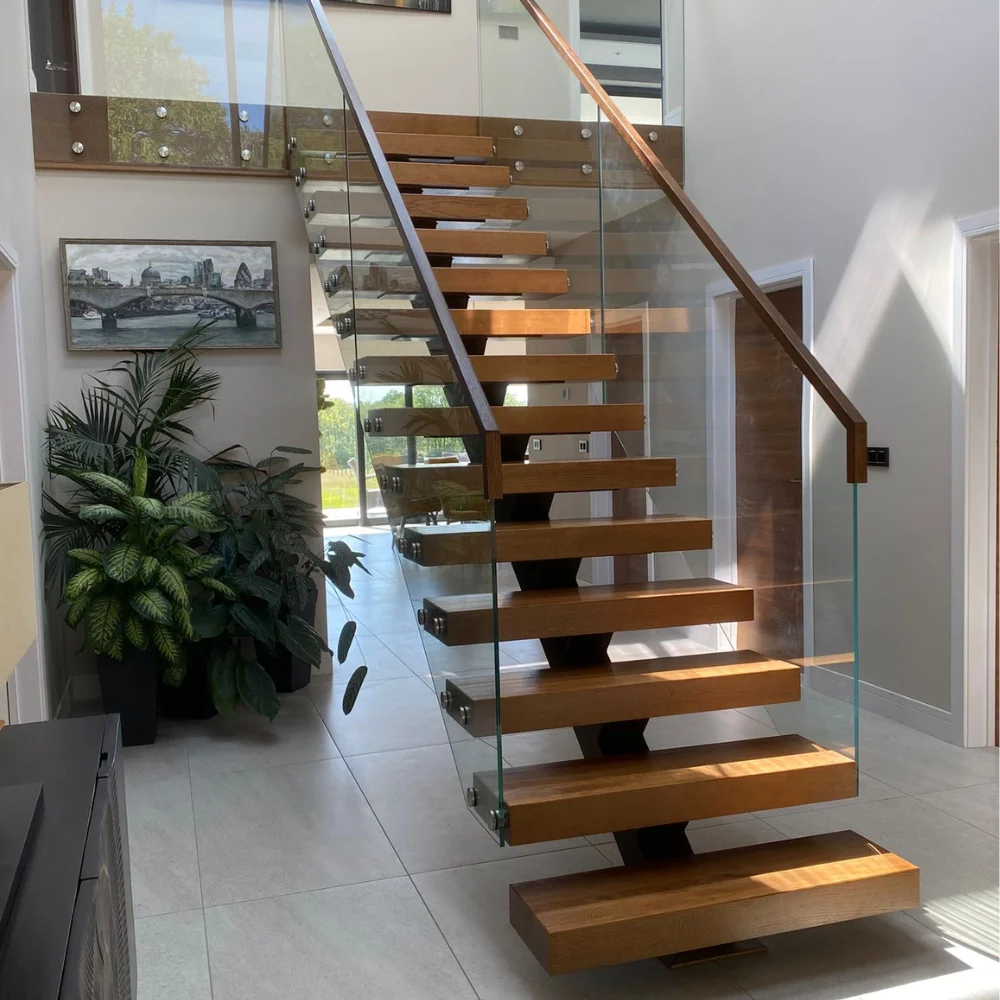
Continox central spine staircase — typical Innere Stadt Gründerzeit duplex insertion. The original cast-iron Hauptstiege remains as the building's legal escape route while the new Continox Stiege provides architectural identity within the unit.
Wien — From Innere Stadt to Cottageviertel
Wien's premium staircase demand concentrates in three district types. The inner Bezirke (1st, 6th, 7th, 8th, 9th) are dense Gründerzeit altbau with high-value duplex insertion projects — typically 120–200 m² apartments where adding a second floor inside the original building creates the spatial opportunity for a Continox Stiege. The premium suburban Bezirke (Döbling 19th, Hietzing 13th, Währing 18th) include the Cottageviertel — a late-19th-century English-villa-inspired residential district with detached and semi-detached villas. The contemporary peripheries (Floridsdorf, Hauptbahnhof Sonnwendviertel, Donaustadt) include new-build Mehrfamilienhäuser where Continox provides the apartment-internal architectural Stiege within otherwise-conventional construction.
Innere Stadt — UNESCO Old Town
UNESCO World Heritage urban core. Gründerzeit duplex insertion in Stephansplatz vicinity, Hofburgviertel, Schottenring premium residential, Graben/Kohlmarkt high-end. Many properties denkmalgeschützt with BDA oversight.
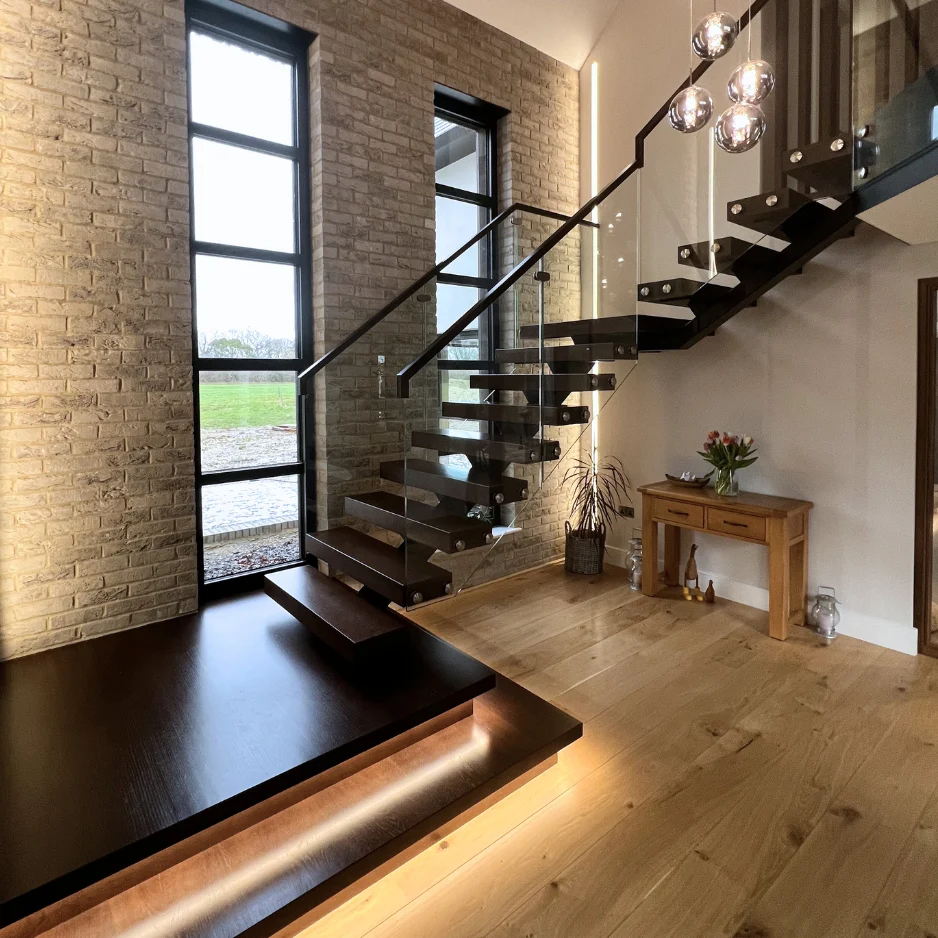
Döbling — Cottageviertel
Late-19th-century English-villa-inspired premium suburb. Detached and semi-detached villa renovation, large floor plates 250–500 m², generous Stiegenhaus configurations, often Premium Oak central spine specifications.
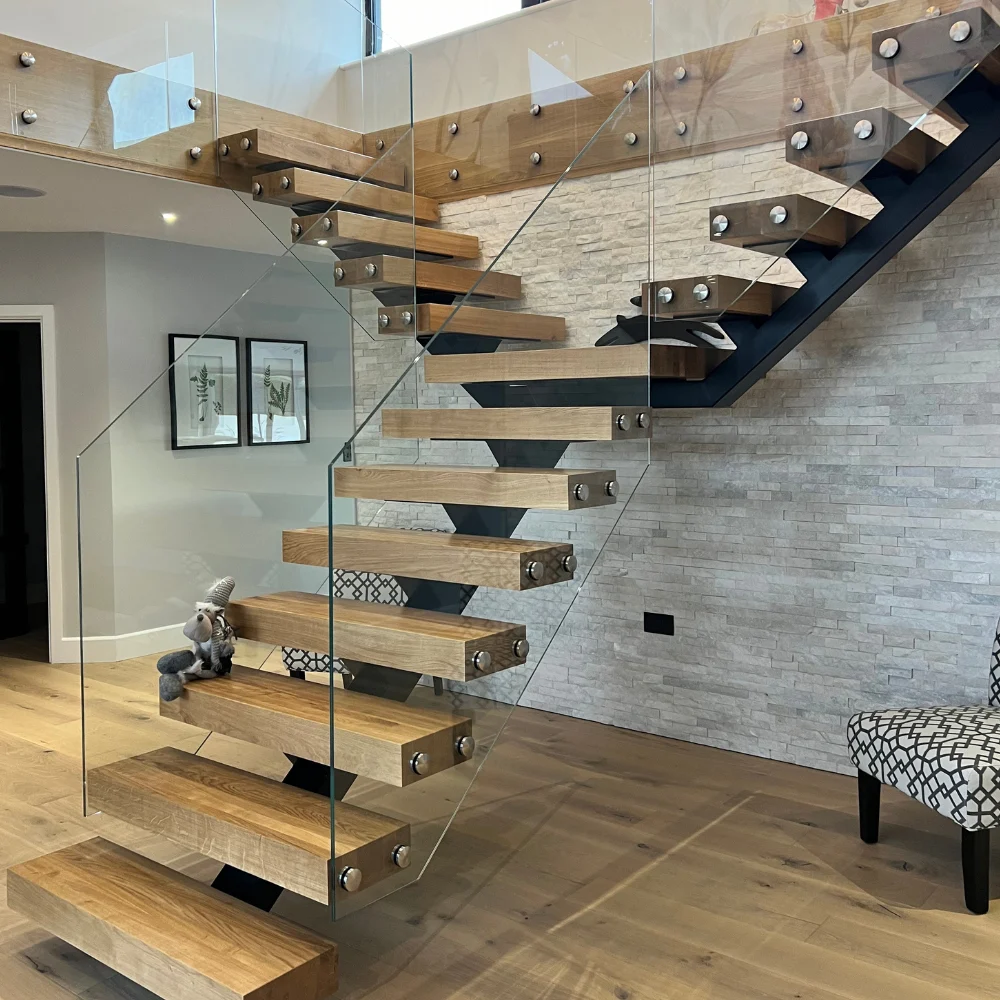
Hietzing — Schönbrunn-side
Premium residential adjacent to Schönbrunn palace. Mixed villa typology — Cottage-style, Jugendstil, Zwischenkriegszeit Bürgerhäuser. Larger projects, often Y-Shape sculptural Stiegen as architectural centrepiece.
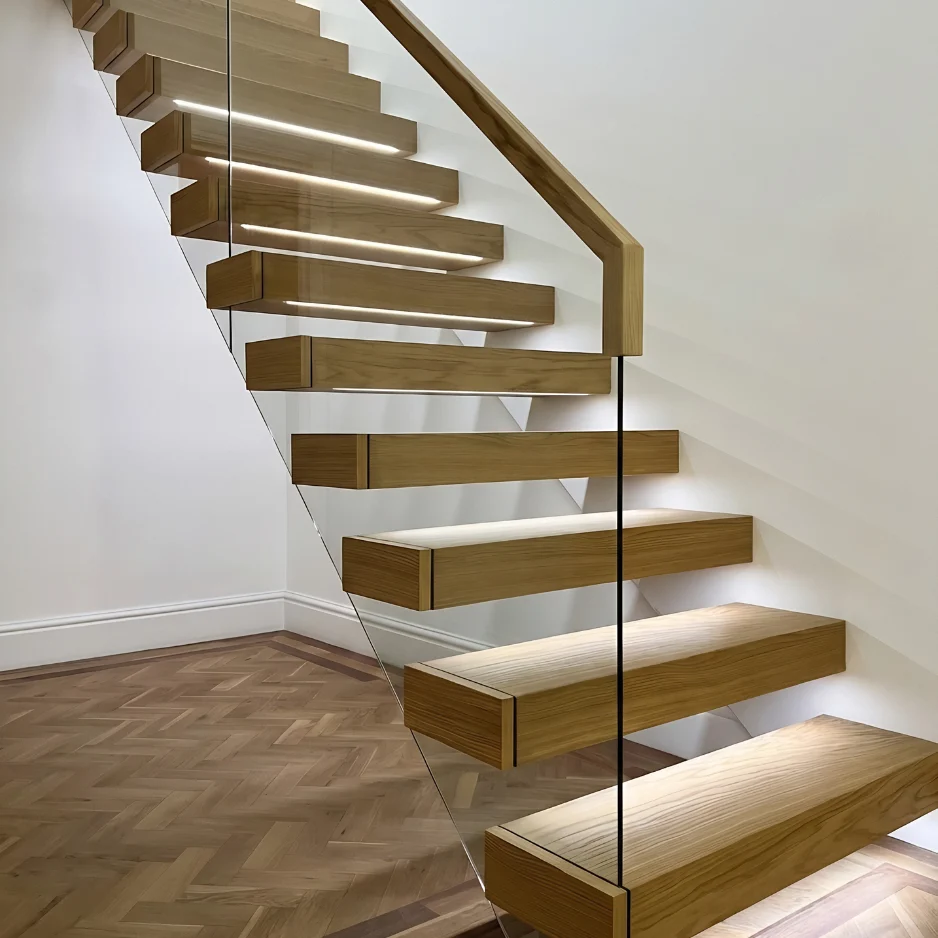
Neubau — Spittelberg & MQ
Creative-class urban premium. MuseumsQuartier vicinity, Spittelberg Biedermeier conversion, Burggasse loft renovation. Often floating staircase specifications where modernist insertion meets historic substrate.
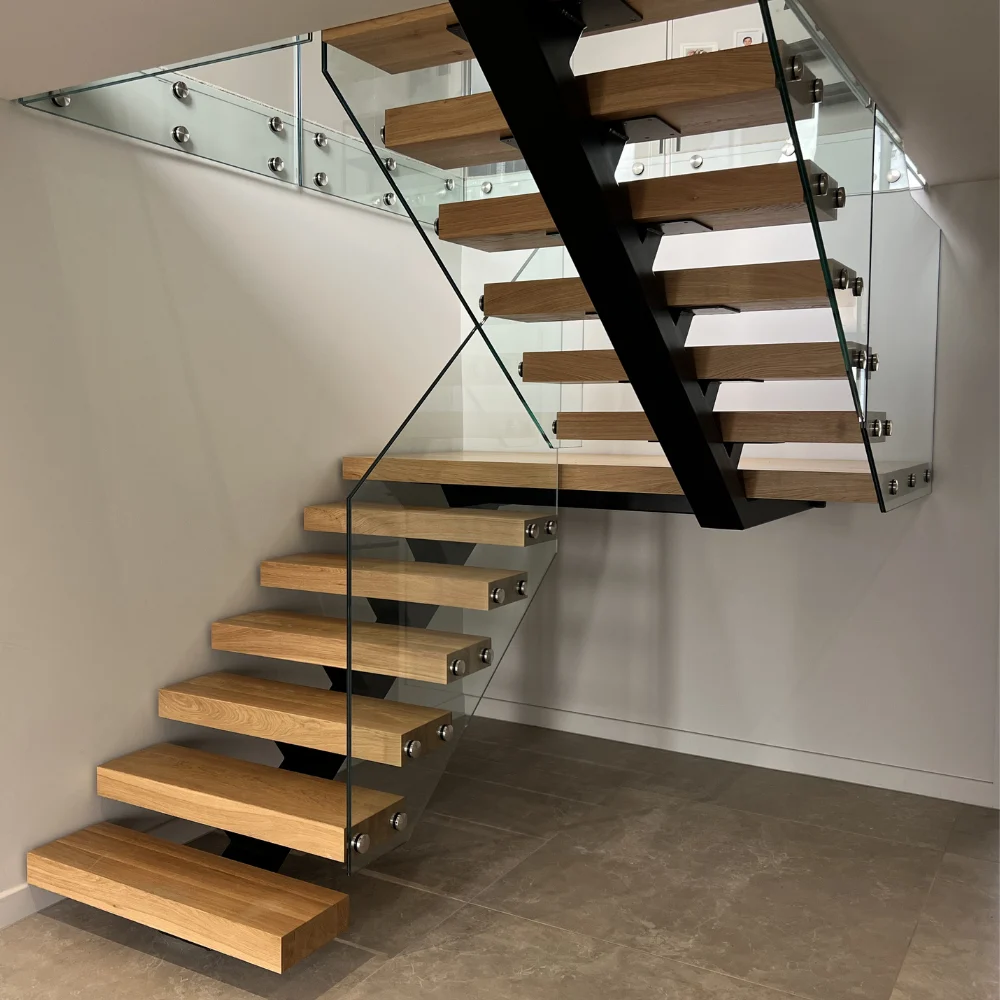
Hauptbahnhof Sonnwendviertel
Contemporary new-build premium. Hauptbahnhof Quartier, Sonnwendviertel Mehrfamilienhäuser, Belvedere Quartier — typically Stahlbeton primary structure, U-Shape spine within larger apartments.
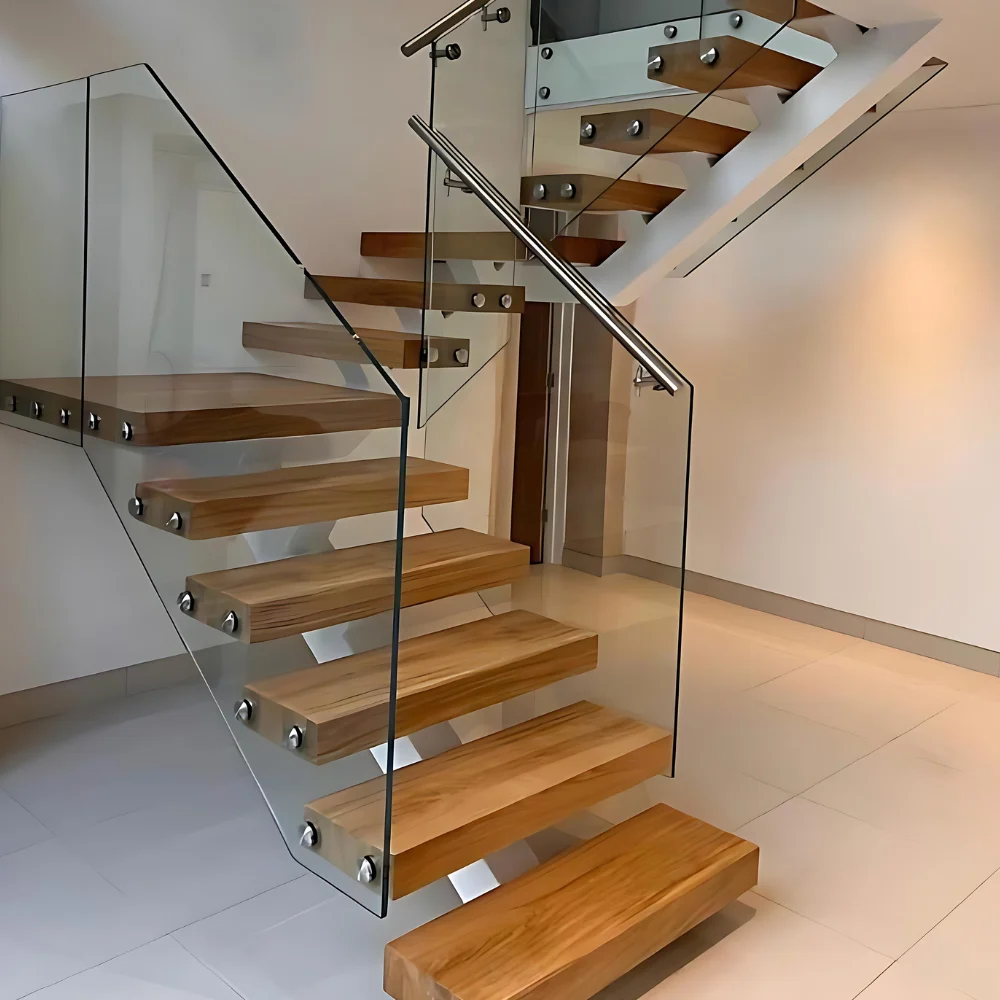
Landstraße — Belvedere & Botschaftsviertel
Embassy district and Belvedere palace surroundings. Schwarzenbergplatz, Reisnerstraße and Strohgasse premium Bürgerhäuser, often diplomatic-grade renovation with elaborate bespoke Stiege specifications.
Niederösterreich — Wienerwald Villa Belt & Beyond
Niederösterreich functionally extends the Wien premium market through its commuter belt. The Wienerwald villa belt — Klosterneuburg, Mödling, Baden bei Wien, Perchtoldsdorf — sits within 20–40 minutes of Wien Innere Stadt, capturing residents who want detached-villa space with capital-region amenities. The architectural register here is mixed: late-19th-century summer-villa Gründerzeit (Baden bei Wien Kaiserzeit), Zwischenkriegszeit suburban (Mödling, Perchtoldsdorf), and contemporary new-build (Klosterneuburg expansion zones).
Beyond the immediate Wienerwald, Niederösterreich extends into Wachau (Krems-Dürnstein UNESCO wine region), Wiener Neustadt-Pottendorf-Wiesen (industrial-heritage conversion), and Waldviertel/Weinviertel agricultural-villa renovation. These outer-NÖ projects are lower-frequency in Continox portfolio but represent specific architectural opportunities where modern staircase insertion in heritage rural fabric creates strong narratives.
Klosterneuburg, Mödling & Perchtoldsdorf
Wien's premium commuter belt. Wienerwald villa renovation, Mödling Zwischenkriegszeit Bürgerhäuser, Perchtoldsdorf Doppelhaushälfte premium, Baden bei Wien Kaiserzeit summer villas with Continox modern insertion.
Wiener Bautypologien — Four Building Types, Four Specifications
Wien's premium projects collapse into four recurring building typologies — each with distinct substrate, structural logic, and Continox specification implications. Architects briefing a new Wien project frequently fit into one of these four; understanding which one anchors the early project conversation.
Gründerzeit Altbau
The dominant Wien residential typology — solid Wienerberger Mauerwerk, timber floor beams.
Construction Reality
Solid Wienerberger clay brick Mauerwerk, 380–500 mm at ground floor reducing to 250–380 mm at upper storeys. Timber floor beams (typically Eichenholz) spanning between Mauerwerk walls. Original Stiegenhaus with cast-iron Geländer and Terrazzo treads. Floor-to-floor heights generous: 3.5–4.2 m typical, occasionally 4.5 m in piano nobile floors.
For Continox: ideal substrate for cantilever spine — solid Mauerwerk supports M16/M20 chemical anchors well, generous floor heights allow comfortable Steigungsverhältnis (often 17/30 cm or 18/29 cm). Substrate Befund mandatory but rarely fails; the Mauerwerk reality is structurally sound.
Jugendstil
The Otto Wagner / Olbrich era — refined Gründerzeit with decorative facades.
Construction Reality
Same fundamental Mauerwerk-and-timber-beam construction as Gründerzeit, but with decorative façade treatments and often more elaborate internal Stiegenhaus. Wagner-influenced apartment plans typical of Bezirk 6, 7, 8, 9. Construction quality often higher than typical Gründerzeit due to the era's architectural ambition.
For Continox: similar substrate behaviour to Gründerzeit. The architectural complication is preserving Jugendstil interior detailing (cornicing, parquet, original doors) while inserting modern Stiege — frequently solved by routing the Continox spine to a less-decorated apartment zone.
Zwischenkriegszeit
Interwar — including Roter Wien Gemeindebauten and Bürgerhäuser.
Construction Reality
Two distinct sub-typologies. Roter Wien Gemeindebauten (Karl-Marx-Hof, Rabenhof) used Stahlbeton primary structure with hollow brick infill — different anchor reality. Bürgerhäuser (Hietzing, Mödling, Perchtoldsdorf private residential) continued Wienerberger Mauerwerk tradition with reduced wall thickness (250–380 mm typical).
For Continox: hollow-brick walls in Roter Wien Gemeindebauten cannot accept M16 chemical anchors directly — sleeve anchors with reduced capacity (4–7 kN) are required. Bürgerhäuser substrate behaves similarly to Gründerzeit. Project briefing must distinguish typology before specifying anchor configuration.
Contemporary New-Build
Stahlbeton frame construction — Sonnwendviertel, Donaustadt, Floridsdorf expansion.
Construction Reality
Reinforced concrete frame primary structure (C25/30 minimum), often combined with Ytong autoclaved aerated concrete or perforated brick infill. Standardised floor heights (typically 2.7–3.0 m), regularised geometry. Energy-performance focused — significant insulation envelope crossing where external steel passes through.
For Continox: highest anchor capacity reality (M16 chemical in C25/30 Stahlbeton supports 30+ kN tension), but thermal bridge mitigation becomes design priority for any external connection. Schöck Isokorb thermal-broken connectors standard for external entry steps where the project targets Niedrigstenergie or Passivhaus.
Wienerberger Substrate Reality — What Befund Testing Tells Us
The Continox Wien project portfolio has produced consistent Mauerwerk Befund data over multiple years, allowing reasonable expectation-setting before project starts. Below is the empirical reality of Wienerberger substrate testing across Wien Bezirke — gathered from anonymised Tragwerksplaner Befund reports across the Continox project base.
| Bezirk Era / Type | Typical Wall Thickness | Brick Compressive Strength | Mortar Strength | Typical M16 Capacity |
|---|---|---|---|---|
| 1. Bezirk Innere Stadt (1860–1880) | 380–500 mm | 10–18 MPa | 2–4 MPa | 10–14 kN tension |
| 6, 7, 8 Bezirk Gründerzeit (1870–1900) | 380 mm typical | 8–14 MPa | 1.5–3 MPa | 8–12 kN tension |
| 9. Bezirk Jugendstil (1895–1914) | 380 mm | 10–16 MPa | 2–3 MPa | 10–13 kN tension |
| 13, 19. Bezirk Cottageviertel (1880–1914) | 380–500 mm | 9–14 MPa | 1.5–3 MPa | 9–13 kN tension |
| Roter Wien Gemeindebau (1920–1934) | Stahlbeton + 250 mm | Hollow brick 6–10 MPa | 2–3 MPa | 4–7 kN (sleeve anchors) |
| Zwischenkriegs Bürgerhaus (1920–1938) | 250–380 mm | 8–12 MPa | 2–3 MPa | 7–11 kN tension |
| Sonnwendviertel new-build (post-2010) | Stahlbeton wall 200 mm | C25/30+ verified | n/a | 30–35 kN tension |
Indicative compiled from Continox project Befund reports. Project-specific verification by Tragwerksplaner remains mandatory — never specify from this table alone.
For a typical Wien Innere Stadt or Cottageviertel cantilever spine project with 700–900 mm cantilever, the design reaction (5–13 kN per anchor) sits within typical Wienerberger M16 capacity (8–14 kN). Project succeeds with M16 + verified anchor testing. For 1,100 mm cantilever (14–18 kN reaction), upgrade to M20 with deeper embedment becomes the Continox default. Roter Wien Gemeindebau is the exception — hollow-brick infill walls don't support cantilever reactions; the Continox spine must anchor into the building's primary Stahlbeton frame, requiring careful project planning.
Heritage Approval Flow — MA 37 & BDA
Wien's Bauanzeige process is administered by Magistratsabteilung 37 (MA 37) for residential building projects, with potential parallel oversight by Bundesdenkmalamt (BDA) for listed (denkmalgeschützt) buildings. The four-stage approval flow runs from initial site assessment through Schlussüberprüfung.
Denkmalgeschützt Buildings — Listed-Status Reality
A significant portion of Wien's premium altbau is denkmalgeschützt — listed under the Austrian Denkmalschutzgesetz (DMSG) and supervised by Bundesdenkmalamt. Listing creates additional regulatory layer alongside MA 37 Bauanzeige, but rarely prevents Continox internal Stiege insertion in residential dwellings — provided the intervention respects the listing's preservation rationale.
What Listing Typically Restricts
- External façade modification — windows, balcony additions, roof modifications usually constrained
- Visible Stiegenhaus from public spaces — original cast-iron Geländer, Terrazzo treads, decorative tile elements often protected
- Original apartment layout boundaries — major reconfiguration of room sizes may require BDA coordination
- Original building elements visible from street — façade colour, signage, exterior lighting
What Listing Typically Doesn't Restrict
- Internal apartment interventions — modern Continox Stiege within a single dwelling unit usually unaffected
- Apartment-level fit-out — kitchens, bathrooms, internal partitions typically free
- Hidden structural work — anchors invisible from Stiegenhaus and street
- Energy upgrades — insulation behind preserved façade often permitted
BDA listing status should be verified before project briefing. Online lookup is available through the Bundesdenkmalamt website (search by address). For confirmed denkmalgeschützt buildings, early consultation with BDA — typically through the project Architekt — is recommended before detailed design. The Continox Stiege itself is rarely the issue; the routing of associated work (electrical, ventilation, finishes) often requires BDA coordination.
Wien & NÖ — Architect Questions
The questions Wien and Niederösterreich Architekten and project developers ask Continox most frequently when starting a new urban heritage project.
Can a Continox spine be safely anchored into a typical Wien Innere Stadt Gründerzeit Mauerwerk?
Almost always yes — solid Wienerberger clay brick at 380–500 mm thickness and 8–18 MPa compressive strength supports M16 or M20 chemical anchors with embedment 180–220 mm at typical capacities of 8–14 kN per anchor (M16) or 14–22 kN (M20). Most typical cantilever spine reactions (5–13 kN) sit comfortably within capacity. Substrate Befund by Austria-registered Tragwerksplaner remains mandatory; we never specify Mauerwerk anchoring without verified site testing.
What's the typical lead time for a Wien project including Bauanzeige?
Bauanzeige process at MA 37 typically takes 4–8 weeks for a standard residential staircase replacement. If the building is denkmalgeschützt, add 4–8 additional weeks for BDA review. Continox manufacturing lead time after order is 6–8 weeks, plus 2 weeks for technical drawings, 2–3 days delivery and installation. Total project timeline 14–22 weeks for non-listed buildings, 18–30 weeks for denkmalgeschützt — depending on architect's pre-Bauanzeige preparation efficiency.
Why is S355JR sufficient for Wien projects without J0 upgrade?
Wien's climate envelope (typical service temperatures −10 to −18 °C even in extreme winter) sits comfortably within S355JR's verification range (Charpy impact verified at +20 °C). Modern interior heated spaces in Wien duplex insertions never see negative service temperatures. JR is the appropriate baseline grade. Where projects extend to external balcony Stiegen or unheated entry halls in Wienerwald villas above 500 m, J0 becomes the preferred grade — but for the typical Wien Innere Stadt project, JR is correct.
Does denkmalgeschützt status prevent installing a modern Continox Stiege?
Generally no — internal apartment interventions in listed buildings rarely face restriction, provided the Continox installation doesn't visibly modify protected elements (cast-iron Hauptstiege, Terrazzo treads, Stiegenhaus tile work, decorative cornicing). Most premium Wien projects involve adding a second-floor Stiege within an apartment unit — this is usually approved without significant BDA modification. Verification with BDA early in the project is recommended.
What's the typical project budget for a Cottageviertel Döbling villa staircase?
Cottageviertel premium villa projects typically span €18,000–28,000 fully fitted. Higher end is Premium Oak central spine with elaborate detailing, A-grade oak treads and brass detailing typical for late-Cottageviertel renovation. Budget central spine specifications run €15,000–22,000. Y-Shape sculptural Stiegen (Hietzing-style projects) reach €25,000–32,000. Innere Stadt premium Bürgerhaus projects similarly €18,000–28,000.
Can a floating staircase be inserted into a Gründerzeit altbau?
Sometimes, with substrate verification. Floating staircase cantilever treads require ≥ 30 kN per anchor — at the upper limit of even verified solid Wienerberger M20 anchor capacity. Most Gründerzeit installations choose central spine instead (lower per-anchor reactions, distributed over multiple connection points). Where floating is architecturally required, project planning typically routes the cantilever anchors into a verified Stahlbeton zone (kitchen wall, bathroom wall, or modern Aufstockung structure) rather than the historic Mauerwerk facade walls.
Continue Through the Austria Resource Library
This Wien & Niederösterreich regional guide is one of three regional posts in the Continox Austria cluster. The full Resource Center extends with foundation, technical and implementation guides:
- AT01 — OIB Richtlinie 4 & Austrian Staircase Regulations — regulatory foundation covering Stiegenlaufbreite, Steigungsverhältnis, Wohnbau Klasse classification
- AT02 — Glass Balustrade Regulations Austria (ÖNORM B 3716) — companion glass standard pillar covering VSG, ESG-H heat-soak, Continox glass supply matrix
- AT04 — Modern Staircases for Tirol & Vorarlberg Alpine — alpine ultra-luxury market, Kitzbühel and Lech project archetypes (the alpine counterpart to this urban guide)
- AT05 — Modern Staircases for Salzburg & Salzkammergut — heritage premium and Salzkammergut lakeside villa supply
- AT06 — Cold Climate Steel & Substrate Engineering — flagship technical pillar — Wienerberger Mauerwerk anchor capacity and Wien substrate engineering covered in detail
- AT07 — UK Supplier Austria — Shipping & System Selection — combined intra-EU logistics and floating-vs-spine decision framework
- /at/ — Austria Resource Center — full library hub with architect specification journey
Specifying a Wien or NÖ Project?
Continox supplies Wien and Niederösterreich projects with full OIB Richtlinie 4-aligned + EN 1090-1 EXC2 documentation pack ready for MA 37 Bauanzeige submission. Substrate-aware specification, Tragwerksplaner Befund support, BDA-coordination guidance for denkmalgeschützt buildings, 2–3 day intra-EU delivery via Bayern–Wien corridor. Free 3D visualisation, fixed EUR quote in 48 working hours.
Get Free Quote Resource Center