

Modern Staircase for the Amsterdam Grachtenpand & Randstad Premium Market
The four typical Dutch project archetypes — canal-house renovation, Randstad new-build penthouse, Noord-Holland coastal villa, Brabant modern farmhouse — together with the omgevingsvergunning workflow for monumenten, the compact-spine systems specified for narrow grachtenpand stairwells, and neighbourhood profiles across all twelve Dutch provinces.
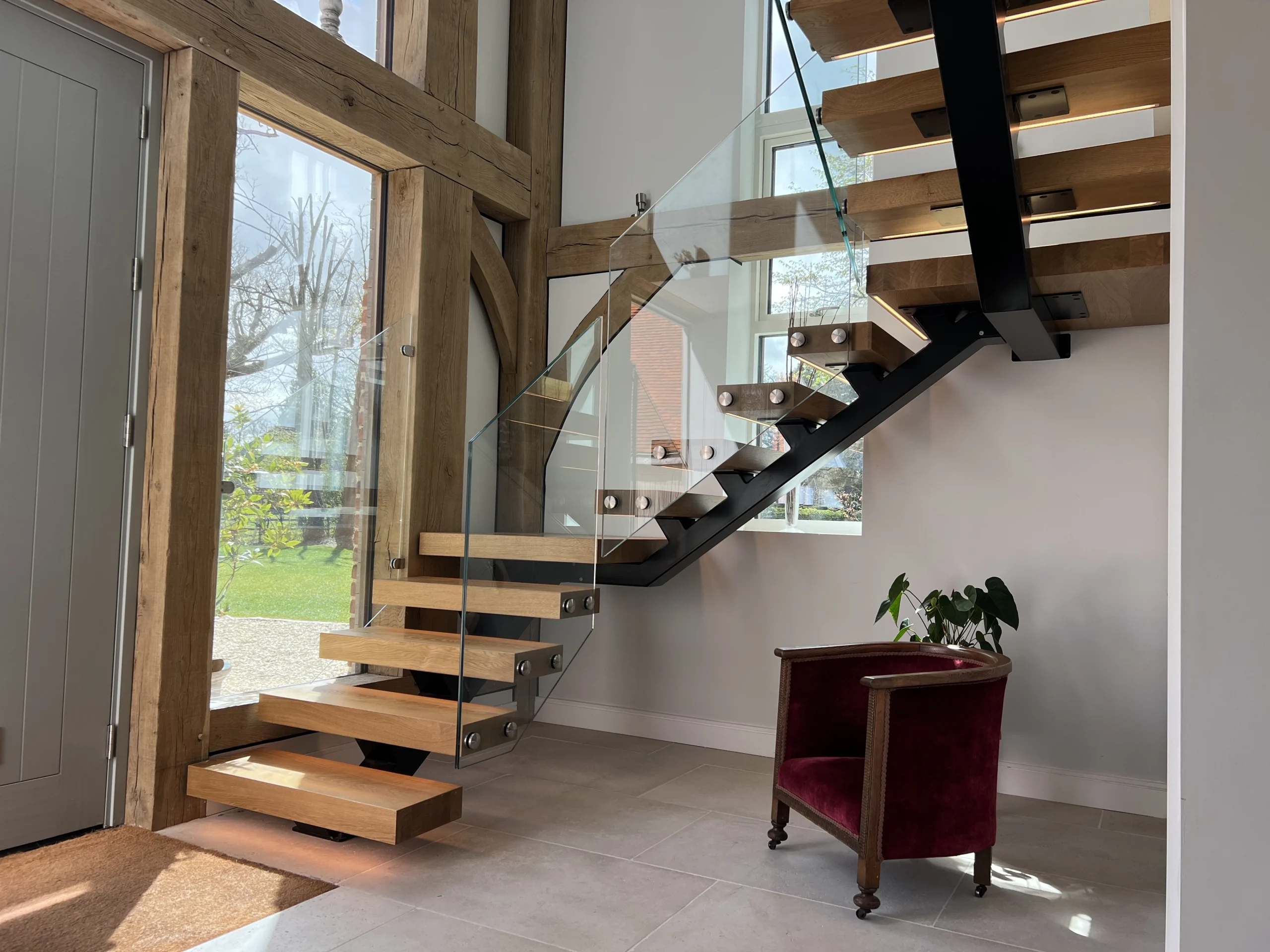
The Dutch staircase market concentrates around four project profiles. The Amsterdam grachtenpand renovation dominates the heritage segment — narrow 17e/19e-century stairwells where compact L-shape or U-shape spine systems are specified within the existing footprint, with monumentenstatus driving an omgevingsvergunning via Bureau Monumenten en Archeologie + RCE advisory (uitgebreide procedure 26 weken for ingrijpende wijziging). The Randstad new-build penthouse (Zuidas, Kop van Zuid, Leidsche Rijn) supports floating cantilever and Y-shape sculptural configurations with frameless glass balustrade. The Noord-Holland coastal villa (Bloemendaal, Aerdenhout, Wassenaar) requires coastal-corrosion specification — heat-soaked VSG 21.52, A4 marine stainless fixings, ISO 9227 salt-spray verification. The Brabant / Limburg modern farmhouse rounds out the premium contemporary segment with central spine + integrated platform configurations for double-height living spaces. Continox supplies all four archetypes from €8,999 supply, design & delivery, ex BTW.
The Randstad Concentration: Where Dutch Premium Demand Lives
The Dutch premium staircase market is geographically concentrated to a remarkable degree. The Randstad — the polycentric urban region anchored by Amsterdam, Rotterdam, Den Haag and Utrecht — accounts for the majority of high-value bespoke staircase commissions across the Netherlands. Three structural reasons explain this: the Randstad concentrates the country's affluent professional and creative class, hosts the bulk of contemporary architectural practice, and contains the densest concentration of historic housing stock that drives heritage-renovation demand.
Beyond the Randstad, the Noord-Holland coastal belt (Bloemendaal, Aerdenhout, Zandvoort) and the inland 't Gooi cluster (Laren, Blaricum, Naarden, Bussum) form the second-tier premium villa belt — leafy, low-density, with the country's most concentrated villa-belt private wealth. The Wassenaar coastal belt sits adjacent, geographically Zuid-Holland but functionally part of the same villa-belt market. These four locations alone account for a disproportionate share of top-tier (€18,000+) bespoke staircase commissions.
The third premium segment — Brabant, Gelderland, Limburg and the eastern provincies — has grown substantially over the past decade. Eindhoven (Strijp-S, Brainport region), Den Bosch, Maastricht, Arnhem and the Veluwe-edge contemporary new-build segment now represent a meaningful proportion of Continox supply, particularly for clients who have wealth-generated outside the Randstad and want to commission ambitious modern villas locally rather than buying into the Randstad market.
The Four Project Archetypes — Each With Its Own Specification Logic
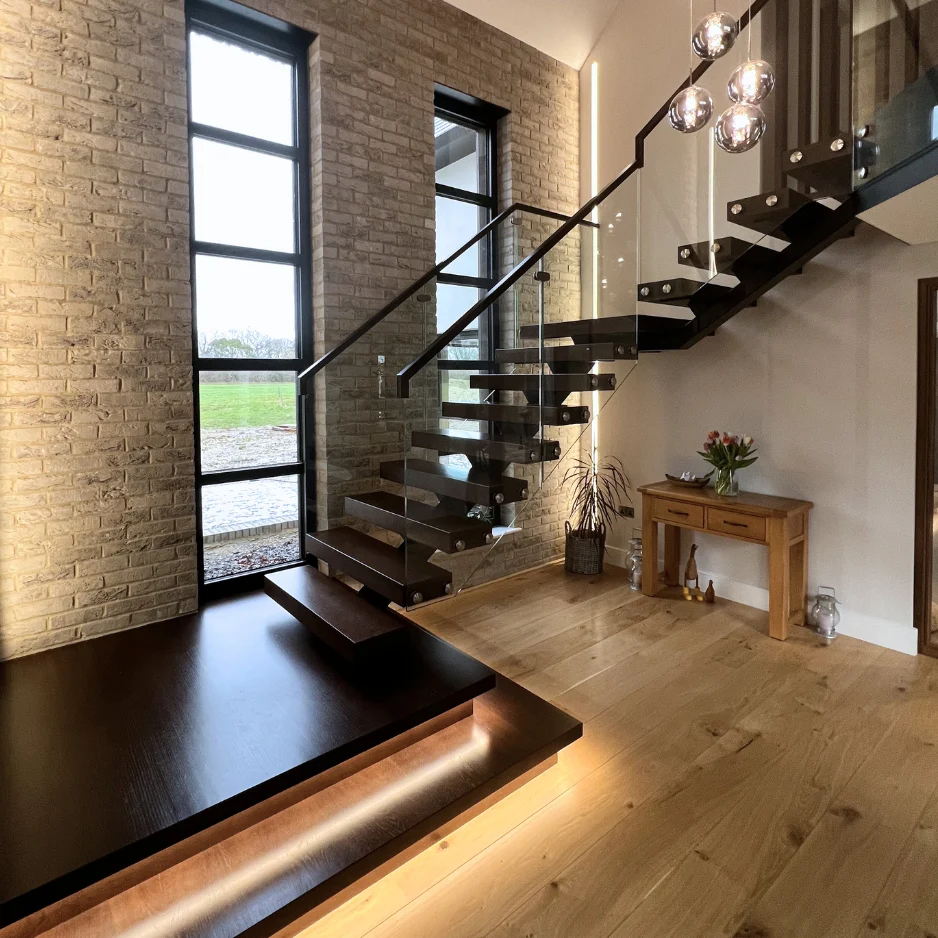
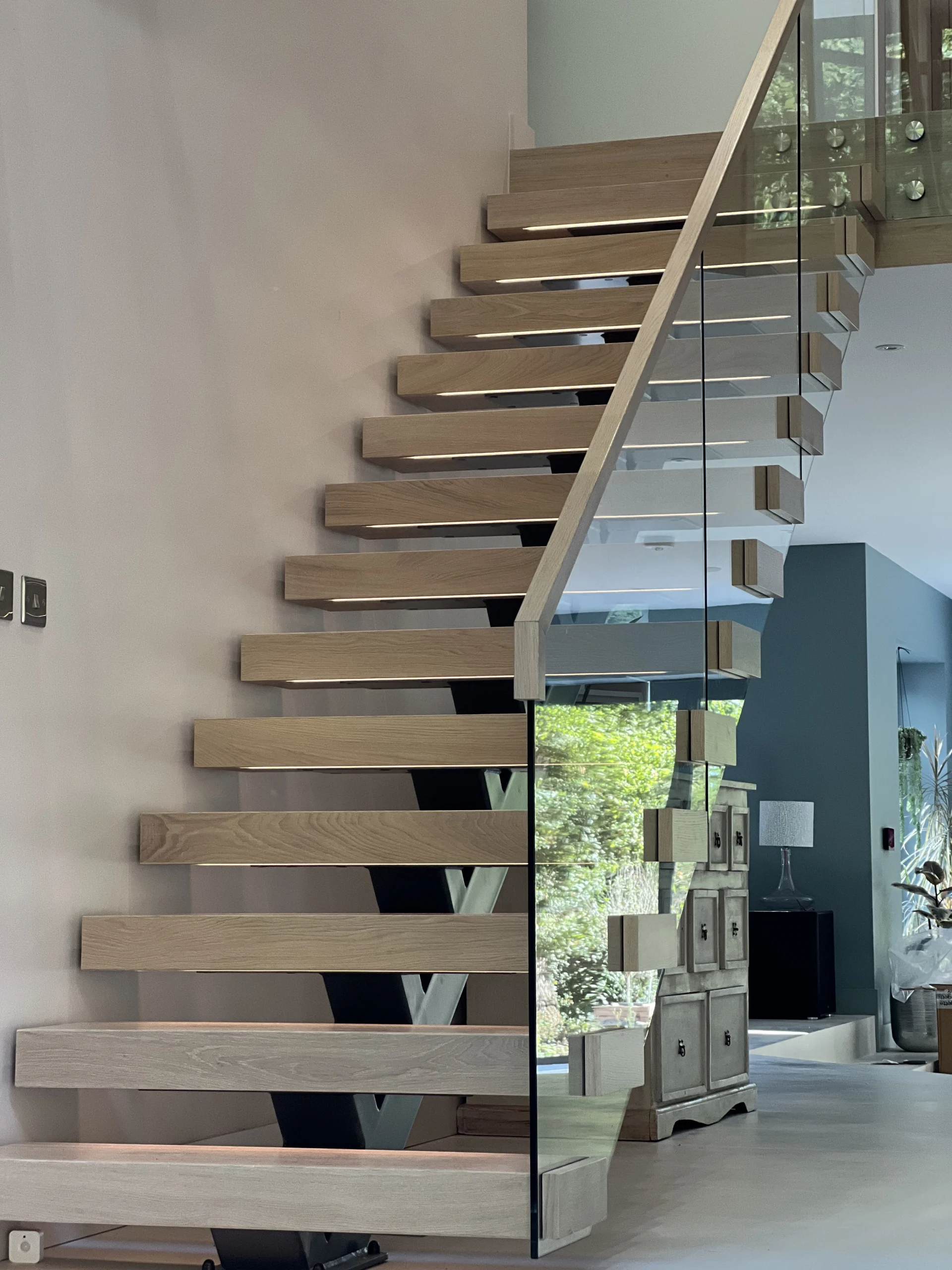
Continox Dutch supply concentrates around four project archetypes. Each has its own specification logic — different system selection, different documentation requirements, different price tier and different installation context. The cards below summarise the four; the rest of this guide expands each in turn.
 Archetype 01 · Heritage
Amsterdam Grachtenpand Renovation
17e/19e-century canal-house with rijksmonument status, narrow stairwell footprint, omgevingsvergunning workflow via Bureau Monumenten en Archeologie + RCE advisory. Compact L-shape or U-shape spine engineered to existing envelope.
From €8,999 · supply, design & delivery
 Archetype 02 · Contemporary
Randstad New-Build Penthouse
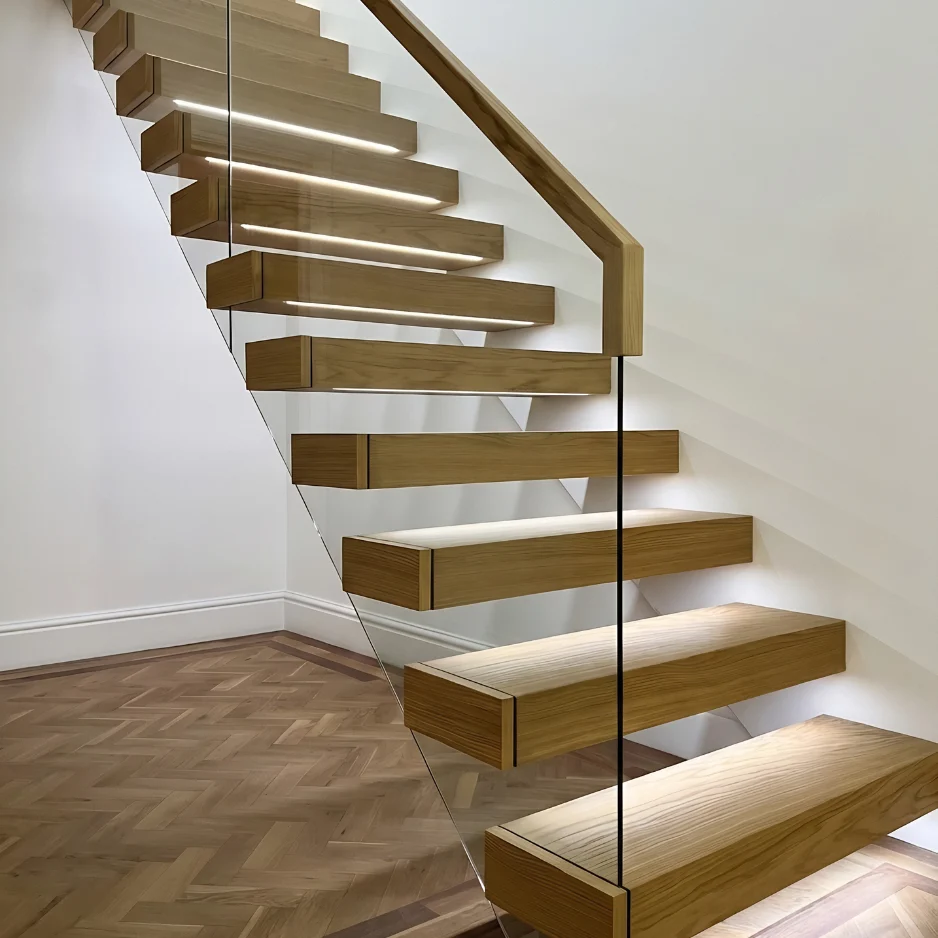
Zuidas executive apartment, Kop van Zuid loft conversion, Leidsche Rijn contemporary new-build. Generous floor-to-floor heights, structural-RC frame substrate, design ambition for floating cantilever or sculptural Y-geometry centrepiece.
From €10,999 · supply, design & delivery
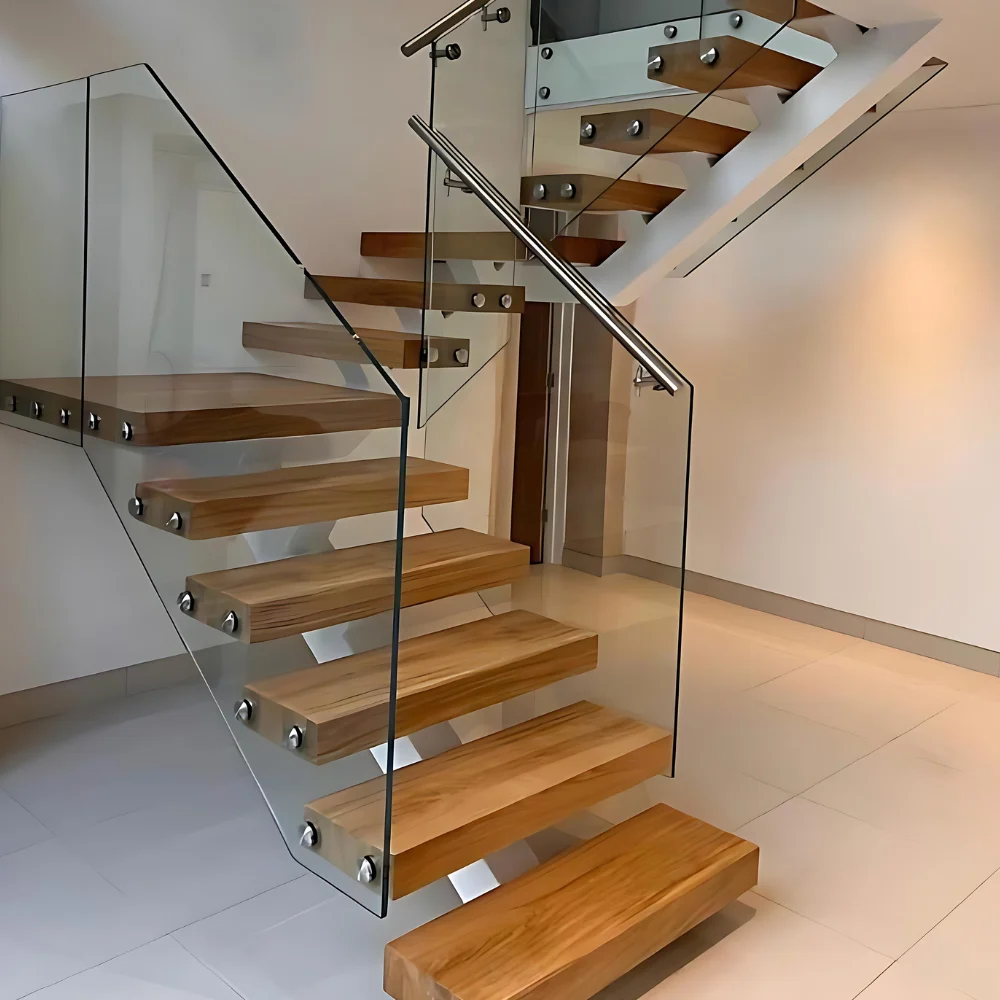 Archetype 03 · Coastal
Noord-Holland Coastal Villa
Bloemendaal dune-front estate, Aerdenhout villa, Wassenaar coastal-belt residence, Zeeland waterfront. Coastal-corrosion specification mandatory: heat-soaked VSG 21.52, A4 marine stainless fixings, ISO 9227 salt-spray verification.
From €11,499 · coastal spec included
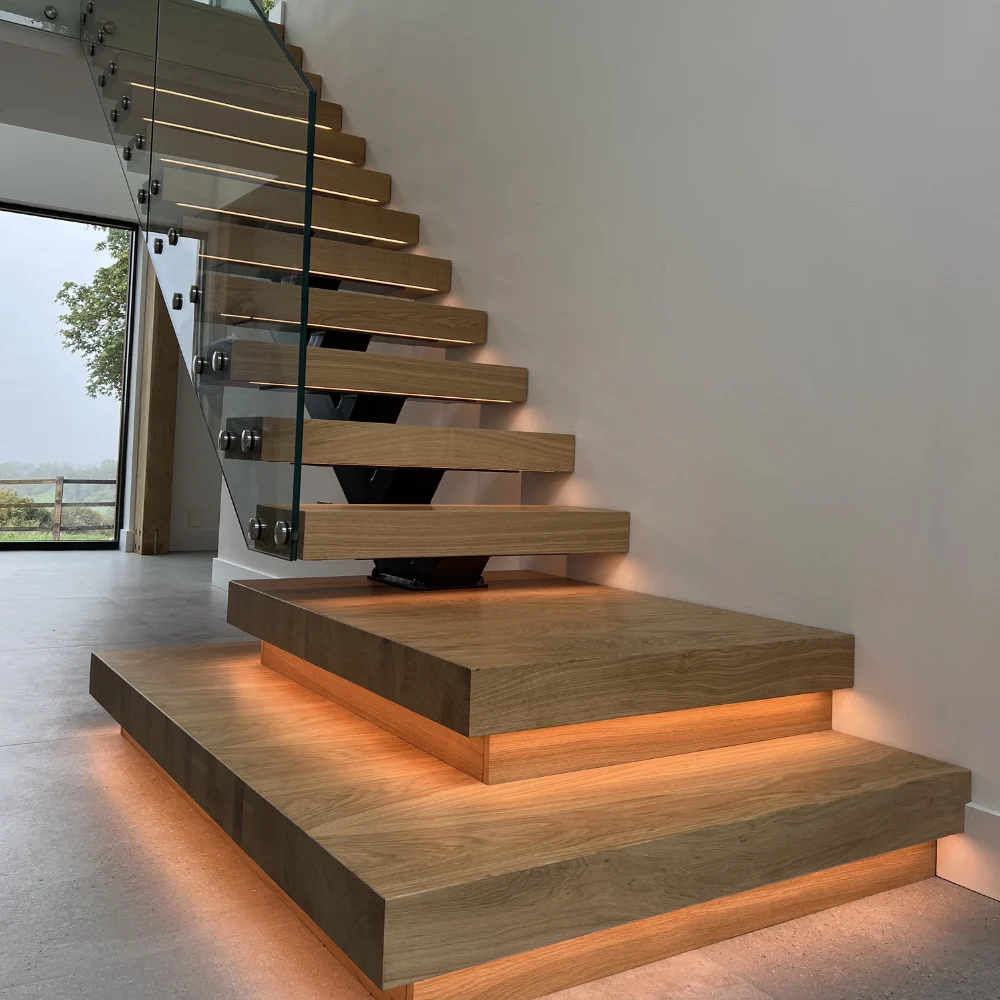 Archetype 04 · Provincial
Brabant Modern Farmhouse
Eindhoven Strijp-S contemporary, Den Bosch Brabant new-build, Maastricht villa renovation, Veluwe-edge premium. Often double-height living with generous ceiling clearance — central spine + integrated platform configurations dominate.
From €9,999 · supply, design & delivery
The Grachtenpand Reality: 17e-Century Footprints, 21st-Century Specification
Amsterdam grachtenpanden — the iconic narrow canal-houses lining the Prinsengracht, Herengracht, Keizersgracht and Singel rings — are the project archetype most associated with bespoke Dutch staircase work. They are also the most technically constrained. The combination of 17th-century footprint geometry, rijksmonument status, fragile fundering construction and floor-by-floor structural irregularity drives every specification decision.
Three physical realities matter. First, the original stairwell footprint is typically narrow (often under 800 mm clear) and steep — the dominant Amsterdam staircase typology was steep specifically because property tax in the 17th century was levied on facade width, driving builders toward tall, narrow, deep buildings where vertical circulation had to consume minimal floor area. Second, the floor structure sits on timber beams (balkenlaag) that have settled unevenly over three centuries — variations of 5–12 cm between front and rear facade are routine. Third, the foundation rests on timber piles driven 11–13 m through the soft clay-and-peat overburden into the first sandlaag; pile-cap deterioration is common and any constructive change to load distribution requires careful coordination with funderingsadvies.

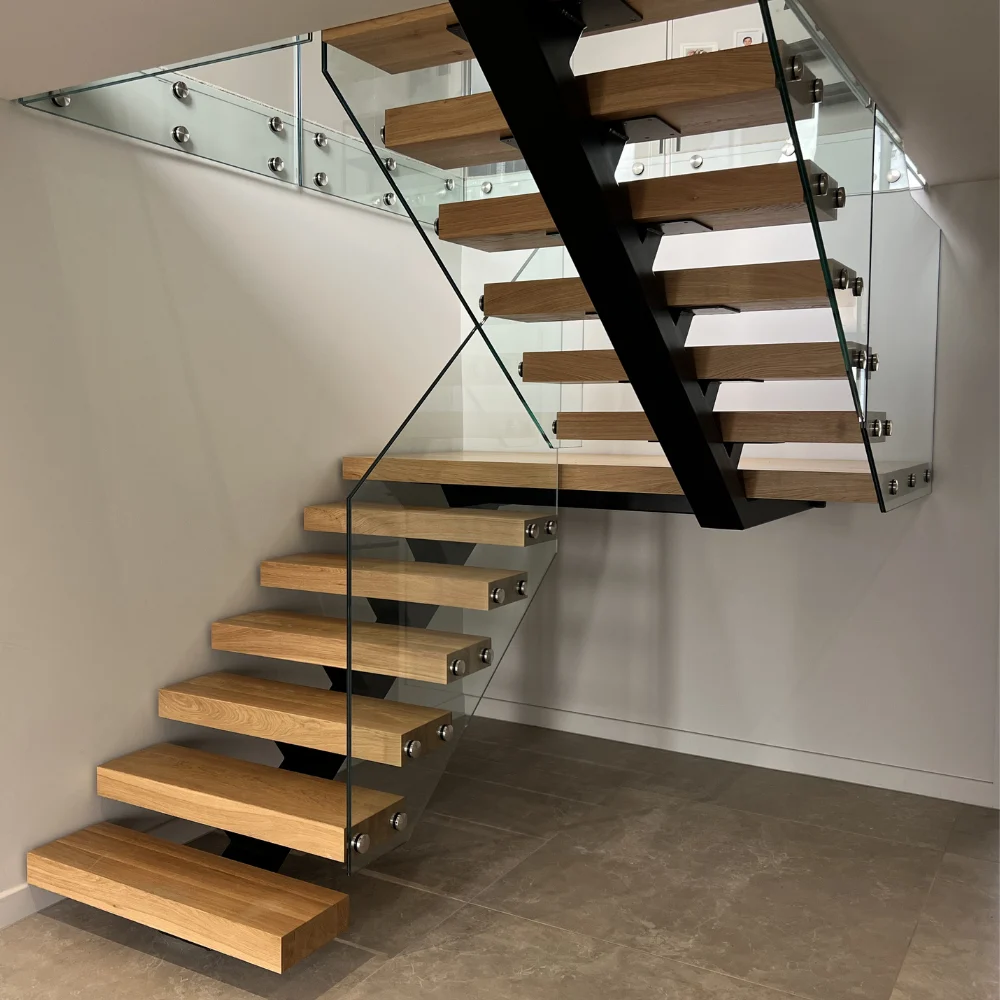
Continox approaches the grachtenpand specification from the existing envelope outward, never from the dimensional ideal inward. We measure the existing stairwell footprint, floor levels (taking variation between front and rear into account), available headroom (which often dictates whether U-shape or L-shape is feasible) and fixing-substrate quality before specifying. The result is one of three configurations:
- L-Shape Steel Plates (from €8,999) — quarter-turn, two flights at 90°, intermediate platform. Suits stairwells where the footprint is rectangular and headroom is constrained.
- U-Shape Steel Plates (from €9,499) — half-turn with intermediate landing. Best for tall floor-to-floor heights where a single flight cannot achieve the geometry within the rechtens-verkregen-niveau threshold.
- U-Shape Central Spine (from €10,499) — half-turn with single steel beam underneath. Specified where the heritage character permits a more contemporary aesthetic but the footprint constraint still requires half-turn geometry.
The rechtens-verkregen-niveau principle (Bbl hoofdstuk 5) is the regulatory framework that makes grachtenpand staircase replacement feasible. It allows the post-renovation result to match the existing geometry rather than demanding nieuwbouw thresholds — a design with 195 mm optrede in an existing grachtenpand can be preserved during verbouw, where forcing 188 mm nieuwbouw would require widening the stairwell. For the regulatory background see the Bbl + NEN 3509 guide.
Omgevingsvergunning Workflow for Monumenten — From Vooroverleg to Approval
Constructive changes to a rijksmonument require an omgevingsvergunning voor het wijzigen van een monument — what was historically called a "monumentenvergunning" before the Omgevingswet integrated all permits into the single omgevingsvergunning system. For Amsterdam canal-house renovations virtually every staircase replacement falls under this requirement; constructive wijzigingen aan een monument zijn altijd vergunningplichtig.
The Six Steps from Vooroverleg to Construction
Vooroverleg with Bureau Monumenten en Archeologie
Optional but strongly recommended pre-application meeting with Bureau M&A. Architect presents the design intent, building's monumental waarden are clarified, RCE may attend via the provincial steunpunt monumentenzorg. Usually free or modest charge; saves weeks downstream by surfacing concerns early.
Bouwhistorisch onderzoek (where required)
For ingrijpende wijziging affecting monumental waarden, a bouwhistorisch onderzoek (architectural history study) may be required as a vergunningvoorschrift. Documents the building's historic fabric and identifies what must be preserved, recorded or replaced.
Aanvraag via Digitaal Stelsel Omgevingswet (DSO)
Formal application submitted through the DSO portal — the post-Omgevingswet replacement for the OLO system. Bundles all required documents: design drawings, structural calculations, Bbl-aligned compliance schedule, bouwhistorisch onderzoek where required, materiaalstaat. Continox supplies the structural and Bbl-aligned components.
RCE advisory + Welstand commissie review
For rijksmonumenten the Rijksdienst voor het Cultureel Erfgoed has a 6-week adviestermijn under the Omgevingswet. In Amsterdam, Bureau M&A coordinates this advisory while the Commissie Welstand en Monumenten reviews the application against welstandseisen. Both advisories inform the gemeente's decision.
Reguliere or uitgebreide procedure
For mostly internal staircase replacement: reguliere procedure 8 weken. For ingrijpende wijziging affecting monumental fabric: uitgebreide procedure 26 weken (formeel 6 maanden). The gemeente bevoegd gezag issues the omgevingsvergunning, with vergunningvoorschriften attached (e.g. specific materials, construction-phase monitoring, bouwhistorische documentation).
Continox manufacture + delivery
With omgevingsvergunning in hand, Continox enters the standard production cycle — fabrication 4–6 weeks at our EN 1090-1 EXC2 facility near Kraków, then 2–3 day road freight to Amsterdam. Local installer mobilises during the freight transit period; staircase installation itself typically completes in 3–5 working days on site.
Two practical points reduce the risk of permit refusal. First, the gemeente prefers internal staircase replacement (within the existing stairwell envelope) over structural intervention (modifying the stairwell shaft, breaking through floors, altering the gevel). The former typically receives reguliere procedure approval in 8 weken; the latter triggers uitgebreide procedure with corresponding 26-week timeline. Continox spine systems are explicitly engineered to fit the existing envelope, supporting the preferred path. Second, the rechtens-verkregen-niveau argument should be made explicitly in the application. Stating that the new staircase preserves the existing footprint and geometry to maintain rechtens-verkregen-niveau under Bbl hoofdstuk 5 reduces the regulatory burden compared to claiming nieuwbouw compliance — the latter triggers larger documentation requirements and typically slows approval.
Structural calculations — Eurocode 1 + 3 + Dutch national annex
NEN 2608 + NEN 6707 glass balustrade calculation
EN 1090-1 EXC2 Declaration of Performance
EN 12150 + EN 14449 tempered laminated glass certification
EN 14179 heat-soak certification (where applicable)
Detail drawings at 1:5 / 1:10 / 1:20 for permit dossier
Materiaalstaat compatible with welstand commissie review
Installation method statement for local contractor
Randstad New-Build: Zuidas, Kop van Zuid, Leidsche Rijn
Where the grachtenpand archetype is constrained by inheritance, the Randstad new-build archetype is constrained only by structural-substrate engineering and design ambition. The dominant developments are:
- Zuidas (Amsterdam) — the international financial district. Executive apartments and penthouses with 3.0–3.5 m floor-to-floor heights, structural reinforced-concrete frame, often double-height living spaces. The Continox Floating Staircase, Y-Shape Central Spine and Premium Central Spine dominate specification.
- Kop van Zuid (Rotterdam) — converted dock-side warehouses and contemporary tower additions. Industrial-aesthetic loft conversions where exposed steel-and-glass staircases are central design statements. Floating cantilever with frameless glass balustrade is the signature configuration.
- Leidsche Rijn (Utrecht) — the country's largest contemporary new-build district. Suburban-density modern villas with 2.7–2.9 m floor-to-floor and architectural ambition typical of the Brainport-influenced Utrecht commuter belt. Central Spine and Central Spine with Platform are most-specified.
- Statenkwartier (Den Haag) — heritage-meets-contemporary townhouse renovations along Frederikstraat and surrounds. U-Shape Central Spine dominates because the typical 19e-century townhouse footprint requires half-turn geometry but the substrate accepts contemporary spine design.
Three things differentiate Randstad new-build from grachtenpand work. First, the structural substrate — reinforced concrete frame supports any Continox configuration, including the cantilevered floating system that requires up to 18 kN/m embedded reaction. Second, the permit pathway is straightforward: standard Bbl hoofdstuk 4 nieuwbouw compliance, Wkb-erkend kwaliteitsborger review, no monumentenstatus complication. Third, the design budget typically supports premium-tier Continox specification — walnut treads, integrated LED lighting, bronze hardware, custom RAL powder-coat.
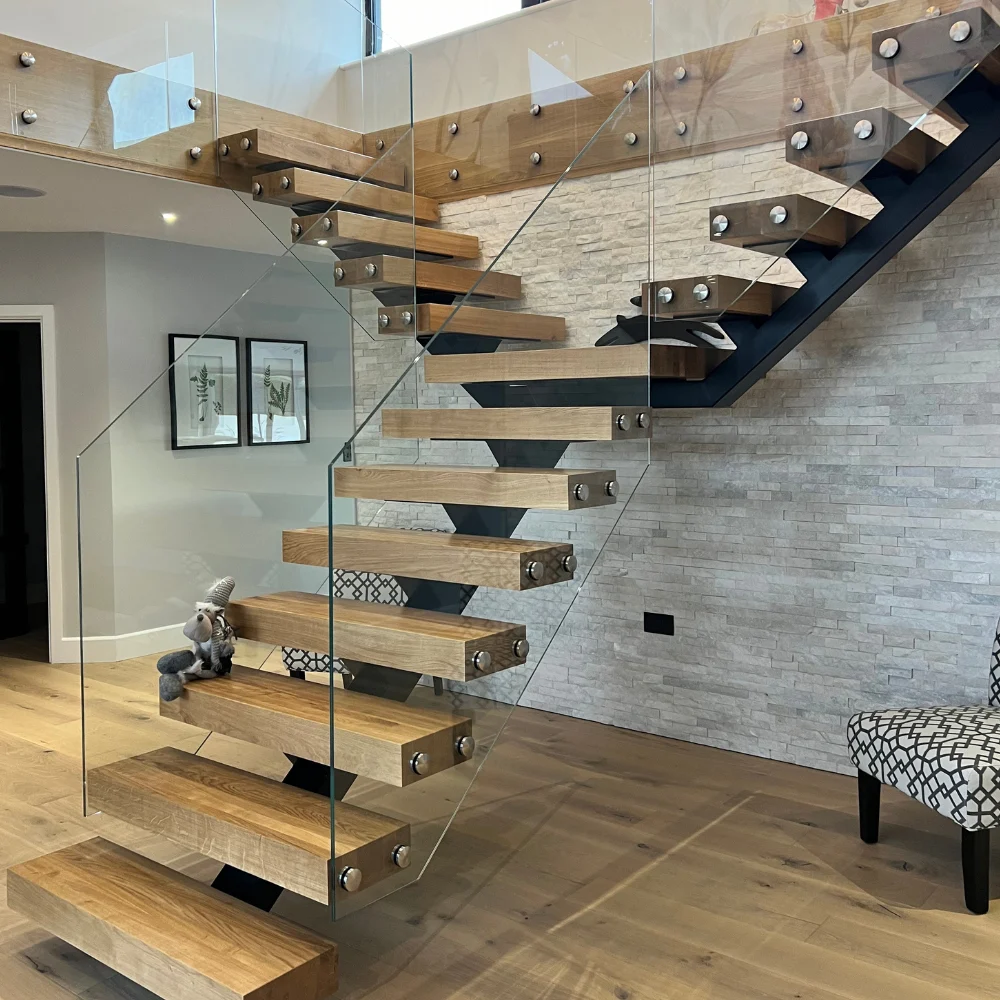
Noord-Holland Coastal Belt & 't Gooi Villa Cluster
The Noord-Holland coastal belt and the inland 't Gooi cluster between them concentrate a disproportionate share of the country's villa-belt private wealth. Bloemendaal, Aerdenhout and Wassenaar form a continuous strip of dune-front and dune-adjacent estates; Laren, Blaricum and Naarden in 't Gooi sit further inland but at similar wealth density. For staircase specification the coastal belt requires the Continox coastal-corrosion protocol; 't Gooi inland projects do not, but typically specify at the same premium tier.
The 't Gooi cluster — Laren, Blaricum, Naarden, Bussum, Huizen — sits inland on sandy heathland that historically attracted Amsterdam's wealthy as a suburban escape. The villa stock here is generally 19e/20e-century with substantial 1980s–2010s contemporary new-build interspersed. Without coastal exposure these projects do not require the corrosion protocol, but typically specify at premium-tier ambition: walnut treads, frameless glass balustrade, integrated LED, custom RAL — and frequently scale up to fully bespoke configurations (€18,000–€35,000+) for double-height entrance halls and atrium-style stairwells.
Beyond the Randstad: Brabant, Gelderland, Limburg & the Provincies
The Dutch market beyond the Randstad and coastal belt represents a growing share of Continox supply. The eastern and southern provincies — Noord-Brabant, Gelderland, Overijssel, Limburg — host substantial premium contemporary new-build, particularly in the Brainport region around Eindhoven, the Den Bosch contemporary segment, the Maastricht villa renovation belt and the Veluwe-edge cluster.
| Provincial cluster | Typical project profile | Continox configurations most-specified |
|---|---|---|
| Brainport · Eindhoven | Strijp-S contemporary renovation, ASML-belt new-build, Veldhoven villa | Central Spine · Floating · Premium |
| Brabant · Den Bosch / Tilburg | Modern farmhouse renovation, Kasteel-belt villa, contemporary suburban | Central Spine with Platform · Y-Shape |
| Limburg · Maastricht | Heritage townhouse renovation, hill-belt villa, contemporary new-build | U-Shape Central Spine · Premium |
| Gelderland · Arnhem / Nijmegen | Veluwe-edge contemporary, hilltop villa, Apeldoorn premium | Floating · Premium · Bespoke |
| Overijssel · Zwolle / Twente | Hanze-cluster contemporary, country-estate renovation | Central Spine · L-Shape Steel Plates |
| Noord-Holland inland · Alkmaar / Hoorn | Beemster polder villa, West-Friesland contemporary | Central Spine · U-Shape Spine |
Table 1 · Provincial cluster profiles and most-specified Continox configurations for Dutch projects beyond the Randstad and coastal villa belt.
Friesland, Groningen and Drenthe — the three northernmost provincies — represent a smaller share of Continox supply but a growing one. Groningen city itself hosts a contemporary architectural scene focused around the university and the Forum Groningen cluster; the Friesland villa belt around Sneek and Heerenveen has expanded with second-home demand from Randstad-based buyers. The northern projects typically specify at the central-spine workhorse tier (€9,999–€11,499) rather than at the top-end bespoke level.
Zeeland — Veere, Vlissingen, Middelburg, the archipelago — sits geographically apart but operationally similar to the Noord-Holland coastal belt: coastal-corrosion specification mandatory, premium tier dominant for the second-home and retirement villa segment. Continox supplies the same VSG 21.52 + A4 marine stainless protocol that applies to Bloemendaal and Wassenaar.
Province Coverage Map
System Mapping: Which Continox Configuration for Which Archetype
The matrix below cross-references the four project archetypes with the nine Continox staircase configurations and the typical pricing tier. This is the practical reference that architects use to scope bespoke staircase budget at design-development stage.
| Continox configuration | From (EUR) | Grachtenpand | Randstad new-build | Coastal villa | Brabant farmhouse |
|---|---|---|---|---|---|
| L-Shape Steel Plates | €8,999 | ★★★ Best fit | ★ Rare | — | ★ Rare |
| U-Shape Steel Plates | €9,499 | ★★★ Common | ★ Rare | — | ★ Rare |
| Central Spine | €9,999 | ★★ Sometimes | ★★★ Common | ★★ Sometimes | ★★★ Most-specified |
| U-Shape Central Spine | €10,499 | ★★★ Common | ★★ Sometimes | ★★ Sometimes | ★★ Sometimes |
| Floating Staircase | €10,999 | — Rare | ★★★ Most-specified | ★★★ Common | ★★ Sometimes |
| Central Spine + Platform | €11,499 | — | ★★ Sometimes | ★★ Sometimes | ★★★ Most-specified |
| Y-Shape Central Spine | €12,499 | — | ★★★ Common | ★★ Sometimes | ★ Rare |
| Premium Central Spine | €12,999 | ★ Heritage premium | ★★★ Common | ★★★ Common | ★★ Sometimes |
| Fully Bespoke | €14,500+ | ★ Heritage architectural | ★★ Sometimes | ★★★ Common (€18–35k+) | ★★ Sometimes |
Table 2 · Continox configuration vs project archetype mapping. Stars indicate frequency: ★ rare · ★★ sometimes · ★★★ common / most-specified. Pricing supply, design & delivery ex BTW.
For supply terms, intra-EU shipping, BTW reverse-charge and Brexit clarification, see UK Supplier Netherlands Shipping Guide (NL04).
Frequently Asked Questions
Do I need an omgevingsvergunning to replace a staircase in an Amsterdam grachtenpand?
Yes — almost always. Constructive wijzigingen aan een rijksmonument zijn altijd vergunningplichtig (changes affecting structural elements always require a permit). Replacing a staircase in an Amsterdam canal-house with rijksmonument status is by definition a constructive wijziging, so the omgevingsvergunning voor het wijzigen van een monument is required. The application is reviewed by Bureau Monumenten en Archeologie + Commissie Welstand en Monumenten, with RCE advisory (6-week adviestermijn).
Most internal staircase replacements within the existing stairwell envelope qualify for the reguliere procedure (8 weken). Ingrijpende wijziging affecting monumental fabric — modifying the stairwell shaft, breaking through floors, altering load distribution to the funderingen — triggers the uitgebreide procedure (26 weken).
Which Continox system fits an Amsterdam grachtenpand best?
The L-Shape Steel Plates (€8,999) and U-Shape Central Spine (€10,499) configurations are most-specified for Amsterdam grachtenpand renovations. Both are engineered for narrow stairwells with constrained headroom — typical of 17e/19e-century canal-houses where the original staircase footprint was tight.
L-Shape suits stairwells with rectangular footprints and adequate horizontal clearance; U-Shape Central Spine fits taller floor-to-floor heights where a single flight cannot achieve the geometry within the rechtens-verkregen-niveau threshold. We measure the existing stairwell footprint, floor levels, available headroom and fixing-substrate quality before recommending which configuration suits the specific project.
What does the rechtens-verkregen-niveau mean for grachtenpand staircase replacement?
The rechtens-verkregen-niveau ("legally acquired level") principle in Bbl hoofdstuk 5 governs verbouw projects. It allows the post-renovation result to match the existing geometry rather than demanding nieuwbouw thresholds — critical for grachtenpand renovations where the original 17e-century steep-staircase geometry can be preserved instead of forcing a stairwell rebuild to meet 188 mm optrede / 220 mm aantrede nieuwbouw rules.
Stating the rechtens-verkregen-niveau argument explicitly in the omgevingsvergunning application reduces the regulatory burden compared to claiming nieuwbouw compliance — the latter triggers larger documentation requirements and typically slows approval. For the regulatory framework see the Bbl + NEN 3509 guide (NL01).
Are coastal-belt projects (Bloemendaal, Wassenaar, Zeeland) more expensive?
The coastal-corrosion specification is included in Continox supply automatically for projects within 10 km of the North Sea coast — there is no premium upcharge. The protocol comprises heat-soaked tempered glass per EN 14179, A4 marine stainless or duplex 1.4462 fixings, ISO 9227 salt-spray verification and uprated VSG 21.52 for external balustrades.
What does drive coastal-belt project budgets higher than the inland average is the specification ambition rather than the corrosion protocol. Bloemendaal, Aerdenhout and Wassenaar villa-belt projects routinely specify Premium Central Spine, Floating Cantilever or Fully Bespoke configurations — frequently €18,000–€35,000+ for top-end villas with double-height entrance halls and atrium stairwells.
How does Continox handle delivery to Amsterdam city centre?
Delivery from our EN 1090-1 EXC2 facility near Kraków to Amsterdam takes 2–3 working days by dedicated road freight, routed via Germany–Oldenzaal corridor. For grachtenpand projects in the Amsterdam canal ring, we coordinate the final-mile logistics with the local installer to handle the canal-side parking constraints — most canal addresses do not allow truck parking and require a smaller offload vehicle within the venster (truck-permit window).
Continox supplies pre-engineered components designed to be carried up narrow staircases — the central spine ships in two or three sections joined on site, treads ship individually, glass panels ship in protective crates sized to fit through standard Amsterdam canal-house front doors (typically 80–90 cm clear).
Can Continox supply to projects outside the Randstad?
Yes — Continox supplies all twelve Dutch provincies, with a growing share of supply going to Brabant (Eindhoven Brainport, Den Bosch), Gelderland (Arnhem, Apeldoorn), Limburg (Maastricht), Friesland, Groningen and Zeeland. Delivery is uniform 2–3 working days regardless of destination because the road-freight transit from Kraków to anywhere in the Netherlands is similar duration.
The configuration mix shifts by region — see Section 08 system mapping table for the typical specification by archetype. Brabant modern farmhouses overwhelmingly specify Central Spine and Central Spine with Platform; Maastricht heritage renovations favour U-Shape Central Spine; Gelderland Veluwe-edge contemporary projects specify across the range from Floating to Fully Bespoke.