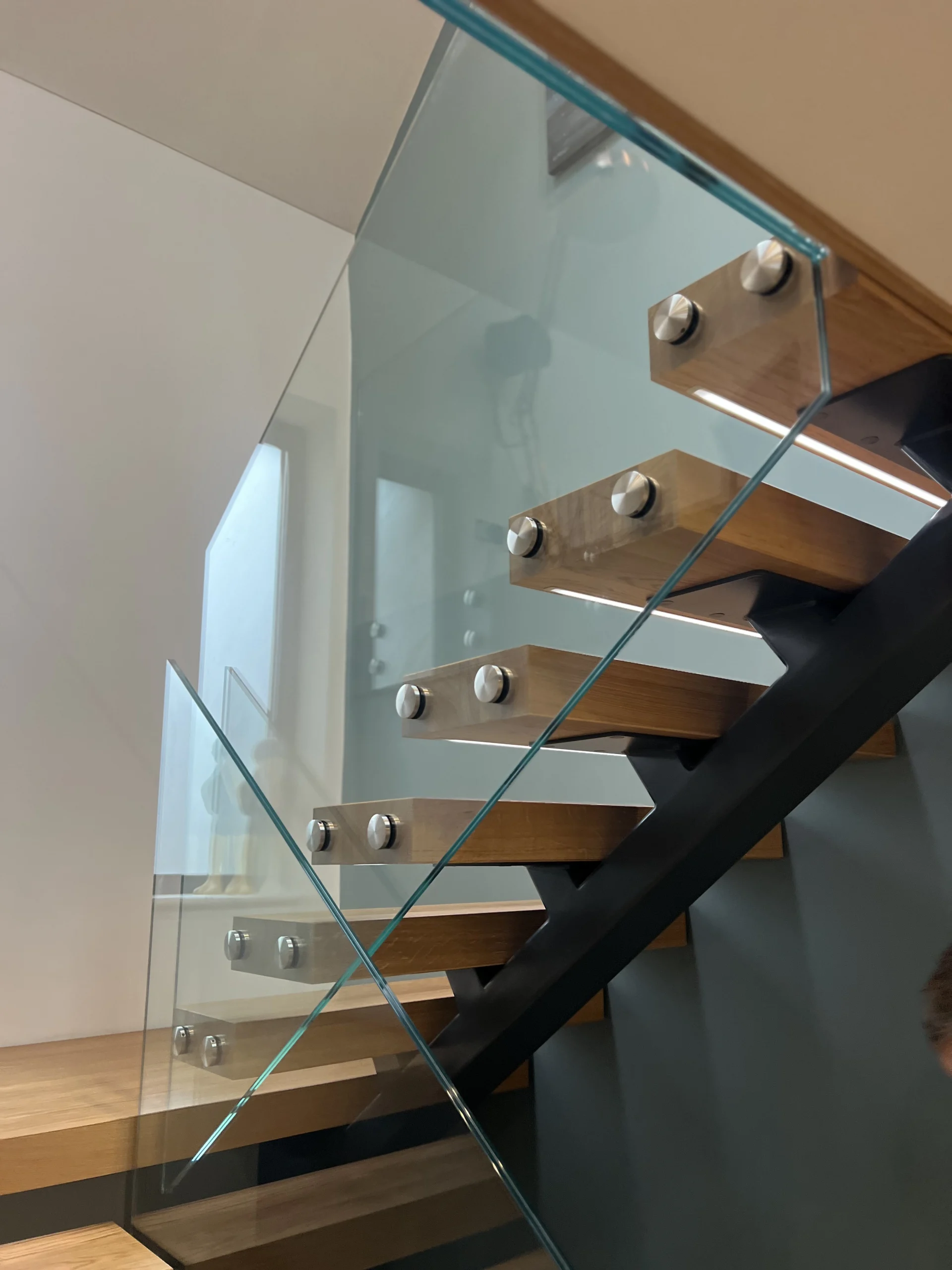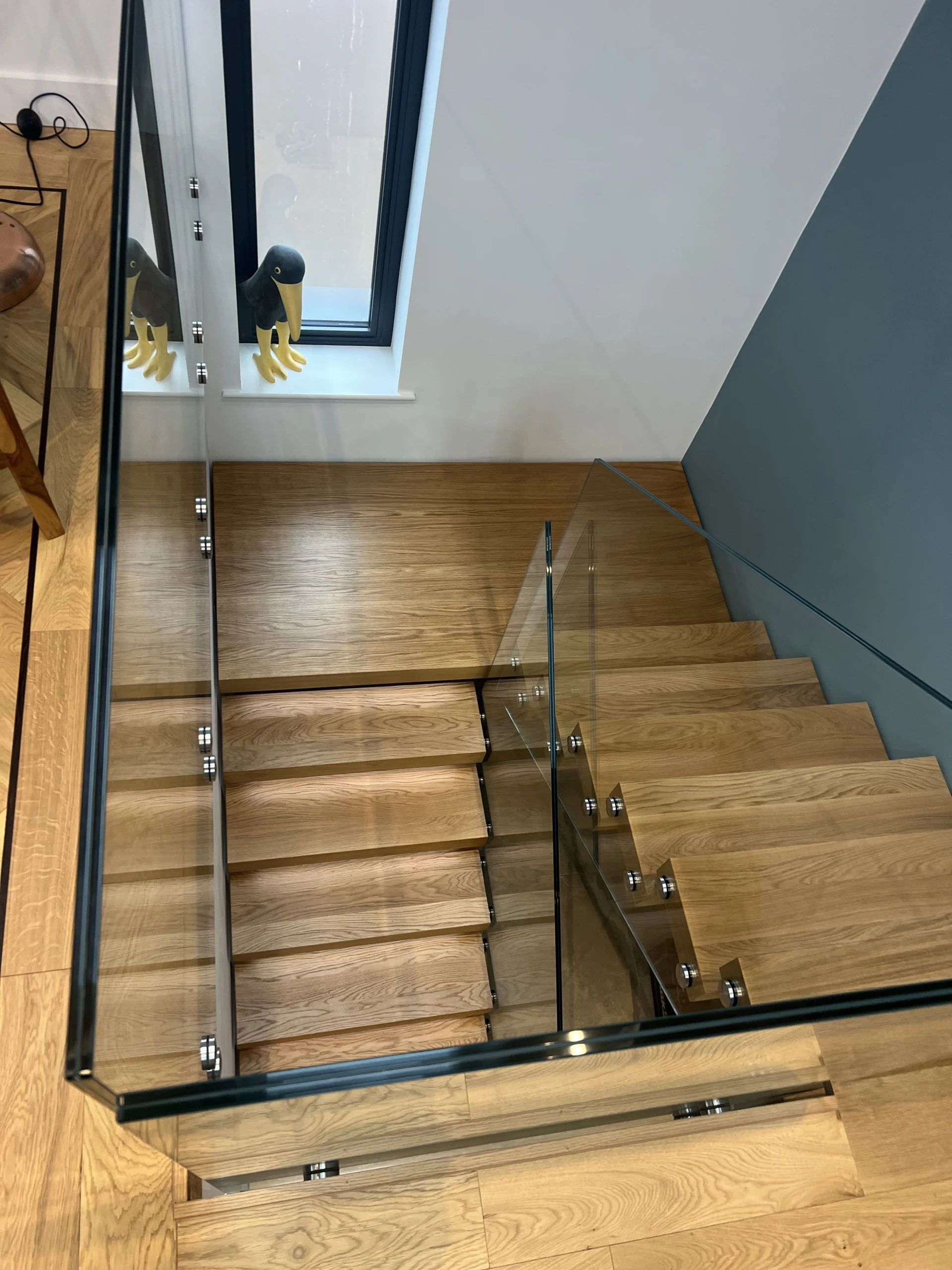

A bespoke staircase is one of the largest single investments most homeowners make in an interior renovation — typically £7,900 to £25,000 for design, manufacture and installation. It's a serious number, and it deserves a serious answer to a serious question: is it actually worth it? This guide breaks down the real return on a bespoke staircase in the UK — the craftsmanship, the property value uplift, the lifespan, the material quality — and compares it directly to off-the-shelf alternatives so you can make the decision with the full picture in front of you.
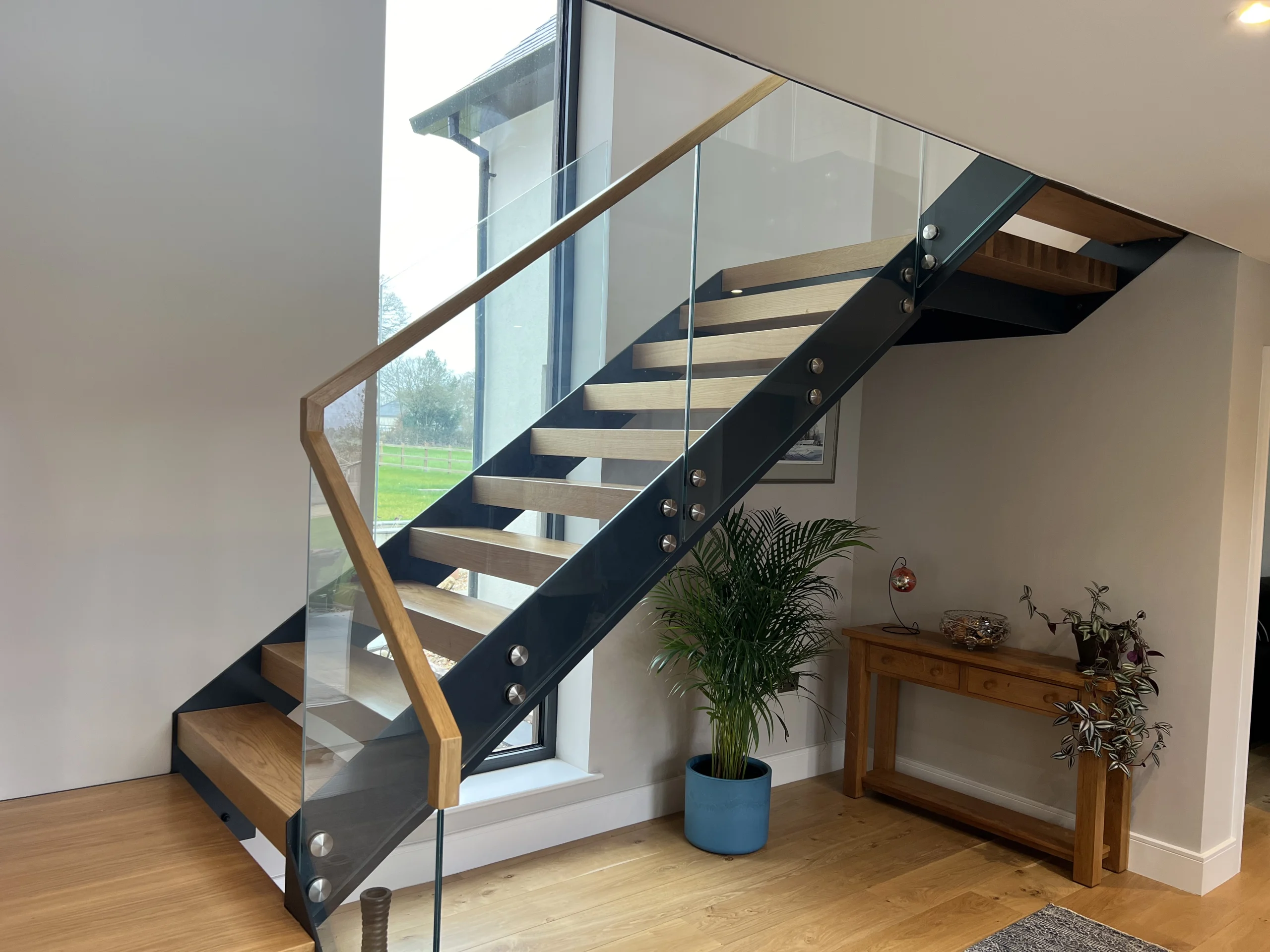
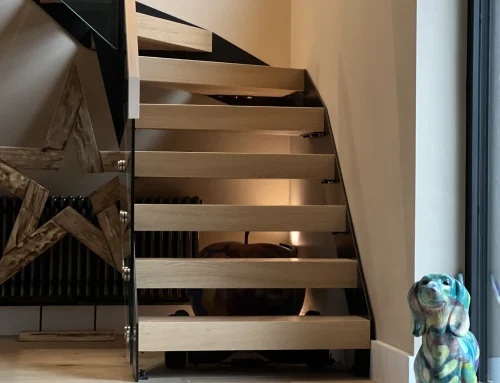
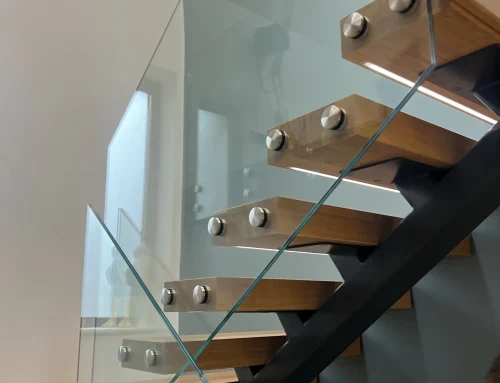
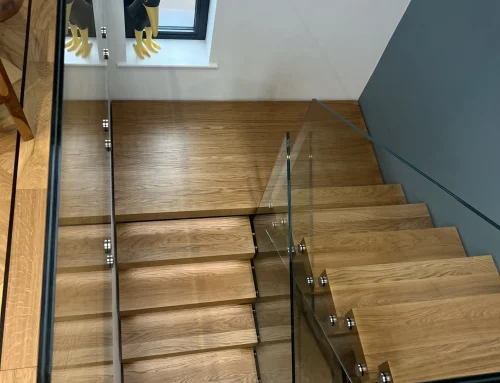
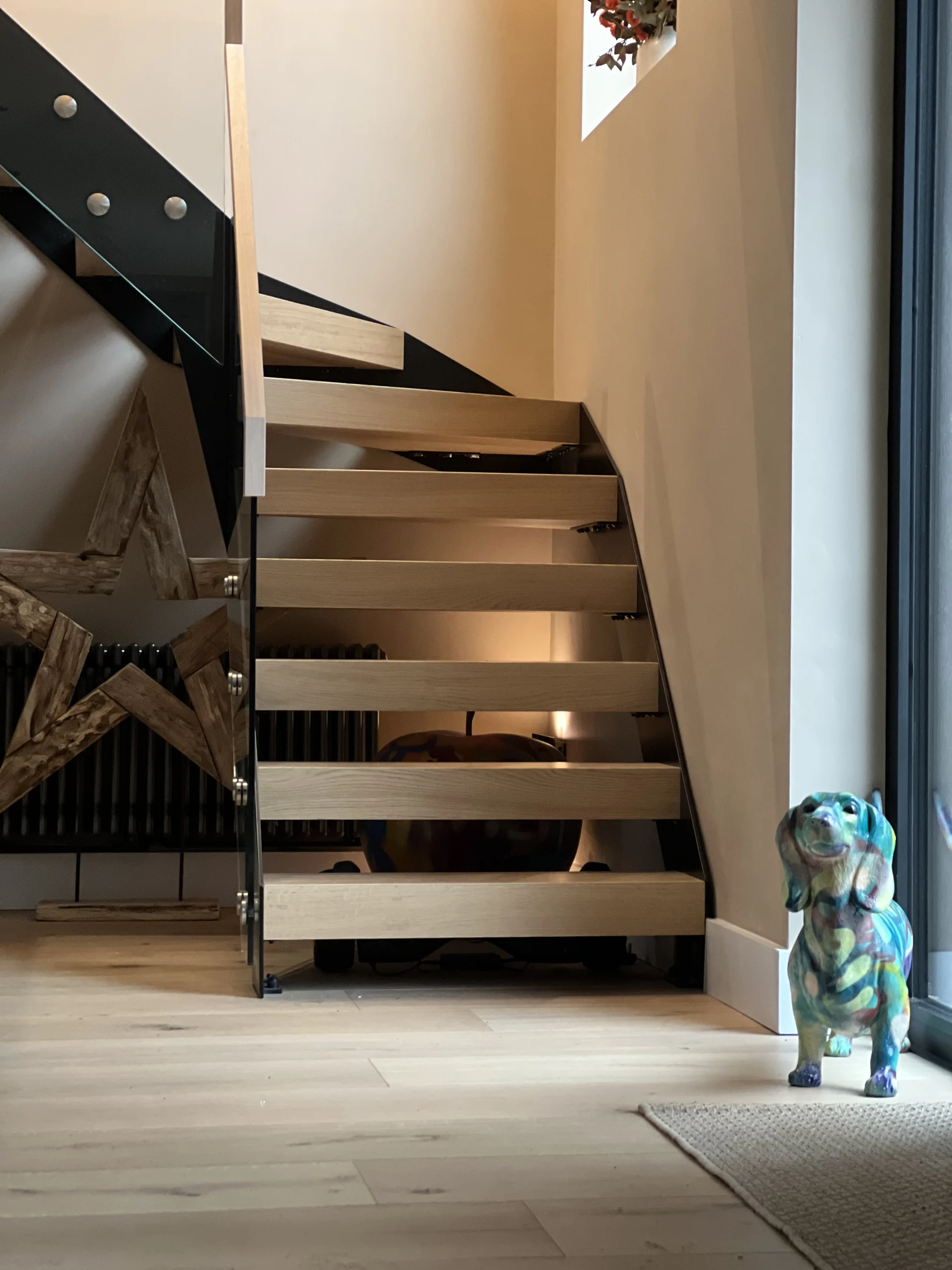
Bespoke central spine staircase by Continox — solid oak treads, frameless glass balustrade, matt black powder coat.
The Bespoke Staircase Investment in Numbers
Before we walk through the reasons, here are the three figures that matter most when you're deciding whether a bespoke staircase makes financial sense. These are based on Continox project data and widely accepted UK property market benchmarks for bespoke feature staircases.
Property value uplift: The 3–5% figure reflects the typical uplift UK estate agents and surveyors associate with a high-specification feature staircase as part of a wider renovation or new-build project — particularly where the staircase is visible from the main entrance or an open-plan living space. On a £600,000 property, that's £18,000–£30,000 of added perceived value against a staircase investment of £9,500–£11,500.
7 Reasons a Bespoke Staircase Is Worth the Investment
There are plenty of reasons to consider a bespoke staircase — some aesthetic, some structural, some financial. Here are the seven that come up most often in conversations with clients, architects and property professionals.
A bespoke staircase consistently registers as one of the highest-impact features in an estate agent's property description. Phrases like "feature staircase," "designer staircase" or "bespoke floating staircase" appear in listings for premium properties across the South East — and for good reason. In open-plan homes, the staircase is often the first thing a viewer sees when they walk through the door, and it sets the tone for their entire perception of the property.
On a £600,000–£1.2M property, the accepted uplift for a high-specification feature staircase is typically 3–5% — in cash terms, £18,000 to £60,000 of perceived value. Against a Continox bespoke installation priced at £9,500–£15,000, this represents a clear net positive to the property — particularly where the staircase is replacing a dated closed-string softwood flight from the 1980s or 1990s.

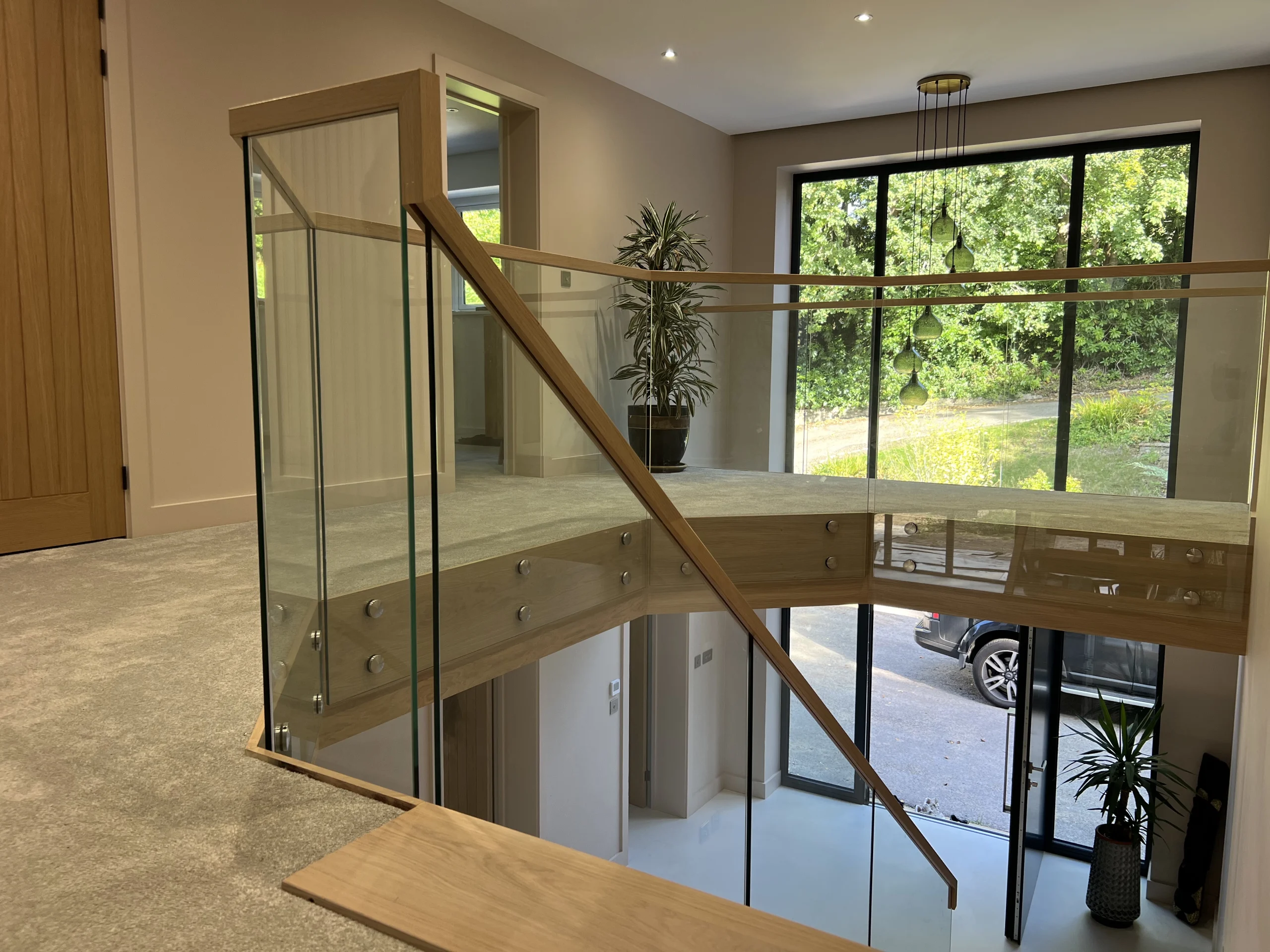
Off-the-shelf staircases are sized to a limited range of standard dimensions — and most UK homes don't match any of them. Ceiling heights vary, floor-to-floor distances vary, opening widths vary, and the angle available for a rise to land in the right position on the upper floor rarely corresponds to a catalogue product. What you end up with is a compromise: either a steeper-than-ideal rise, a landing in the wrong position, or a staircase that visually fights the rest of the interior.
A bespoke staircase is engineered to the exact floor-to-floor measurement of your property, with rise, going and pitch calculated to maximise comfort within Approved Document K limits. Every detail — tread depth, handrail height, landing position, balustrade run — is designed around your space, not pulled from a catalogue.
Why this matters on resale: An awkward, mis-fitted staircase is one of the first things property viewers notice subconsciously — even if they can't articulate what's wrong. A staircase that flows properly through the space reads as "this house has been thought about carefully." That impression carries through the rest of the viewing.
The difference between a bespoke staircase and a mid-market off-the-shelf product isn't just the design — it's what it's actually made of. Off-the-shelf staircases are typically constructed from engineered timber, MDF stringers with a veneer finish, or powder-coated mild steel with minimal surface preparation. The visible materials are often thin veneers over a cheaper substrate, and the structural elements are sized to the minimum spec.
A bespoke Continox staircase is built from structural-grade S275 or S355 steel for the frame (BS EN 1090 certified), solid 40mm oak or walnut hardwood for the treads, and 17.5mm toughened-laminated safety glass for the balustrade. The steel spine is shot-blasted, primed and powder-coated to a full automotive-grade specification. Every material is specified to last decades, not years.
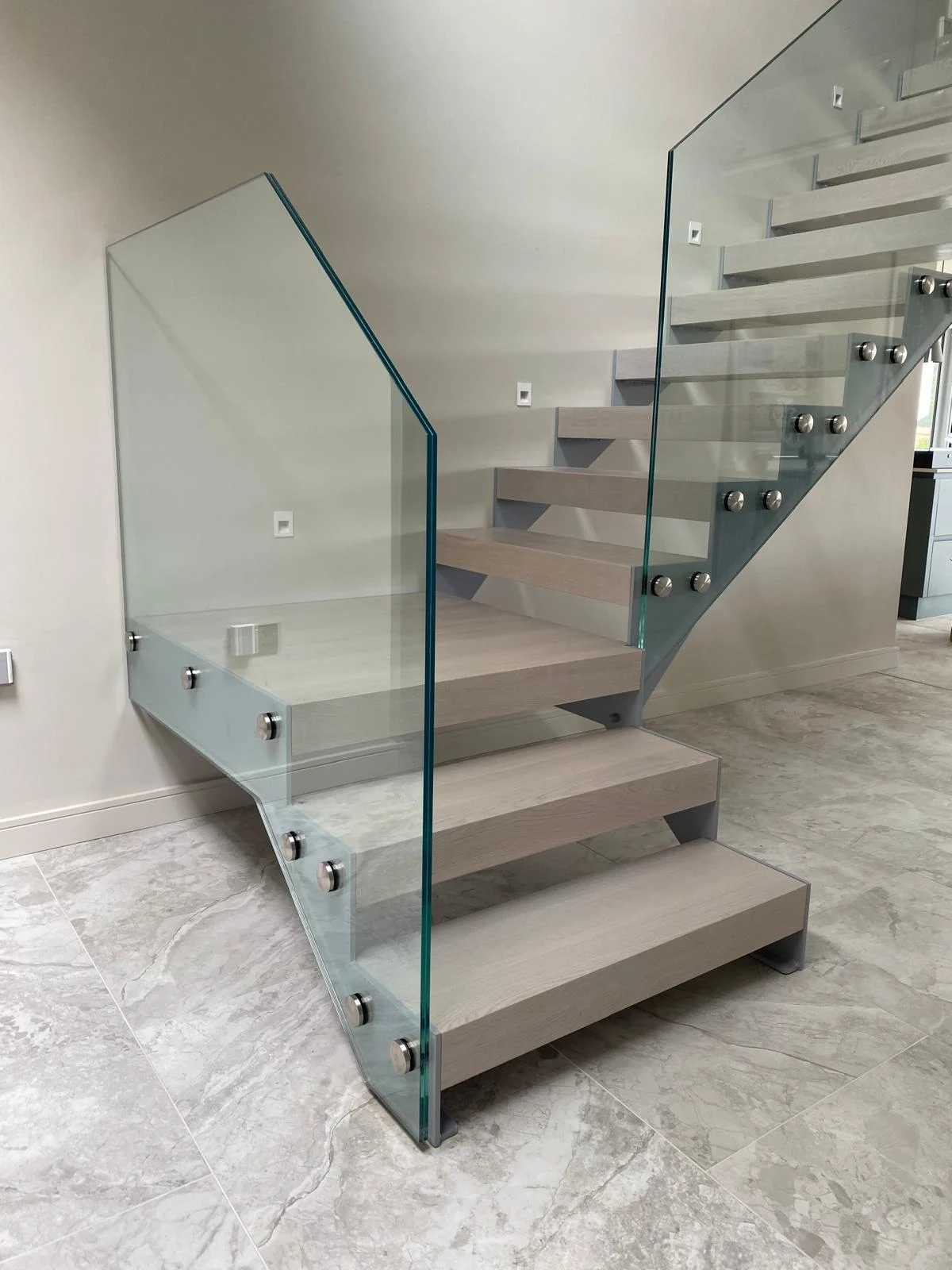

A bespoke staircase isn't just designed — it's engineered. Every Continox staircase is calculated to resist the load requirements of Part K and BS 6399, with the steel spine, tread fixings and balustrade posts sized to the specific span, cantilever length and anticipated load of your installation. For a floating or central-spine design, the cantilever moment at each tread fixing has to be calculated and verified — this isn't a catalogue exercise.
The result is a staircase with no flex, no bounce and no creak — even on cantilevered designs. Glass balustrades are specified in toughened-laminated safety glass (17.5mm or 21.5mm depending on span and installation type) meeting BS 6180 for 0.74 kN/m residential or 3.0 kN/m commercial load. Every installation receives a structural check and, where required, a stamped calculation package for Building Control.
Bespoke means the configuration is decided by the space and the brief — not by a manufacturer's product line. Straight flights, L-shape, U-shape, winder turns, quarter landings, half landings, Y-shape split, spiral, helical — any geometry that fits your opening and complies with Approved Document K can be built.
The same freedom applies to the specification. Floating designs cantilevered from a wall, central spine systems with oak or walnut treads, full steel plate staircases for industrial-contemporary interiors, LED-integrated treads, frameless glass or framed glass balustrades, black or bronze powder coat, tempered glass treads — every element is specified at the design stage rather than selected from a limited catalogue. See our modern staircase ideas guide for a full walk-through of the 9 configurations most commonly specified.

Y-shape central spine staircase by Continox — a configuration impossible to source off-the-shelf.
Off-the-shelf residential staircases — particularly mass-market timber flights and budget steel-timber hybrids — typically show visible wear within 8–12 years. Tread surfaces scuff and lose finish, glass-clip mounted balustrades develop play, veneer edges lift, and timber strings can twist and crack under seasonal humidity changes. Replacement is often the only economic option once wear reaches a certain point.
A properly built bespoke staircase — structural steel, solid hardwood, toughened safety glass, powder coat on shot-blasted steel — has a design life of 25+ years with no significant maintenance beyond occasional cleaning and tread refinishing. The steel frame will outlast most other elements of the house. This is what separates a bespoke staircase from a disposable one.
The real cost comparison: A £3,500 off-the-shelf staircase replaced at year 10 costs more over a 25-year period (£3,500 + £3,500 + installation + disruption) than a £9,500 bespoke installation that runs the full 25 years without replacement. And the bespoke staircase delivers a property value uplift on top of that — the off-the-shelf one does not.
With an off-the-shelf staircase, responsibility is fragmented. The manufacturer supplies a product; the installer fits it; the Building Control inspector signs it off. If something goes wrong — sizing error, out-of-tolerance delivery, missing components — the homeowner ends up in the middle of a three-way argument.
A Continox bespoke staircase is designed, engineered, fabricated, powder-coated and installed by one team. The same people who measure your space produce the 3D design, calculate the structural loads, cut the steel, apply the finish and fit the completed staircase. If anything needs adjusting, there's one number to call and one point of responsibility — not a supply chain to argue with.
Bespoke vs Off-the-Shelf — Direct Comparison
Here's how a typical Continox bespoke staircase compares directly against a mid-market off-the-shelf residential staircase across the factors that affect long-term value.
| Factor | Off-the-Shelf | Bespoke Continox |
|---|---|---|
| Starting price | £1,500–£4,500 | From £7,900 |
| Design lead time | None — catalogue product | 2–3 weeks with 3D visuals |
| Dimensions | Fixed catalogue sizes | Engineered to your space (mm precision) |
| Frame material | MDF / softwood / thin steel | Structural S275/S355 steel (BS EN 1090) |
| Tread material | Engineered timber / veneer / MDF | Solid oak / walnut 40mm |
| Balustrade glass | 8–10mm toughened (basic) | 17.5mm toughened-laminated (BS EN 14449) |
| Structural calculations | Generic — not project specific | Project-specific, stamped where required |
| Design life | ~10 years before visible wear | 25+ years with minimal maintenance |
| Property value impact | Neutral / negligible | 3–5% uplift on premium properties |
| Accountability | Split: manufacturer / installer / BC | Single team, start to finish |
Worked Example — What a £9,500 Bespoke Staircase Actually Buys
To make the numbers concrete, here's an itemised breakdown of a typical Continox central-spine staircase project: straight-flight, 13 treads, L-shape with quarter landing, solid oak treads, frameless glass balustrade and matt black powder coat finish.
| Element | Cost (excl. VAT) |
|---|---|
| Structural steel spine — L-shape, 13 treads, shot-blasted, powder-coated RAL 9005 | £6,200 |
| Solid oak treads (×13) — 40mm, hard-wax oil finish | £1,950 |
| Frameless glass balustrade (17.5mm toughened-laminated, 8.4m run) | £2,520 |
| Steel handrail with solid oak capping | £480 |
| LED tread lighting — factory-integrated, warm white | £699 |
| 3D visualisation, structural calculations, site survey, installation | Included |
| Total excl. VAT | £11,849 |
On a £600,000 property, a 3% uplift associated with a feature staircase represents £18,000 of perceived value against an £11,849 investment — a net positive of ~£6,150 before accounting for the 25-year lifespan, the design freedom, and the material quality differential against any off-the-shelf alternative.
Current Bespoke Staircase Pricing Guide
Continox pricing for bespoke staircases starts at £7,900 for a floating design and £9,500 for a central spine — both including design, 3D visuals, manufacture and installation. Here are the current starting prices for the three most-specified configurations.
For a full cost breakdown including upgrade costs (walnut, LED integration, low-iron glass, U-shape), see our Bespoke Staircase Cost UK guide. For design configurations and inspiration see our Modern Staircase Ideas guide.
Bespoke Staircase Investment — FAQ
Common questions from homeowners and architects about whether a bespoke staircase is financially worthwhile.
Free 3D Visuals, Fixed Price in 24 Hours
Free on-site survey, photorealistic 3D visuals in your chosen finish, fixed-price quotation within 24 hours. Bespoke staircases from £7,900 — designed, manufactured and installed across the UK.