
Staircase lighting turns the staircase from a circulation element into an architectural feature. Done well — with the right colour temperature, correct mounting positions, and properly integrated cabling — it adds both dramatic visual impact and measurable safety benefit. Done badly, with visible cable runs, mismatched fittings and inconsistent light output, it undermines the entire staircase design. This guide covers the seven staircase lighting types most frequently specified on UK bespoke installations — with technical specifications, Part P compliance notes, and real pricing from Continox projects.
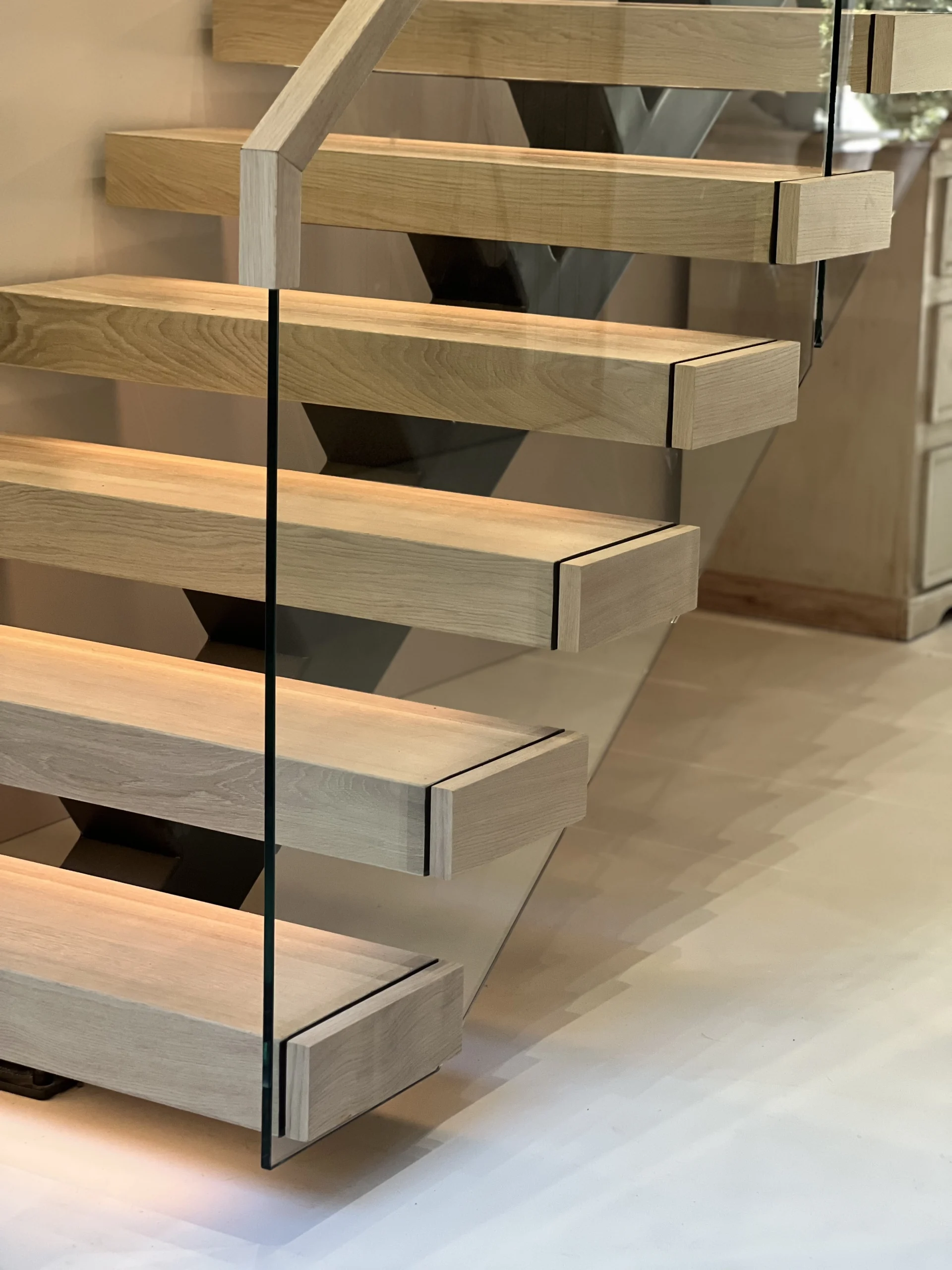
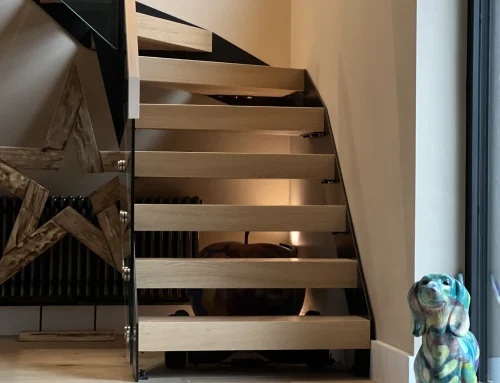
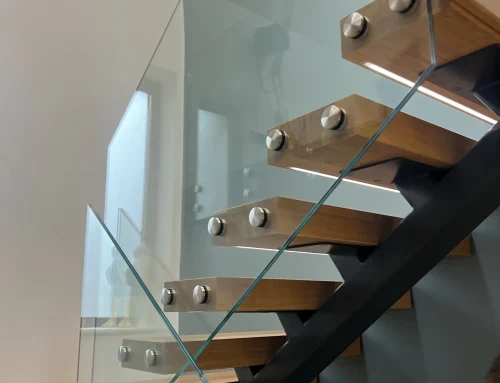
Factory-integrated LED tread lighting by Continox — warm white 3000K, continuous recessed strip, no visible fittings or cables.
Why Staircase Lighting Matters
Two reasons, both real. The first is aesthetic — a staircase is the most three-dimensional element in a typical home interior, and properly designed lighting reveals that three-dimensionality, casts shadows deliberately, and draws the eye to the treads, balustrade and structural form. The second is safety. HSE and coroner data consistently identify staircase falls as one of the leading causes of injury in UK homes, and poor lighting is the most common contributing environmental factor on non-alcohol-related incidents.
Approved Document K requires that stairs are "adequately illuminated." This is deliberately non-specific — there is no lux target in the regulation — but in practice a well-lit staircase delivers a minimum of 100 lux at tread level with the primary lighting on, and retains some low-level illumination when the primary is off (particularly important for night-time navigation in family homes). Most of the lighting options covered below address both requirements simultaneously.
7 Staircase Lighting Types — What Works Where
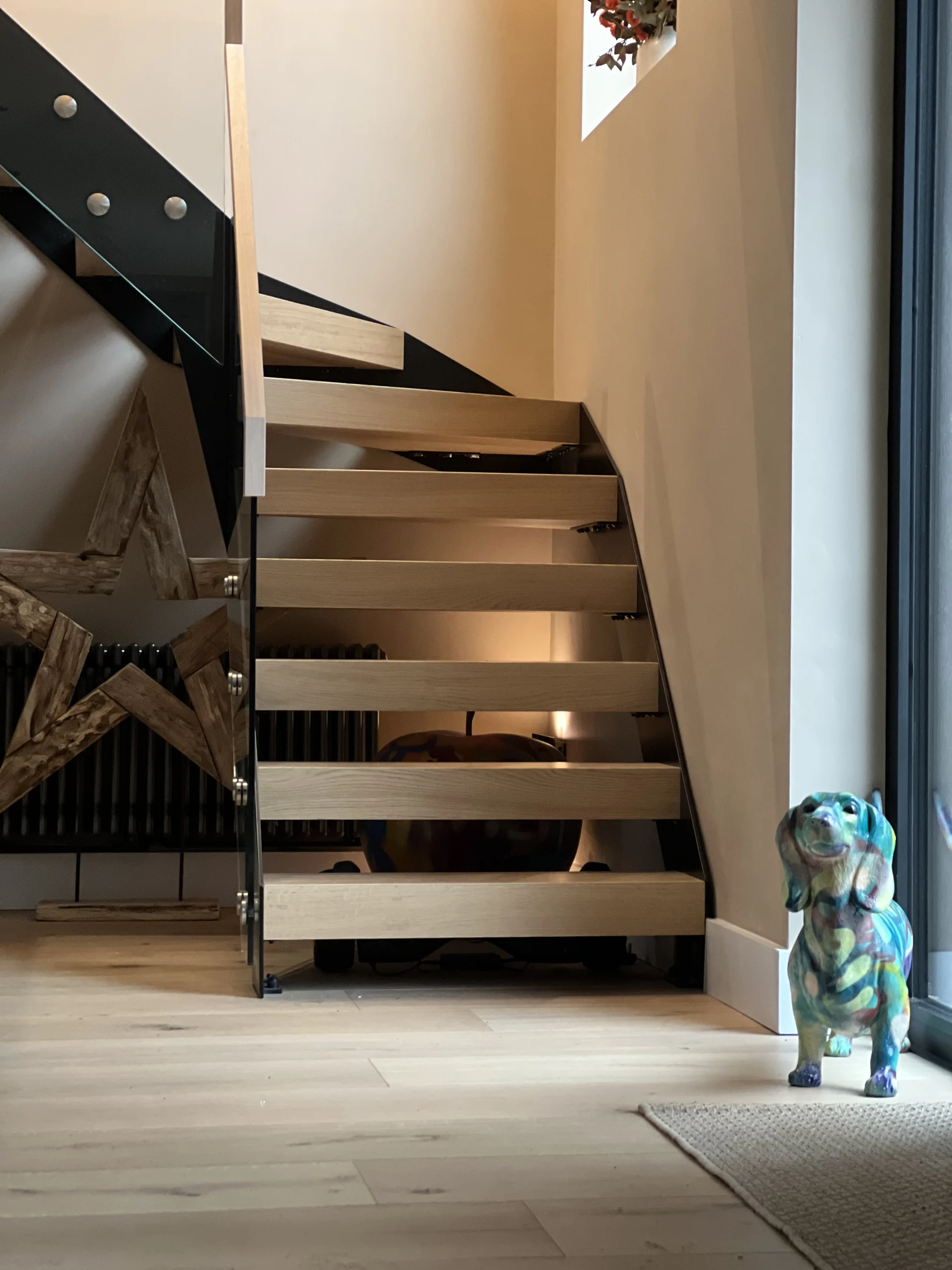
The classic staircase lighting specification — small recessed spotlights mounted into the wall adjacent to the flight, typically at tread height or slightly above, positioned every 2–3 treads. The effect is dramatic and architectural: pools of light cast downward across each illuminated tread, with the wall between fittings in soft shadow. This is the specification you see most frequently in high-end hotel staircases and contemporary residential architecture.
Specification matters. Recessed wall spotlights should be low-profile (15–25mm projection maximum), warm white (2700–3000K), with asymmetric downward-cast optics — fittings with round symmetric beam patterns glare directly into the eye at step-above-fitting positions. For newly-constructed staircases and renovations, cable chases in the wall are straightforward; for retrofit into existing plaster walls the disruption is significant.
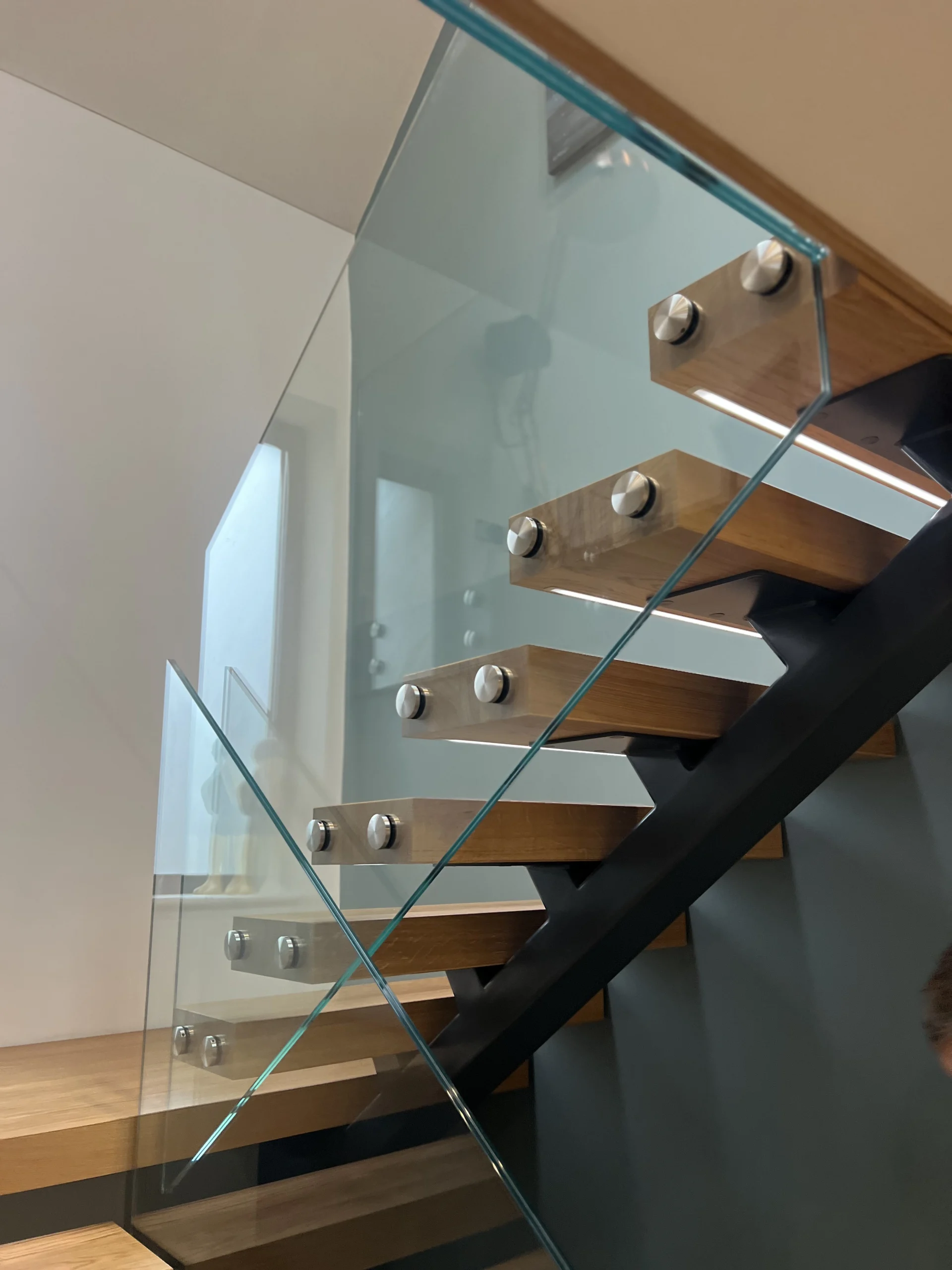
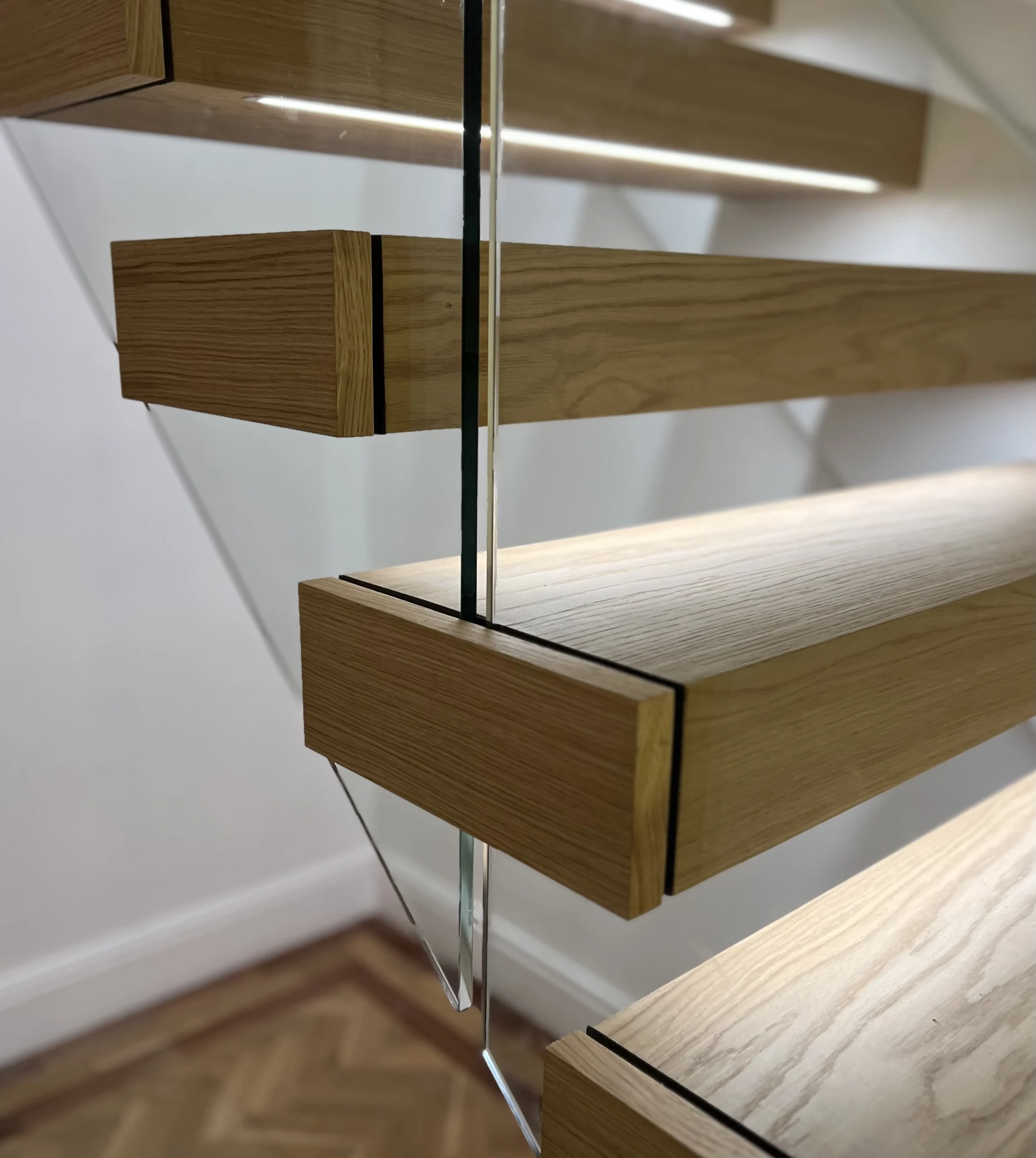
The signature lighting specification for floating and cantilevered staircases — a continuous LED strip recessed into the underside of each tread, casting a soft glow downward onto the tread below. On a contemporary central-spine or floating staircase, this creates one of the most dramatic interior design effects available in a domestic setting: each tread appears to be outlined in light against the dark substructure, with no visible fittings or cables.
This is only genuinely effective as a factory-integrated system. The LED strip runs inside a machined channel in the tread support bracket — cables routed through the steel substructure, driver located remote from the staircase, no visible surface-mount. Retrofit LED strip stuck to the underside of an existing staircase reads as exactly what it is: a DIY addition, with visible cables, hot spots at joints, and failure within 2–3 years. For complete floating staircases with integrated LED see our floating staircase range.
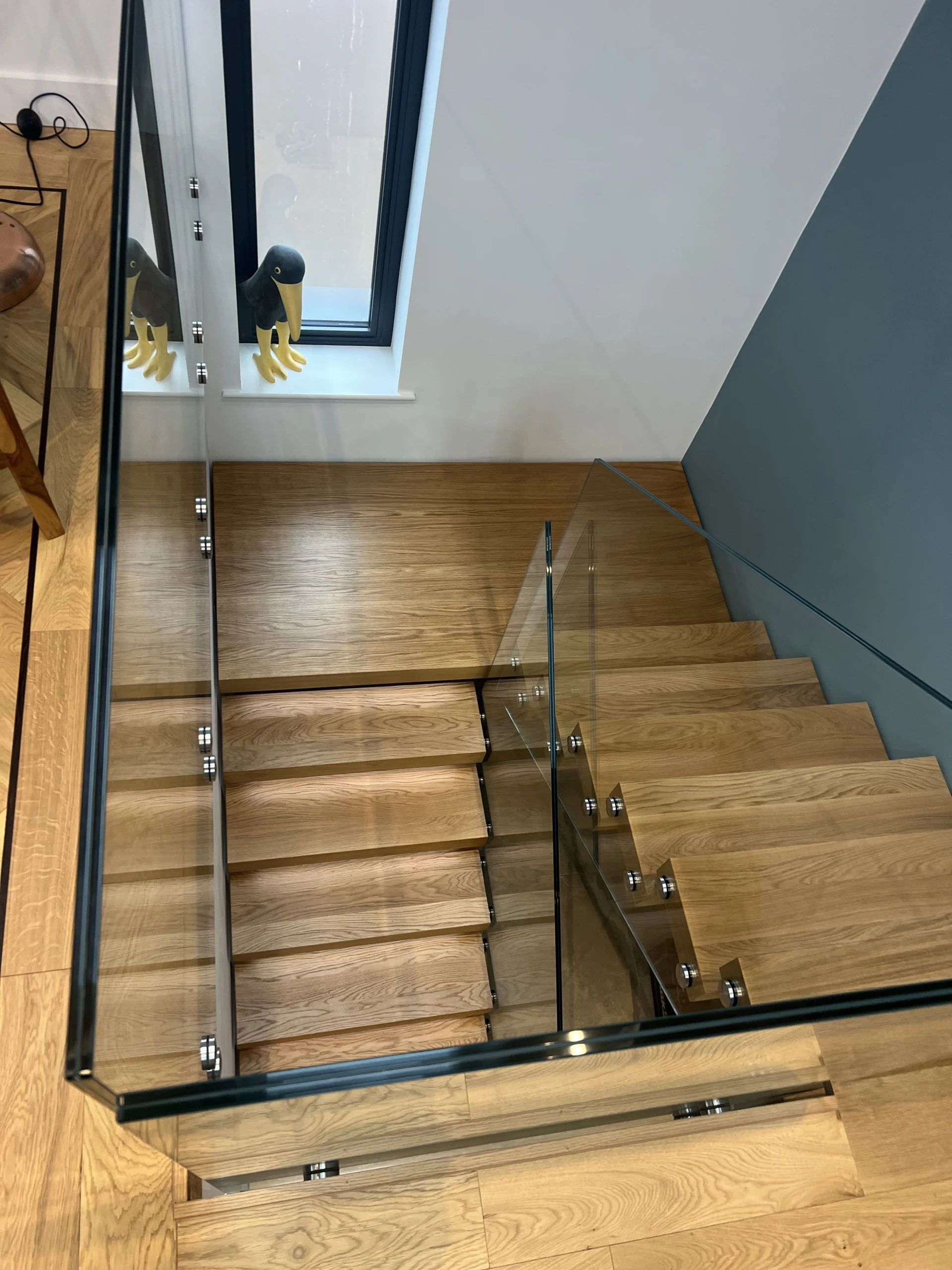
An LED strip concealed on the underside of the handrail, casting light downward onto the balustrade and treads from the top of the flight. Handrail lighting is particularly effective on frameless glass balustrade installations — the light reflects through the glass and illuminates the entire balustrade run, creating a distinctive line of light that defines the staircase edge at night.
Specification requires an LED strip with a continuous diffuser and a handrail profile deep enough to conceal the fitting. On a standard 42.4mm stainless steel handrail tube, this means either specifying a handrail with an integrated LED channel (available from specialist suppliers) or accepting a visible strip underneath a round-section handrail. On a bespoke fabricated handrail, the channel is routed into the handrail during manufacture.
For double-height stairwells — particularly in Victorian and Edwardian properties with deep landings above the entrance hall — a feature pendant or chandelier hanging into the stairwell void is the traditional specification. The fitting can be anything from a restored period chandelier to a contemporary cluster pendant. Scale matters: the fitting should read as substantial from both ground floor and landing viewpoints, and should be hung so the lowest point clears the landing edge by at least 2.1m for safe passing clearance.
This is also the single highest-impact lighting intervention in a period home — a well-chosen stairwell pendant acts as the focal point for both the hall and the landing.
Installation and maintenance: A stairwell pendant is typically inaccessible without scaffold tower or specialist MEWP access — the fitting hangs above the stairs, which cannot be used as a ladder platform. Specify LED lamps with 25,000+ hour life rather than halogen or incandescent to minimise re-lamping cycles. Fit a winch or lowering mechanism if the fitting needs regular cleaning or lamp changes.
Surface-mounted wall lights — either traditional sconces for period homes or minimal contemporary wall-wash fittings for modern interiors. Wall sconces sit between the drama of recessed spotlights and the more ambient feel of a pendant, and work well on straight flights where a run of matching fittings creates visual rhythm. Mounting height is critical: at 1.5–1.7m above each tread gives even coverage without glare; lower than 1.4m creates glare directly into the eyes of a descending user.
For period properties, wall sconces often replace fittings that were originally gas lamps or early electric wall lights — electrical box positions may already exist in the wall, simplifying installation.
Recessed downlights in the stairwell ceiling — the workhorse lighting specification that provides the primary illumination layer above any decorative or accent lighting. For most staircases, three to five fire-rated downlights in the ceiling above the flight deliver the 100+ lux tread illumination required for safe use. This layer is supplementary to the aesthetic lighting — it does the work, the other fittings create the atmosphere.
Fire-rated is non-negotiable: ceiling downlights in a staircase penetrate a fire-resisting ceiling (since the stair is usually the protected escape route), and must be certified to maintain the ceiling's fire rating after installation. Standard non-fire-rated downlights create a fire risk and will fail building control sign-off.
Fire-rated downlights are mandatoryUnder Building Regulations Part B, any downlight installed into a ceiling that forms part of a fire-resisting compartment (including most staircase ceilings in two-storey or higher houses) must maintain the ceiling's fire rating — minimum 30 minutes, often 60 minutes. Use only downlights certified to BS 476 or BS EN 1365. Non-fire-rated downlights in a stair ceiling are a serious compliance failure and create a direct life-safety risk.
A secondary lighting layer that activates automatically when the staircase is used at night — typically low-level LED strip or recessed nosing lights, triggered by passive infrared sensors at the top and bottom of the flight. The effect is discreet: a very low ambient light level that comes on automatically when someone enters the stair, providing enough illumination to descend safely without needing to find and operate a main light switch.
This is particularly valuable in households with children who use the stairs at night, and in homes with elderly residents where night-time visibility is a safety priority. The low light level — typically 20–40 lux at tread level — is enough to navigate but not so bright that it disturbs sleep patterns or requires dark adaptation on return to bed.

Technical Specifications — Getting the Light Right
Three technical specifications determine whether staircase LED lighting reads as premium or as a DIY add-on: colour temperature, colour rendering index (CRI), and beam angle or diffusion. The wrong choice on any of the three undermines the entire installation regardless of budget.
Colour Temperature (Kelvin)
For residential staircase lighting, specify 2700K or 3000K warm white. 2700K matches incandescent/halogen colour temperature and reads as the warmest, most inviting light — right for traditional and period properties. 3000K is very slightly cooler and suits contemporary interiors where timber treads are warm-toned and need a slight contrast. Avoid 4000K (neutral white) and above — 4000K reads as clinical/commercial and destroys the atmosphere in a residential staircase; 5000K+ "daylight" LEDs are completely inappropriate for domestic lighting.
Colour Rendering Index (CRI)
CRI measures how accurately a light source reveals colours compared to natural daylight (CRI 100). Cheap LED strip comes in at CRI 70–80, which makes warm timber treads look washed-out and grey. For staircase LED specify CRI ≥ 90, ideally CRI 95+ for premium installations. The cost difference is modest; the visual difference is significant, particularly on oak and walnut treads.
Beam Angle & Diffusion
For recessed wall spotlights, asymmetric optics prevent glare. For LED strip on treads and handrails, always specify a frosted or milky diffuser — direct-view of LED dots through clear silicone is visually cheap and uncomfortable to look at.
Factory-Integrated vs Retrofit LED
The single biggest decision on staircase LED is whether to specify it at the design stage of a bespoke staircase or add it retrofit to an existing installation. The outcomes are dramatically different.
LED strip recessed into a machined channel in the tread support. Cables routed inside the steel substructure. Driver located remote. Zero visible fittings, continuous light line, no joints in the strip. Lasts the life of the staircase. Added at design stage: +£600–£1,200 to project cost.
Self-adhesive LED strip fitted to the underside of existing treads. Cable trunking visible along substructure. Visible joints where strip segments meet. Typical failure within 2–3 years. DIY cost £150–£400 but the result looks like what it is: an after-market addition.
If LED is part of the design vision, specify it with the staircase. Continox factory-integrates LED into every staircase where it's specified at the design stage — it's a standard option, not a retrofit service. For complete staircases with LED see our modern staircase range from £7,900.
UK Electrical Compliance — Part P
All staircase lighting installation in the UK falls under Part P of the Building Regulations — the domestic electrical safety requirements. For most standard lighting work (replacing an existing fitting on an existing circuit), a competent DIY installation is legal but notifiable under certain conditions. For any new lighting circuit, any work in special locations, or any consumer unit changes, the work must be carried out by a registered electrician (Part P competent person scheme) and certified.
On bespoke staircase installations with factory-integrated LED, Continox supplies the LED system with 12V or 24V DC output — the low-voltage side does not fall under Part P. The mains-side connection to the LED driver does, and should be carried out by the homeowner's electrician as part of the wider installation. This is standard practice and keeps responsibility appropriately split.
Staircase Lighting Cost Guide
Staircase Lighting — FAQ
Common questions about staircase lighting specification from UK homeowners and architects.
Free Survey + LED Design
Free on-site survey across the UK, photorealistic 3D visuals with your chosen LED specification, fixed-price quotation within 24 hours. Bespoke staircases with factory-integrated LED from £8,500 — designed, manufactured and installed by Continox.