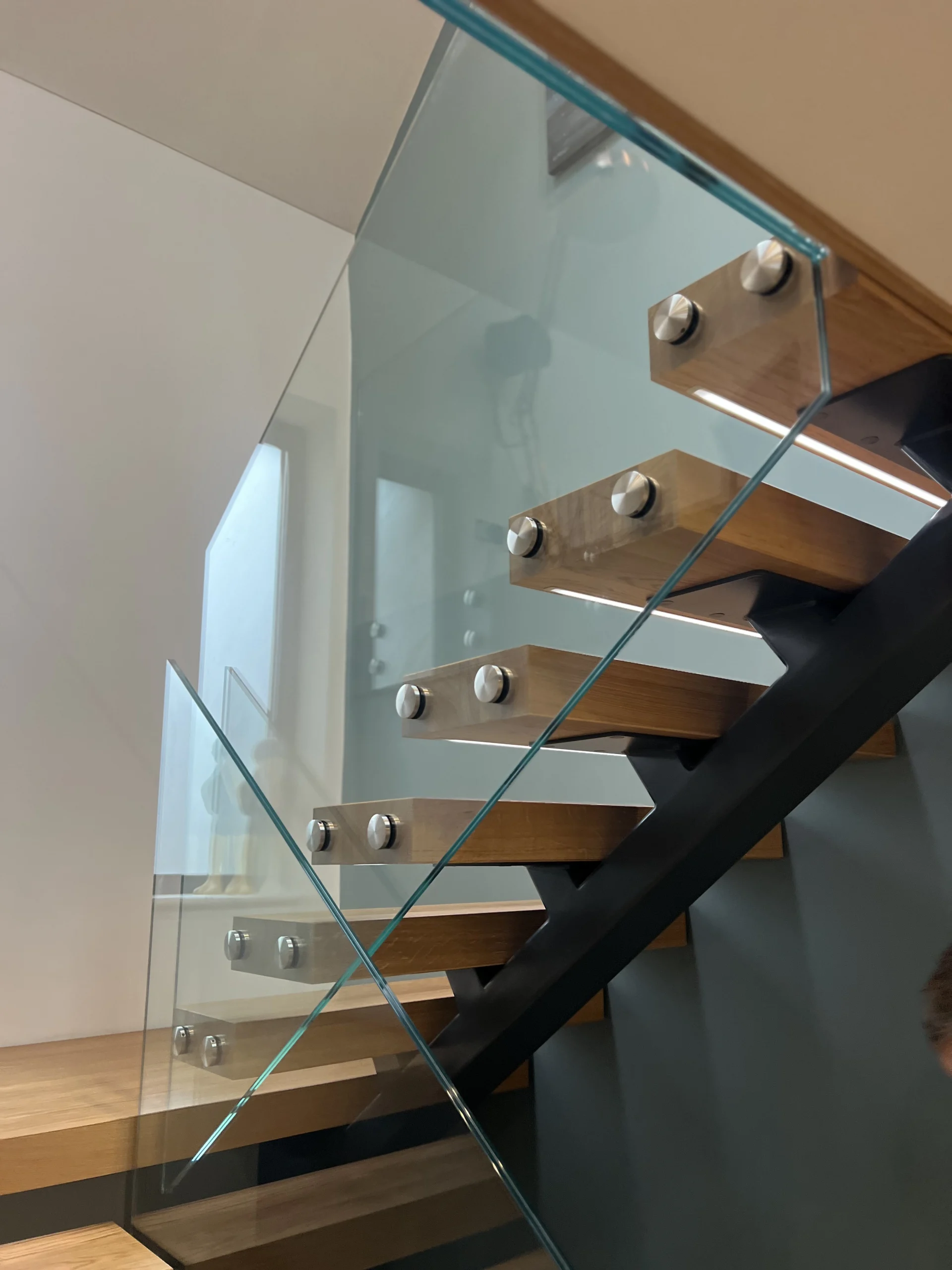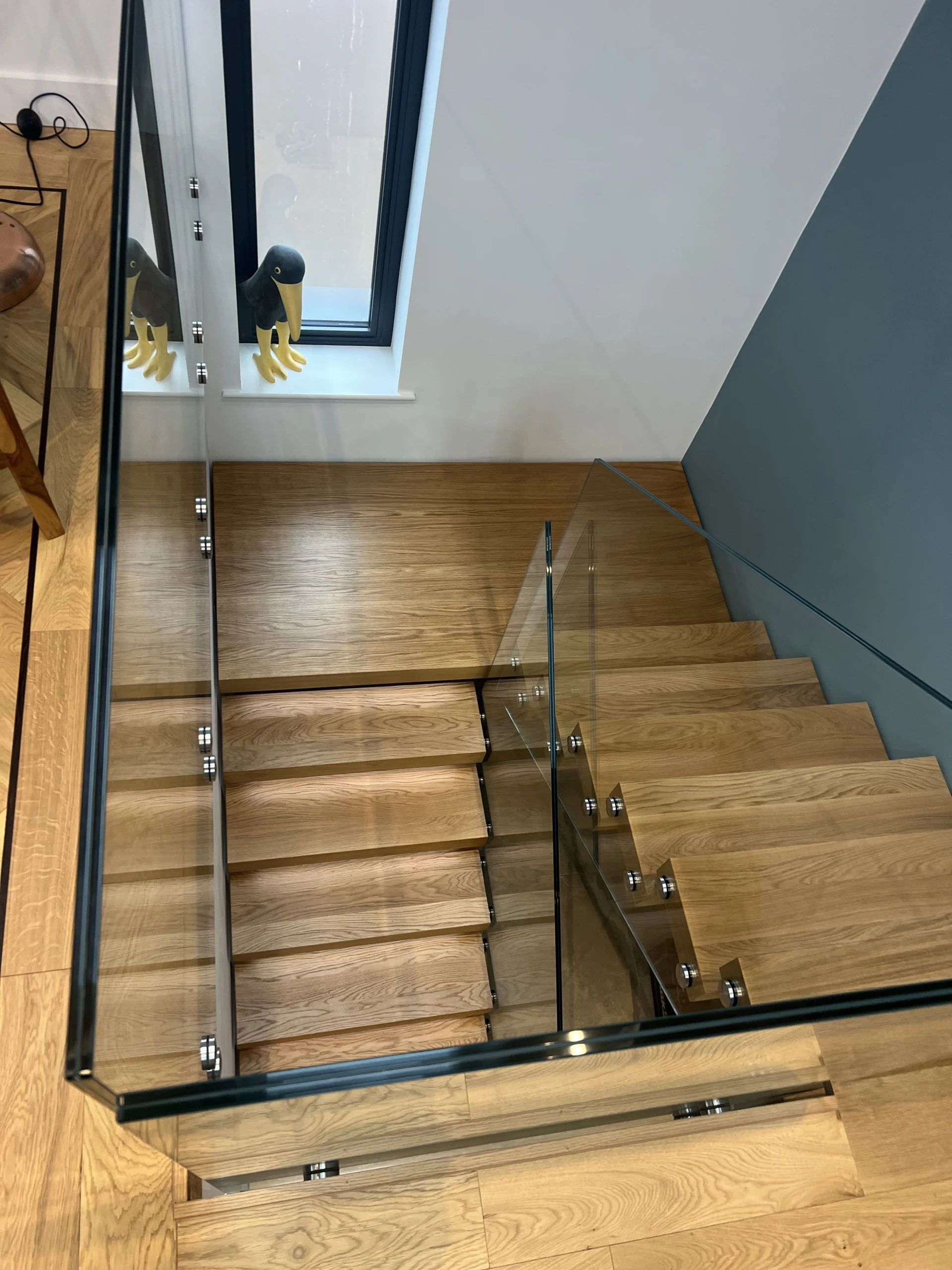

Wood or steel? It is the most common staircase material question homeowners ask — and the most commonly answered with unhelpful generalisations. The truth is that neither material is universally "better." Wood is warmer, quieter, and cheaper at entry level. Steel is stronger, thinner, more durable, and enables designs that wood simply cannot achieve. And in practice, the best staircases in UK homes combine both — steel structure with oak treads, giving you the strength of steel with the warmth of wood underfoot. This guide compares wood and steel across every dimension that actually matters to a UK homeowner: cost, durability, maintenance, design flexibility, sound, fire performance, regulations, and resale value.
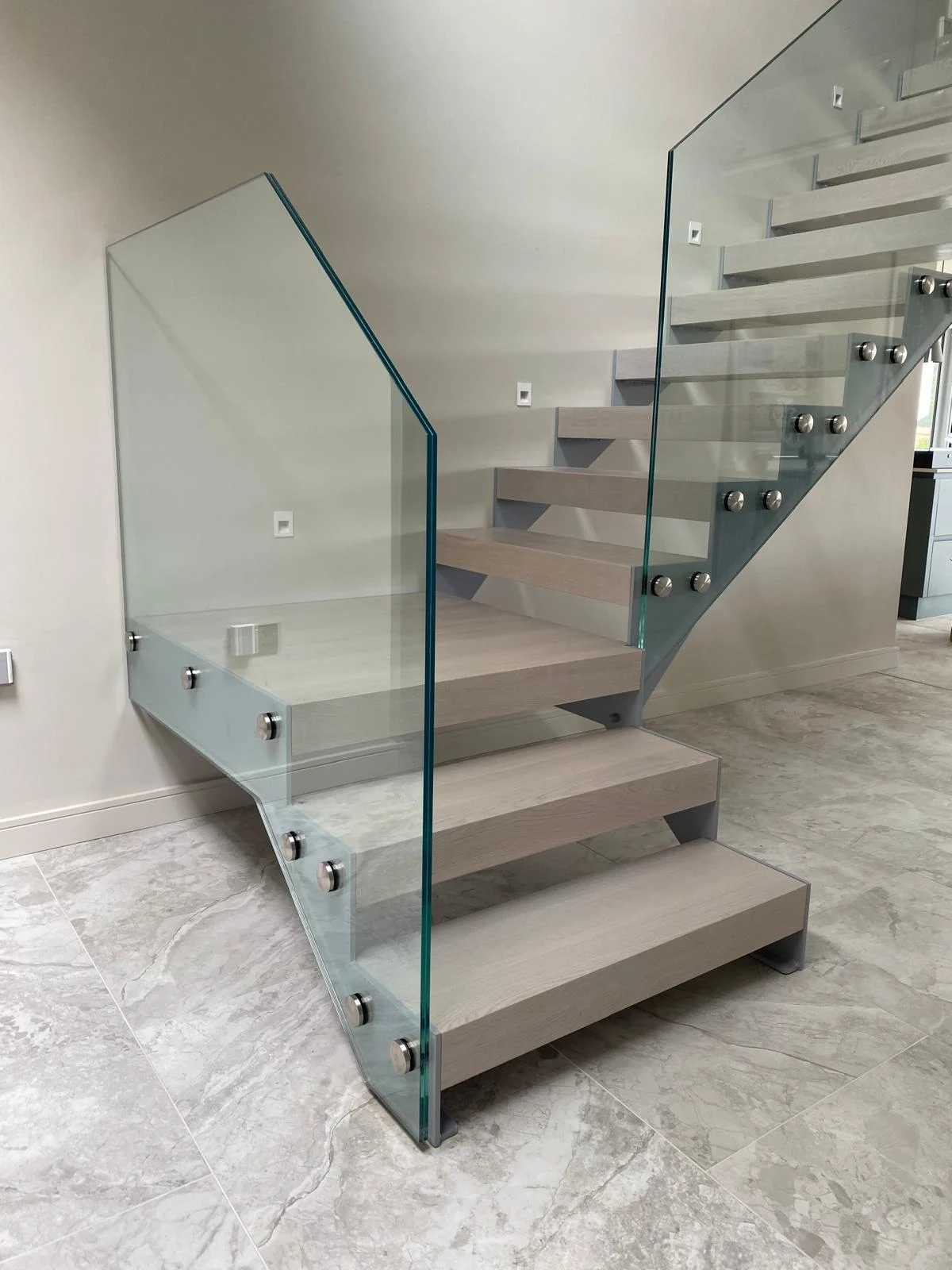
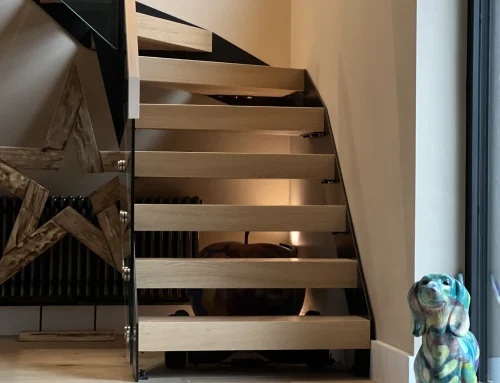
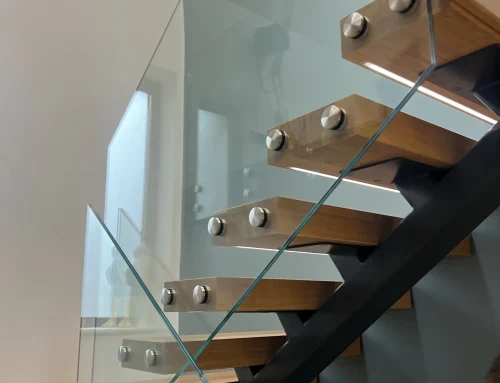
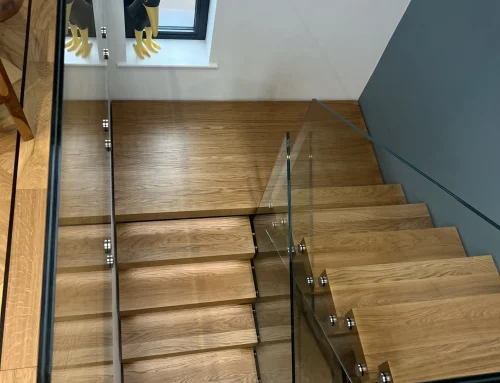
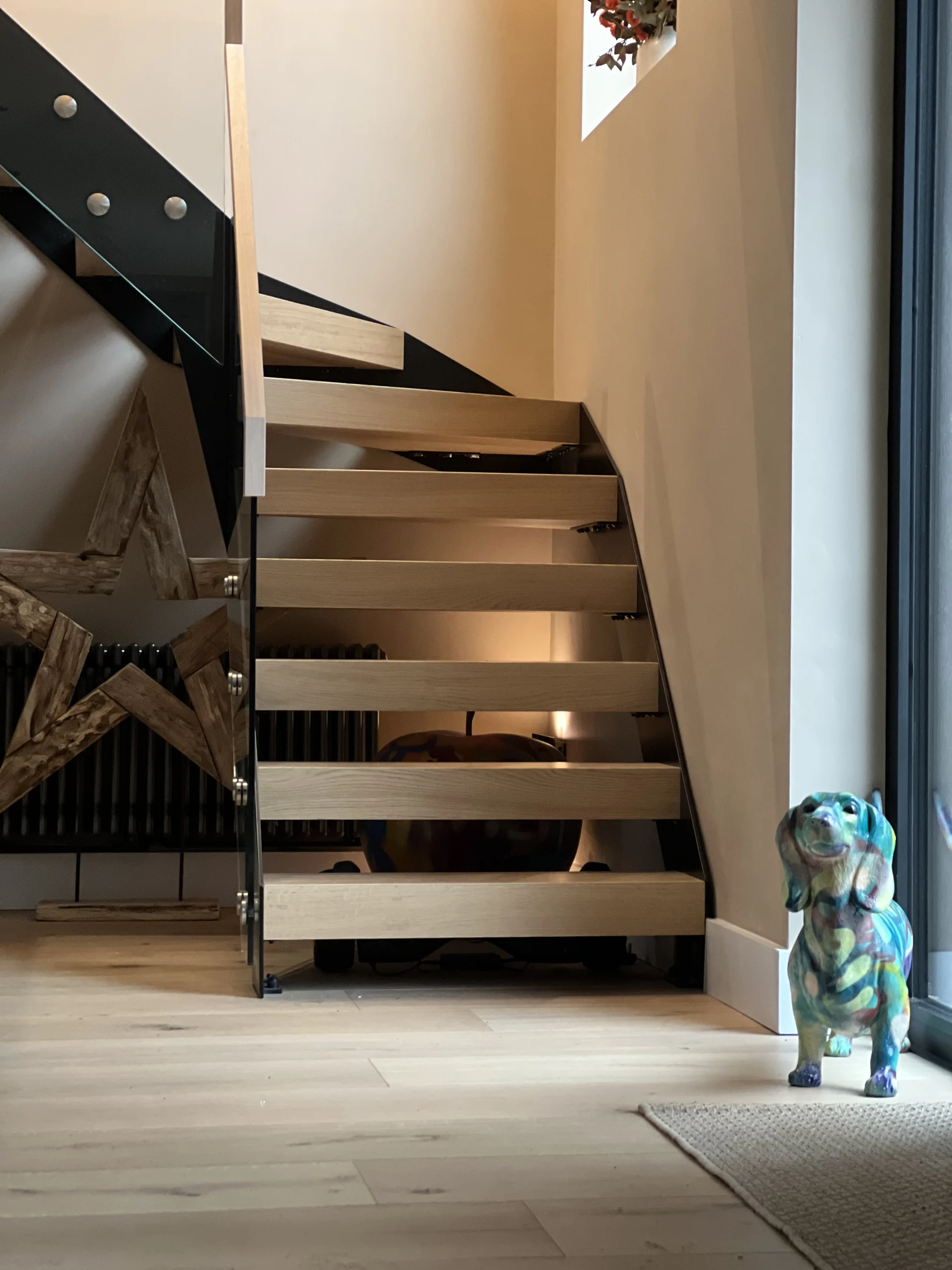
Steel frame with solid oak treads — the hybrid design that dominates the UK bespoke market
A timber staircase costs £1,500–£5,000 and suits traditional homes, budget projects, and enclosed stairwells where the structure is hidden. A bespoke steel staircase (with oak treads) costs from £7,900 and suits open-plan homes, floating designs, loft conversions, and any project where the staircase is a visible design feature. Steel is stronger (enabling thinner profiles and longer unsupported spans), more durable (25–50 year structural life vs periodic refinishing for wood), and inherently fire-resistant (exceeds 30-minute fire rating without protection). Wood is warmer underfoot, acoustically quieter, and has a lower entry price. The best answer for most UK homes in 2026 is the hybrid: a structural steel frame with solid oak treads — giving you steel's strength and design flexibility with wood's warmth and natural beauty.
The Complete Comparison — 15 Factors Side by Side
| Factor | Wood (Timber) | Steel (Powder Coated) |
|---|---|---|
| Entry cost (standard) | £1,500–£5,000 | £4,500+ (all-steel) / £7,900+ (steel+oak) |
| Structural lifespan | 50–100+ years (oak structure) | 25–50+ years (galvanised/powder coated) |
| Finish lifespan | 5–10 years between refinishing | 15–25 years (powder coat) |
| Strength-to-weight ratio | Good — but thicker sections needed | Excellent — thin profiles, long spans |
| Maximum unsupported span | ~1.2m (hardwood tread) | 2.5m+ (steel stringer) |
| Floating staircase | Difficult — needs hidden steel support | Native — cantilever and mono-stringer designs |
| Open riser designs | Possible but structurally limited | Standard — steel frame supports open treads |
| Weight | Lighter (oak ~700kg/m³) | Heavier (steel ~7,850kg/m³) |
| Sound / acoustics | Quieter — wood absorbs vibration | Can resonate — needs rubber damping or wood cladding |
| Warmth underfoot | Warm — natural thermal insulation | Cold — metal conducts heat away from skin |
| Fire resistance | Combustible — requires treatment for ratings | Non-combustible — exceeds 30-min inherently |
| Moisture resistance | Susceptible — warping, swelling, cupping | Resistant — galvanised/powder coated |
| Scratch / dent resistance | Moderate — oak dents, softwood marks easily | High — powder coat resists impact |
| Environmental impact | Renewable (FSC-certified) — carbon-storing | Recyclable — high embodied energy at production |
| Design flexibility | Curved — but expensive. Limited spans. | Almost unlimited — floating, helical, cantilever |
Cost Comparison — Real 2026 UK Prices
| Staircase Type | All-Wood | Steel + Oak (Bespoke) |
|---|---|---|
| Straight flight (standard) | £1,500–£3,000 | From £7,900 (floating) |
| Quarter-turn winder | £2,000–£4,000 | From £8,500 |
| U-shaped switchback | £3,000–£6,000 | From £9,500 (central spine) |
| Spiral | £3,000–£6,000 (timber spiral rare) | From £8,000 |
| Helical | £8,000–£15,000 (complex joinery) | From £11,500 |
| Glass balustrade add-on | From £350/m (framed) | From £450/m (frameless) |
Wood wins decisively on entry price — a standard softwood staircase at £1,500 is a fraction of a bespoke steel design. But the comparison is misleading because they serve different purposes. A softwood staircase is a functional building element — hidden behind walls, carpeted, and rarely seen. A bespoke steel-and-oak staircase is an architectural feature — visible, celebrated, and designed to define the character of the home. The real comparison is between a premium all-timber staircase (solid oak, £4,000–£6,000) and a bespoke steel-and-oak design (£7,900–£11,500), where the price gap narrows and the performance gap widens in steel's favour.
For full staircase pricing across all types, see our bespoke staircase cost guide.
 Traditional oak — warm, classic, suits period properties
 Solid oak treads — warmth underfoot, natural grain beauty
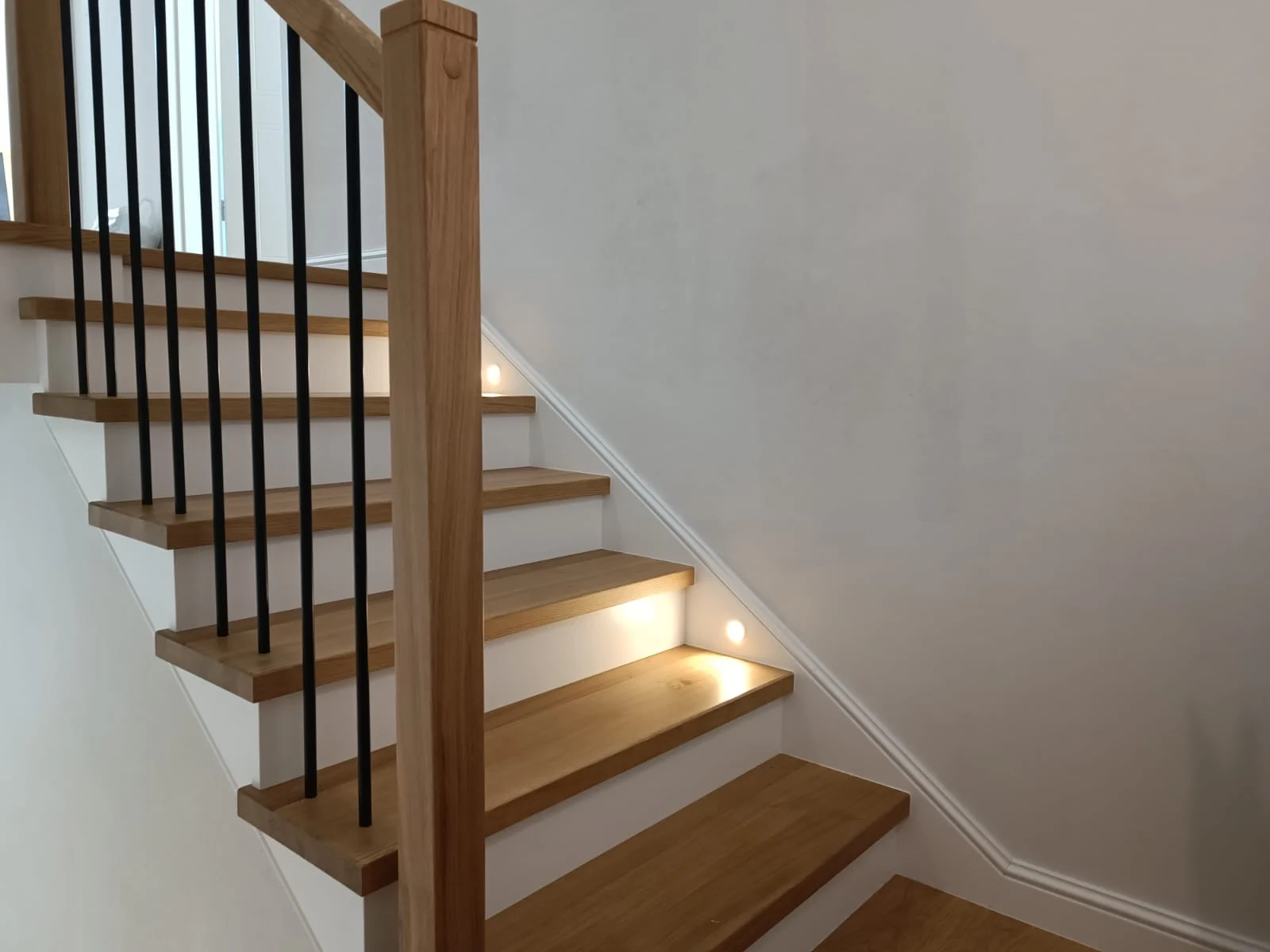 Oak with LED lighting — wood modernised with contemporary accents
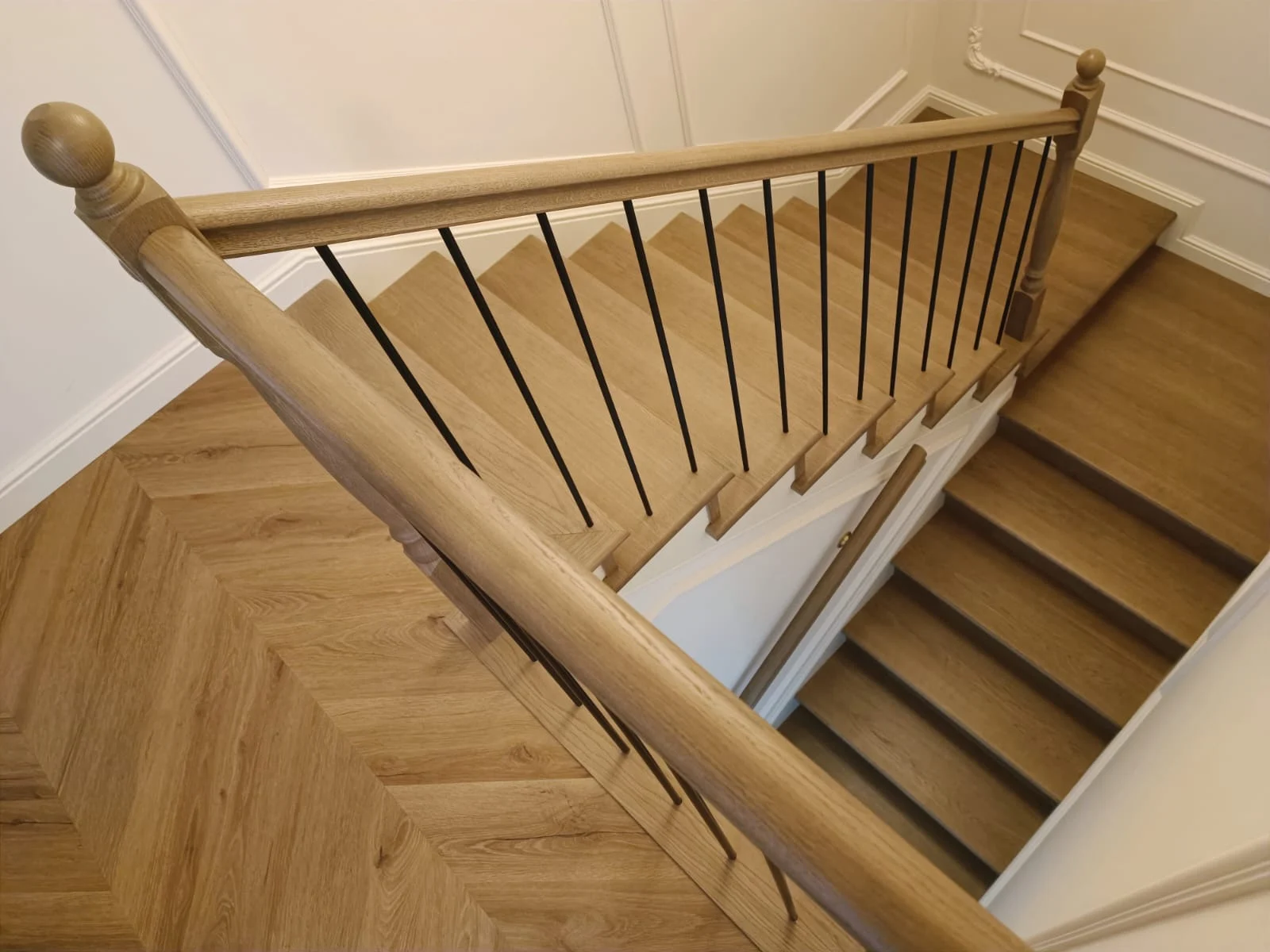
 Oak + black metal spindles — the modern-traditional hybrid
Durability — What Lasts Longer in a Real Home?
Structurally, both materials last decades. A well-built oak staircase can remain structurally sound for 100+ years — many Georgian and Victorian staircases are still in service. A structural steel frame with appropriate corrosion protection (powder coat or galvanising) has a service life of 25–50+ years before any attention is needed.
The difference is in the finish. Wood surfaces — treads, risers, handrails — take physical punishment from shoes, furniture, pets, and daily use. Oak treads in a family home typically need refinishing (sanding and re-oiling) every 5–10 years to maintain their appearance. Softwood treads wear faster and show marks more readily. Powder-coated steel, by contrast, maintains its finish for 15–25 years in an internal environment. The coating is harder than wood and resistant to scuffing, scratching, and impact.
In practice, the most durable domestic staircase is the hybrid: a structural steel frame (which never needs refinishing) with solid oak treads (which can be sanded and refinished multiple times without affecting the structure). When the treads eventually show wear, you replace the treads alone — the steel frame underneath is untouched.
Design Flexibility — What Each Material Can Do
What steel can do that wood cannot
Floating (cantilever) staircases — treads projecting from a wall with no visible support. This requires concealed steel fixings or a hidden mono-stringer; wood alone cannot achieve the cantilever spans needed. Central spine staircases — a single steel beam running beneath the treads, creating a sculptural centrepiece. Open-riser designs with long unsupported tread spans — steel supports treads at spans of 900mm+ without visible stringers. Helical curves with thin, elegant profiles — curved steel stringers can be fabricated to precise radii that would require massively thick timber sections.
What wood can do that steel cannot
Warmth. Steel is cold to the touch — anyone walking barefoot on steel treads feels it immediately. This is why steel staircases almost always have timber or stone treads — the steel provides the structure, and the wood provides the surface you actually walk on. Acoustic comfort — wood absorbs vibration and impact noise, while steel can resonate and amplify footfall. In properties with open-plan layouts where the staircase is adjacent to living spaces, this matters.
For design inspiration across both materials, see our modern staircase gallery and our staircase ideas page.
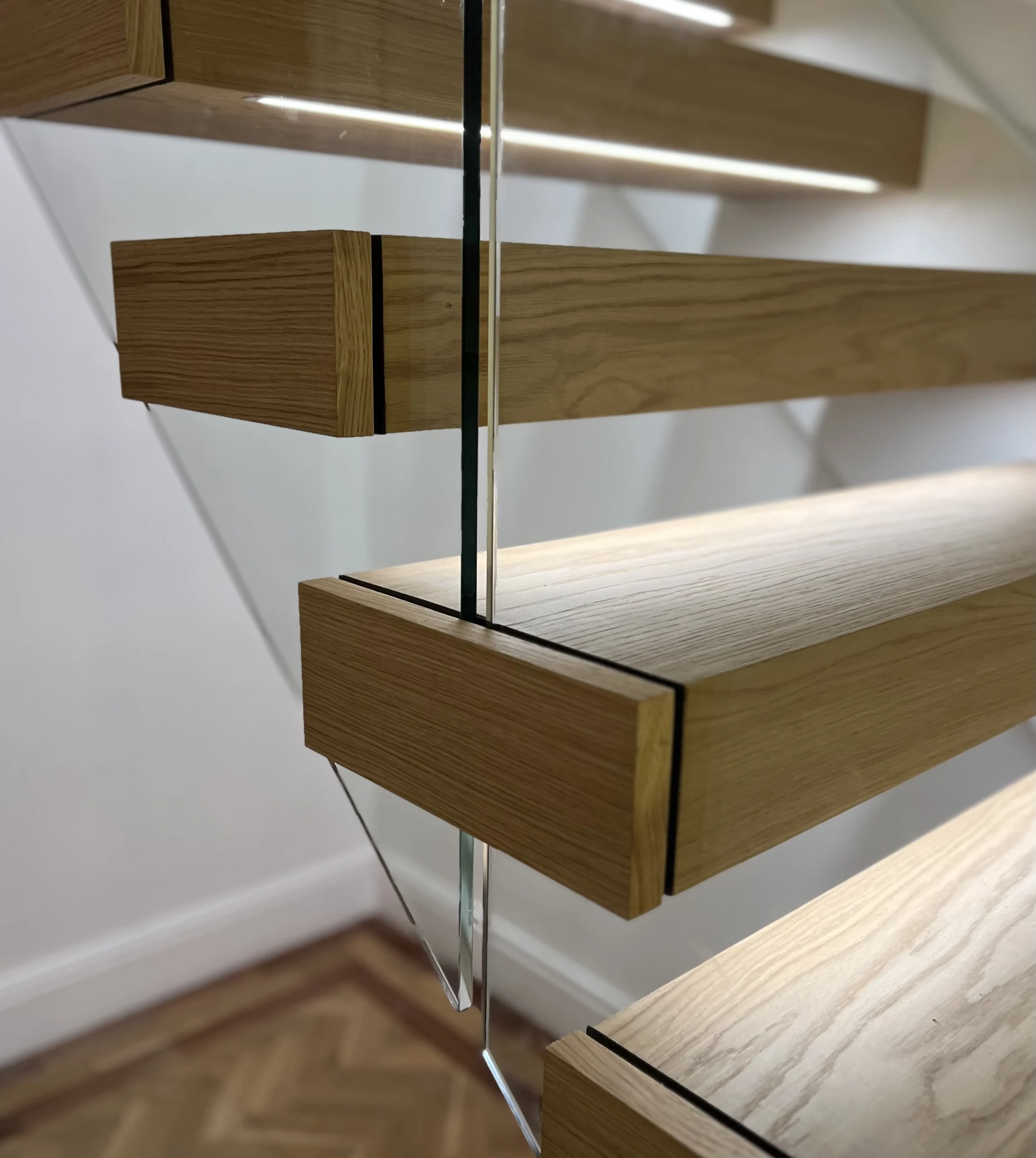 Floating staircase — only possible with a structural steel frame
 Central spine — steel does the work, oak provides the warmth
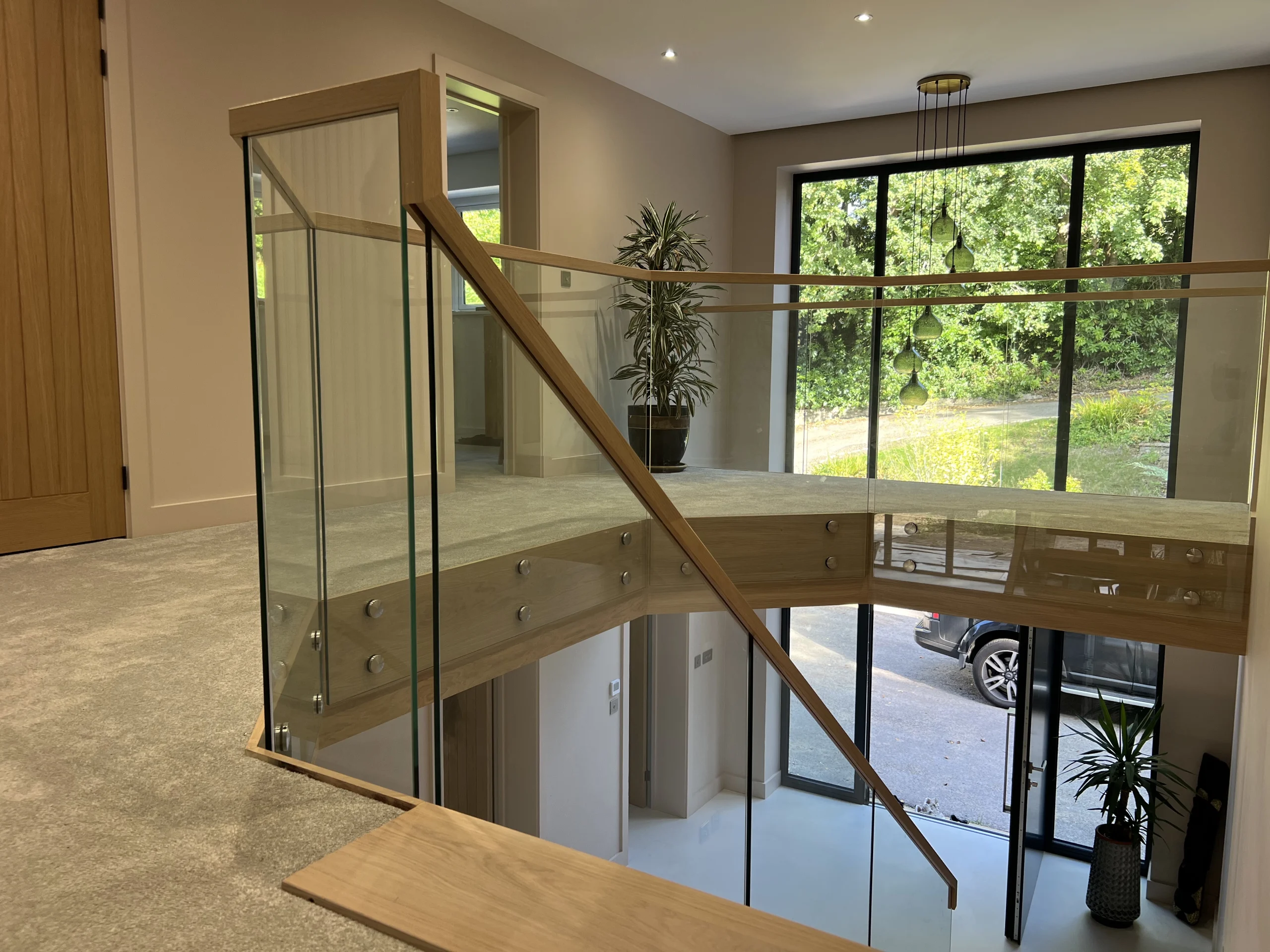 Steel + glass — the open-plan combination wood cannot replicate
 LED integration — steel's thin profiles create the floating effect
Fire Performance — A Clear Winner
Steel wins this category decisively. Structural steel is non-combustible and inherently exceeds the 30-minute fire resistance requirement for domestic staircases without any additional fire protection. It does not contribute to fire spread, and it maintains its structural integrity at temperatures well above those encountered in a domestic fire for the first 30 minutes.
Wood is combustible. A timber staircase will eventually ignite and burn, contributing fuel to a fire and potentially losing structural integrity. Fire-retardant treatments can slow ignition and surface spread, but they do not make wood non-combustible. In a three-storey property (including loft conversions), where the staircase is the primary means of escape, the fire performance of the staircase structure directly affects the safety of the occupants.
This is one of the reasons why steel-framed staircases are increasingly specified in loft conversions and multi-storey refurbishments — the steel frame provides inherent fire resistance that a timber structure cannot match. For full fire safety requirements in loft conversions, see our loft staircase regulations guide.
Sound and Comfort — Where Wood Wins
This is wood's strongest advantage over steel in a domestic setting. Wood is a natural acoustic absorber — it dampens vibration and reduces impact noise. Walking on solid oak treads is quiet, warm, and comfortable. Steel treads, by contrast, can resonate and transmit vibration — a particularly noticeable issue in open-plan homes where the staircase is adjacent to living and sleeping spaces.
The solution in steel staircase design is to add timber treads. Solid oak treads (40mm thick) mounted on a steel frame with rubber isolation gaskets between the wood and steel eliminate resonance almost entirely. The result is acoustically indistinguishable from an all-timber staircase — but with the structural performance of steel.
Maintenance — 10-Year Ownership Cost
| Maintenance Item | All-Wood Staircase | Steel + Oak Hybrid |
|---|---|---|
| Annual cleaning | Dust + wood-safe cleaner | Dust + damp cloth (steel) + wood cleaner (treads) |
| Tread refinishing (5–10 yrs) | £400–£800 (sand + re-oil) | £400–£800 (treads only — steel untouched) |
| Structural inspection | Check for woodworm, rot, movement | Check fixings, powder coat condition |
| Balustrade tightening | Spindles loosen — retighten annually | Steel/glass — rarely loosens |
| Squeaks / creaks | Common — wedges, screws, adhesive | Rare — steel does not move |
| Estimated 10-year maintenance cost | £800–£1,500 | £400–£800 |
When to Choose All-Wood
An all-timber staircase is the right choice in the following situations. Your budget is under £5,000 — no bespoke steel option exists at this price point. The staircase is enclosed between walls and will never be seen as a design feature — spending on a steel structure that is hidden makes no sense. The property is a period home where the character demands traditional joinery — turned spindles, newel posts, and solid oak throughout. You are matching an existing timber staircase in a multi-storey property. The project is a straightforward replacement of an existing timber staircase with the same configuration.
When to Choose Steel (or Steel + Oak)
A steel-framed staircase is the right choice in the following situations. The staircase is visible from the main living area — this is where the design impact of steel justifies the investment. You want a floating, cantilever, or central spine design — these are not achievable in wood alone. The property is open-plan — steel's thinner profiles and glass balustrade compatibility keep the staircase visually light. You are doing a loft conversion and want inherent fire resistance in the staircase structure. Durability and low maintenance are priorities — the steel frame will outlast a timber frame with less attention. You want glass balustrade — steel is the natural partner for glass, providing the structural framework for frameless or framed panels.
The Hybrid — Why It Dominates the UK Market
The overwhelming majority of bespoke staircases installed in UK homes in 2026 are hybrids: a structural steel frame with solid hardwood treads. This is not a compromise — it is the best of both materials in their natural roles. Steel does what steel does best: provide the structural frame with minimal visual bulk, enable floating and open-riser designs, and deliver inherent fire resistance. Oak does what oak does best: provide a warm, beautiful, comfortable surface to walk on, absorb sound, and create a natural, tactile connection that steel alone cannot offer.
At Continox, every bespoke staircase we manufacture uses this hybrid approach. The S275 structural steel frame is powder coated (any RAL colour), and the solid European oak treads (40mm thick, hard-wax oil finish) are mounted on top. The result is a staircase that performs like steel and feels like wood. For our full range, see our floating staircase, central spine, and single spine designs.
 Oak treads + glass balustrade — the hybrid at its most refined
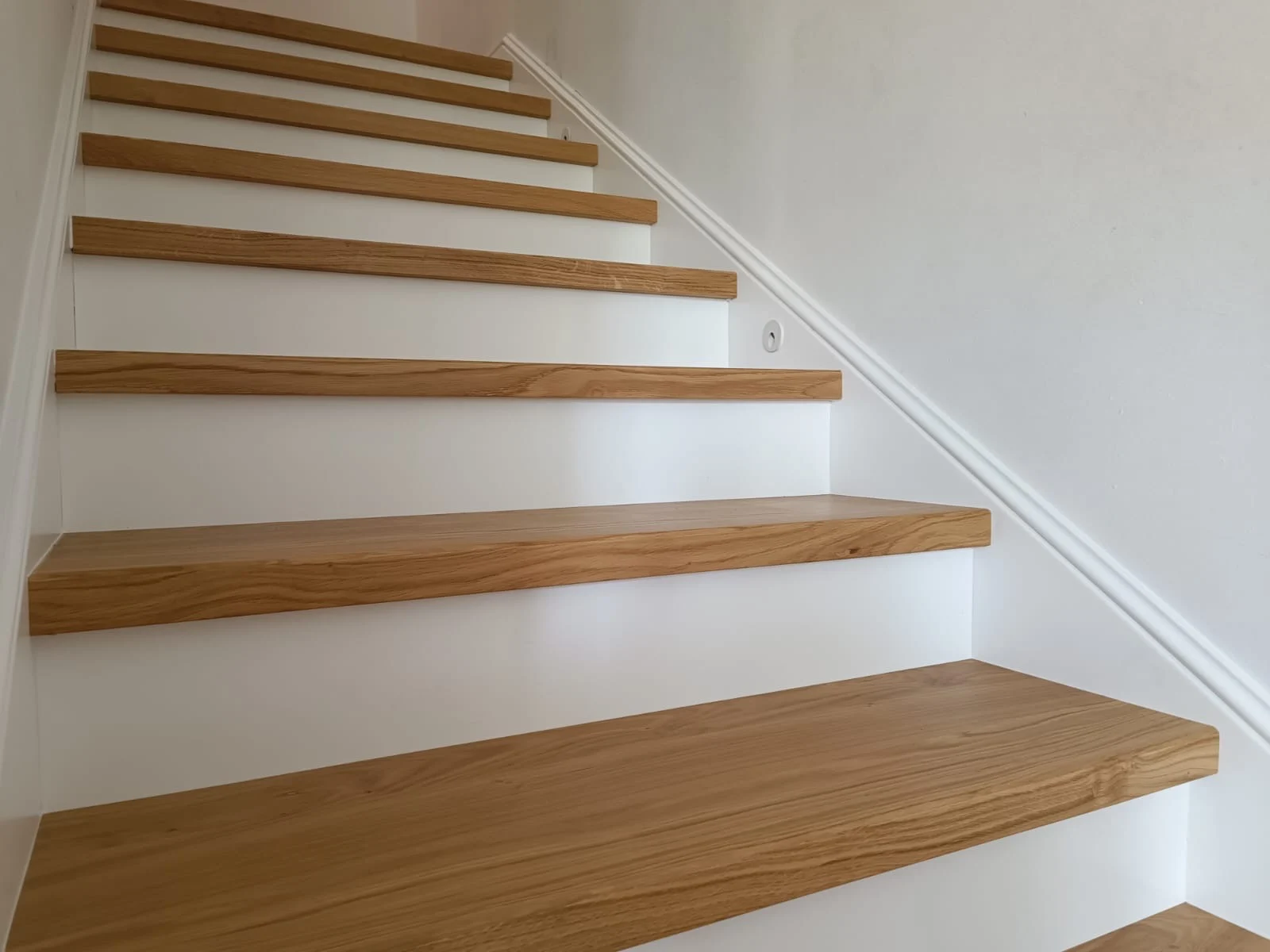 Open risers — steel frame enables the floating oak treads
 Oak + white steel — the hybrid adapts to any colour palette
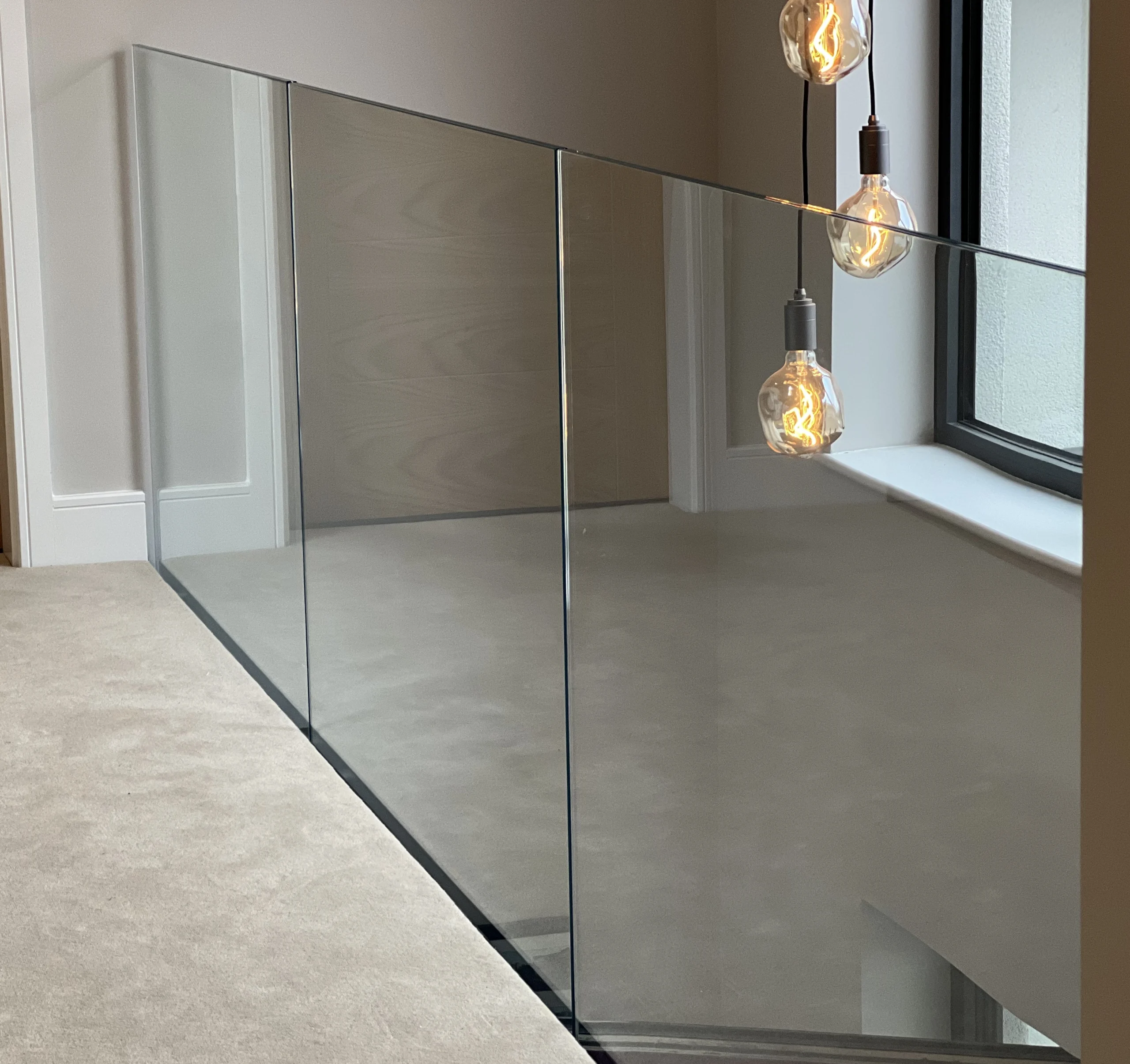 Frameless glass on steel — the premium hybrid specification
Frequently Asked Questions — Wood vs Steel Staircase
Steel is better for strength, design flexibility, fire resistance, and low maintenance. Wood is better for warmth, acoustics, and entry-level cost. The best option for most UK homes is a hybrid: steel structure with oak treads — giving you the performance of steel with the warmth of wood.
A standard timber staircase costs £1,500–£5,000. A bespoke steel-and-oak staircase starts from £7,900 (floating) or £9,500 (central spine with glass balustrade). Premium all-timber staircases (solid oak, bespoke joinery) cost £4,000–£8,000, narrowing the gap with steel hybrids.
Internal steel staircases with a proper powder coat finish do not rust under normal conditions. The powder coat provides a durable barrier against moisture. External steel staircases should be galvanised (zinc coating) or duplex finished (galvanised + powder coated) for maximum corrosion protection. Continox uses a two-stage primer and powder coat system on all internal staircases.
All-steel treads can resonate and transmit vibration. However, steel staircases with solid oak treads (40mm thick) mounted on rubber isolation gaskets are acoustically equivalent to all-timber staircases. The wood absorbs the impact noise, and the rubber prevents vibration transfer to the steel frame. This is standard practice in all Continox bespoke staircases.
Structurally, both can last 50+ years. The difference is in the finish: wood treads need refinishing every 5–10 years (sanding + re-oiling), while powder-coated steel maintains its finish for 15–25 years internally. Over a 30-year period, the total maintenance cost for a steel-and-oak hybrid is approximately half that of an all-timber staircase.
A true floating (cantilever) staircase requires concealed structural steel — the treads appear to float, but they are supported by steel fixings embedded in the wall or a hidden mono-stringer. Wood alone cannot achieve the cantilever spans needed. What looks like an all-wood floating staircase always has steel hidden inside. If the floating aesthetic is your goal, a steel-framed design with visible oak treads is the honest and more cost-effective approach.
Steel is significantly better. Structural steel is non-combustible and inherently exceeds 30-minute fire resistance — the standard required for domestic staircases. Wood is combustible and eventually loses structural integrity in a fire. For loft conversions creating a three-storey property, steel-framed staircases provide inherent fire performance that timber cannot match.
A bespoke steel-and-oak staircase with glass balustrade is the specification that estate agents consistently report as having the highest impact on buyer perception. It signals design quality throughout the property. However, in a period home where the character demands traditional joinery, a premium all-oak staircase can be equally impactful. Match the staircase material to the property — that is what adds value.
Ready to Choose Your Staircase Material?
Continox designs and manufactures bespoke steel-and-oak staircases — floating, central spine, and single spine designs with glass balustrade. The hybrid that gives you the best of both materials. Based in Gosport, Hampshire.