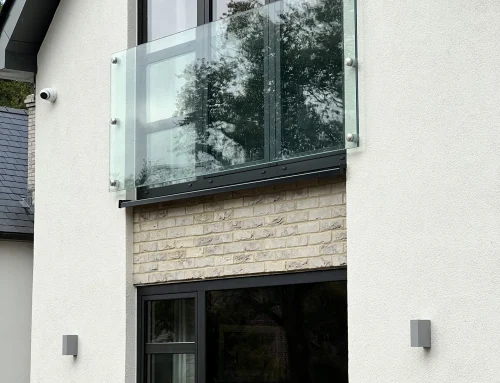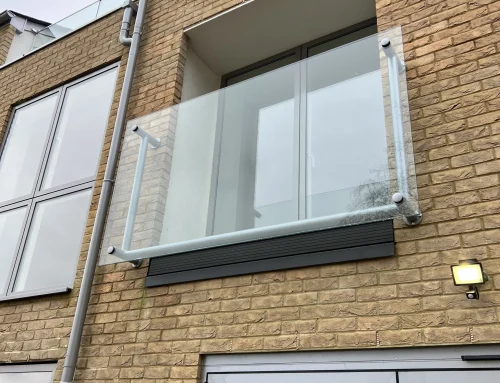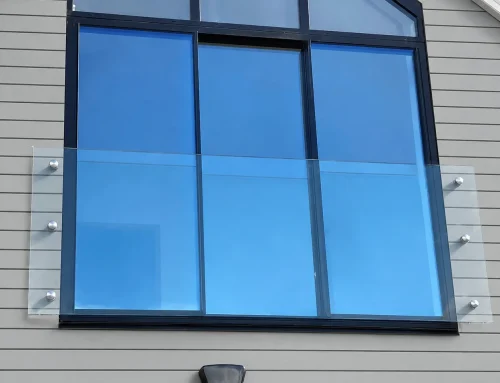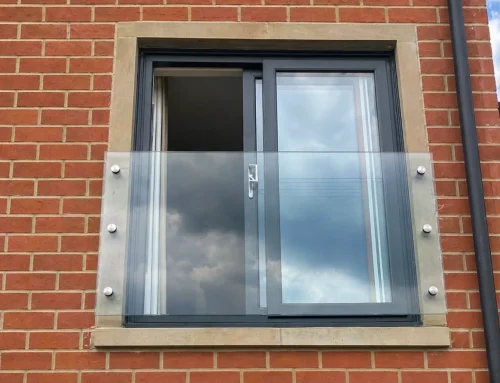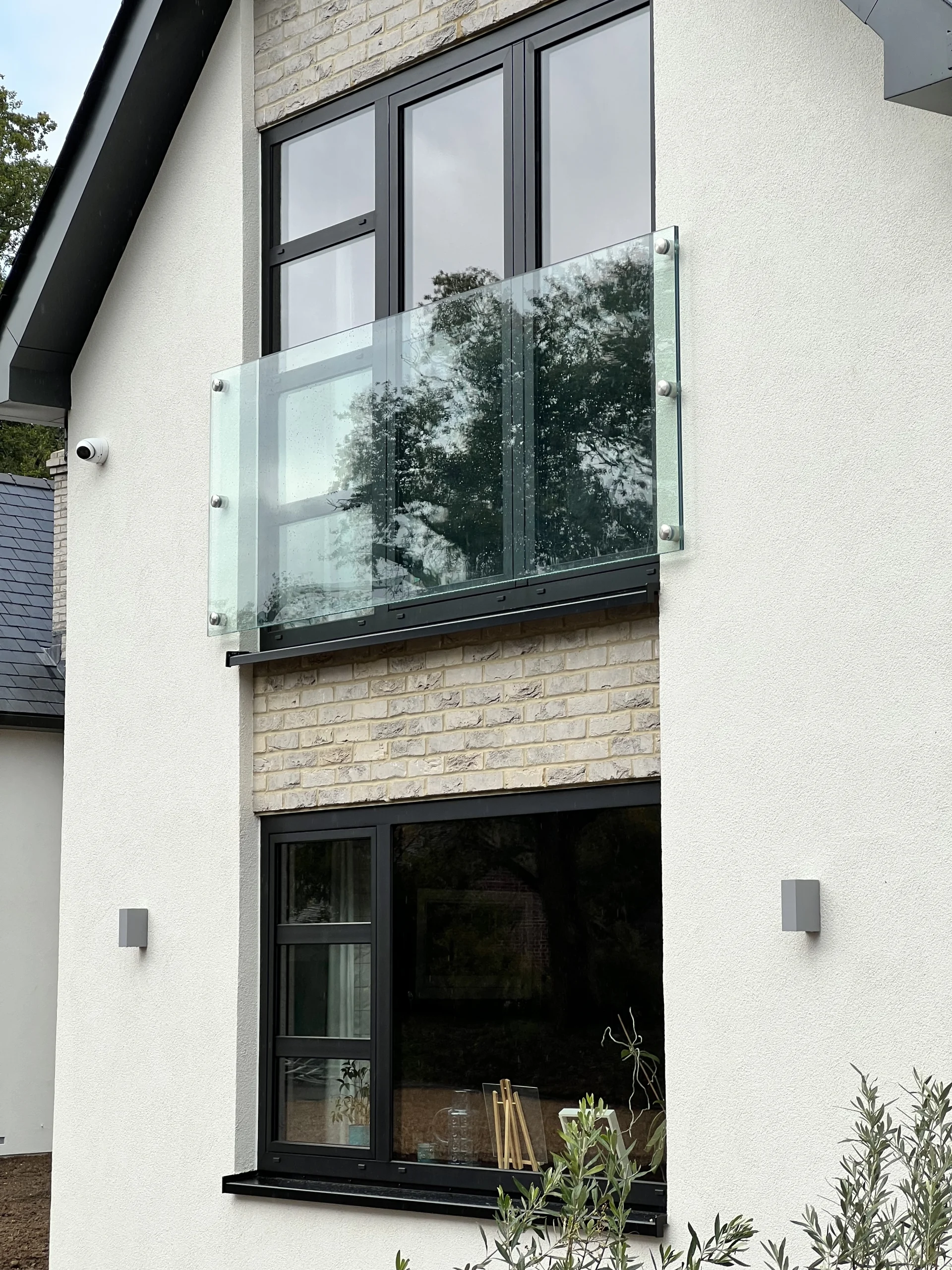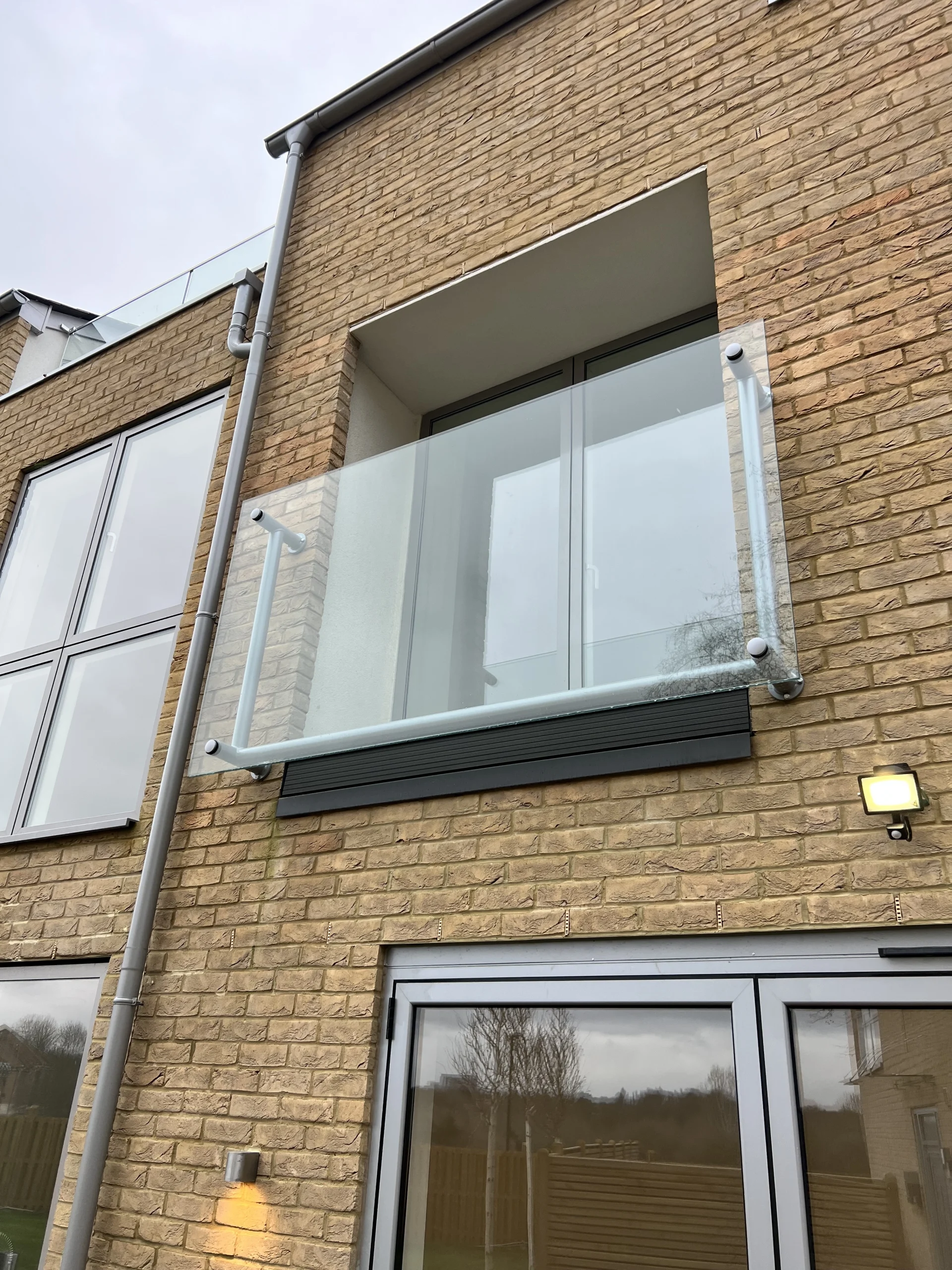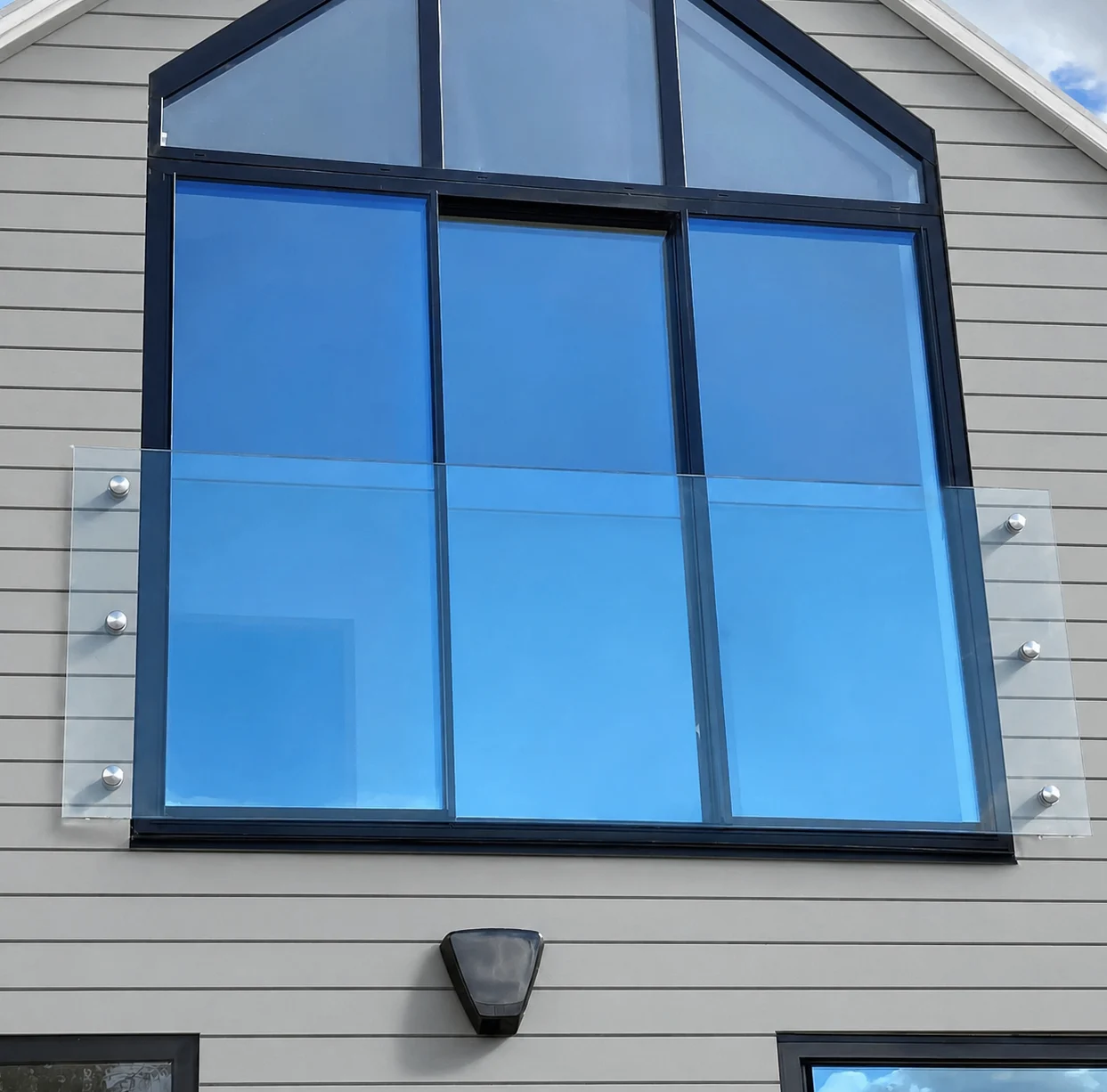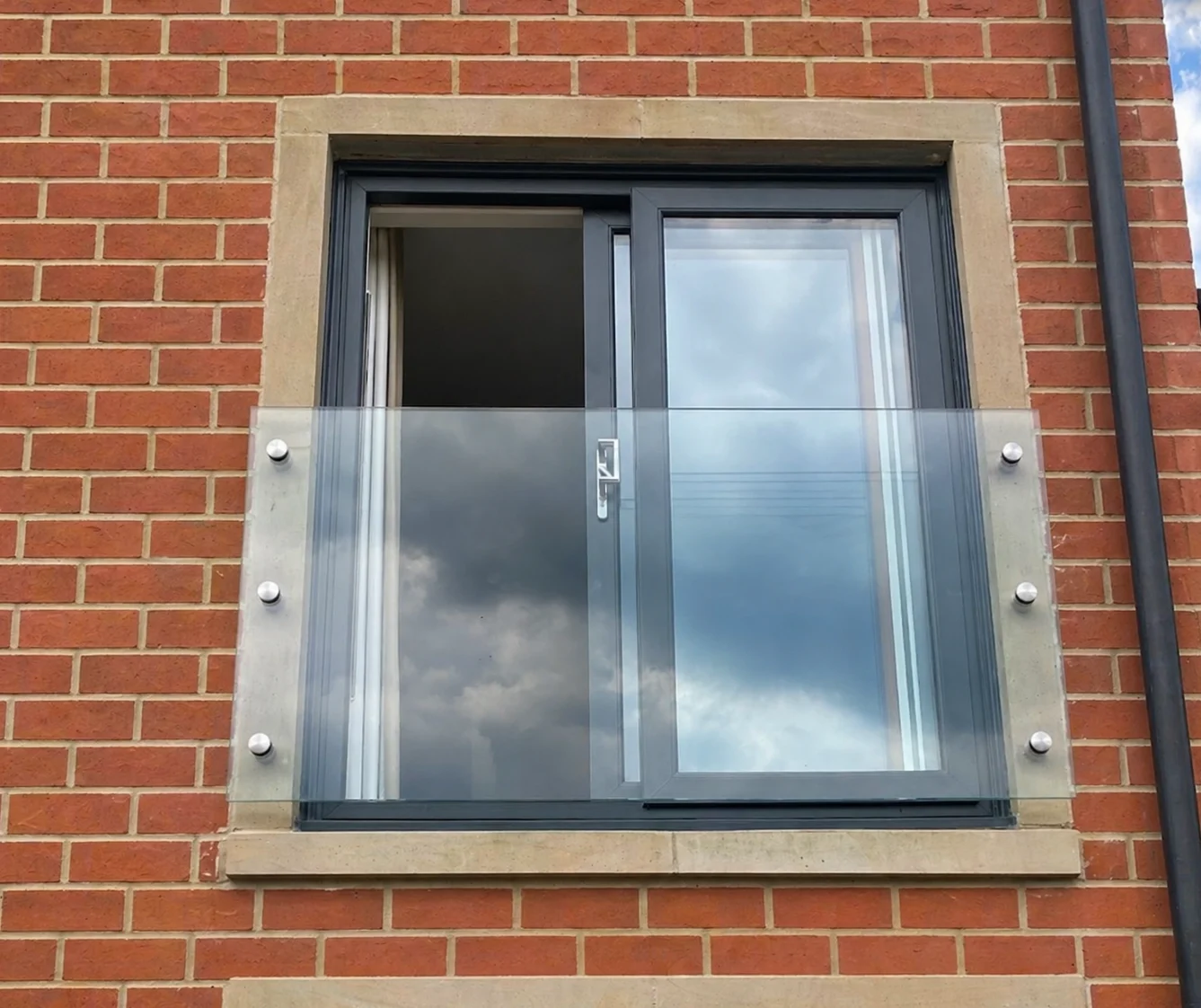

Bournemouth's coastal setting — sea views, abundant natural light and a strong seaside architectural tradition — is the ideal environment for a glass balustrade installation. Whether the application is a seafront balcony with views over the English Channel, an open-plan staircase in a Westbourne townhouse or a poolside terrace in Canford Cliffs, glass delivers a finish that traditional timber or powder-coated metal railings cannot match. Here are six reasons Bournemouth homeowners are specifying glass balustrades — with the technical detail, pricing and compliance standards that matter for coastal installations.
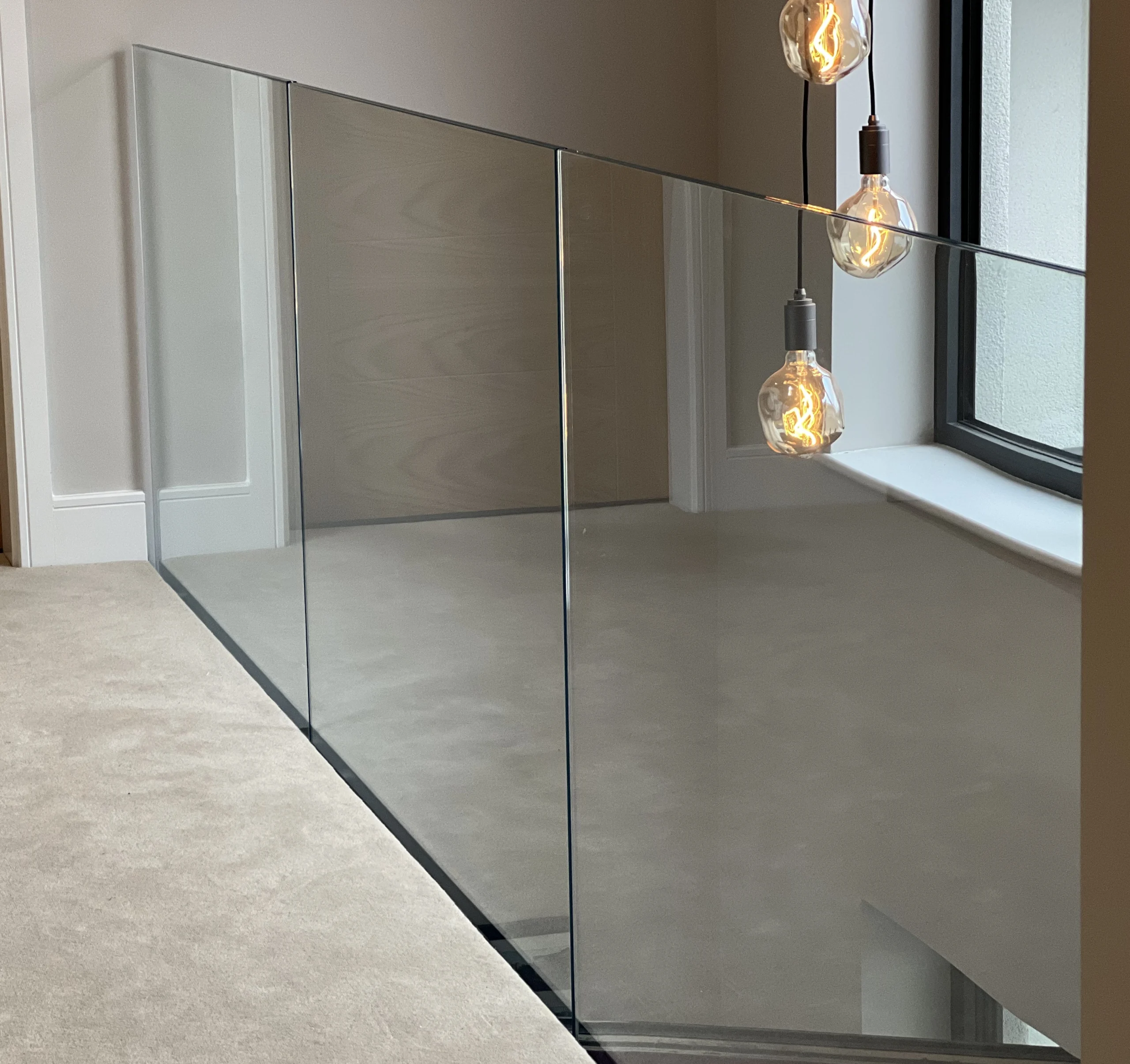
Frameless glass balustrade installation by Continox — coastal residential property, toughened & laminated glass specification.
6 Reasons to Choose Glass Balustrades for Your Bournemouth Home
For properties with views over Bournemouth Bay, Poole Harbour or the Isle of Wight, the single most important feature of any balustrade is that it does not interrupt the view. A frameless glass balustrade is, in practical terms, invisible from most angles — the only visible elements are the recessed base channel at floor level and a slim handrail or top rail (or none at all, with an infill-only specification).
By comparison, a traditional post-and-infill metal balustrade places a vertical element every 900–1200mm across the run — which, when viewed from an angle, creates a near-continuous visual barrier. Timber balustrades are worse still: wider posts, heavier rails, and typically a spindle infill that effectively fills the field of view. For any Bournemouth property where the view is a significant feature of the home, a frameless glass specification is the correct starting point.


Glass balustrades transmit light. A solid or spindle balustrade does not. In interior applications — staircases, landings, mezzanine edges — this difference is immediately noticeable: a glass balustrade allows daylight from a stairwell window or rooflight to reach the floor below, rather than being blocked at the balustrade line. In properties with a central staircase core, this can transform the quality of light on the ground floor.
For Bournemouth homes — where south-facing aspects and high levels of coastal daylight are a defining feature — glass balustrades maximise the benefit. The standard glass specification (clear toughened) transmits approximately 90% of visible light. For specifications where absolute clarity is the priority, low-iron glass (Pilkington Optiwhite or equivalent) removes the faint green tint of standard float glass entirely — particularly noticeable on thicker panels and longer runs.

Interior glass balustrade — natural light transmission on staircase, Continox installation.
Salt-laden air, driving rain and UV exposure are the three conditions that degrade external balustrade materials on the south coast. Untreated timber warps, splits and requires annual staining or repainting. Standard mild steel rusts where the coating is broken. Even hardwoods require periodic oiling in exposed positions. Glass has none of these problems — it is chemically inert, UV-stable and does not corrode in the marine environment.
Maintenance of a glass balustrade in a coastal setting is straightforward: a periodic rinse with fresh water (most effectively after a period of strong onshore winds that deposit salt on the glass) and an occasional clean with standard glass cleaner. The stainless steel fittings — base channel, standoff bolts, top rail supports — should be specified in grade 316 marine stainless rather than grade 304 for any installation within a few hundred metres of the shoreline. Grade 316 contains molybdenum, which provides significantly improved resistance to chloride pitting corrosion in salt-air environments.
Coastal specification — grade 316 stainlessAll Continox coastal installations specify grade 316 marine stainless steel for base channels, standoffs, posts and all visible fixings as standard. Grade 304 is acceptable inland but will develop surface tea staining in salt-air exposure within 2–3 years. The cost difference is modest and the long-term durability is substantially better.
Glass balustrades are not fragile — the glass specified for a domestic or commercial balustrade application is engineered to take substantially more load than the same system built from timber or aluminium. The standard specification for a frameless external balustrade is 17.5mm toughened and laminated glass: two 8mm toughened panels bonded by a 1.52mm PVB (polyvinyl butyral) interlayer. If the glass is struck hard enough to break, the PVB holds the fragments in place — the panel cracks rather than shattering and falling away.
The structural load requirement under BS 6180:2011 is 0.74 kN/m horizontal load applied to the top of the balustrade for domestic applications, and 3.0 kN/m for commercial applications in areas of crowd loading. A correctly engineered Continox frameless system meets these requirements with a significant safety margin. For balconies at height, or any balustrade where a child could fall, laminated glass is not optional — it is the minimum safe specification.
Full technical detail on glass specifications, heights and load requirements is covered in our UK Glass Balustrade Regulations guide.
Bournemouth's premium residential postcodes — Canford Cliffs, Sandbanks, Westbourne, Talbot Woods — are markets where finish quality materially affects sale price. A frameless glass balustrade on a seafront balcony, a glass-sided staircase in an open-plan reception, or a glass-panelled first-floor landing all read as premium specification to prospective buyers. They also photograph well — important for any property marketed through Rightmove or Zoopla where the first impression is made by the listing images.
The direct impact on sale price is difficult to quantify in isolation, but the indirect effect — reducing time on market, reinforcing a high-specification narrative, and differentiating the property from similar listings — is significant. In a comparison between two otherwise identical properties, the one with frameless glass detailing will consistently present as the higher-specification home. This is the reason architects working on new builds and substantial refurbishments in Bournemouth specify glass balustrades as a matter of course, rather than as an upgrade.
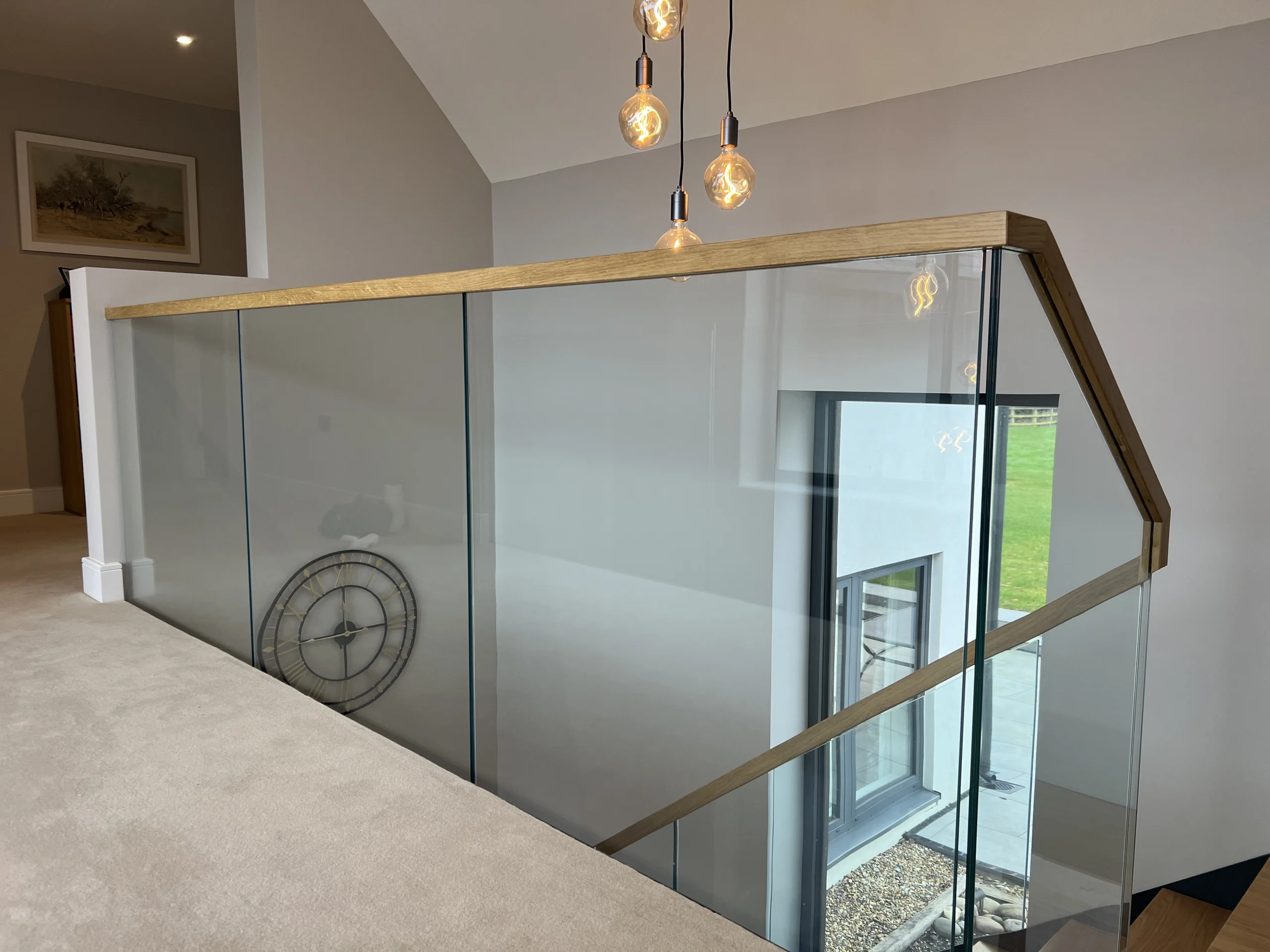
Frameless glass balustrade by Continox — premium residential installation, property value enhancement.
Glass balustrades are not a single product — the category covers three distinct systems, each with a different aesthetic and a different price point. Understanding which system suits which application is the first step in specifying a balustrade that fits the property.
| System | From | Best for |
|---|---|---|
| Frameless (channel-fixed) | £450/m | Sea views, premium spec, contemporary homes |
| Framed (post & top rail) | £350/m | Period properties, traditional interiors |
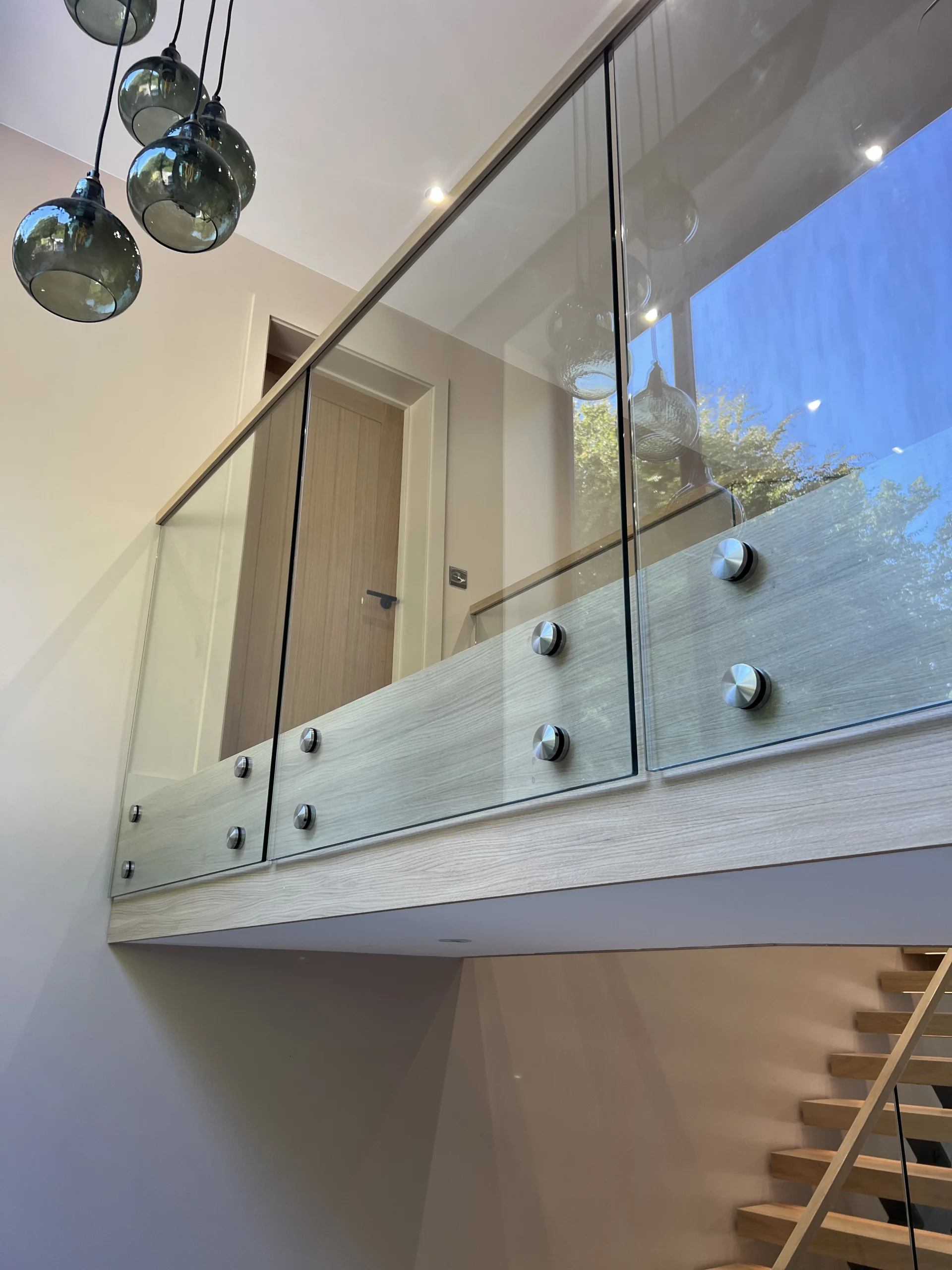
| Posted (standoff buttons) | £400/m | Mid-specification, reduced install complexity |
| Juliet balcony | £650 (1.2m) | Inward-opening doors, fixed-point installations |
All three systems are available with any combination of handrail specification: oak or walnut timber capping, brushed or polished stainless steel, black powder-coated steel, or no top rail at all (channel-only installation). Continox manufactures all components in-house, which allows any combination to be specified without the cost penalty that typically applies to non-standard configurations from modular suppliers.

The Coastal Environment: What Bournemouth Homeowners Need to Know
The south coast climate imposes specific requirements on external balustrades that are not relevant in inland locations. Salt deposition, UV intensity, wind loading and rainfall duration are all more demanding in Bournemouth than in a typical inland UK site. A specification that is adequate for a Reading townhouse may underperform on a Sandbanks seafront property within 5–10 years.
Coastal specification checklist for external glass balustradesGrade 316 marine stainless steel for all fittings (channels, standoffs, posts); minimum 17.5mm toughened & laminated glass; PVB or SGP interlayer (SGP for longer spans or cantilever posts); powder coat over hot-dip galvanising (duplex system) for any mild steel components; silicone — not polyurethane — sealant for all glass-to-frame joints; annual fresh-water rinse recommended during peak salt-deposition months (October–March).
Wind Loading on Seafront Installations
Bournemouth's seafront and elevated coastal positions are subject to substantially higher design wind loads than inland sites. For a balcony at the edge of the cliff above Durley Chine or Alum Chine, the characteristic wind speed under BS EN 1991-1-4 (Eurocode 1) can be 28–32 m/s — compared to roughly 22–24 m/s for an inland site. This affects the required thickness of the glass, the spacing of the standoffs (for post-fixed systems) and the structural detail of the supporting frame.
For any balustrade on a seafront or cliff-edge position in Bournemouth, Continox specifies glass thickness and fixing detail based on the site-specific wind load calculation — not the default domestic specification. This is included in the design process as standard and does not affect the quoted price provided the site has been surveyed prior to quotation.
Glass Balustrade Cost Guide — Bournemouth
The following prices apply to glass balustrade installations by Continox across Bournemouth and the surrounding coastal areas. All prices include design, manufacture, delivery and installation. A fixed price is provided following a free on-site survey.
Factors affecting the final priceGlass specification (clear vs low-iron, 17.5mm vs 21.5mm, PVB vs SGP interlayer); total run length; number of corners, returns and step-downs; height above ground (wind load); access for installation (ground floor vs upper balcony); marine-grade fixings; handrail specification (no rail / steel / timber capping); base channel finish (polished / brushed / powder-coated).
For the full cost breakdown and comparison of glass balustrade options, see our Glass Balustrade product page. For modern staircase design ideas that incorporate glass balustrading, see our Modern Staircase Ideas UK guide, and for a dedicated local page see our Bournemouth Modern Staircase page.
Glass Balustrades Bournemouth — FAQ
Common questions from Bournemouth homeowners about glass balustrade specification, coastal durability and installation.
Free Survey & 3D Visuals in Your Home
Free on-site survey, photorealistic 3D visuals in your chosen specification, fixed-price quotation within 24 hours. Coastal specification glass balustrades from £350/m — designed, manufactured and installed across Bournemouth, Poole, Sandbanks and the Dorset coast.