
Do you need planning permission for a Juliet balcony? The short answer is almost always no — but "almost always" is doing a lot of work in that sentence. The UK Government's official technical guidance states that a Juliet balcony "where there is no platform and therefore no external access, would normally be permitted development." That word "normally" means there are situations where planning permission is required — and getting it wrong can mean enforcement action, removal of the balcony, and fines. This guide covers exactly when planning permission is needed, when it is not, what Building Regulations require separately, and the specific scenarios that catch homeowners out.
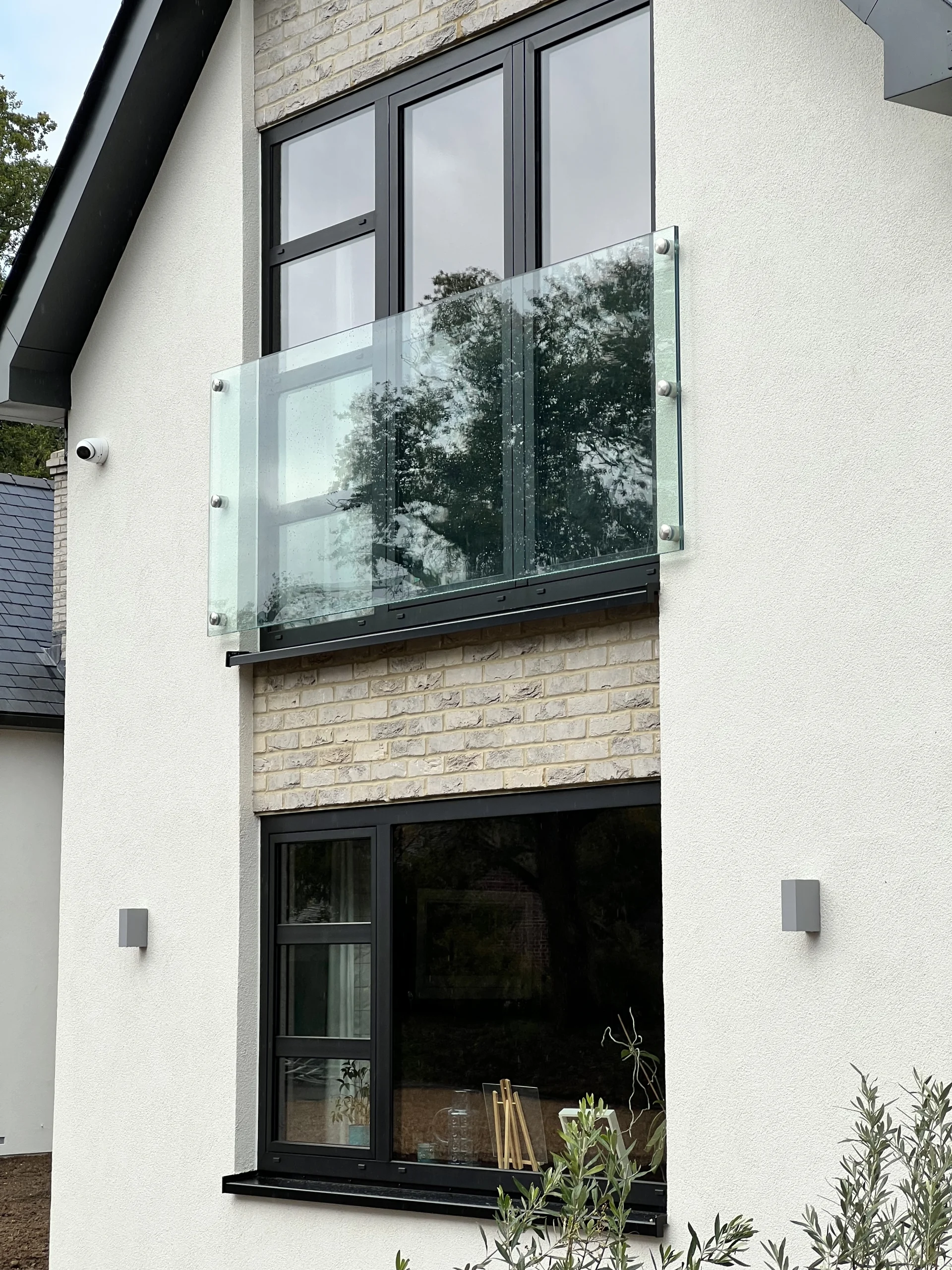
A frameless glass Juliet balcony — permitted development in most UK residential scenarios
A Juliet balcony — where there is no platform and no external access — is normally permitted development in England and does not require planning permission. This is confirmed by the Government's Permitted Development Rights for Householders Technical Guidance and the Planning Portal. However, planning permission IS required if: the property is a listed building (listed building consent always needed), the property is in a conservation area and the Juliet balcony would alter the front elevation, the property is subject to an Article 4 direction removing permitted development rights, the installation includes a platform of any depth (making it a walk-out balcony), or the new opening itself requires planning permission (creating a door where there was not one before may need consent). Building Regulations approval (Part K guarding) is a separate requirement and IS needed whenever the Juliet balcony forms part of wider building work.
The Official Position — What the Government Says
The Government's technical guidance on permitted development rights for householders, published by the Ministry of Housing, Communities and Local Government, addresses Juliet balconies directly. It states that balconies, verandahs, and raised platforms are not permitted development and require planning permission. However, it explicitly carves out an exception: a Juliet balcony — defined as one where there is no platform and therefore no external access — would normally be permitted development.
The Planning Portal (the official UK planning resource) confirms this position, stating that Juliet balconies which do not have any external access or platform can be classed as permitted development. LABC (the national body representing local authority Building Control) takes the same view, noting that a Juliet balcony with no platform generally falls within permitted development.
The consistent thread across all three official sources is the same: no platform means no planning permission (in most cases). The moment any external platform is added — even a shallow 300mm step-out — the installation is reclassified as a balcony and requires planning permission.
Key legal reference: Schedule 2, Part 1, Class A of The Town and Country Planning (General Permitted Development) (England) Order 2015 (as amended). This is the statutory instrument that defines permitted development rights for householders. The Government's technical guidance interprets this Order for practical application. For the full text, visit gov.uk and search "Permitted development rights for householders: technical guidance."
When Planning Permission IS Required — 6 Scenarios
1 Listed buildings
If your property is a listed building (Grade I, Grade II*, or Grade II), you need listed building consent for any external alteration — regardless of how minor. A Juliet balcony changes the external appearance of the building and therefore requires consent. This applies even if you are replacing an existing Juliet balcony with a like-for-like replacement. The application is made to your local planning authority, and Historic England may be consulted for Grade I and Grade II* properties. Penalties for unauthorised work on a listed building can include criminal prosecution — this is not a risk worth taking.
2 Conservation areas
Properties in conservation areas retain most permitted development rights, but with restrictions. If the Juliet balcony would materially alter the front elevation or a side elevation visible from a public highway, planning permission may be required. Rear-elevation Juliet balconies in conservation areas are generally permitted development — but practices vary between local planning authorities. Contact your council's planning team to confirm before ordering.
3 Article 4 directions
Some local authorities have issued Article 4 directions that remove specific permitted development rights in defined areas. An Article 4 direction can, for example, require planning permission for any alteration to the external appearance of a dwelling — which would include installing a Juliet balcony. Article 4 directions are common in conservation areas but can apply anywhere. Check with your local planning authority whether an Article 4 direction affects your property.
4 Any platform — however small
If the Juliet balcony includes any external platform that you can step onto — even a narrow ledge of 100mm — it is reclassified as a balcony and requires planning permission. The Government's technical guidance defines a raised platform as any platform with a height greater than 300mm. At first-floor level, any platform is by definition more than 300mm above ground and therefore requires planning permission. This is the critical distinction: a Juliet balcony with no platform is permitted development. A Juliet balcony with any platform is not.
5 New opening requires consent
If you are creating a new opening in the wall (converting a window to French doors, or installing French doors where there was solid wall), the new opening itself may require planning permission — even if the Juliet balcony does not. This is particularly relevant for front and side elevations, where changes to the fenestration pattern may require consent. Rear-elevation window-to-door conversions are generally permitted development, but check with your local authority.
6 Loft conversion balcony alterations
The Planning Portal specifically notes that alterations to the roof of a house for loft conversions involving the creation of balconies are not permitted development. If your loft conversion includes a balcony with a platform (a dormer balcony), planning permission is required. A Juliet balcony on a loft conversion dormer — with no platform — is treated as a window alteration and is normally permitted development, subject to the dormer itself being compliant. For more on loft conversion design, see our loft conversion staircase ideas guide.
| Scenario | Planning Permission? | Action |
|---|---|---|
| Standard house, rear elevation, no platform | No — permitted development | Proceed (check Article 4) |
| Standard house, front elevation, no platform | Usually no — but check locally | Contact LPA to confirm |
| Listed building (any elevation) | Yes — listed building consent | Apply before ordering |
| Conservation area, front elevation | Likely yes | Contact LPA to confirm |
| Conservation area, rear elevation | Usually no — but check locally | Contact LPA to confirm |
| Article 4 direction area | Possibly — depends on direction | Check the specific direction |
| Any installation with a platform | Yes — it is a balcony, not a Juliet | Apply for planning permission |
| New opening (window to door conversion) | Possibly — for the opening, not the Juliet | Check with LPA |
| Loft conversion dormer with Juliet (no platform) | No — if dormer is PD compliant | Check dormer compliance separately |
| Flat / apartment (leasehold) | May need freeholder consent (not planning) | Check lease terms |
Planning Permission vs Building Regulations — Two Separate Systems
Planning permission and Building Regulations approval are two completely separate legal systems. A Juliet balcony can be exempt from planning permission but still require Building Regulations approval — and vice versa. Understanding the difference prevents the common mistake of assuming that "no planning permission needed" means "no approvals needed."
Planning permission
Controlled by your local planning authority. Addresses whether the development is acceptable in terms of visual impact, neighbour amenity, character of the area, and land use policy. A Juliet balcony is normally exempt from planning permission because it has no external platform and minimal visual impact.
Building Regulations
Controlled by Building Control (local authority or approved inspector). Addresses whether the installation is safe — specifically, whether the barrier height, glass specification, fixing strength, and overall construction prevent falls. Building Regulations approval is required whenever the Juliet balcony forms part of wider building work (loft conversion, extension, new opening). For like-for-like replacements on unchanged openings, Building Regulations may not apply — but the installation must still comply with Part K requirements (1,100mm height, 100mm sphere rule, safety glass, structural fixings).
The trap: "Permitted development" does not mean "no rules apply." It means planning permission is not required. Building Regulations, structural safety, and compliance with Part K still apply in full. A Juliet balcony installed under permitted development but failing to meet the 1,100mm height requirement is legally non-compliant — and can be flagged by Building Control, surveyors, or conveyancing solicitors when you sell the property.
For the complete Part K requirements for Juliet balconies and all guarding applications, see our UK staircase and balustrade regulations guide.
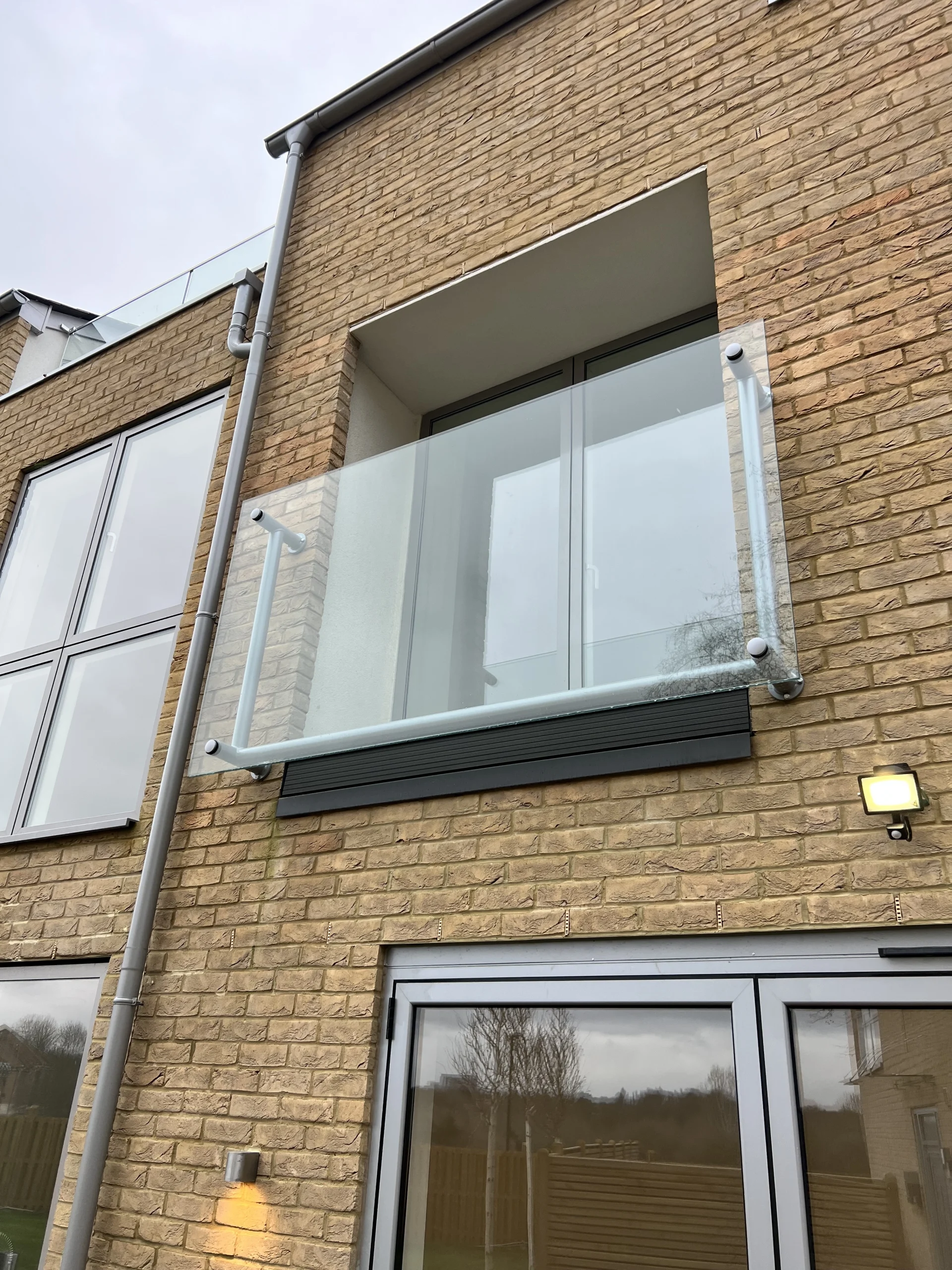 Bespoke glass Juliet — no platform, no planning permission in most scenarios
 Rear elevation installation — the lowest-risk scenario for permitted development
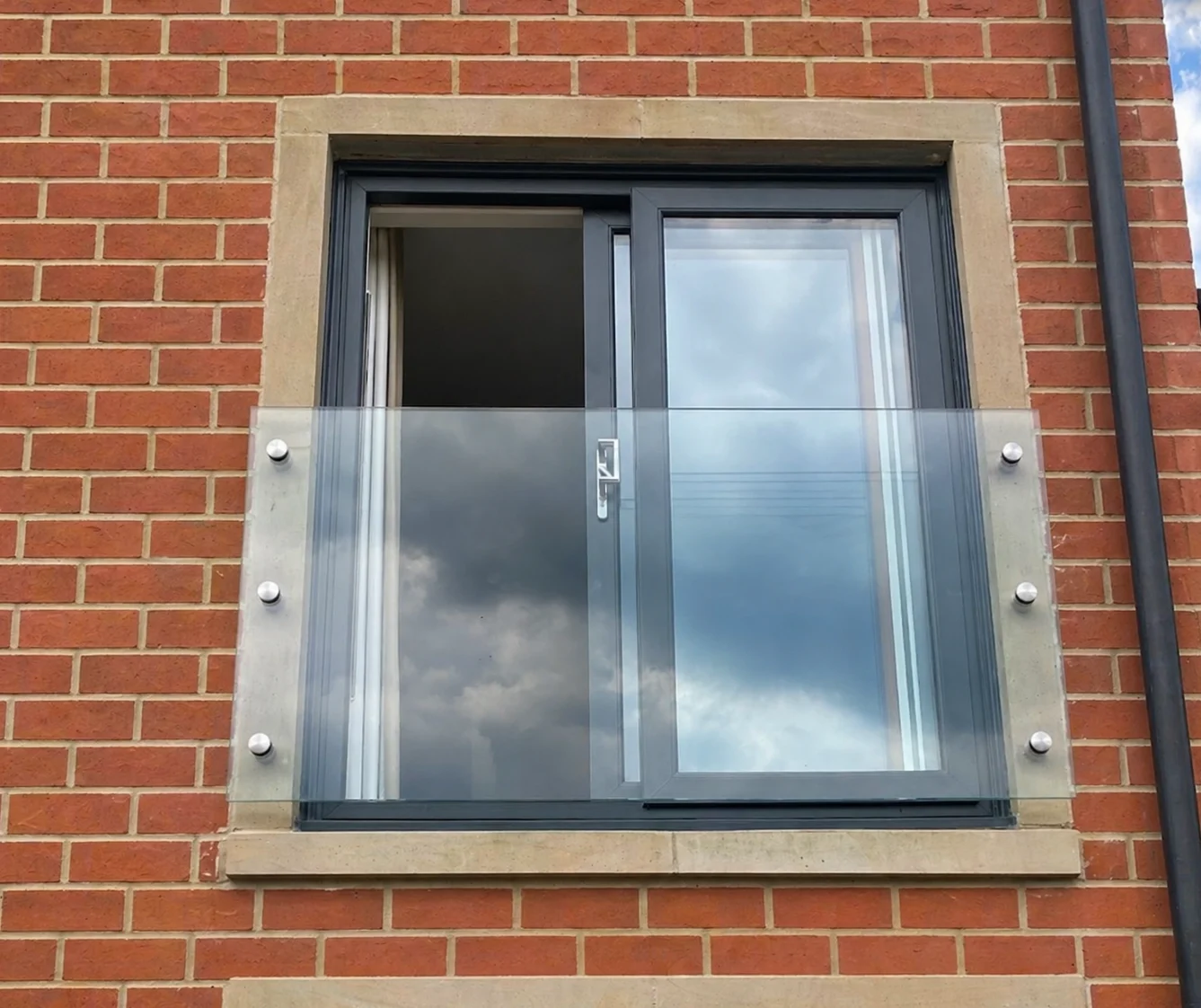 Minimal visual impact — the key reason Juliet balconies qualify as PD
Part K compliant — 1,100mm height, safety glass, structural fixings
Minimal visual impact — the key reason Juliet balconies qualify as PD
Part K compliant — 1,100mm height, safety glass, structural fixings
The Lawful Development Certificate — Written Proof You Don't Need Planning
If you want absolute certainty that your Juliet balcony is permitted development, you can apply for a Lawful Development Certificate (LDC) from your local planning authority. An LDC is a formal written confirmation from the council that your proposed development does not require planning permission.
The application costs approximately £103 (half the standard planning application fee of £206). The council assesses your proposal against the permitted development rules and issues a certificate confirming it is (or is not) lawful. The certificate is a permanent record that you can present to buyers, solicitors, and surveyors when you sell the property.
For straightforward rear-elevation Juliet balcony installations on standard (non-listed, non-conservation-area) residential properties, an LDC is usually unnecessary — the installation is clearly permitted development. But for borderline cases (front elevations, side elevations visible from a highway, properties near conservation area boundaries), an LDC provides valuable peace of mind for approximately £103 and 4–8 weeks of processing time.
What Happens If You Get It Wrong — Enforcement and Consequences
Installing a Juliet balcony without planning permission when permission was required is a planning breach. The consequences vary depending on the severity and the local authority's approach, but can include the following.
Enforcement notice
The council issues a formal notice requiring you to remove the Juliet balcony or apply for retrospective planning permission within a specified timeframe. Failure to comply with an enforcement notice is a criminal offence.
Retrospective planning application
You can apply for planning permission after the fact. The council assesses the application on its merits — the fact that the work has already been done does not prejudice the decision (positively or negatively). If retrospective permission is granted, the breach is resolved. If refused, you must remove the installation.
Impact on property sale
Conveyancing solicitors routinely check for planning compliance as part of the property sale process. If the Juliet balcony required planning permission and none was obtained, the buyer's solicitor will flag it. This can delay the sale, reduce the offer price, or require indemnity insurance — all of which cost money and goodwill.
Time limit: The council's enforcement powers for a planning breach related to building operations (which includes installing a Juliet balcony) expire after 4 years from the date the work was substantially completed. After 4 years, the installation becomes immune from enforcement — but this does not make it lawful for conveyancing purposes. A buyer's solicitor may still require evidence of compliance or indemnity insurance.
Flats and Apartments — A Different Set of Rules
If you live in a flat or apartment (leasehold property), the planning permission question is usually the same as for houses — Juliet balconies are normally permitted development. However, you face an additional hurdle that has nothing to do with planning: your lease and the freeholder's consent.
Most leases restrict external alterations to the building without the freeholder's (or management company's) written consent. Installing a Juliet balcony — even one that is permitted development under planning law — may breach your lease if you do not obtain consent from the freeholder first. The freeholder can refuse consent (reasonably or unreasonably, depending on the lease terms), and installing without consent can result in a breach of lease claim.
If you live in a flat, check your lease for clauses about external alterations before ordering a Juliet balcony. Contact the freeholder or management company in writing to request consent. This is a contract law issue, not a planning law issue — but it is equally important.
Neighbours — Overlooking and Privacy
One of the main reasons walk-out balconies are frequently refused planning permission is overlooking — the balcony creates a new elevated vantage point from which you can see into a neighbour's garden or windows. Juliet balconies largely avoid this problem because there is no external platform to stand on — you remain inside the room, at the same level as the existing windows.
However, replacing a standard window with full-height French doors does increase the visibility from your room into neighbouring properties. If the opening faces directly into a neighbour's bedroom or garden, it is courteous (and strategically wise) to inform them before the installation. Neighbour objections cannot prevent a permitted development installation — but they can trigger a formal planning enquiry if the neighbour contacts the council, which adds stress and delay.
For side elevations close to a boundary, consider whether the Juliet balcony doors will be obscure-glazed or whether additional screening is appropriate. This is not a planning requirement for Juliet balconies, but it demonstrates goodwill and can prevent disputes. For the full comparison of privacy implications between Juliet and walk-out balconies, see our Juliet vs walk-out balcony guide.
Scotland, Wales, and Northern Ireland — Different Rules Apply
The permitted development guidance discussed in this article applies to England. Planning law in Scotland, Wales, and Northern Ireland is devolved and operates under separate legislation with different rules.
In Scotland, permitted development rights are governed by The Town and Country Planning (General Permitted Development) (Scotland) Order 1992 (as amended). The rules for Juliet balconies are broadly similar but not identical — check with your local planning authority. In Wales, permitted development rights are governed by The Town and Country Planning (General Permitted Development) Order 1995 (as amended) with Welsh modifications. Again, check locally. In Northern Ireland, permitted development is governed by separate legislation with its own conditions and limitations.
If your property is outside England, do not rely on the guidance in this article — contact your local planning authority directly.
Step-by-Step — What to Do Before Ordering
1 Confirm your property is not listed
Check the National Heritage List for England at historicengland.org.uk. If your property is listed (any grade), you need listed building consent before installing a Juliet balcony.
2 Check for conservation area / Article 4
Search your local authority's website for conservation area maps and Article 4 direction registers. If your property is in either, contact the planning department to confirm whether the installation requires permission.
3 Confirm no platform is involved
Ensure your Juliet balcony has absolutely no external platform. Even a decorative ledge or sill extension that could be stood on may reclassify the installation as a balcony requiring planning permission.
4 Check if the opening needs consent
If you are creating a new opening (window-to-door conversion or new door in a solid wall), check whether the opening itself requires planning permission — particularly on front and side elevations.
5 Apply for an LDC (if in doubt)
For borderline cases, apply for a Lawful Development Certificate (~£103, 4–8 weeks). This gives you written confirmation that planning permission is not required.
6 Inform your neighbours (courtesy)
Not legally required, but prevents disputes. A brief conversation or letter explaining the installation is sufficient.
7 Order and install
Once you are satisfied that no planning permission is needed (or have obtained it), order your Juliet balcony and proceed with installation. Ensure the installation complies with Part K Building Regulations — 1,100mm height, safety glass, structural fixings. For the full installation process, see our glass Juliet balcony installation guide.
For a complete explanation of what a Juliet balcony is, including types, costs, and regulations, see our what is a Juliet balcony guide. For glass balustrade products suitable for Juliet balconies, see our product page.
Frequently Asked Questions — Juliet Balcony Planning Permission
In most cases, no. The UK Government's technical guidance confirms that a Juliet balcony with no platform and no external access is normally permitted development. However, planning permission is required for listed buildings, may be required in conservation areas or Article 4 direction areas, and is always required if any external platform is included.
Yes — listed building consent is required for any external alteration to a listed building, regardless of how minor. This applies to all grades (I, II*, and II). Apply to your local planning authority before ordering. Unauthorised work on a listed building is a criminal offence.
Possibly — depending on the elevation and your local authority's interpretation. Rear-elevation installations are generally permitted development. Front and side-elevation installations may require permission if they would alter the character of the conservation area. Check with your local planning department before proceeding.
A Lawful Development Certificate (LDC) is a formal written confirmation from your local council that your proposed development is permitted development and does not require planning permission. It costs approximately £103 and takes 4–8 weeks. You do not need one for straightforward rear-elevation installations on standard properties — but it provides useful written proof for property sales and borderline cases.
If planning permission was required and you did not obtain it, the council can issue an enforcement notice requiring you to remove the Juliet balcony or apply retrospectively. This can also cause problems when selling the property — conveyancing solicitors check for planning compliance. The council's enforcement powers expire after 4 years from completion of the work, but the lack of permission remains a conveyancing issue indefinitely.
Yes — they are completely separate legal systems. Planning permission addresses visual impact, neighbour amenity, and land use. Building Regulations address safety — barrier height, glass specification, fixing strength. A Juliet balcony can be exempt from planning permission but still require Building Regulations approval (if part of wider building work). Both must be satisfied independently.
In most cases, yes. Most leases restrict external alterations without the freeholder's or management company's written consent. This is a lease (contract law) issue, not a planning law issue. Check your lease for clauses about external alterations and contact the freeholder in writing before ordering. Installing without consent can constitute a breach of lease.
No — planning law is devolved. The permitted development guidance in this article applies to England only. Scotland, Wales, and Northern Ireland have separate legislation with different conditions. Contact your local planning authority directly if your property is outside England.
Need a Juliet Balcony That Meets Every Requirement?
Continox supplies and installs bespoke glass Juliet balconies — Part K compliant, precision-engineered, with full documentation for Building Control. No platform, no planning hassle. Based in Gosport, Hampshire, serving Southern England.