
Juliet balcony or walk-out balcony? The names sound similar, but they are fundamentally different structures — with different costs, different regulations, different planning requirements, and different impacts on your property. One is a protective barrier that costs £300–£1,500 and can be installed in a morning. The other is a structural platform that costs £5,000–£50,000, almost always needs planning permission, and requires a structural engineer. This guide compares the two in every dimension that matters — so you can decide which one actually fits your property, your budget, and your goals.
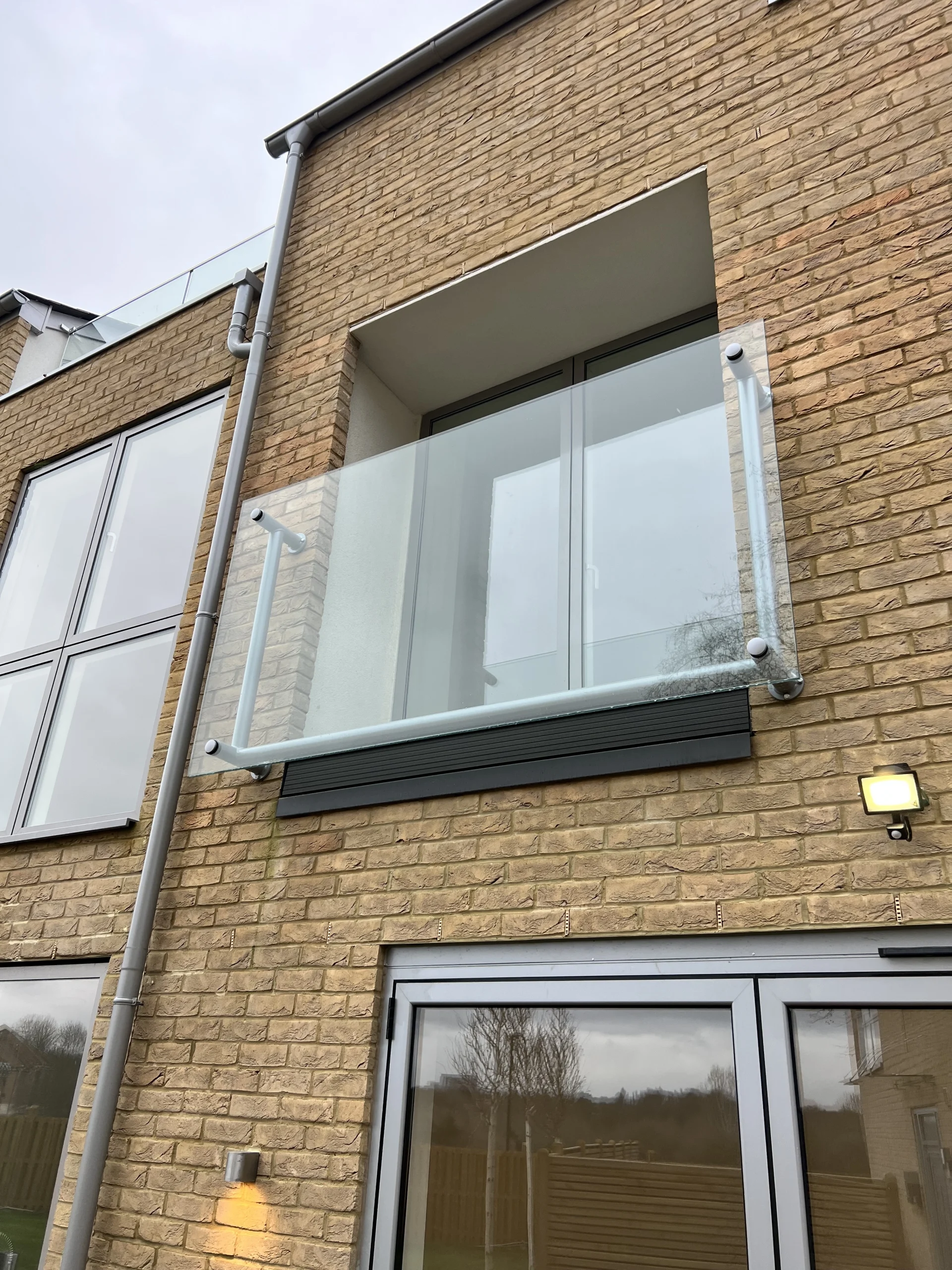
A frameless glass Juliet balcony — no platform, no planning permission, maximum impact for minimum cost
A Juliet balcony is a protective barrier (glass, steel, or iron) fixed across a full-height opening — no external platform, no projecting structure, no outdoor space to stand on. A walk-out balcony is a structural platform that projects from the building, creating an external floor area you can step out onto. Juliet balconies cost £300–£1,500, rarely need planning permission, and install in half a day. Walk-out balconies cost £5,000–£50,000, almost always require planning permission plus structural engineering, and take 1–4 weeks to install. Choose a Juliet for light, ventilation, and visual impact on a budget. Choose a walk-out for genuine outdoor living space.
The Complete Comparison — Every Factor That Matters
| Factor | Juliet Balcony | Walk-Out Balcony |
|---|---|---|
| What it is | Protective barrier — no platform | Structural platform projecting from building |
| Can you stand outside? | No — you stand inside the room | Yes — external floor area |
| Cost (supplied and installed) | £300–£1,500 | £5,000–£50,000 |
| Planning permission | Usually not required | Almost always required |
| Building Regulations | Part K (guarding only) | Part A (structure) + Part K (guarding) |
| Structural engineer | Rarely needed | Always required |
| Installation time | 2–4 hours | 1–4 weeks |
| Barrier height | 1,100mm from finished floor | 1,100mm from balcony deck level |
| Loading requirement | 0.74 kN/m (barrier only) | 1.5 kN/m² (platform) + 0.74 kN/m (barrier) |
| Maintenance | Minimal — glass clean, fixing check | Significant — deck, drainage, waterproofing |
| Property value impact | Modest — improved room appeal | Significant — additional outdoor space |
| Disruption during install | Minimal — external fixing only | Major — structural intervention |
| Overlooking / privacy risk | Low — no external standing area | High — planning often refused on this basis |
| Suitable for flats / apartments | Yes — no structural alteration to building | Rarely — freeholder/management co. consent needed |
For a detailed explanation of what a Juliet balcony is and the regulations that apply, see our complete what is a Juliet balcony guide.
Cost Comparison — The Real Numbers
The cost difference between a Juliet balcony and a walk-out balcony is not marginal — it is an order of magnitude. This is the single most important factor for most homeowners, so it deserves a detailed breakdown.
Juliet balcony: £300–£1,500 all-in
| Item | Cost |
|---|---|
| Steel railing Juliet (standard width, installed) | £200–£500 |
| Frameless glass Juliet (standard width, installed) | £400–£800 |
| Glass + steel handrail bespoke (installed) | £800–£1,500 |
| New French doors (if converting from window) | +£1,500–£4,000 |
| Planning permission | Usually £0 (permitted development) |
| Structural engineer | Usually £0 (not required) |
Walk-out balcony: £5,000–£50,000 all-in
| Item | Cost |
|---|---|
| Small cantilever balcony (1.5m × 1m, steel + composite) | £5,000–£10,000 |
| Medium balcony (3m × 1.5m, steel + glass balustrade) | £10,000–£20,000 |
| Large bespoke balcony (4m+ × 2m, premium spec) | £20,000–£50,000 |
| Structural engineer calculations | +£500–£1,500 |
| Planning permission application | +£206 (standard fee) |
| Building Regulations approval | +£200–£500 |
| Glass balustrade (1,100mm, laminated) | +£450/m (from) |
The hidden cost of walk-out balconies: The initial construction cost is only the beginning. Walk-out balconies require ongoing waterproofing maintenance (the deck junction with the building is a persistent leak risk), drainage maintenance (blocked drains cause water damage to the structure below), and periodic inspection of the structural connections. Budget £200–£500 per year for maintenance. A Juliet balcony has no deck, no drainage, and no waterproofing — maintenance is limited to cleaning the glass and checking fixings annually.
Planning Permission — Where Projects Succeed and Fail
Juliet balcony: usually permitted development
Because a Juliet balcony has no external platform and no increase in the building's footprint, it generally falls within permitted development rights. You are essentially fitting a safety barrier to an existing or new door opening — not creating usable external space. Exceptions apply for listed buildings, conservation areas, and properties subject to Article 4 directions. In these cases, check with your local planning authority before proceeding.
Walk-out balcony: planning permission almost always required
A walk-out balcony projects from the building, creates new external usable space, and can affect the privacy of neighbouring properties. This means it almost always requires planning permission. Common grounds for refusal include overlooking (the balcony gives views into a neighbour's garden or windows), loss of light (the balcony structure casts shadows on a neighbour's property), visual impact (the balcony changes the character of the building or streetscape), and structural concerns (the existing building cannot safely support the additional loading).
Planning applications for walk-out balconies on rear elevations of detached properties have the highest approval rates. Applications for front-elevation balconies, balconies on semi-detached or terraced houses, and balconies that overlook neighbours are frequently refused.
The overlooking issue: This is the number one reason walk-out balcony planning applications are refused. A Juliet balcony avoids this problem entirely — because you cannot step outside, there is no elevated standing area from which to overlook neighbours. If overlooking is likely to be a planning issue for your property, a Juliet balcony may be your only viable option at upper-floor level.
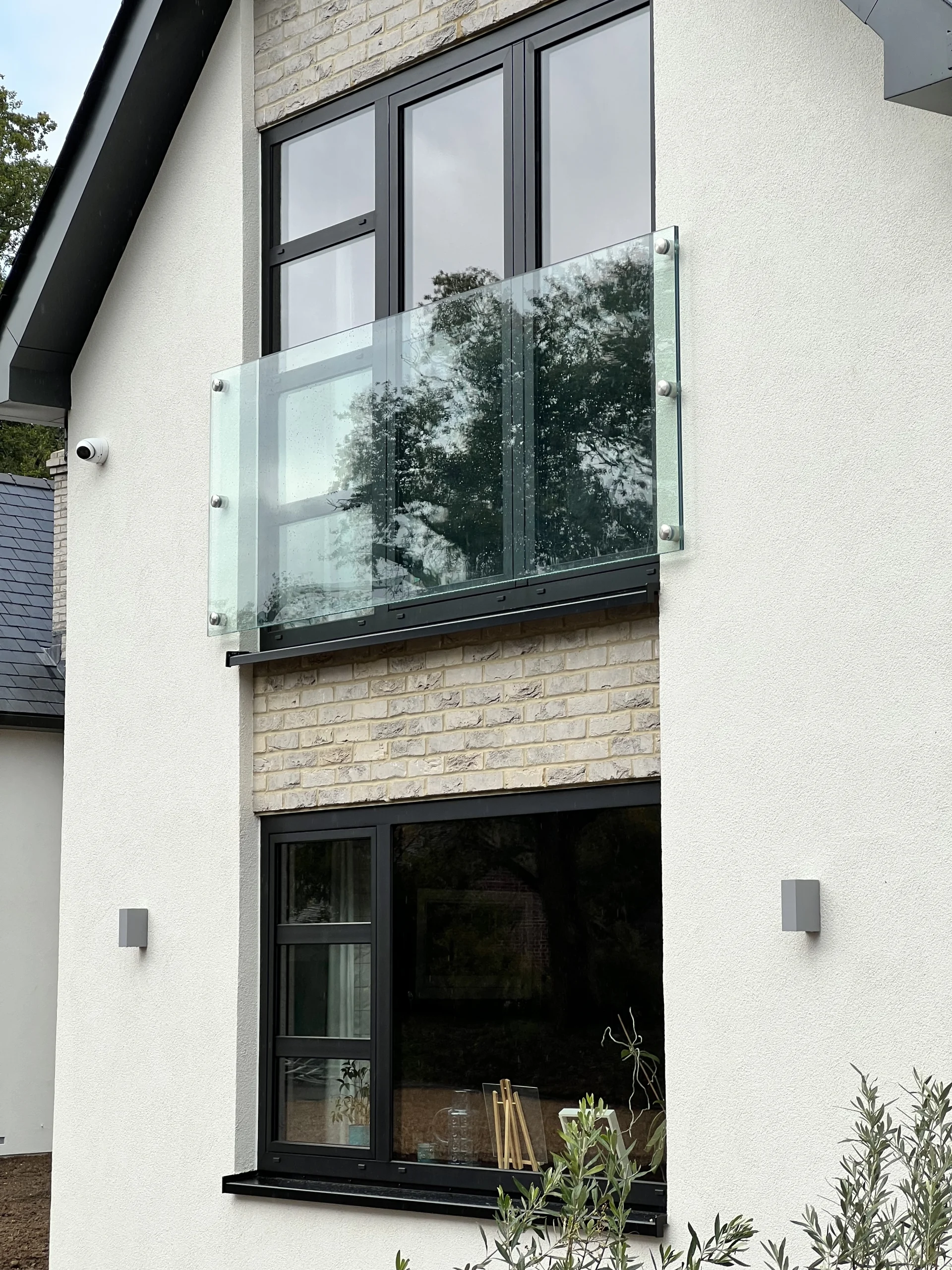 Juliet balcony — no platform means no overlooking issues and no planning permission
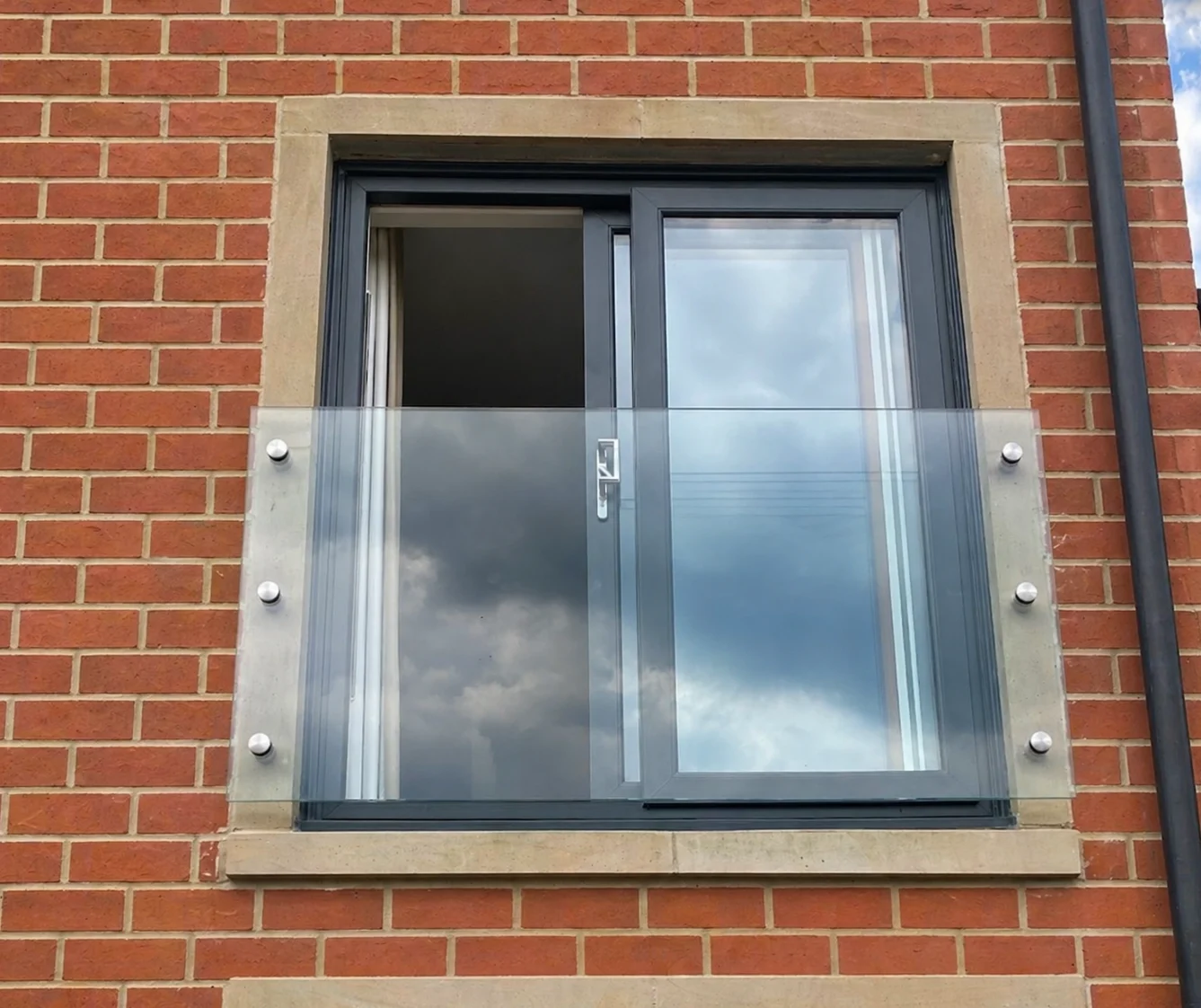 Glass system — 2-hour install, zero disruption to neighbours
 Full-height opening — maximum light and ventilation without external platform
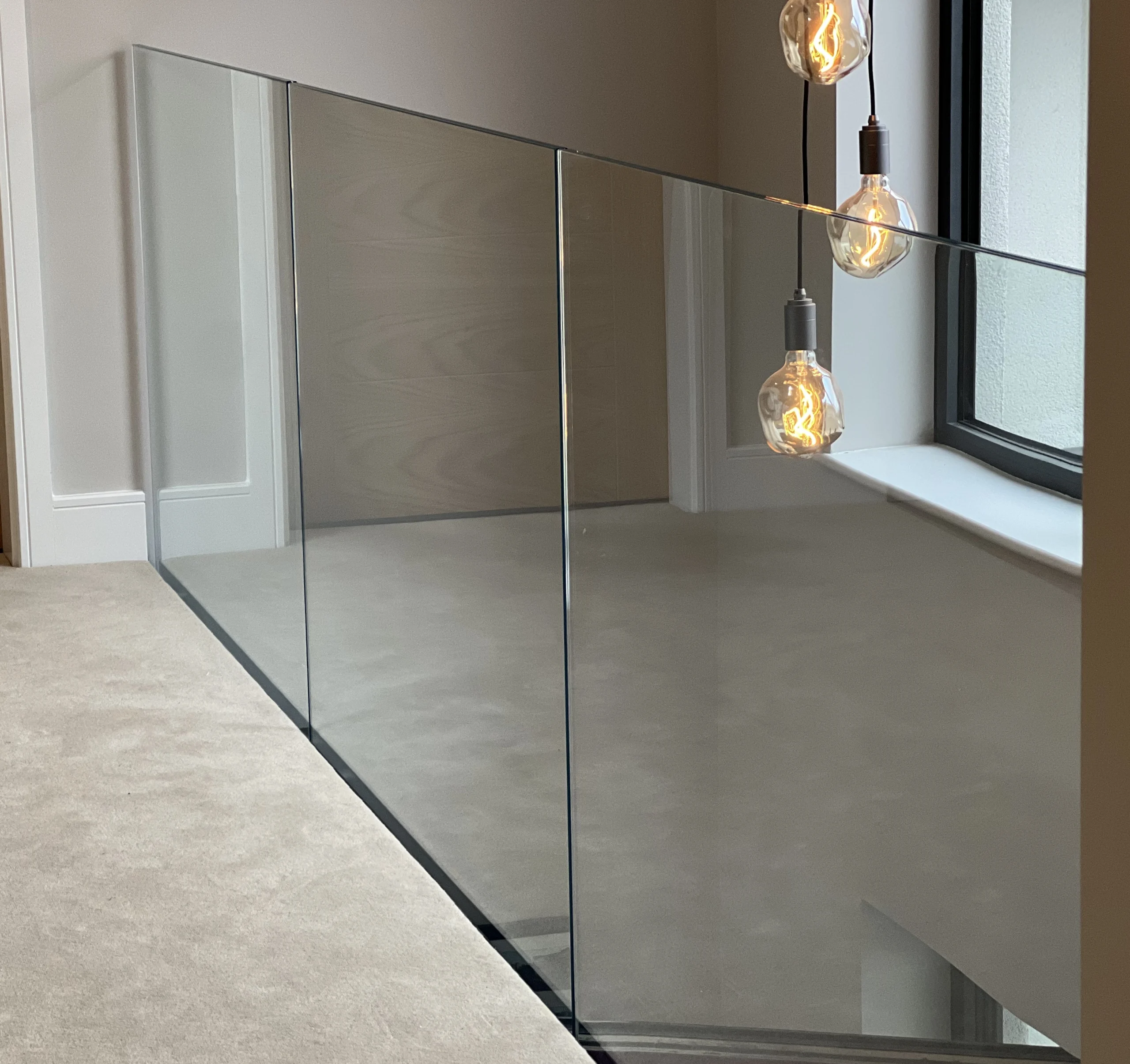 Frameless glass — works equally for Juliet balconies and walk-out balcony edge protection
Building Regulations — What Each Type Requires
Juliet balcony: Part K guarding only
A Juliet balcony is classified as guarding under Part K — its sole function is fall prevention. The requirements are: minimum 1,100mm height from finished floor level, no gaps exceeding 100mm (sphere rule), ability to withstand 0.74 kN/m horizontal line load, safety glass if glazed (toughened or laminated to BS EN 12150 / BS EN 14449), and fixings into structural masonry or steel. No structural engineering is required for the building itself — the Juliet balcony does not impose significant loading on the structure.
Walk-out balcony: Part A structure + Part K guarding
A walk-out balcony is a structural addition to the building. Part A (Structure) requires full structural engineering calculations covering the platform design (joists, frame, deck surface), the connection design (how the platform attaches to the building — the most critical detail), the foundation design (for post-supported balconies), and the loading calculations (dead load of the structure plus 1.5 kN/m² live load for residential use). Additionally, Part K applies to the balustrade around the platform edge — minimum 1,100mm height, 0.74 kN/m horizontal load, 100mm sphere rule.
Building Control approval is always required for walk-out balconies. For Juliet balconies, Building Control approval is required only if the installation forms part of wider building work (loft conversion, extension, new opening). For the full regulatory framework, see our staircase and balustrade regulations guide.
When to Choose a Juliet Balcony
A Juliet balcony is the right choice in the following situations.
Your primary goal is light and ventilation — not outdoor living space. You want the feel of an open balcony without the cost, planning complexity, or structural intervention of a walk-out. Your property is in a conservation area, listed, or in a location where planning permission for a walk-out balcony would be refused. You live in a flat or apartment where you do not own the building fabric and cannot make structural alterations. Your budget is under £2,000 (including new French doors if needed). You want a project completed in a day rather than weeks. Overlooking neighbours is a concern — a Juliet balcony avoids this issue entirely.
Best rooms for a Juliet balcony: Master bedrooms (light + ventilation + morning views), loft conversions (makes the dormer feel open and connected), upper-floor home offices (natural light and air for productivity), and upper-floor kitchens (ventilation for cooking). For more on loft conversions, see our loft conversion staircase ideas guide.
When to Choose a Walk-Out Balcony
A walk-out balcony is the right choice in the following situations.
You genuinely want outdoor living space — somewhere to sit with a coffee, eat al fresco, or grow plants. Your property is detached with no overlooking issues, making planning permission likely to succeed. You are building new or extending — incorporating a balcony during construction is dramatically cheaper than retrofitting. Your budget is £10,000+ and you are happy to invest in structural engineering and planning. You plan to stay in the property long-term and want the property value uplift that genuine outdoor space provides (typically 5–10% for a well-designed balcony on a premium property).
The Hybrid Option — Walk-Out Juliet
Some manufacturers offer a "walk-out Juliet" — a shallow platform (typically 300–500mm deep) that projects just enough to step onto but not enough to sit or place furniture on. This occupies a grey area between the two types.
From a planning perspective, any platform more than 300mm above ground level is generally treated as a balcony and requires planning permission. From a Building Regulations perspective, a platform of any depth requires structural calculations and Building Control approval. The "walk-out Juliet" does not avoid these requirements — it simply creates a smaller version of a walk-out balcony with the same regulatory burden.
In most cases, if you cannot justify the cost and complexity of a proper walk-out balcony, a standard Juliet balcony (with no platform at all) is the more practical choice. The small amount of standing space a shallow platform provides rarely justifies the additional cost and regulatory complexity.
Balustrade Options — Glass, Steel, or Iron
Whether you choose a Juliet or walk-out balcony, the balustrade is the most visible element. Here is how the main options compare across both balcony types.
| Balustrade Type | Juliet Cost | Walk-Out Cost (per m) | Best For |
|---|---|---|---|
| Frameless glass (structural) | £400–£1,200 | From £450/m | Contemporary homes, maximum views |
| Framed glass (steel frame) | £300–£800 | From £350/m | Budget contemporary, most versatile |
| Powder coated steel bars | £200–£500 | From £180/m | Modern minimalist, mid-century |
| Wrought iron (traditional) | £300–£800 | From £250/m | Period properties, conservation areas |
| Stainless steel wire / cable | £250–£600 | From £200/m | Coastal, nautical aesthetic |
For glass balustrade specifications and pricing across all applications — Juliet balconies, walk-out balconies, staircases, landings — see our product page. For steel balcony railings, see our dedicated railings page.
Property Value — Which Adds More?
A walk-out balcony adds measurable value because it creates genuine additional living space — estate agents and surveyors can quantify this as usable outdoor area. On a premium property, a well-designed walk-out balcony can add 5–10% to the property's market value. On a £400,000 property, that is £20,000–£40,000 — easily justifying the £10,000–£20,000 construction cost.
A Juliet balcony does not add directly measurable value — no estate agent will quote a percentage uplift for a barrier across a door opening. But it significantly improves the desirability and photographic appeal of the room it serves. A bedroom with French doors and a frameless glass Juliet balcony looks dramatically better in listing photographs than the same room with a standard window. In a market where buyers form initial impressions online, this matters — and the £500–£1,500 investment is trivial relative to the improvement in presentation.
For maximum property value impact with stairs and balustrades together, explore our modern staircase range and our bespoke staircase cost guide.
Decision Flowchart — Which Should You Choose?
| Your Situation | Best Option | Why |
|---|---|---|
| Budget under £2,000 | Juliet balcony | Walk-out impossible at this budget |
| Listed building / conservation area | Juliet balcony | Walk-out planning extremely unlikely to succeed |
| Overlooking neighbours | Juliet balcony | No external standing area = no overlooking issue |
| Flat / apartment (leasehold) | Juliet balcony | No structural alteration to building fabric |
| Want outdoor dining / seating space | Walk-out balcony | Juliet offers no usable outdoor space |
| New build or major extension | Walk-out balcony | Cheapest during construction, maximum value |
| Detached house, no overlooking | Walk-out balcony | Planning likely to succeed, maximum value uplift |
| Want it done this month | Juliet balcony | Install in a day vs weeks for walk-out |
| Loft conversion dormer | Juliet balcony | Walk-out rarely practical at roof level |
Frequently Asked Questions — Juliet vs Walk-Out Balcony
A Juliet balcony has no external platform — it is a protective barrier fixed across a full-height opening. You cannot step outside. A normal (walk-out) balcony has a structural platform that projects from the building, creating outdoor space you can stand or sit on. Juliet balconies cost £300–£1,500, walk-out balconies cost £5,000–£50,000.
Yes — if your goal is more light, better ventilation, and improved room appeal. A Juliet balcony transforms a room at a fraction of the cost of a walk-out balcony, with no planning permission required in most cases and installation in a single day. It is not worth it if you specifically want outdoor space to sit or stand on — for that, you need a walk-out balcony.
Usually not — a Juliet balcony is generally treated as permitted development because there is no external platform. Exceptions include listed buildings, conservation areas, and properties with Article 4 directions. Walk-out balconies almost always require planning permission because they create external space and can affect neighbours' privacy.
Approximately 5–20× cheaper. A standard frameless glass Juliet balcony costs £400–£800 installed. A small walk-out balcony starts from £5,000 and a medium-sized walk-out with glass balustrade typically costs £10,000–£20,000. The cost difference is driven by the structural engineering, construction, and planning permission required for a walk-out.
A walk-out balcony adds more measurable value because it creates genuine outdoor space (typically 5–10% uplift on premium properties). A Juliet balcony improves room appeal and listing photographs but does not add directly measurable square footage. However, the ROI on a Juliet balcony is often higher — spending £800 to significantly improve a bedroom's presentation can be more cost-effective than spending £15,000 on a walk-out that adds £20,000 of value.
Technically yes — but it is not a conversion. You would be removing the Juliet balcony and constructing a completely new walk-out balcony structure from scratch. This requires structural engineering, planning permission, and Building Regulations approval. The existing Juliet balcony provides no structural foundation for a walk-out platform. Budget the full walk-out balcony cost (£5,000+) rather than treating it as an upgrade from the Juliet.
A walk-out Juliet is a shallow platform (300–500mm deep) that projects just enough to step onto but not enough for furniture. Despite the name, it is regulated as a walk-out balcony — requiring structural calculations, Building Control approval, and usually planning permission. It does not avoid any of the regulatory requirements of a full walk-out balcony. In most cases, a standard Juliet balcony (no platform) is the more practical and cost-effective choice.
Both Juliet and walk-out balconies require a minimum balustrade height of 1,100mm. For a Juliet balcony, this is measured from the finished floor level inside the room. For a walk-out balcony, this is measured from the deck surface of the balcony platform. The 100mm sphere rule (no gap allowing a 100mm sphere to pass through) applies to both types.
Ready to Choose Your Balcony Solution?
Continox designs and manufactures bespoke Juliet balconies and glass balustrade systems for walk-out balconies. Frameless glass, steel handrails, any width — Part K compliant, precision-engineered, installed by our own team across Southern England.