
Glass balustrades have become the default specification for contemporary UK homes — but the reasons go well beyond aesthetics. From measurable light transmission gains to long-term maintenance savings and documented property value uplift, modern glass balustrades outperform traditional timber, wrought iron and cable alternatives across almost every metric that matters. This guide breaks down the ten specific benefits that make glass the right choice — with real numbers, technical specifications, and comparison data from fifteen years of Continox installations across the UK.
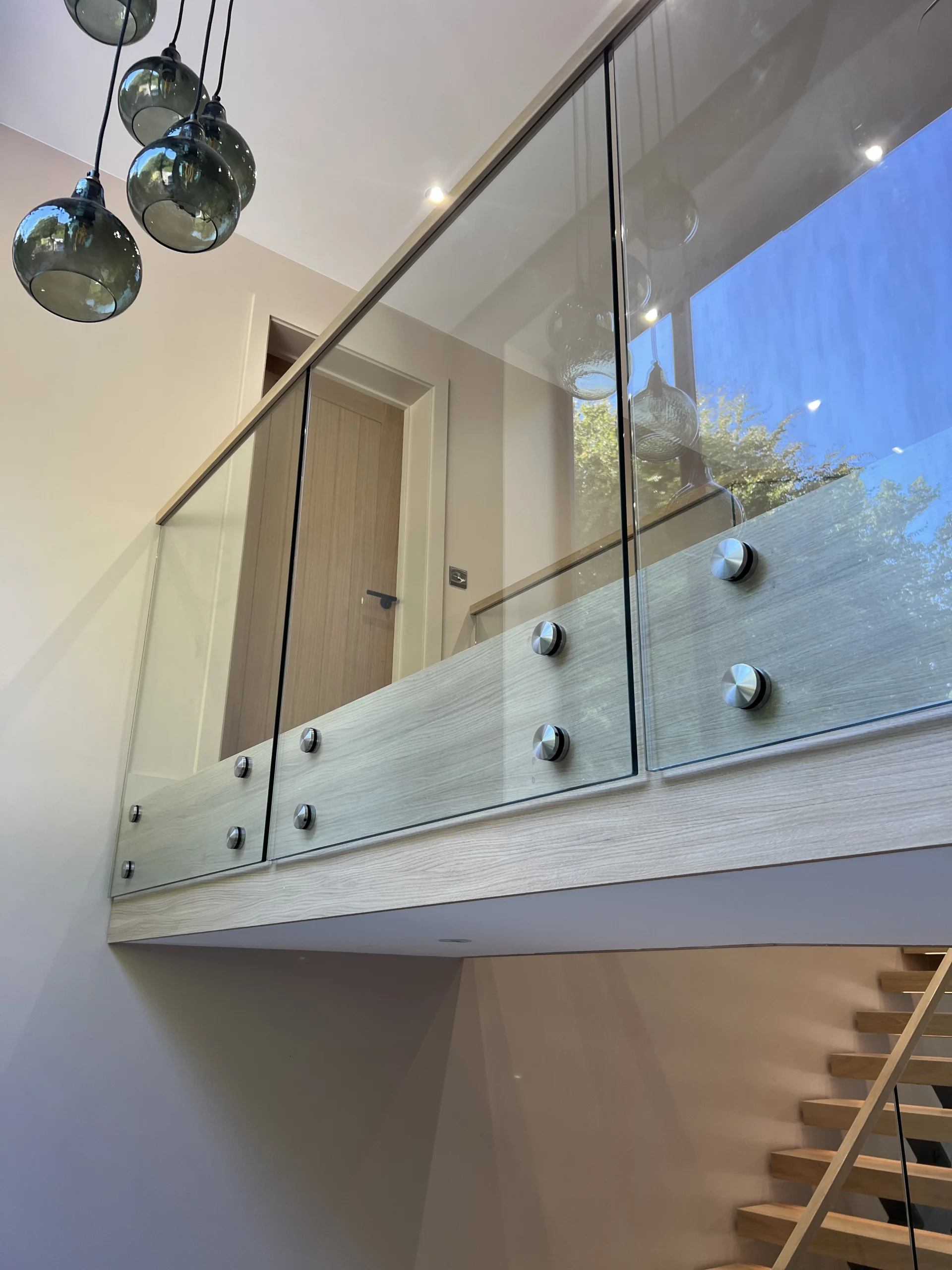
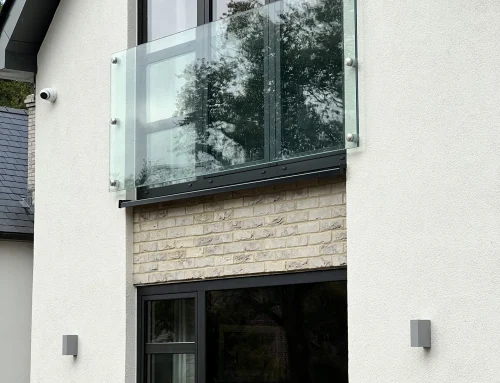
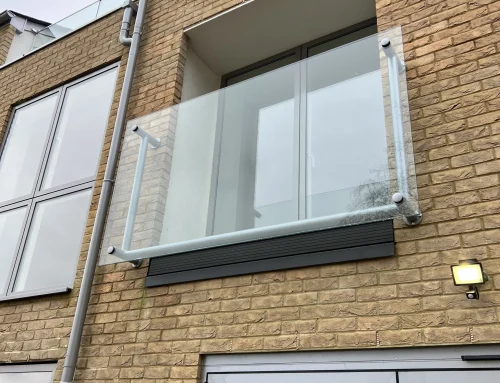
Frameless glass balustrade by Continox — 17.5mm toughened & laminated glass, premium light transmission, zero-maintenance finish.
The Ten Benefits — Explained
Clear toughened glass transmits approximately 88–92% of visible light across the spectrum — compared with 0% for a solid timber or metal balustrade. Low-iron (extra-clear) glass pushes transmission closer to 92%, eliminating the subtle green tint visible on edges of standard float glass. In a typical UK staircase or landing installation, this translates into a visible increase in daylight penetration to stair soffits, ground-floor circulation spaces, and any room adjacent to the balustrade run.
The effect is most noticeable in period conversions and narrow Victorian/Edwardian hallways — replacing an original timber balustrade with frameless glass typically increases measured lux levels on the lower floor by 20–40% without any change to windows or artificial lighting.
Open-plan architecture depends on visual continuity — the ability to read a space as a single volume rather than a series of compartments. Traditional spindle or panel balustrades interrupt sightlines across landings, mezzanines and open staircases. A frameless glass balustrade preserves the architectural logic of the space: you can see through it, across it, and around it without visual obstruction.
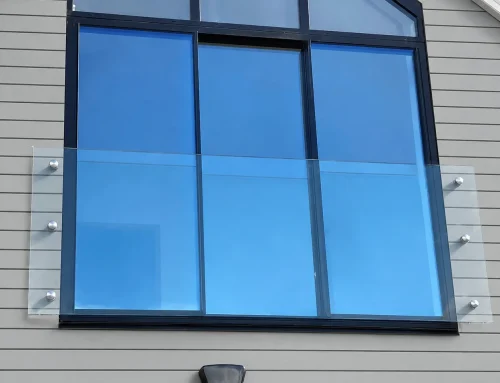
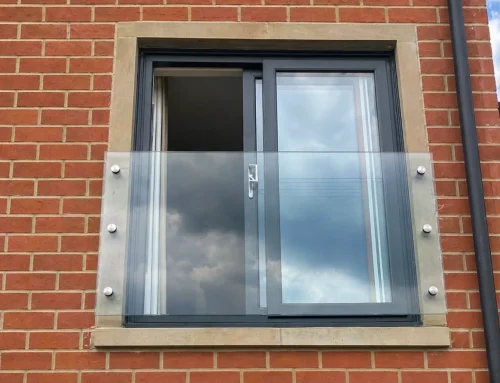
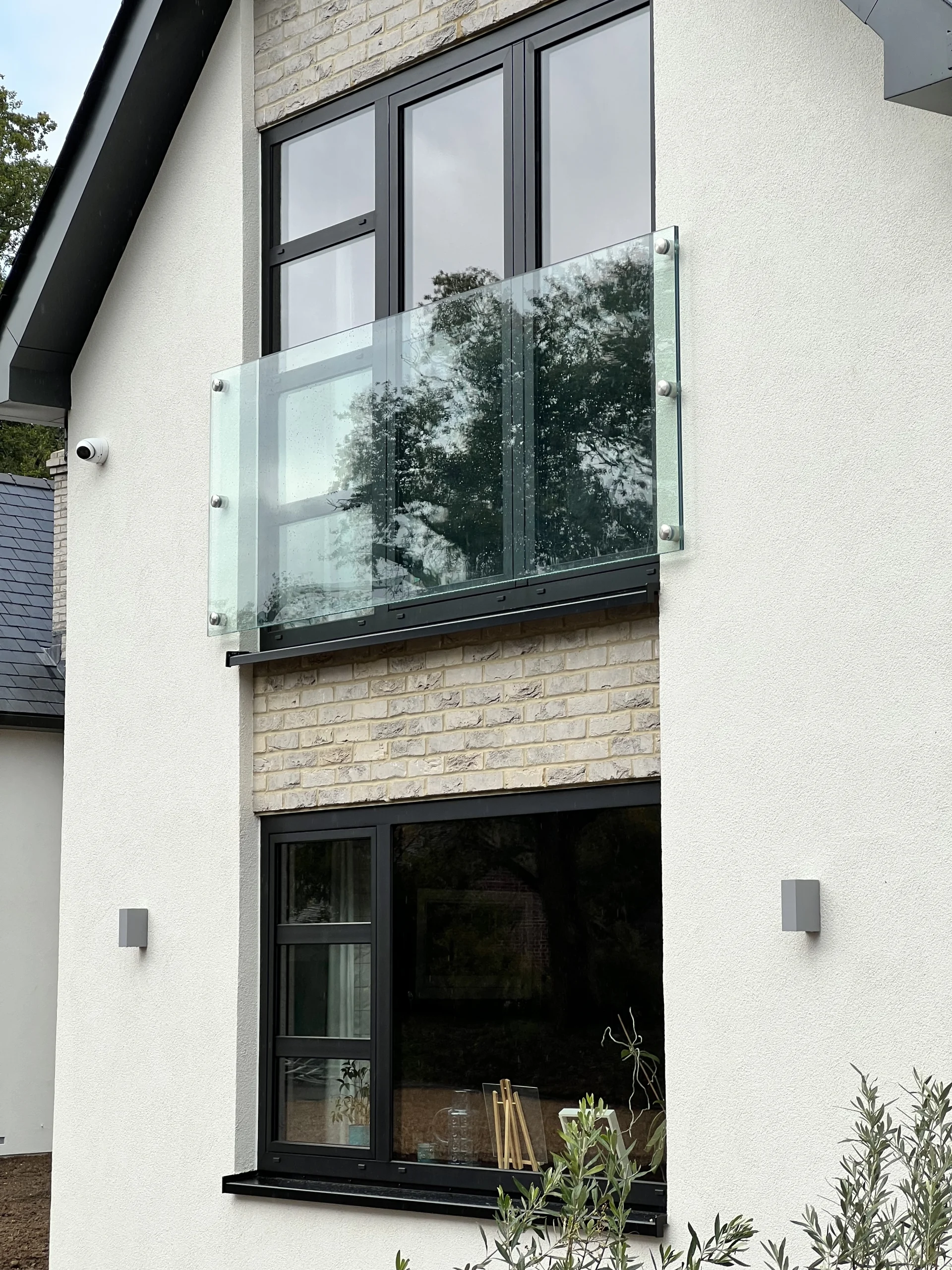
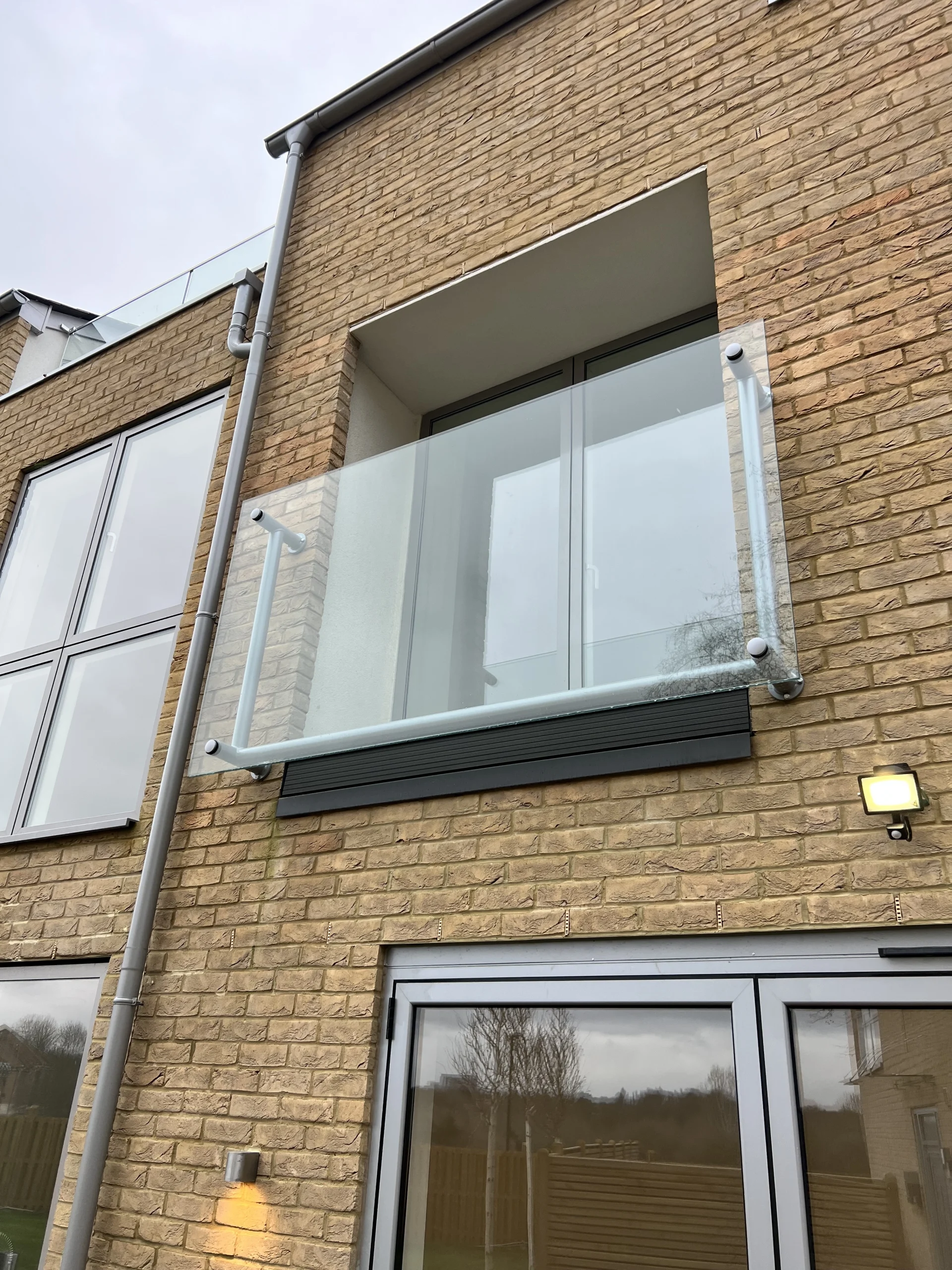
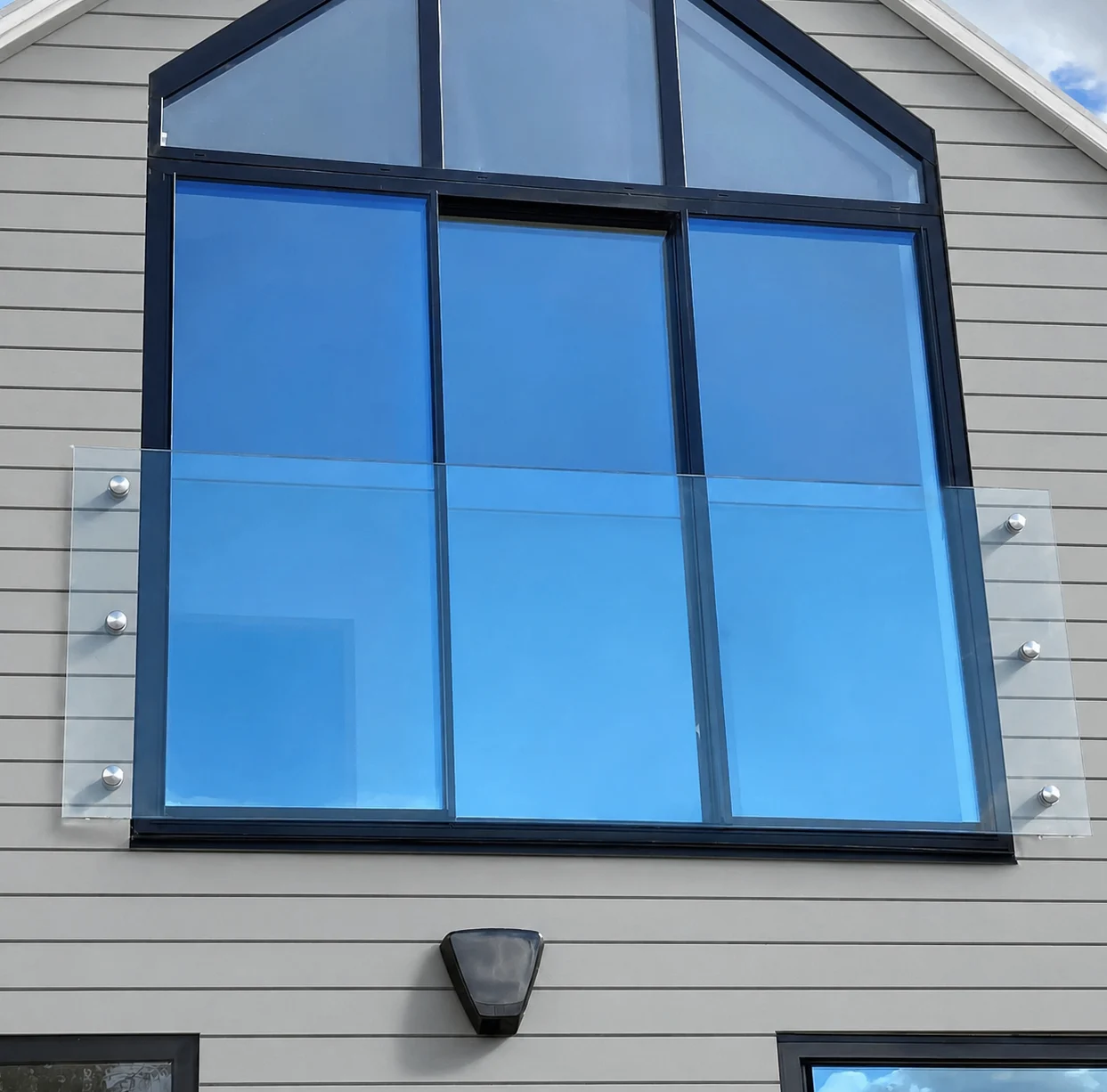
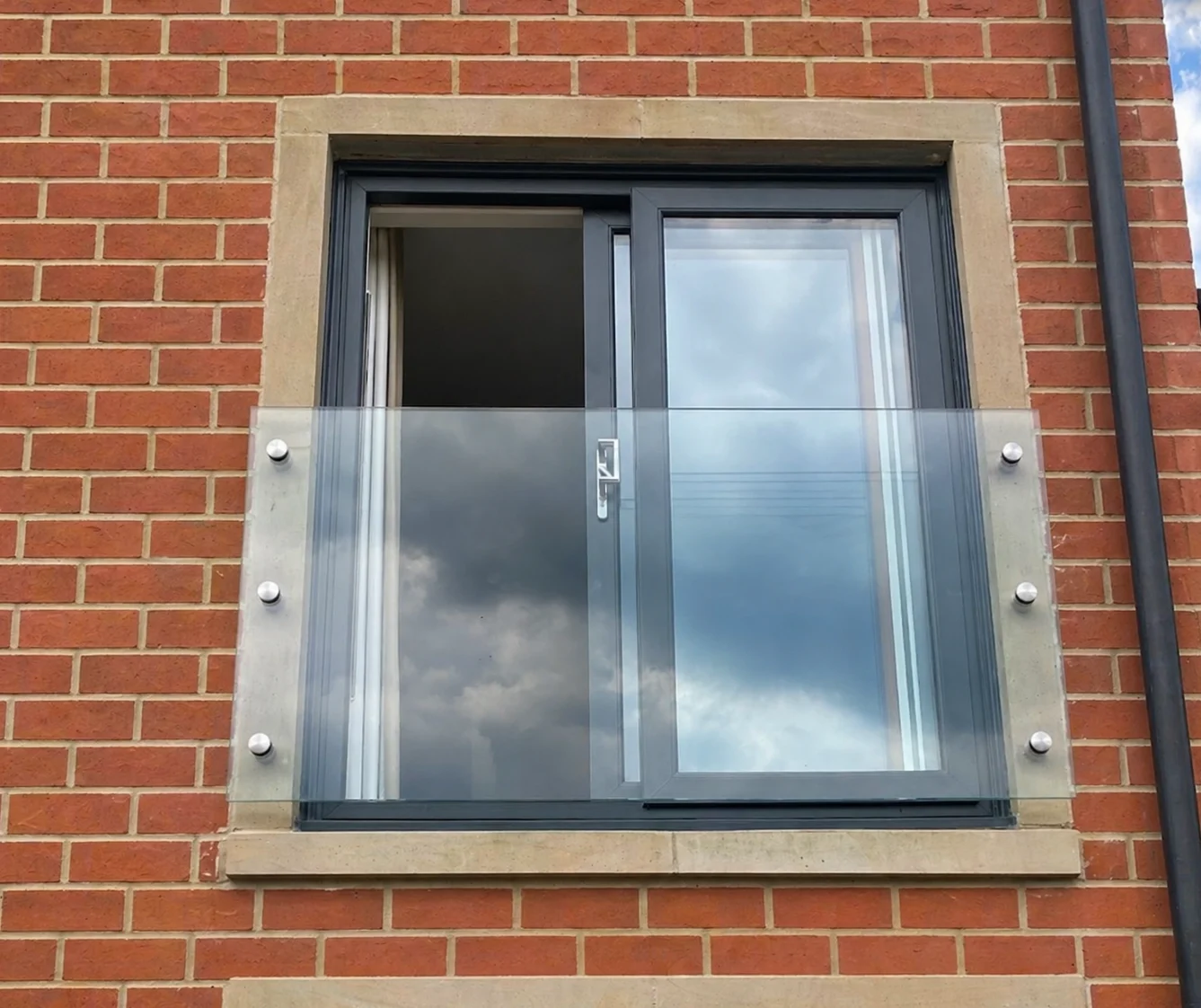
For properties with scenic views — coastal, rural, or urban skyline — external balcony glass balustrades preserve the view from the primary living space while providing the BS 6180-compliant barrier. See our balcony railings range for external applications from £450/m.
Even when the actual floor area is unchanged, removing a visual barrier enlarges the perceived volume of a space. Interior architects refer to this as the "sightline effect" — the human visual system judges room size partly by how far the eye can travel before meeting an opaque surface. A frameless glass balustrade replaces 4–8 linear metres of opaque barrier with transparency, which is why homeowners almost universally describe the post-installation change as "the space feels twice as big."
Where this matters most: Narrow hallways, split-level living rooms, open-plan kitchen-dining-living areas, mezzanine floors and loft conversions. In spaces where the floor area is genuinely constrained, glass balustrades are one of the few interventions that increase perceived size without requiring structural alterations.
A correctly installed glass balustrade requires only routine cleaning — monthly for interior applications, more frequently for externals. There is no periodic refinishing, no rust treatment, no re-staining and no re-varnishing. Toughened glass does not degrade under UV exposure; powder-coated steel used in framed systems does not rust in interior environments; modern structural sealants retain their performance for 20+ years.
Over a 20-year service life, the total maintenance cost of a domestic glass balustrade typically stays well under £500. A timber balustrade over the same period will need repainting or re-staining every 3–5 years, at a cost of £200–£500 per cycle — a lifetime cost of £1,000–£2,500 in materials and labour, assuming it does not need full replacement.
Contrary to intuition, a correctly specified glass balustrade is one of the safest barrier specifications available for domestic use. The glass is toughened (BS EN 12150) or toughened & laminated (BS EN 14449) — structural specifications that are tested and certified to withstand horizontal loads far in excess of everyday use. The 100mm sphere rule (Approved Document K) ensures no gap in the balustrade is large enough for a child's head to pass through. There are no spindles to climb, no horizontal rails to grip as a ladder, and no sharp edges.
Specification caveatFor balustrades at height — balconies, mezzanines, landings above ground floor — the glass must be toughened & laminated (BS EN 14449), not single-pane toughened. Laminated glass retains residual barrier capacity after breakage because the interlayer holds fragments in place. Continox specifies toughened & laminated as standard for all elevated applications. Full compliance breakdown is on our glass balustrade regulations page.
Estate agents and valuation surveyors consistently identify high-quality glass balustrades as a value-adding feature in UK residential property. The typical resale uplift on a premium domestic installation is 3–7% of the property value — a meaningful return on a £4,000–£8,000 installation cost in mid-market homes and a significantly higher absolute return in premium postcodes.
The uplift comes from two mechanisms: the visual impression of modernity and maintenance quality at viewing stage, and the technical reality that the buyer is inheriting a 20+ year asset with zero refurbishment cost ahead. Buyers of properties with dated timber balustrades regularly factor replacement cost into their offer — glass balustrades remove this deduction.
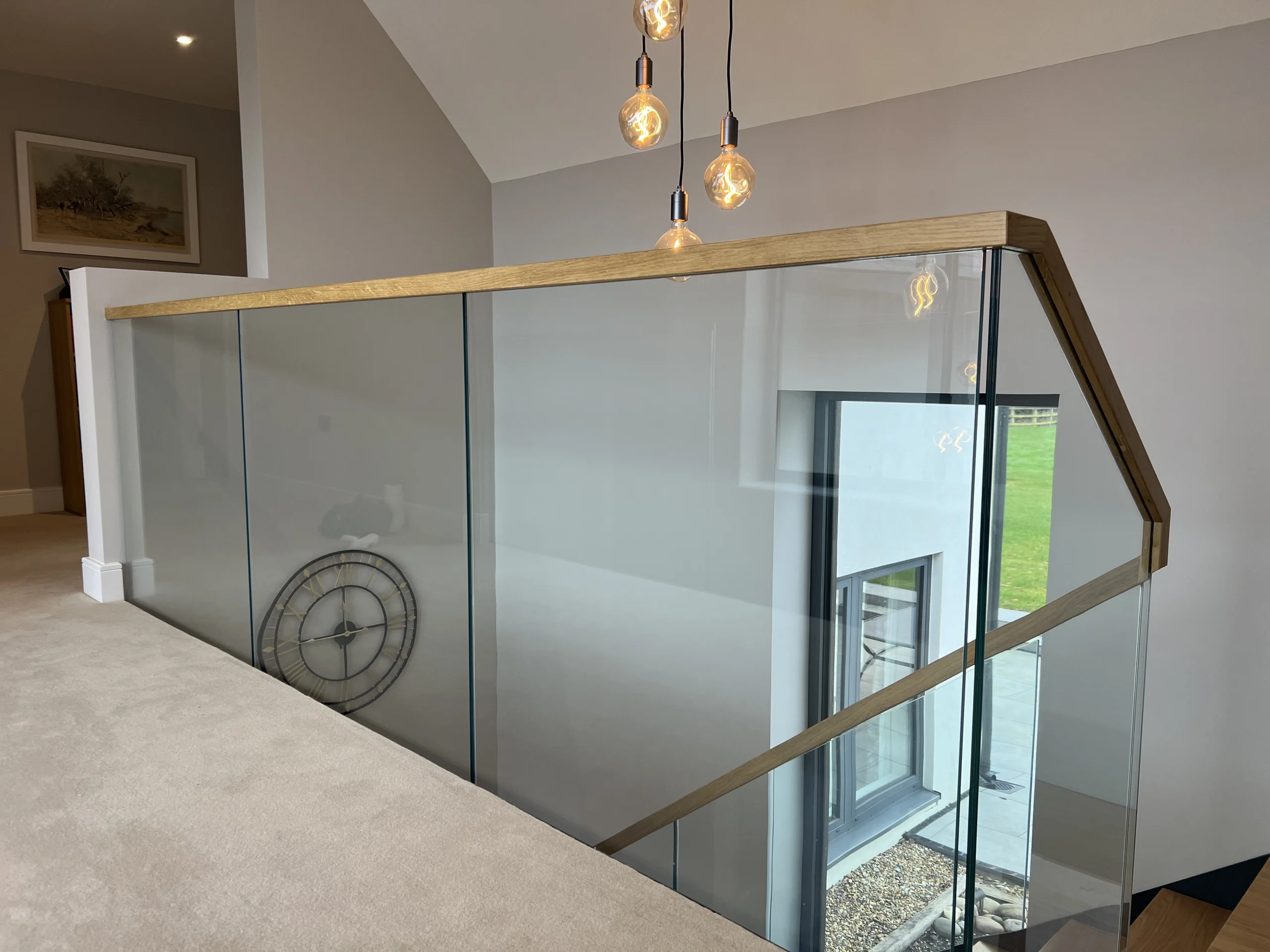

"Glass balustrade" is not a single product — it is a family of configurations, each suited to different architectural contexts. The right specification depends on the budget, the aesthetic intent, and the structural context of the installation.
Frameless (channel-fixed) — the most minimalist specification, where the glass itself carries the load. No visible frame, no vertical posts, no top rail. From £450/m. Framed (post-and-rail) — traditional posts with glass infill panels, suits period and commercial properties. From £350/m. Framed with stainless steel top rail — glass infill with a continuous stainless handrail, combines the safety of a handhold with the transparency of glass. Tinted, frosted or sandblasted glass — where privacy matters (bathrooms, overlooked balconies, duplex landings with an adjacent bedroom). Low-iron glass — premium specification, removes the green tint on glass edges.
The full specification range is on our glass balustrade page.
Toughened glass is fully UV-stable and waterproof — the two properties that cause the majority of long-term degradation in exterior timber and mild steel balustrades. External glass balustrades do not bleach, crack, rot or corrode. The supporting metalwork on Continox external installations uses a duplex finish (hot-dip galvanising + powder coat) which provides 20–30 years of corrosion protection even in coastal environments.
The combination makes glass the default specification for balcony railings, terrace balustrades, pool surrounds and any external circulation edge. Unlike timber, glass does not require annual inspection and retreatment; unlike painted mild steel, the finish does not chip, rust-bleed or fail at joints.
All Continox glass balustrades are designed and engineered to meet UK building regulations as standard — Approved Document K for geometry (heights, 100mm sphere rule), BS 6180 for structural loading (0.74 kN/m residential, 1.5 kN/m general public, 3.0 kN/m high-density commercial), and BS EN 12150 / BS EN 14449 for the glass itself. Structural calculations are provided for building control sign-off on request.
This removes a common homeowner risk: non-compliant balustrades fitted before building regulations were tightened, or kit-system balustrades installed without structural calculations, which can delay property sales, trigger retrospective building control action, or fail a surveyor's home buyer report.
Glass balustrades are now firmly established as a durable design category — not a short-lived trend. The configuration has been specified in high-end UK residential architecture for over two decades and remains the default choice in contemporary builds, luxury refurbishments and architect-designed extensions. Unlike decorative details that date quickly, a clean glass balustrade on a clean steel substructure reads as timeless — the minimal aesthetic does not rely on a specific style cycle.
From a practical standpoint, the installation is also replaceable at panel level. If a single glass panel is ever damaged, it can be replaced without disturbing the rest of the run — provided the installer holds the original specification records. This is another reason to use a bespoke fabricator rather than an anonymous kit supplier: 10 years from now, the fabricator is still there and still holds your drawings.
Glass vs Alternative Balustrade Materials
Where do glass balustrades actually outperform the alternatives — and where do timber or metal still have a role? The honest answer: glass wins on most metrics for contemporary homes, but there are specific cases (heritage restoration, ultra-traditional interiors) where timber or wrought iron are the right specification.
| Criterion | Glass | Timber | Wrought Iron | Cable |
|---|---|---|---|---|
| Light transmission | ~90% | 0% | ~70% (view) | ~85% (view) |
| Maintenance cycle | Clean only | Refinish 3–5 yrs | Paint 5–8 yrs | Re-tension annually |
| Typical service life | 20+ years | 10–15 years | 15–20 years | 10–15 years |
| Child safety (100mm rule) | Compliant | Depends on design | Depends on design | Often non-compliant |
| External suitability | Excellent | Poor (UV, rot) | Good | Good |
| Starting price (installed) | £350/m | £180/m | £280/m | £220/m |
| 20-year total cost | £350/m + ~£25 cleaning | £180/m + £400–£600 refinish | £280/m + £300–£500 repaint | £220/m + £200–£400 re-tension |
The real cost comparison: On starting price alone, glass is the most expensive option. On total 20-year ownership cost — including maintenance and likely replacement — glass is the most economical for any homeowner staying in the property 10+ years. This is the pricing reality that kit-system marketing materials obscure.
Where Glass Balustrades Work Best
Not every location calls for frameless glass, and not every frameless installation needs low-iron glass. The specification should match the application — both to control cost and to deliver the right aesthetic. These are the configurations Continox most frequently installs across the UK.
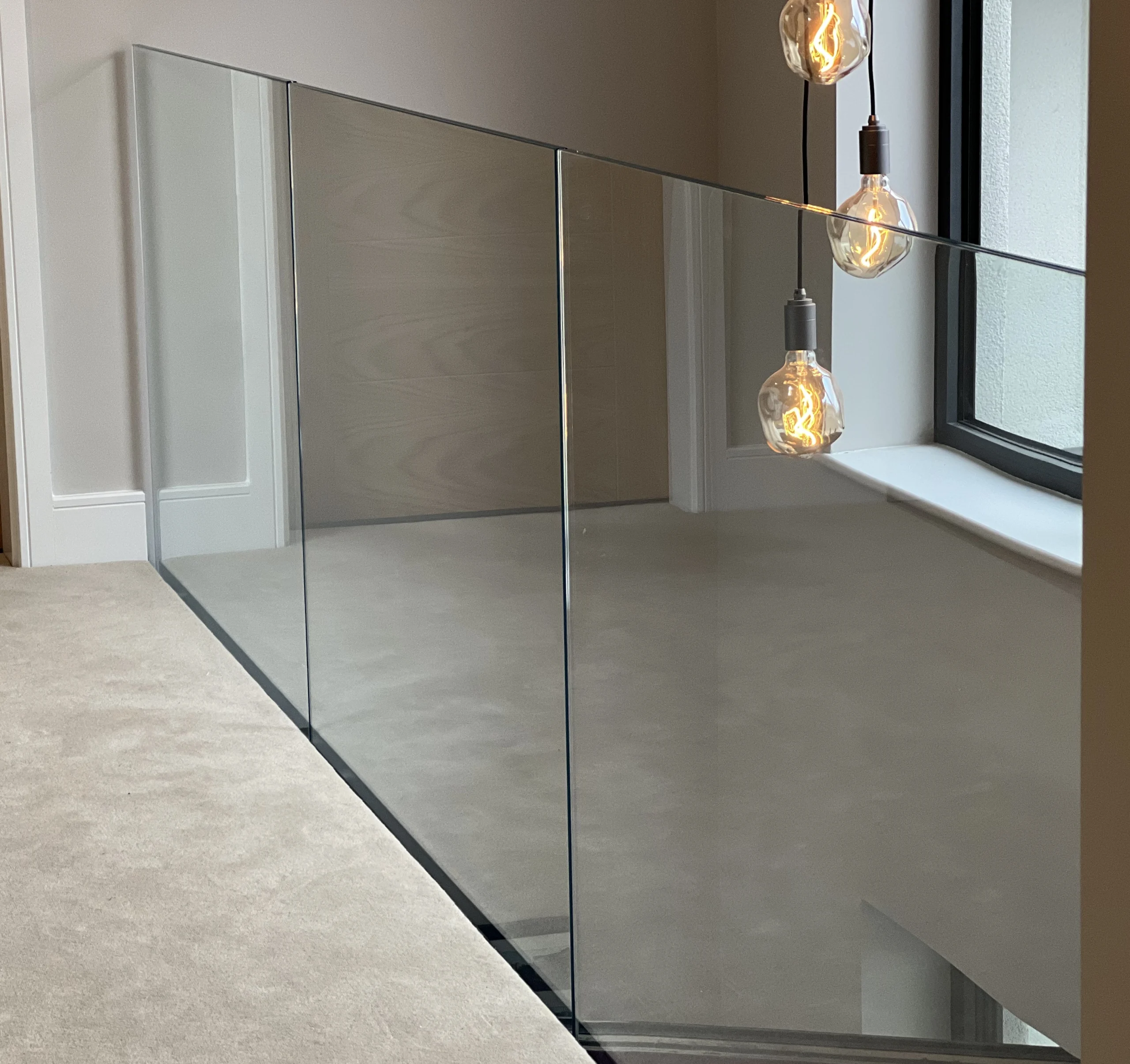


For inspiration on how glass balustrades integrate with a complete modern staircase design, see our modern staircase range — floating staircases from £7,900, central spine from £9,500, all with integrated glass balustrade options.
Glass Balustrade Benefits — FAQ
Common questions from homeowners weighing up glass balustrades against traditional alternatives in UK properties.
Free Survey + Fixed-Price Quote
Free on-site survey across the UK, photorealistic 3D visuals of your balustrade in your space, fixed-price quotation within 24 hours. Framed from £350/m, frameless from £450/m — designed, manufactured and installed by Continox.