
Loft Conversion Staircase Cost UK 2026 — Complete Pricing Guide
The staircase is one of the most variable costs in a loft conversion — and one of the least well understood. Prices range from £800 for a basic paddle staircase to £11,500+ for a fully bespoke helical design, with the vast majority of UK homeowners spending between £2,000 and £5,000. This guide breaks down exactly what each option costs in 2026, what you get for your money at each price point, and the hidden ancillary costs that most online estimates leave out. For an instant estimate based on your specifications, try our UK staircase cost calculator — adjust type, material, and balustrade for live pricing.
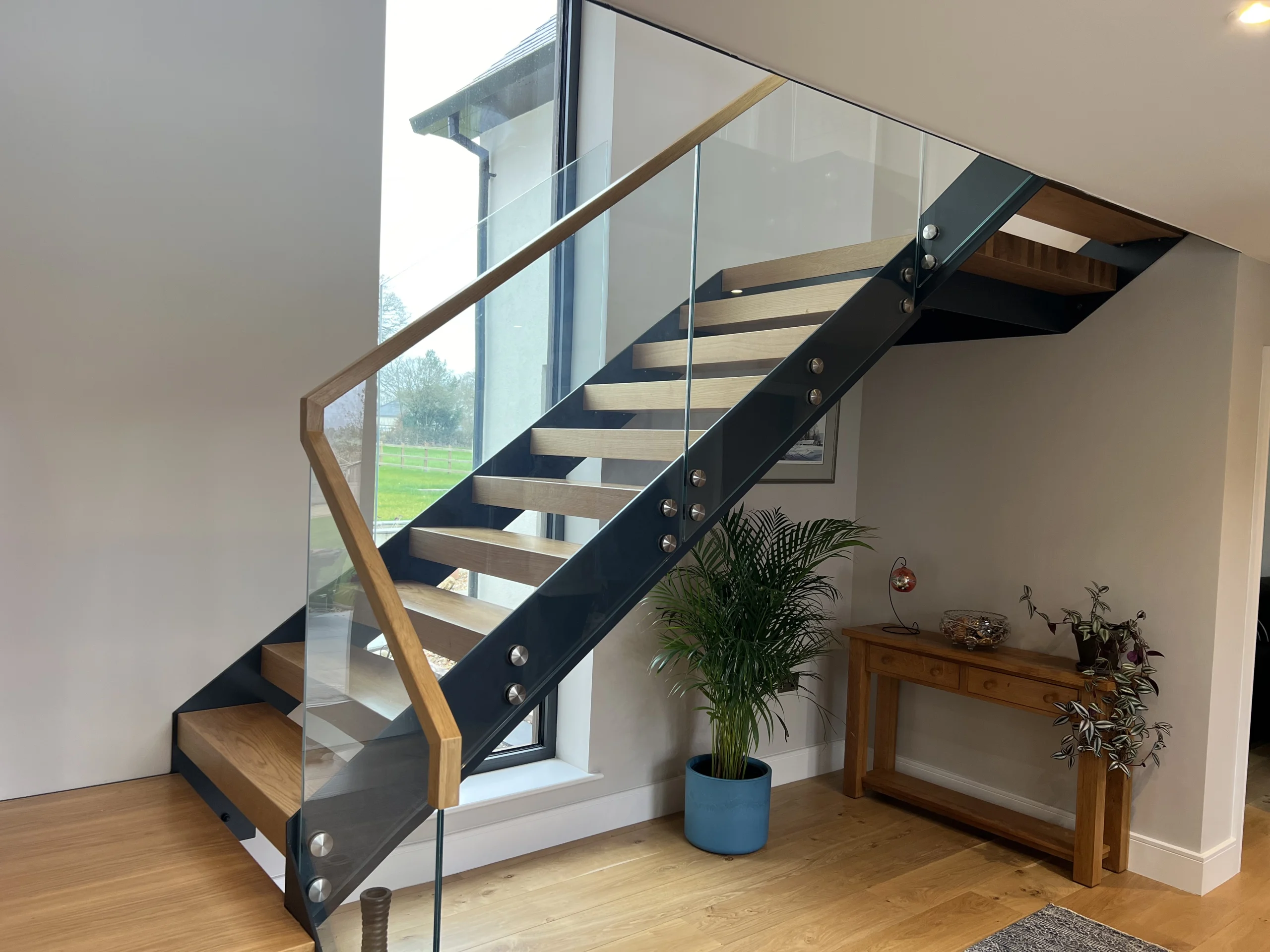
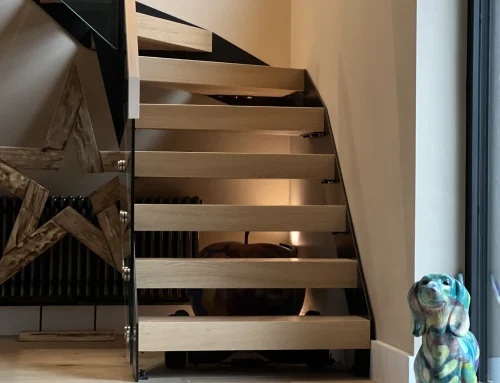
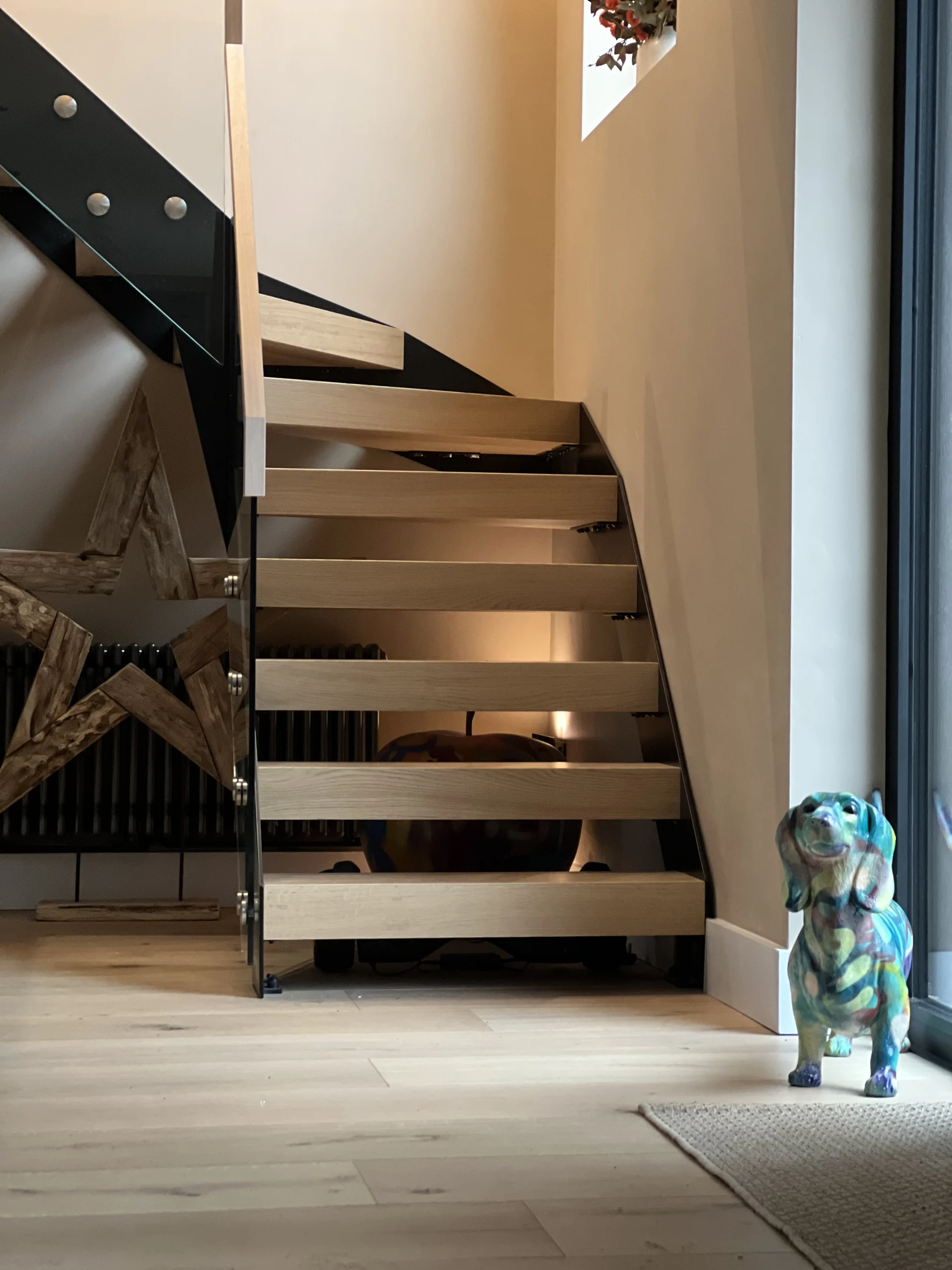
A bespoke steel-and-oak loft staircase — the premium end of loft conversion staircase costs in the UK
A loft conversion staircase in the UK costs between £800 and £11,500+ in 2026, depending on type and specification. Standard softwood straight flight: £1,500–£3,000. Quarter-turn winder: £2,000–£4,000. Spiral: £2,000–£6,000. Bespoke floating (steel + oak): from £7,900. Bespoke central spine with glass balustrade: from £9,500. Add £1,000–£3,000 for structural opening, fire doors, smoke alarms, and Building Control fees. Labour runs £150–£250 per day, with installation taking 1–5 days depending on complexity. The staircase typically represents 5–10% of the total loft conversion budget.
Loft Staircase Costs at a Glance — 2026 Pricing
The table below shows the full cost range for every loft conversion staircase type available in the UK market. All prices include supply and standard installation. Structural works, fire-rating, and Building Control fees are additional — see the ancillary costs section below.
| Staircase Type | Supply & Install Cost | Material |
|---|---|---|
| Paddle / alternating tread (space-saver) | £800–£2,000 | Softwood |
| Straight flight (basic) | £1,500–£3,000 | Softwood / MDF |
| Quarter-turn winder | £2,000–£4,000 | Softwood / hardwood |
| L-shaped with half landing | £2,500–£5,000 | Softwood / hardwood |
| U-shaped switchback | £3,000–£6,000 | Softwood / hardwood |
| Spiral staircase (standard) | £2,000–£6,000 | Steel + timber treads |
| Bespoke floating (steel + oak) | From £7,900 | Structural steel + solid oak |
| Bespoke steel plates | From £8,500 | Steel plate treads |
| Bespoke central spine + glass | From £9,500 | Steel spine + oak + glass balustrade |
| Bespoke helical (fully custom) | From £11,500 | Curved steel + hardwood + glass |
Where the staircase fits in the total budget: A typical UK loft conversion costs between £40,000 and £65,000. The staircase (including ancillary works) represents roughly 5–10% of that total. Spending at the lower end gets you a functional softwood staircase that Building Control will approve. Spending at the higher end gets you a design feature that transforms how the conversion looks and feels — and directly impacts the property's resale value.
Estimate Your Exact Cost in 30 Seconds
Adjust staircase type, material, balustrade and region — get an instant price range for your loft conversion staircase.
What You Get at Each Price Point
£ Budget tier: £800–£3,000
At this price point you are buying a standard softwood staircase — either a straight flight, a simple quarter-turn with winder treads, or a paddle (alternating tread) design. The staircase will be functional, Part K compliant, and unobtrusive. Treads are typically softwood (pine or spruce) with MDF risers, painted or carpeted. The balustrade is painted softwood with standard square or turned spindles.
This is the specification that most loft conversion builders include in their overall quote. It does the job, passes Building Control, and is the appropriate choice when the staircase is enclosed within walls and will never be a visual feature of the house.
Limitations: softwood treads are softer than hardwood and show wear faster (especially on the nosings), painted MDF risers can chip, and a standard spindle balustrade does nothing to enhance light flow into the stairwell. If the staircase is visible from the hallway or living area, the visual impact is minimal.
££ Mid-range tier: £3,000–£6,000
This is where meaningful choices open up. At £3,000–£6,000 you can specify hardwood treads (oak or ash), a more complex configuration (L-shape, U-shape, or a standard spiral staircase), and upgraded balustrade options such as brushed stainless steel spindles or framed glass panels.
An oak staircase at this price point is a genuine upgrade — solid European oak treads (40mm thick, hard-wax oil finish) are warmer, more durable, and visually richer than softwood. The staircase begins to feel like a considered design choice rather than a necessary utility.
A framed glass balustrade (from £350 per linear metre) at this tier allows light to pass through the stairwell and prevents the loft access from feeling like a dark corridor. This is the single upgrade that has the biggest visual impact for the money.
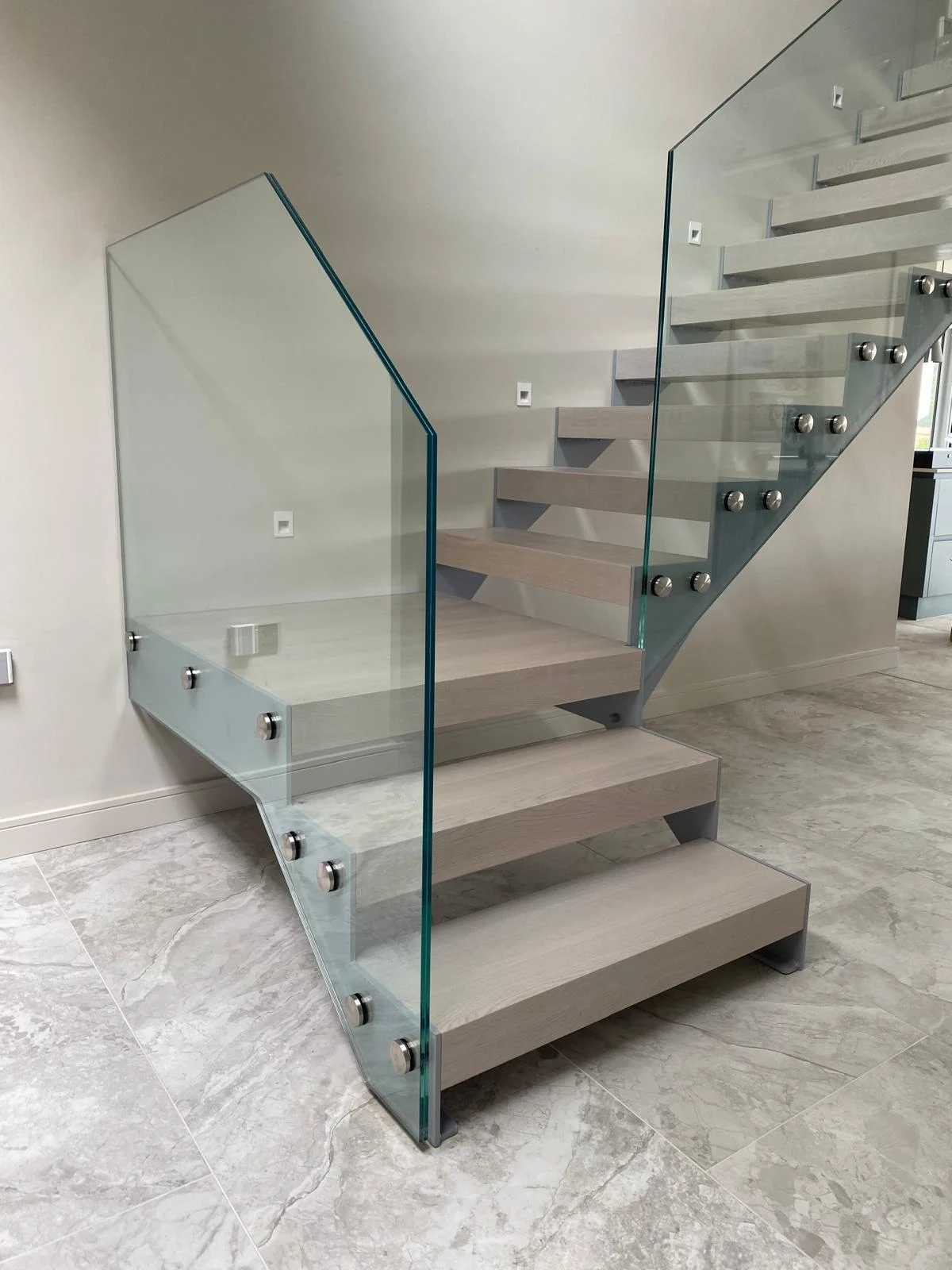 Steel-and-oak — mid-range bespoke specification from £6,000
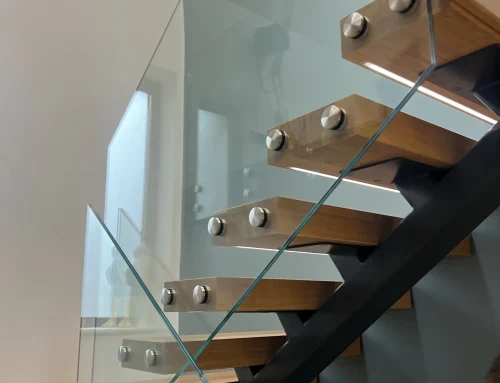
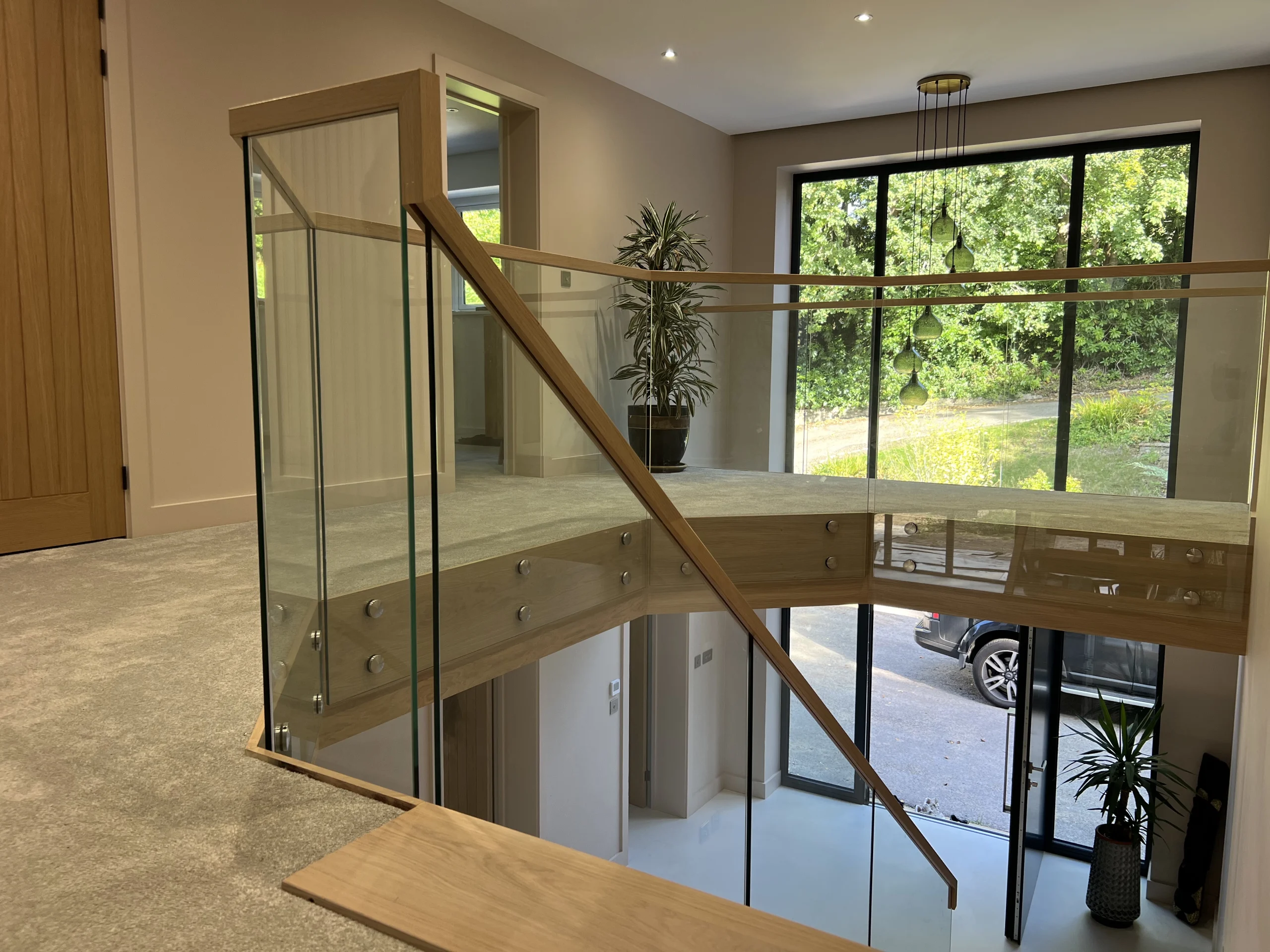 Open risers with glass — transforms the stairwell for £6,000–£8,000
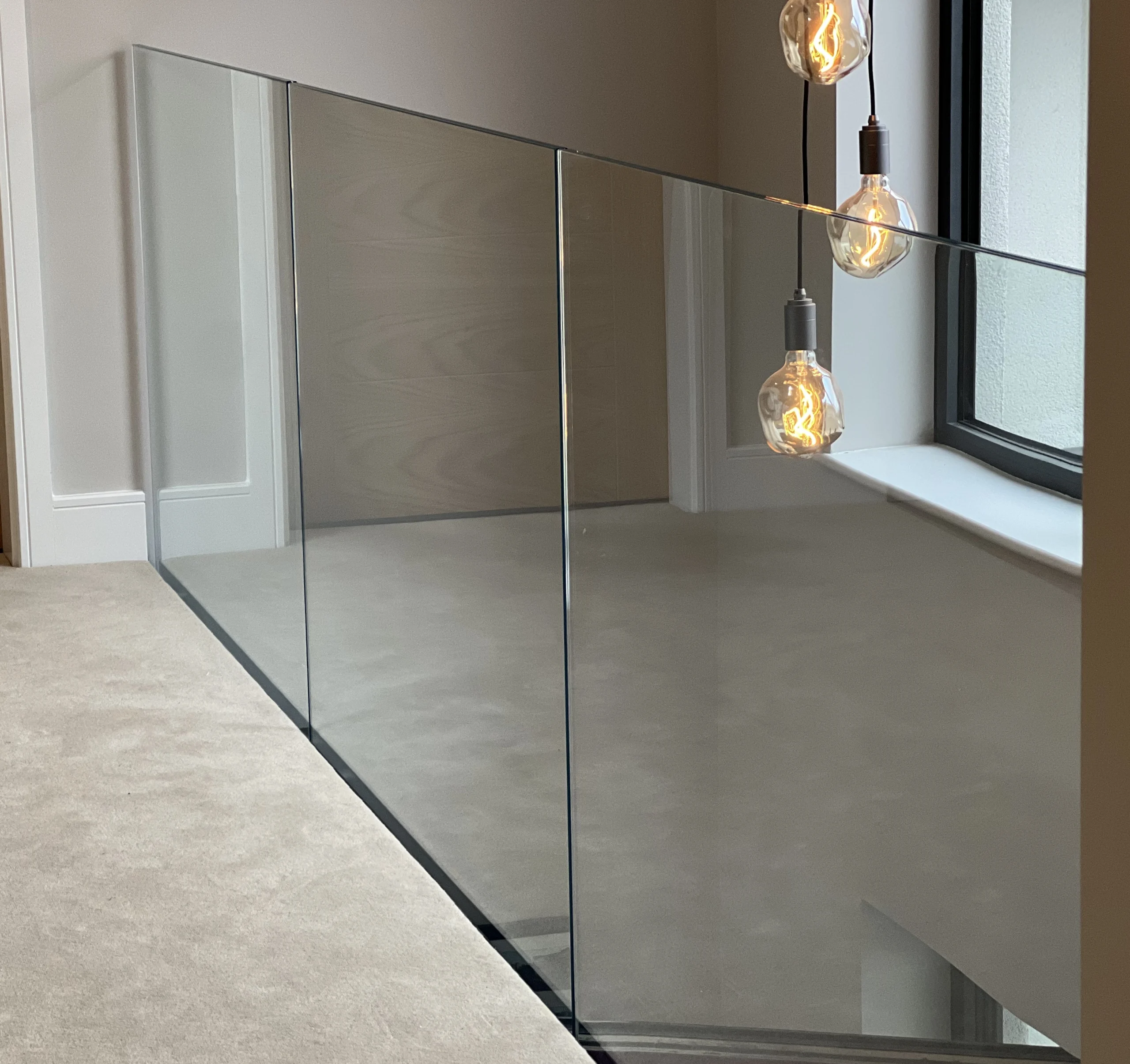 Frameless glass balustrade — from £450/m, the highest-impact upgrade
 LED integration — adds £600–£1,200 to any bespoke staircase
£££ Premium tier: £7,900–£11,500+
This is the bespoke territory — a staircase designed, engineered, and fabricated as a one-off for your specific property. At Continox, our bespoke loft conversion staircases start at £7,900 for a floating design with solid oak treads and a powder-coated steel structure. Browse our modern staircase range to see all bespoke options including floating, central spine, and curved configurations.
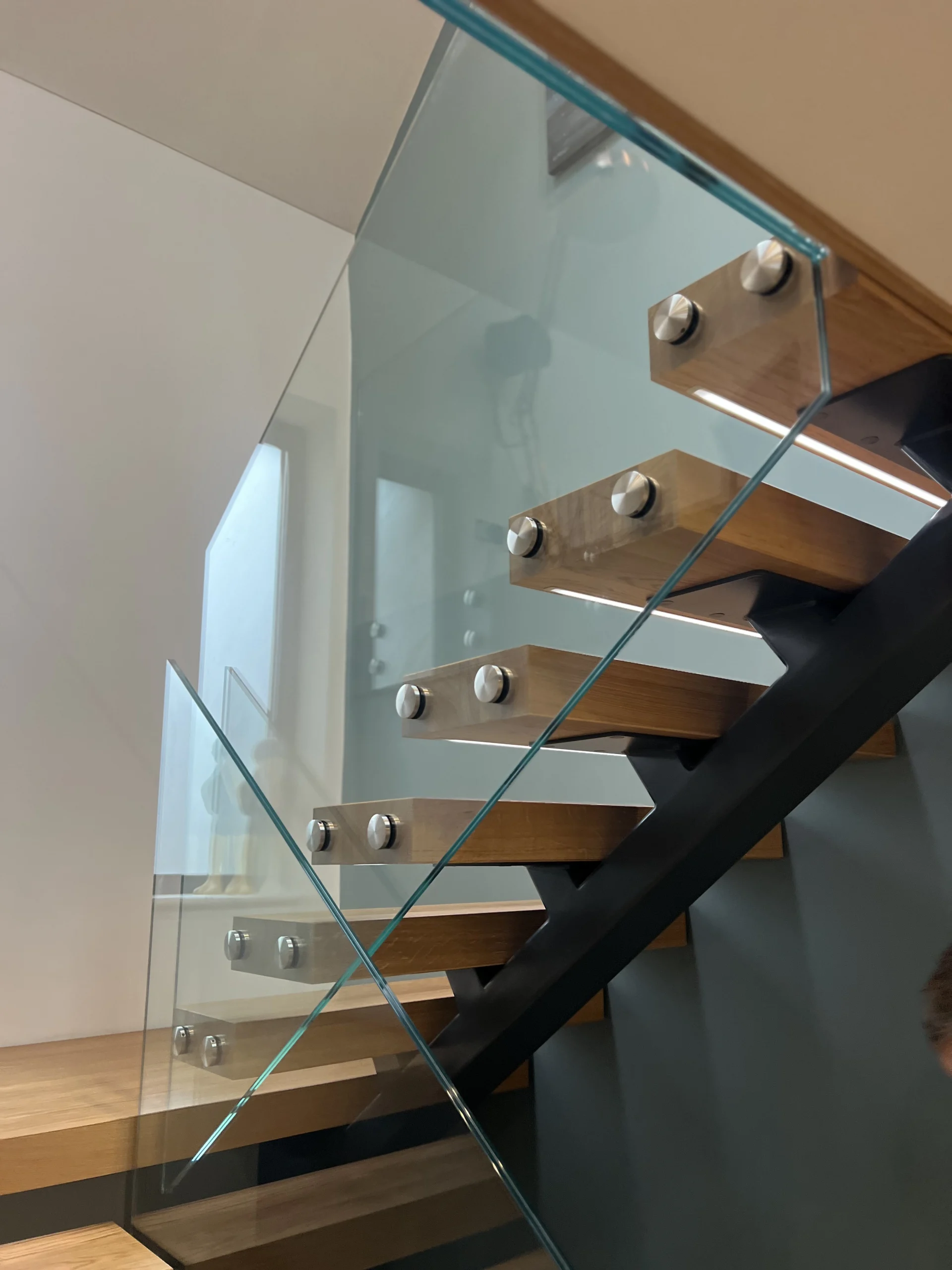
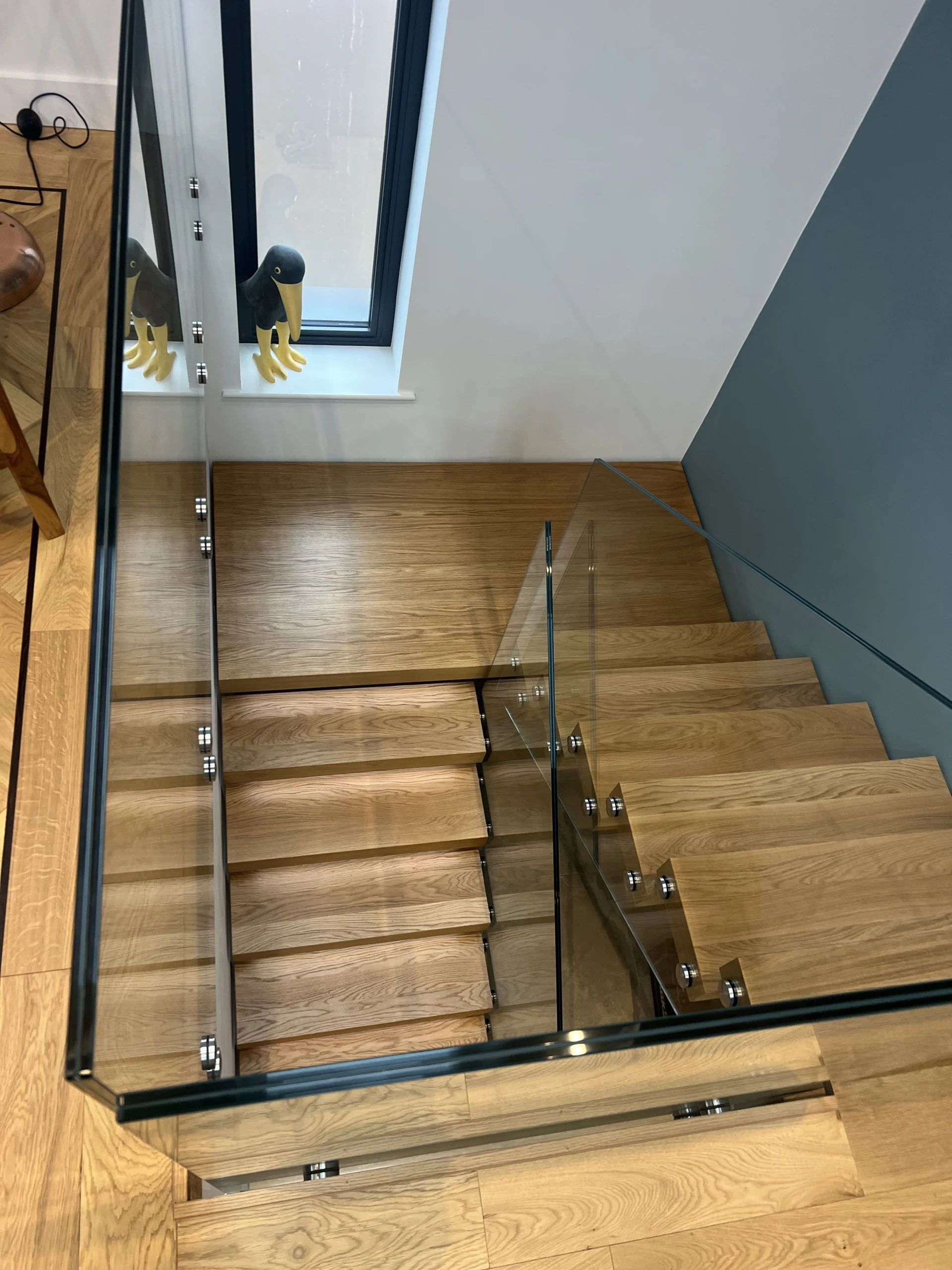
At this level, the staircase is not merely functional — it is an architectural element. A central spine staircase with frameless glass balustrade (from £9,500) becomes the visual centrepiece of the stairwell, connecting the existing house to the loft in a way that estate agents photograph for listings and buyers remember during viewings. Our Romsey L-shape floating staircase project is a real example of this specification — 100mm solid oak treads, 12mm toughened glass, RAL 9005 steel spine, with full project details and pricing context.
The premium tier includes precision-engineered structural steel (S275 grade, primer + powder coat finish), solid European oak or walnut treads (40mm, hand-finished), frameless toughened glass balustrade, and professional installation by the manufacturer's own team. Lead time is typically 4–8 weeks from site survey to installation.
Tread Material Costs — Per Tread Pricing
The tread material is the single biggest cost variable within a staircase specification. A standard loft staircase has 12–14 treads, so the per-tread cost multiplied across the flight has a significant impact on the total price.
| Tread Material | Cost Per Tread | Notes |
|---|---|---|
| Softwood (pine / spruce) | £30–£60 | Budget option — paint or carpet |
| Engineered oak | £80–£120 | Oak veneer on plywood core |
| Solid European oak (40mm) | £130–£180 | Hard-wax oil — the standard premium choice |
| Ash | £110–£150 | Lighter tone, good durability |
| Walnut | £190–£270 | Rich dark tone — luxury specification |
| Steel plate | £180–£240 | Industrial aesthetic, powder coated |
| Glass (toughened & laminated) | £280–£400 | Ultra-contemporary — structural glass |
Over 13 treads, the difference between softwood (£30 × 13 = £390) and solid oak (£150 × 13 = £1,950) is approximately £1,560. The difference between oak and walnut is approximately £1,300. These figures explain why "oak staircase" and "walnut staircase" appear as distinct cost tiers in most quotes.
Balustrade Costs — The Biggest Visual Upgrade
The balustrade has more visual impact than any other single element of the staircase. It is also the component with the widest cost range — from £50 per linear metre for painted softwood spindles to £450+ per linear metre for frameless structural glass. The same balustrade options apply at the loft landing, where you may want to consider interior balcony railings if the landing overlooks a double-height space.
| Balustrade Type | Cost Per Linear Metre | Visual Impact |
|---|---|---|
| Painted softwood spindles | £50–£100/m | Traditional — low impact |
| Oak spindles | £80–£150/m | Warm, classic |
| Stainless steel spindles | £120–£200/m | Contemporary |
| Steel wire / cable | £100–£180/m | Minimal, modern |
| Framed glass panels | From £350/m | High — light flows through |
| Frameless glass (structural) | From £450/m | Maximum — fully transparent |
A typical loft staircase has 4–6 linear metres of balustrade (including the stair flight and the landing opening). Upgrading from painted softwood spindles (£300–£600 total) to frameless glass (£1,800–£2,700 total) adds approximately £1,200–£2,100 to the staircase cost. For the visual transformation this delivers — flooding the stairwell with light and making the loft conversion feel integrated rather than bolted on — this is consistently the best-value upgrade available.
The Costs Nobody Tells You About
Most online loft staircase cost guides quote the supply and installation price of the staircase itself. But the staircase does not exist in isolation — it requires structural modifications, fire safety upgrades, and Building Control sign-off. These ancillary costs typically add £1,000–£3,000 to the total, and they apply regardless of whether you choose a £1,500 softwood flight or a £9,500 bespoke design. They also need to comply with current UK staircase Building Regulations — particularly Part K for staircase geometry and Part B for fire safety.
| Ancillary Item | Typical Cost | Notes |
|---|---|---|
| Structural opening (timber trimmers) | £400–£800 | Double trimmers, sized by structural engineer |
| Structural opening (steel beam) | £800–£1,500 | Required for wider openings or heavy loads |
| Structural engineer's calculations | £300–£600 | Required before Building Control approval |
| Fire doors (FD20/FD30) × 3–5 doors | £600–£1,500 | £120–£300 per door supplied and fitted |
| Mains-powered interlinked smoke alarms | £200–£400 | One per floor, mains-wired, battery backup |
| Building Control fees | £200–£500 | Local authority or approved inspector |
| Plastering / making good | £300–£600 | Around the staircase opening and stairwell |
| Decorating (stairwell) | £200–£500 | Painting the new and existing surfaces |
Total real cost example: A standard quarter-turn softwood staircase quoted at £2,500 will actually cost approximately £4,200–£5,800 once you add structural opening (£600), structural engineer (£400), fire doors (£900), smoke alarms (£300), Building Control (£300), plastering (£400), and decorating (£300). Always ask for an all-inclusive quote that covers every element — or use our staircase cost calculator with the removal toggle enabled to estimate the all-in figure.
Labour Costs — What Installers Charge
Labour for loft staircase installation is typically charged by the day or as a fixed price within the overall staircase quote. Standard day rates for staircase installers in England range from £150 to £250 per day, with London and the South East at the upper end.
Installation time varies significantly by staircase type. A standard straight softwood flight can be installed in 1 day by an experienced joiner. A quarter-turn winder takes 1–2 days. A spiral staircase typically takes 2–3 days. A bespoke steel-and-timber staircase with glass balustrade takes 2–5 days depending on complexity and site access.
At Continox, installation is carried out by our own team — not subcontracted — and is included in the quoted price. This eliminates the risk of a staircase that does not fit properly due to miscommunication between the manufacturer and a third-party installer.
Watch out for: Some loft conversion builders include a "staircase allowance" in their quote (typically £1,500–£2,000) rather than pricing a specific staircase. This allowance usually covers a basic softwood flight. If you want hardwood treads, glass balustrade, or a bespoke design, the upgrade cost comes on top of the allowance — and this difference can be £3,000–£8,000. Always clarify exactly what staircase specification is included in the builder's quote.
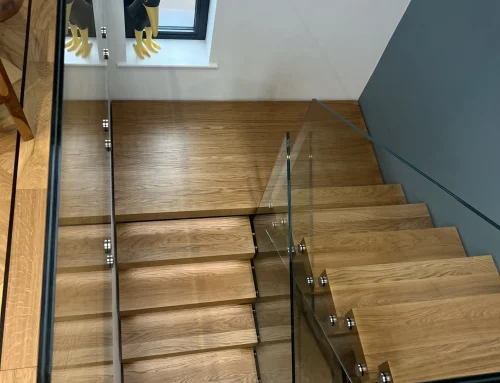
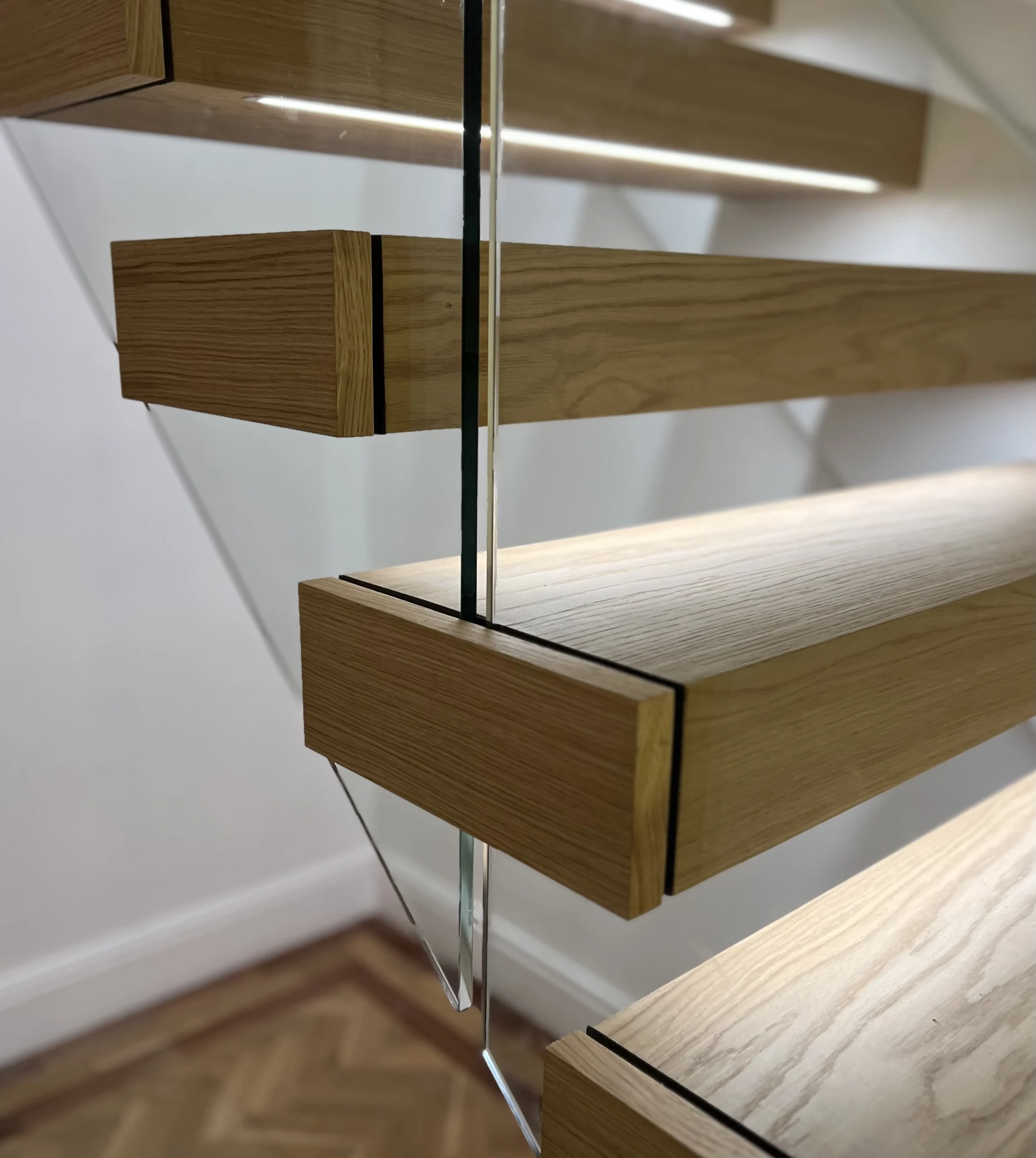 Floating staircase — from £7,900 with solid oak treads
 Central spine U-shape — from £9,500 with glass balustrade
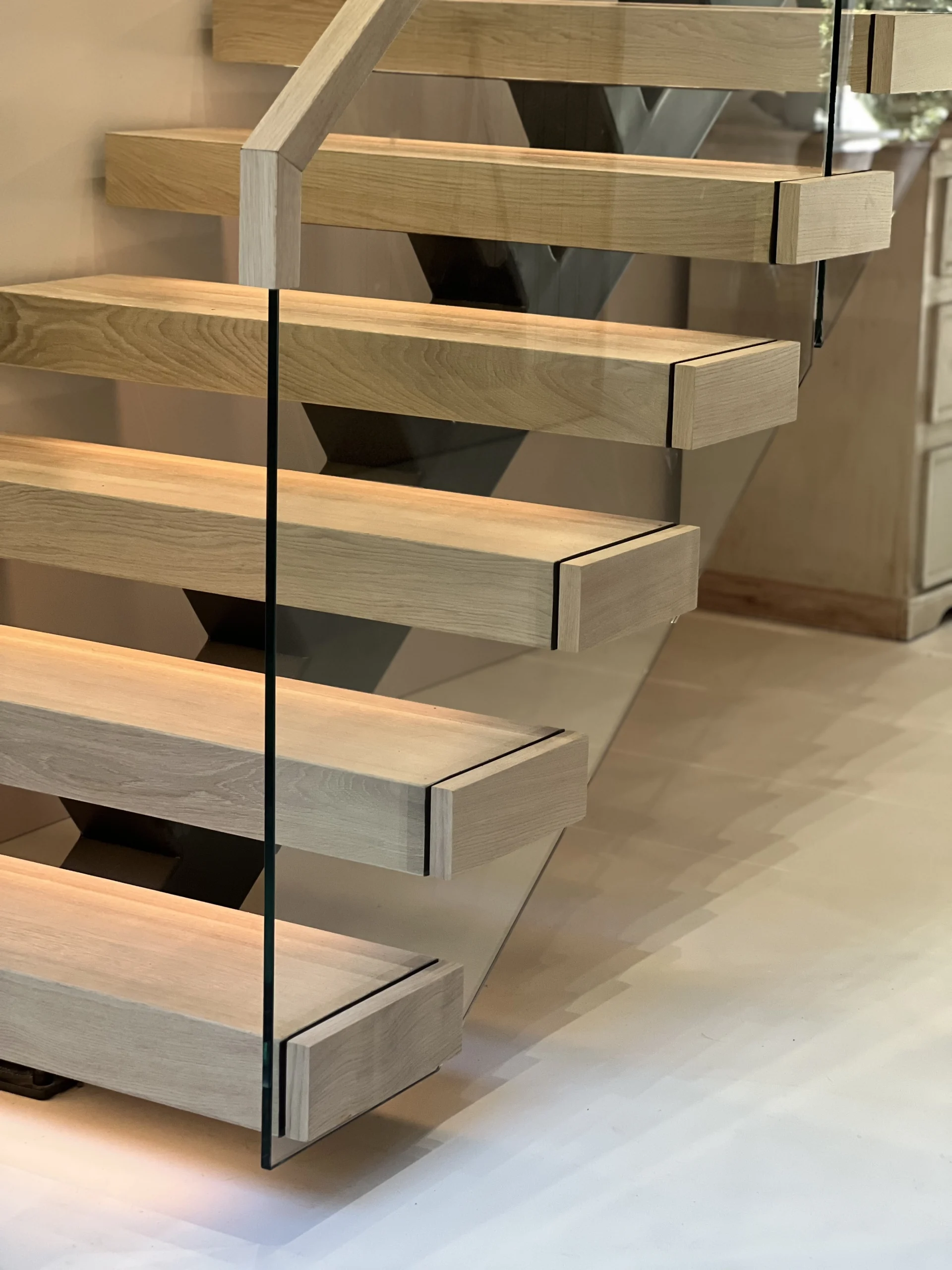 LED integration — adds £600–£1,200 to any bespoke design
 Landing glass — essential at the loft opening, from £350/m
Popular Upgrade Costs — What Each Add-On Costs
If you start with a standard staircase specification and want to upgrade specific elements, these are the typical add-on costs for the most requested upgrades in 2026.
| Upgrade | Additional Cost | Impact |
|---|---|---|
| Softwood treads → solid oak | +£1,000–£1,600 | Warmth, durability, premium appearance |
| Oak treads → walnut | +£800–£1,200 | Richer colour, luxury positioning |
| Spindle balustrade → framed glass | +£1,000–£1,500 | Light flow, contemporary feel |
| Framed glass → frameless glass | +£400–£800 | Cleaner lines, maximum transparency |
| LED under-tread lighting | +£600–£1,200 | Safety + drama — floating effect |
| Low-iron glass (ultra-clear) | +15–20% on glass cost | Eliminates green tint |
| Closed risers → open risers | +£200–£500 | Light, visual openness |
Regional Price Variations — Where You Live Matters
Staircase supply costs are broadly consistent across the UK — the same materials and manufacturing processes apply regardless of location. What varies significantly is labour cost and the overall cost of the loft conversion within which the staircase sits.
London and the South East typically command a 15–25% premium on labour compared to national averages. This applies to the staircase installation itself and to the ancillary trades (structural engineer, plastering, fire door fitting, Building Control fees). A staircase installation quoted at £2,500 in the Midlands might cost £3,000–£3,200 in Hampshire and £3,500+ in London.
For bespoke staircases manufactured off-site (as all Continox staircases are), the manufacturing cost is fixed regardless of the installation location. The variable is delivery and installation travel — for locations within our standard service area (Southern England), this is included in the quoted price.
Get Region-Specific Pricing
Our calculator includes 5 UK regions (London, South, Midlands, North, Scotland) with built-in labour rate adjustments — no manual maths needed.
The Return on Investment — Does It Pay to Spend More?
A loft conversion typically adds 10–20% to a property's market value. On a £300,000 UK home, that is £30,000–£60,000 of added equity. The question is whether spending more on the staircase shifts you from the lower end of that range to the upper end.
The evidence from estate agents and surveyors is consistent: a premium staircase correlates with a higher perceived value for the entire conversion. Buyers and surveyors assess the quality of a loft conversion through visible indicators — the staircase is the first thing you see when you approach the loft, and it sets expectations for everything above.
| Staircase Investment | Cost | Estimated Value Uplift Impact |
|---|---|---|
| Basic softwood (budget) | £1,500–£3,000 | 10–12% property value uplift |
| Hardwood + glass balustrade (mid) | £4,000–£6,000 | 14–17% property value uplift |
| Bespoke steel + oak + glass (premium) | £7,900–£11,500 | 17–20% property value uplift |
On a £300,000 property, moving from a 12% uplift (£36,000) to an 18% uplift (£54,000) represents an additional £18,000 of property value — generated by spending an extra £5,000–£8,000 on the staircase. The investment math is straightforward: a premium staircase pays for itself and then some.
For design ideas that maximise the impact of your investment, explore our staircase ideas gallery and our guide to bespoke staircase costs across all project types.
How to Reduce Costs Without Compromising Quality
1 Specify the steel frame now, upgrade treads later
If budget is tight, commission the bespoke steel frame and structural fixings at full specification but fit temporary softwood treads. You can upgrade to oak or walnut treads later without modifying the structure — a practical compromise that keeps the premium structure while deferring the tread cost.
2 Use framed glass instead of frameless
Framed glass balustrade (from £350/m) delivers 80% of the visual impact of frameless glass (from £450/m) at a lower cost. The difference over 5 linear metres is approximately £500 — meaningful but not dramatic.
3 Position the staircase above the existing stairwell
Building the loft staircase directly above the existing stairwell eliminates the cost of remodelling an existing room to accommodate the staircase opening. It also reduces plastering and making-good costs because the stairwell is an existing circulation space. Verify UK headroom requirements at planning stage — loft conversions get a 1.8m concession, but only at the lowest point.
4 Combine staircase installation with the main build
Having the staircase installed during the loft conversion (rather than as a separate project) reduces scaffold costs, eliminates duplicate site mobilisation, and allows the builder and staircase manufacturer to coordinate the structural opening. Retrofitting a staircase into a completed conversion is significantly more expensive.
5 Get an itemised quote — not a lump sum
Always request a fully itemised quote that separates the staircase supply, installation, structural opening, fire doors, smoke alarms, plastering, and Building Control fees. A single lump-sum figure makes it impossible to compare quotes meaningfully or to identify where costs can be reduced. Use our cost calculator as a benchmark before requesting trade quotes — it gives you a defensible price range to compare against.
6 Verify Part K compliance before ordering
The 2R+G comfort formula (550–700mm) determines whether your staircase will be comfortable to use, and is best-practice referenced in the UK 2R+G stair formula. Pitch must stay under 42° (Part K), and headroom must meet either the 2.0m standard or the loft conversion 1.8m concession. Order a non-compliant staircase and Building Control will reject it — costing thousands in rework.
Frequently Asked Questions — Loft Staircase Costs
In 2026, a loft conversion staircase costs between £800 and £11,500+ depending on type and specification. A standard softwood straight flight costs £1,500–£3,000. A quarter-turn winder runs £2,000–£4,000. A spiral staircase costs £2,000–£6,000. Bespoke steel-and-oak designs start from £7,900. Add £1,000–£3,000 for the structural opening, fire doors, smoke alarms, plastering, and Building Control fees. For a personalised estimate, use our staircase cost calculator.
The cheapest option is an alternating tread (paddle) staircase at £800–£2,000. However, paddle stairs are a Building Control last resort — permitted only in loft conversions where no other staircase type will fit. They are uncomfortable for daily use and reduce the resale value of the loft room. The cheapest standard staircase is a softwood straight flight at £1,500–£3,000, which is comfortable, compliant, and suitable for daily use.
Fire doors cost £120–£300 each supplied and fitted, depending on specification (FD20 or FD30) and finish. A typical loft conversion in a three-storey property requires 3–5 fire doors on the stairwell enclosure — a total cost of £600–£1,500. This is a mandatory requirement under Approved Document B and is frequently omitted from online cost estimates.
Yes — if the staircase is visible from the hallway or living area. A bespoke staircase with hardwood treads and glass balustrade typically adds 5–8% more property value uplift compared to a basic softwood flight. On a £300,000 property, that translates to £15,000–£24,000 of additional value for an investment of £5,000–£8,000 over the basic option. If the staircase is fully enclosed within walls and never seen, a standard softwood design is the rational choice.
Standard softwood staircases take 1–2 days. Spiral staircases take 2–3 days. Bespoke steel-and-timber staircases with glass balustrade take 2–5 days. The main disruption comes from cutting the floor opening (typically completed on day one). Lead time from order to installation is 1–2 weeks for standard designs and 4–8 weeks for bespoke.
Budget £1,000–£3,000 for ancillary costs on top of the staircase price. These include: structural opening formation (£400–£1,500), structural engineer's calculations (£300–£600), fire doors (£600–£1,500), mains smoke alarms (£200–£400), Building Control fees (£200–£500), plastering around the opening (£300–£600), and decorating the stairwell (£200–£500). These costs apply regardless of which staircase type you choose.
No — Building Control fees are separate. Local authority Building Control typically charges £200–£500 for a loft conversion inspection (which covers the staircase as part of the overall project). Some builders include this in their loft conversion quote; staircase-only quotes never include it. The fee covers plan check, structural inspection, and final sign-off.
Assembling a flat-pack staircase kit is possible for a competent DIY enthusiast — but cutting the structural floor opening is not a DIY job. The opening requires cutting existing ceiling joists, which support the ceiling and restrain the roof from spreading. This structural work must be designed by a structural engineer and inspected by Building Control. Incorrect cutting of joists can cause ceiling collapse, roof spread, or structural failure. The staircase itself must also pass Building Control inspection for Part K compliance.
Get an Exact Price for Your Loft Staircase
Continox provides fixed-price quotes for bespoke loft conversion staircases — no hidden extras. Steel-framed, precision-engineered, manufactured in-house in Gosport, Hampshire, and installed by our own team across Southern England. Try our calculator first for an instant estimate, then book a free survey for an exact quote.